

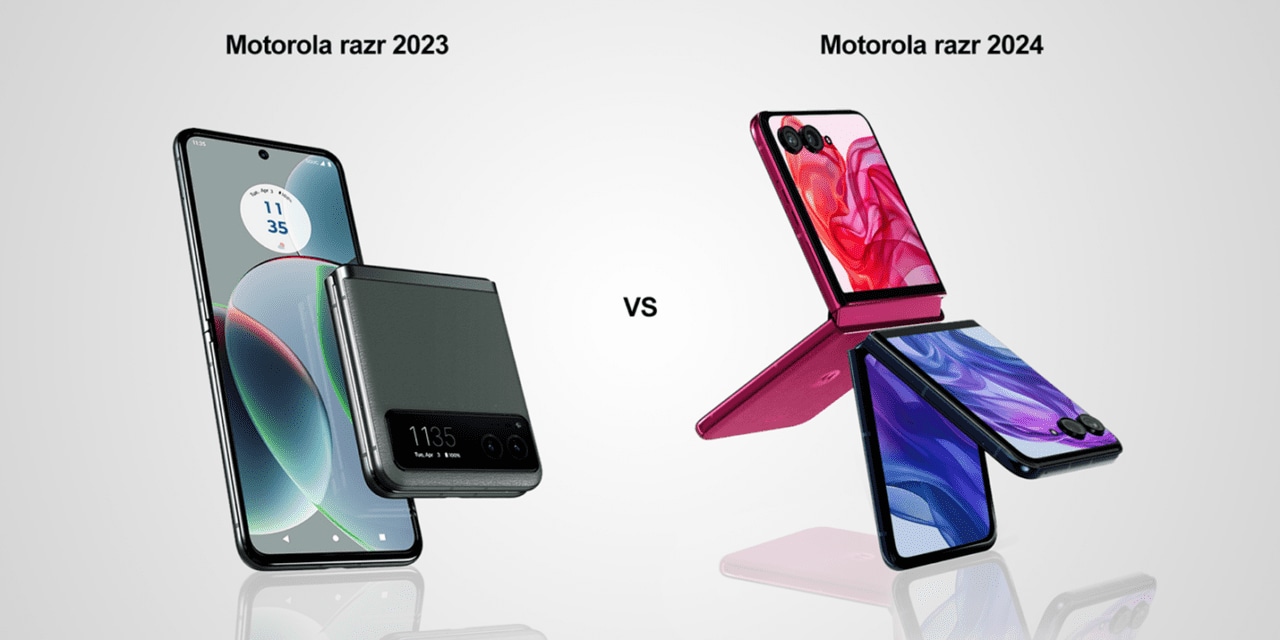
The Motorola Razr line has always been about more than just phones. It’s about nostalgia, design, and pushing what’s possible in a compact foldable. In 2024, Motorola introduced two exciting models: the Motorola Razr+ (also called Razr Plus or Razr 40 Ultra in some regions) and the newer Motorola Razr 2024. While both wear the iconic Razr badge, they target slightly different users and bring their own strengths to the foldable scene. If you’re considering a flip phone upgrade, or just want to know how these two Razrs compare, this guide will break down everything you need to know.
You’ll find side-by-side specs, real-world differences, and some insights most beginners miss. Whether you care most about the cover screen, camera performance, battery life, or just want the best value, this deep dive will help you decide which Razr is right for you in 2024.

36% off Today’s Exclusive Deals
Limited-time Exclusive Deals. Check current discount on Amazon.
Check Price on Amazon As an Amazon Associate I earn from qualifying purchases.Design And Build Quality
Motorola has a reputation for stylish, compact foldables, and both these Razr models continue that tradition. But don’t let the similar names fool you—they’re not identical twins.
Overall Aesthetics
The Motorola Razr+ leans into a premium look. It offers a glass and aluminum frame with a super-thin profile when unfolded. The hinge is nearly invisible, creating a seamless feel. The phone feels sturdy yet light, and the curved edges make it easy to hold and flip open with one hand.
The Motorola Razr 2024 is just as pocket-friendly, but its finish is slightly more understated. Motorola uses a mix of vegan leather and matte plastic for better grip and durability. Some color options are more playful, targeting a younger crowd or those who want a softer, less “techy” look.
Durability
Both models use Gorilla Glass Victus on the external screens for scratch resistance. The hinge mechanism is reinforced compared to older Razrs, promising more than 400,000 folds (which is years of daily use). However, the Razr+ has a slightly more robust hinge with less wobble, which you’ll notice if you flip your phone open and closed a lot.
Neither device is fully waterproof, but both are rated IP52—this means they can handle dust and a little splash, but not submersion. That’s standard for foldables, but it’s something to keep in mind if you’re often near water.
Size And Weight
When closed, both phones are about the size of a compact powder case—easy to slip into any pocket or purse. Here’s a direct comparison:
| Model | Closed Dimensions (mm) | Open Dimensions (mm) | Weight (g) |
|---|---|---|---|
| Motorola Razr+ | 88.4 x 74 x 15.1 | 170.8 x 74 x 7.2 | 188 |
| Motorola Razr 2024 | 88.6 x 73.9 x 15.3 | 171.2 x 73.9 x 7.4 | 190 |
The differences are minimal, but the Razr 2024 is a touch heavier and thicker. In the hand, though, both feel balanced.
Colors And Finishes
The Razr+ comes in classic black, a bold magenta, and a sophisticated blue. The Razr 2024 adds some fresh pastels and vegan leather choices, which are less likely to attract fingerprints.
Non-obvious insight: The vegan leather finish on the Razr 2024 is more resistant to cold weather fingerprints and smudges than the glass back of the Razr+, making it a better pick for people in colder climates or those who hate wiping their phone constantly.
Display And Cover Screen
The display is where these two phones start to diverge. Flip phones live and die by their screens—both inside and out.
Main Foldable Screen
Both Razrs offer a 6.9-inch pOLED main display with FHD+ resolution (2640 x 1080) and HDR10+ support. The screens are bright, colorful, and smooth. But there are some differences:
- Razr+: 165Hz refresh rate, peak brightness up to 1400 nits
- Razr 2024: 120Hz refresh rate, peak brightness up to 1200 nits
The higher refresh rate on the Razr+ makes scrolling, gaming, and animations feel just a bit smoother. For most people, 120Hz is already very smooth, but if you’ve used a 165Hz phone before, you’ll notice the difference.
Cover Display
Here’s where the real split happens.
- Razr+: Massive 3.6-inch pOLED cover display, nearly edge-to-edge, fully functional (you can run most apps, type replies, play videos, and use widgets without opening the phone)
- Razr 2024: Smaller 1.5-inch OLED cover screen, focused on notifications, music controls, and quick replies. It can’t run full apps.
A quick side-by-side:
| Model | Cover Screen Size | Resolution | Features |
|---|---|---|---|
| Motorola Razr+ | 3.6 inches | 1056 x 1066 | Full app support, camera preview, widgets |
| Motorola Razr 2024 | 1.5 inches | 194 x 368 | Quick view, notifications, music, camera preview |
Non-obvious insight: The Razr+ cover screen is big enough to use maps, reply to messages, or even browse social media—great for one-handed use or when you don’t want to open the main display in public. The Razr 2024’s smaller screen is better if you prefer simplicity and battery savings, but you’ll end up opening the phone much more often.
Usability In Sunlight
Both main screens are easy to read outdoors, but the Razr+ cover screen’s high brightness makes it more practical for quick tasks in bright sunlight. The Razr 2024’s smaller display is a bit harder to use in direct sun.
Performance And Hardware
Foldables need to balance power and heat in a very tight space. Here’s how these Razrs compare.
Processor And Ram
The Motorola Razr+ uses the Qualcomm Snapdragon 8+ Gen 1 chipset—a flagship-grade processor from late 2022. It’s paired with 8GB or 12GB of RAM, depending on your region and configuration. This combination is still very fast for 2024, able to handle gaming, multitasking, and demanding apps.
The Motorola Razr 2024 steps down to the Snapdragon 7 Gen 3 (or Snapdragon 6 Gen 1 in some regions), with 8GB RAM. This is a solid mid-range chip, fast enough for most daily tasks, social media, and streaming. It’s not as powerful for gaming or heavy video editing.
Storage
- Razr+: 256GB or 512GB (no microSD support)
- Razr 2024: 256GB (no microSD support)
Both offer plenty of room for photos, apps, and music. The Razr+ has a 512GB option if you shoot a lot of videos or want to future-proof your storage.
Heat And Throttling
Foldables can get warm with heavy use, especially while gaming or using the camera for long periods. The Razr+’s flagship chip gets hotter under stress but cools down quickly. The Razr 2024’s mid-range chip runs cooler, but you might notice some slowdowns during long gaming sessions.
Biometrics And Security
Both phones use a side-mounted fingerprint sensor for unlocking, which is fast and reliable. There’s also face unlock, but it’s less secure since it uses the selfie camera, not advanced sensors.
Practical tip: If you often use mobile payments, the side sensor is easier to reach with one hand when the phone is closed or open.
Software Experience
Motorola’s software is known for being clean, fast, and close to stock Android, with a few smart additions.
Operating System And Updates
Both the Razr+ and Razr 2024 launch with Android 14 out of the box. Motorola promises three years of major Android updates and four years of security updates for both. That’s now the industry standard for premium and upper mid-range devices.
Unique Features
- Moto Actions: Classic Motorola gestures like chop for flashlight or twist for camera work on both models.
- Ready For: The Razr+ supports Motorola’s desktop mode, so you can connect it to a monitor and use it like a PC. The Razr 2024 has limited Ready For support (mostly for screen mirroring).
- Customization: You can tweak the cover screen widgets, always-on display, and even the folding animations. The Razr+ allows more detailed cover screen customization due to its size.
Bloatware
Both phones come with minimal pre-installed apps. Motorola avoids heavy skins and duplicate apps. This means faster updates and smoother performance.
Foldable-specific Tricks
On the Razr+, you can use the cover display as a viewfinder for selfies, run two apps side by side when the phone is half-open, and even prop the phone like a mini tripod for hands-free video calls. The Razr 2024 supports most of these tricks, but the smaller cover screen limits some selfie and multitasking features.
Non-obvious insight: If you’re upgrading from a non-foldable, it takes a few weeks to fully use all the fold-specific features—like hands-free video calls in “tent mode” or using the cover display for quick replies. Many users never discover these until they explore the Moto Tips app.
Camera Performance
Foldable phones often compromise on camera hardware to stay slim. Both Razrs focus on delivering good, not great, photos—but there are some key differences.
Main Cameras
- Razr+: Dual rear cameras (12MP main, 13MP ultra-wide), 32MP selfie camera inside
- Razr 2024: Dual rear cameras (50MP main, 13MP ultra-wide), 32MP selfie camera inside
Here’s how that looks side by side:
| Camera | Razr+ | Razr 2024 |
|---|---|---|
| Main Rear | 12MP, f/1.5, OIS | 50MP, f/1.7, OIS |
| Ultra-wide | 13MP, f/2.2 | 13MP, f/2.2 |
| Front Selfie | 32MP, f/2.4 | 32MP, f/2.4 |
Real-world Results
- Razr+: The main camera is fast, with good color in daylight. Night mode is solid, but not on the level of top flagships. Ultra-wide shots are decent, and the cover display is excellent as a viewfinder for selfies.
- Razr 2024: The 50MP sensor does capture more detail in good light. However, image processing is tuned for natural colors, sometimes resulting in less dramatic photos. Low-light performance is improved over last year’s Razr, but still not as strong as dedicated camera phones.
Both models offer 4K video recording at 30fps and electronic image stabilization. The Razr+ has a slight edge in video thanks to better HDR and smoother stabilization.
Practical example: If you love taking selfies, both Razrs let you use the main camera and the cover screen as a giant mirror. The Razr+’s bigger cover screen makes it much easier to frame your shot, especially in groups.
Camera App And Extras
Motorola’s camera app is simple and quick, with easy access to night mode, portrait, panorama, and fun filters. There’s a “Photo Booth” mode that takes four quick pictures in a row—another nod to classic photo booths and perfect for capturing fun moments with friends.
Common Mistake
Many users expect flagship-level photos from foldables. While these Razrs deliver good results, especially for social media, they won’t match the latest Galaxy S or iPhone Pro in tricky lighting or zoom.
Battery Life And Charging
Battery life is a major concern for foldables, since there’s less space for big batteries.
Battery Capacity
- Razr+: 3,800mAh
- Razr 2024: 4,200mAh
The Razr 2024 has a bigger battery, but remember: the Razr+ powers a larger, brighter cover screen and a faster processor.
Real-world Usage
- Razr+: Lasts about a full day with mixed use (5-6 hours of screen time), but heavy use of the cover screen or gaming will drain it faster.
- Razr 2024: Can stretch to 1.5 days with moderate use, thanks to the more efficient chip and smaller cover screen.
Practical tip: If you’re a heavy user, the Razr 2024 will give you more confidence to get through the day without charging. But if you rely on the cover screen for most interactions, the Razr+ might drain faster than expected.
Charging Speed
- Razr+: 30W wired charging, 5W wireless charging
- Razr 2024: 33W wired charging, no wireless charging
Both charge quickly—about 1 hour from 0 to 100% with the included charger. Only the Razr+ supports wireless charging, which is handy if you like to charge on a pad at your desk or bedside.
Battery Management Features
Both models include smart battery management tools, like charging limits to extend battery lifespan, and adaptive charging schedules. These help reduce battery wear over time—a big plus for foldables, which are harder to repair.

Connectivity And Extras
5g, Wi-fi, And Bluetooth
Both Razrs support sub-6GHz 5G (but not mmWave in all regions), Wi-Fi 6E, and Bluetooth 5.3. This means you get fast downloads, strong wireless connections, and future-proofing for new networks.
Audio
- Razr+: Stereo speakers with Dolby Atmos, louder and clearer than most foldables
- Razr 2024: Stereo speakers, slightly less bass than Razr+
Neither model includes a headphone jack, but both support high-res audio over Bluetooth.
Esim And Dual Sim
Both support dual SIM (nano SIM + eSIM), making them travel-friendly. This is especially useful if you want to keep your work and personal numbers separate.
Nfc And Payments
Both Razrs support NFC for contactless payments and transit cards. Google Pay works out of the box.
Haptic Feedback
The Razr+ provides sharper, more precise vibration feedback, which makes typing and notifications feel more “premium. ” The Razr 2024’s haptics are softer.
Non-obvious insight: Good haptics improve the feel of a foldable more than most people expect, because you interact with the phone in different ways (folded, half-open, closed). The Razr+ delivers a more satisfying tactile experience.
Price And Value
Launch Prices
- Motorola Razr+: $999 (for 256GB), $1,099 (for 512GB)
- Motorola Razr 2024: $699 (256GB)
Prices can vary by carrier, retailer, and region.
What Do You Get For The Money?
- The Razr+ is a “flagship” foldable—top processor, best cover screen, premium build, and extra software features.
- The Razr 2024 aims for value—similar folding magic, bigger battery, but a few key trade-offs (smaller cover screen, mid-range chip, no wireless charging).
Practical advice: If the cover screen is your main reason for wanting a flip phone, the Razr+ is worth the extra cost. If you just want a stylish, compact foldable for calls, texts, and social media—and want the best battery life—the Razr 2024 is a better buy.
Trade-in And Carrier Deals
Both Razr models are often discounted through carrier promotions, especially if you trade in an old phone. Check with your local carriers for the latest offers.
Which Should You Buy? Key Scenarios
Choose The Razr+ If:
- You want a fully functional cover display for apps, navigation, and selfies
- You care about smoothest performance and gaming
- You want wireless charging and Ready For desktop mode
- You love premium materials and sharper haptics
Choose The Razr 2024 If:
- You want the best battery life in a flip phone
- You prefer a simpler cover screen and don’t need full app access outside
- You want to save $300 or more
- You don’t care about wireless charging
Common Buyer Mistake
Many first-time foldable buyers focus only on specs. But with Razr phones, the cover screen experience and battery life will shape your daily use far more than raw performance numbers.
How They Stack Up Against The Competition
Motorola Razrs compete with Samsung’s Z Flip series and, in some regions, the Oppo Find N2 Flip. Compared to the Samsung Galaxy Z Flip 5, the Razr+ offers a larger cover display and a less noticeable crease, though Samsung’s cameras and software updates are a bit better. The Razr 2024 is cheaper than any current Z Flip, making it a strong budget foldable option.
For more about foldable phone trends, check out the Wikipedia page on foldable smartphones.

Frequently Asked Questions
Is The Motorola Razr+ Worth The Extra Money Over The Razr 2024?
If you want the best cover screen and fastest performance in a flip phone, the Razr+ is worth it. But if you’re happy with a smaller cover screen and care more about battery life and saving money, the Razr 2024 is a better value.
Can I Use The Main Cameras For Selfies On Both Razr Models?
Yes, both phones let you use the rear cameras for selfies, thanks to the cover display acting as a viewfinder. The Razr+’s larger cover screen makes it much easier to frame your shot, especially for group photos.
Which Razr Model Lasts Longer On A Single Charge?
The Razr 2024 has a bigger battery and more efficient chip, so it generally lasts longer—up to 1. 5 days with moderate use. The Razr+ usually lasts a day but can drain faster if you use the large cover display heavily.
Do Both Phones Get Software Updates At The Same Time?
Yes, Motorola promises three years of major Android updates and four years of security patches for both Razr+ and Razr 2024. Updates usually arrive at the same time, though flagship models sometimes get them a bit earlier.
Can I Use These Razrs With Any Carrier Worldwide?
Both models support a wide range of 5G and 4G bands, plus eSIM. However, check with your carrier to confirm compatibility, especially if you want full 5G speeds or plan to use the phone internationally.
The 2024 Razr lineup proves Motorola is serious about making foldables for everyone—not just tech fans, but anyone who wants style, substance, and a bit of fun in their pocket. If you know your priorities, you’ll find a Razr that fits your lifestyle.

