

Folding a shirt sounds simple, but many people struggle to do it neatly. If you often end up with wrinkled shirts or messy piles in your closet, you’re not alone. Learning how to fold a shirt the right way can save space, keep your clothes looking fresh, and make your daily routine smoother.
Whether you want to organize your drawers, pack for a trip, or just keep your favorite shirts wrinkle-free, mastering this skill makes a real difference.

36% off Today’s Exclusive Deals
Limited-time Exclusive Deals. Check current discount on Amazon.
Check Price on Amazon As an Amazon Associate I earn from qualifying purchases.This guide will show you several shirt folding methods, explain why folding matters, and share tips that even experienced organizers sometimes miss. You’ll learn step-by-step instructions, compare different techniques, and find out how to avoid common mistakes. By the end, you’ll fold shirts like a pro—quickly and efficiently.
Why Proper Shirt Folding Matters
Many people think folding is just about making clothes look tidy. But there’s more to it. Proper folding protects shirts from wrinkles, saves storage space, and helps you find clothes faster. If you stack shirts poorly, they get crushed and wrinkled. When shirts are folded neatly, each one stays in good shape and is easy to grab.
Statistics show that Americans spend about 20 minutes per week sorting and folding laundry, according to the American Cleaning Institute. That adds up to more than 17 hours per year. If you fold shirts efficiently, you can save some of that time and reduce stress.
For travelers, folding shirts well can make packing easier. You can fit more clothes in your suitcase and avoid wrinkled shirts when you arrive. For those living in small apartments, a good folding technique can help maximize closet space. Even for busy families, teaching everyone to fold shirts properly can keep drawers organized and mornings less hectic.
Choosing The Right Folding Method
Different shirt folding methods work for different needs. The best technique depends on your shirt type, storage space, and purpose (home storage, packing, display, etc.). Let’s compare three popular methods: the basic fold, the retail fold, and the Marie Kondo fold.
| Method | Best For | Speed | Space Saving | Wrinkle Prevention |
|---|---|---|---|---|
| Basic Fold | Everyday storage | Fast | Moderate | Good |
| Retail Fold | Display/shelves | Medium | High | Very good |
| Marie Kondo Fold | Drawer storage | Medium | Very high | Excellent |
Some beginners overlook the importance of choosing the right method. For example, the Marie Kondo fold lets shirts stand upright in drawers, making it easy to see each shirt. The retail fold is best for shelves and gives that “store-bought” look. The basic fold is quick and works well for large closets. Understanding these differences helps you pick the technique that matches your needs.
Step-by-step: The Basic Shirt Fold
This method works for most t-shirts and casual shirts. It’s easy to learn and fast to do.
- Lay the shirt flat on a clean surface, front side facing down.
- Smooth out wrinkles gently with your hands.
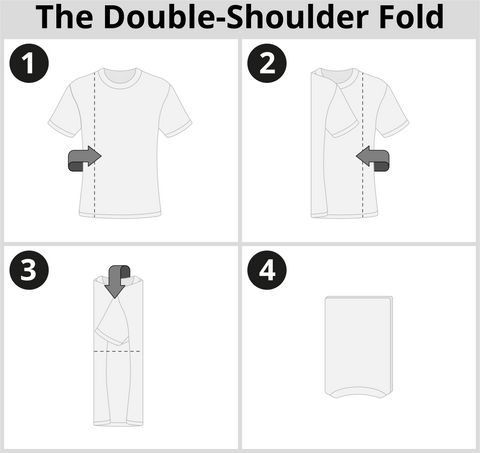
- Fold one sleeve and side toward the center. The edge should line up with the shirt’s middle.
- Fold the other sleeve and side the same way.
- Fold the bottom up to meet the collar (for storage), or halfway for packing.
- Flip the shirt over (optional for extra neatness).
If you’re folding a shirt for a drawer, make sure the fold is tight so it stacks easily. For packing, fold shirts smaller to fit more in your suitcase.
Practical Tips For The Basic Fold
- Always smooth out wrinkles before folding. This prevents creases.
- If your shirt is very large, fold sleeves inward twice to make it more compact.
- For thin shirts, avoid folding too many times. This can create deep creases.
- Stack shirts with the folded edge facing out. This helps you grab shirts quickly.
Many people forget to check for wrinkles before folding. Even a small wrinkle can turn into a deep crease after a few days in the drawer.
Mastering The Retail Fold
If you want your shirts to look like they do in stores, the retail fold is the way to go. This method is used in clothing shops to display shirts neatly.
- Lay the shirt face down on a flat surface.
- Place a folding board (or use a magazine) in the center of the shirt.
- Fold one side and sleeve over the board.
- Fold the other side and sleeve the same way.
- Fold the bottom up over the board.
- Slide out the board gently.
- Flip the shirt over. You’ll see a clean, square fold.
Advantages Of The Retail Fold
- Shirts look tidy and uniform.
- Great for open shelves or display racks.
- Makes sorting easy.
| Feature | Retail Fold | Basic Fold |
|---|---|---|
| Uniformity | High | Medium |
| Ease of stacking | High | Medium |
| Best for | Shops, open shelves | Closets, drawers |
A mistake beginners often make is skipping the folding board. Without it, shirts may look uneven. You can use cardboard, a book, or a magazine if you don’t have a folding board.
The Marie Kondo Fold For Drawers
Popularized by Marie Kondo, this folding method is all about saving space and keeping things visible. Shirts stand upright in the drawer, making it easy to see every shirt.
- Lay the shirt flat (front side up).
- Fold one side and sleeve toward the center.
- Repeat with the other side.
- Fold the bottom up to the collar.
- Fold the shirt in half vertically.
- Fold again into thirds. The shirt should stand upright.
Benefits Of The Marie Kondo Fold
- Maximizes drawer space.
- Shirts stay wrinkle-free longer.
- Makes it easy to see all shirts at once.
Many people skip the last “stand upright” step. But this is key to the method. If the shirt doesn’t stand, adjust the folds.
Folding Dress Shirts: Step-by-step
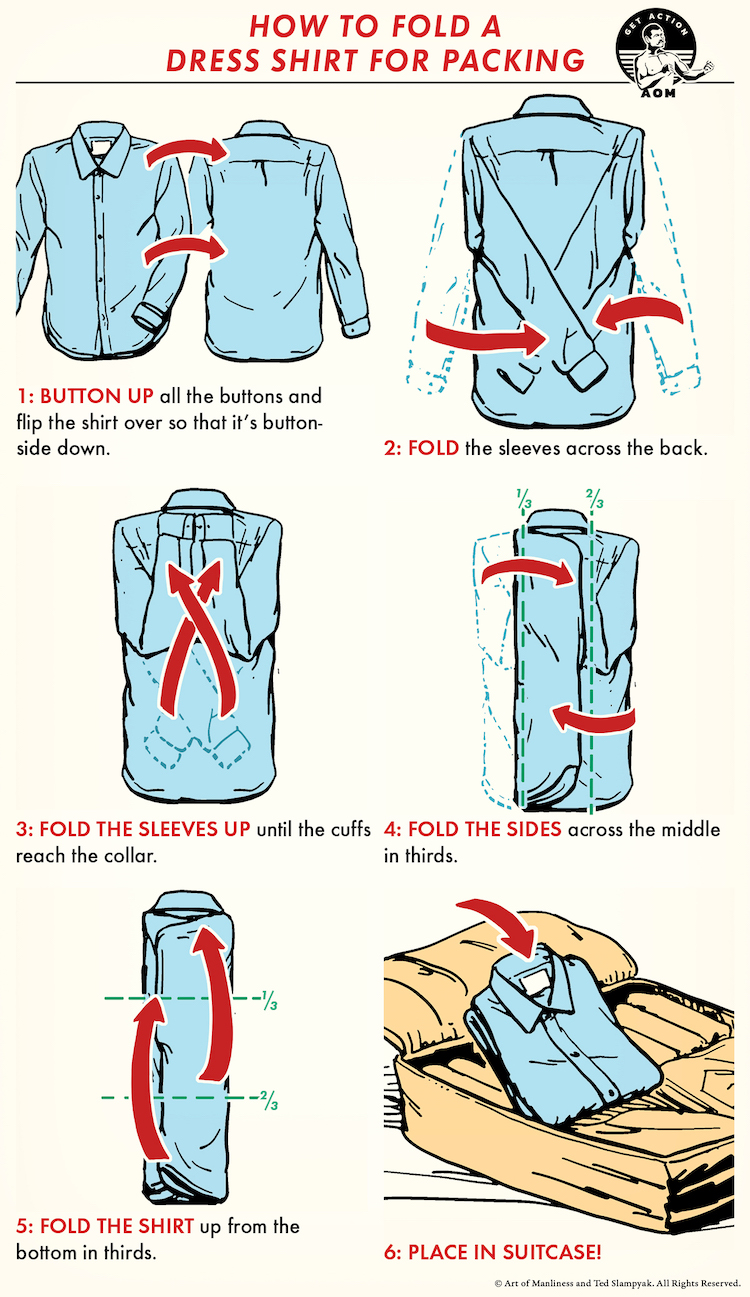
Dress shirts need extra care to avoid wrinkles and keep collars crisp. Follow these steps for a neat fold:
- Button all buttons (including cuffs and collar).
- Lay the shirt face down on a flat surface.
- Fold sleeves back along the seam.
- Fold each side toward the center.
- Fold sleeves down so they lie flat.
- Fold the bottom up to just below the collar.
For storage, keep folded dress shirts in a stack or use a shirt box. If packing, place tissue paper inside to protect the fabric.
Dress Shirt Folding Tips
- Always button shirts before folding. This keeps the shape.
- Use tissue paper for extra wrinkle protection.
- Store in a cool, dry place to avoid humidity damage.
Dress shirts are often made of delicate fabrics. Rushing the fold can cause permanent creases.
Quick Folding For Packing And Travel
When packing for a trip, you want shirts to take up less space and avoid wrinkles. Here’s a fast, efficient method:
- Lay the shirt flat.
- Fold sleeves inward.
- Fold the shirt in half lengthwise.
- Roll the shirt tightly from the bottom to the collar.
Rolling shirts is popular among travelers. It saves space and prevents deep wrinkles. According to travel experts, rolling can reduce packing volume by up to 30% compared to flat folding.
Packing Tips
- Roll shirts after folding for the smallest size.
- Place rolled shirts in packing cubes or bags.
- Put heavier shirts at the bottom of your suitcase.
Some travelers forget to roll shirts tight. Loose rolls take up more space and wrinkle easily.
Folding Shirts For Children
Kids’ shirts are smaller and often made of softer fabrics. The basic fold works well, but you may need to adjust for tiny sizes:
- Lay the shirt flat.
- Fold sleeves inward.
- Fold sides to the center.
- Fold bottom up to the collar.
Stack children’s shirts with the folded edge facing out. This makes it easy for kids to pick shirts themselves.
Tips For Folding Kids’ Shirts
- Use colorful folding boards to make folding fun.
- Teach kids to smooth shirts before folding.
- Stack shirts by size for easy access.
Parents often overlook teaching kids to fold. Early habits help children stay organized.
Shirt Folding For Storage Vs. Packing
The best fold depends on whether you’re storing shirts at home or packing for travel. Let’s compare:
| Purpose | Best Fold | Benefits |
|---|---|---|
| Storage (drawers) | Marie Kondo Fold | Easy access, space saving |
| Storage (shelves) | Retail Fold | Uniform look, easy stacking |
| Packing (travel) | Rolling | Space saving, wrinkle prevention |
Beginners often use the same fold for every situation. But choosing the right method makes a big difference.
Avoiding Common Shirt Folding Mistakes
Many people make small mistakes that lead to messy drawers and wrinkled shirts. Here are the most common errors:
- Not smoothing shirts before folding. Wrinkles become deep creases.
- Folding shirts while damp. This leads to mildew and odor.
- Stacking shirts too high. Bottom shirts get crushed.
- Skipping buttons on dress shirts. Collars lose shape.
- Using the wrong fold for the space. Drawers get messy.
To avoid these mistakes, always check that shirts are dry, smooth, and folded using the best method for your storage.
Tools And Accessories For Perfect Folding
You don’t need expensive tools, but a few accessories can help:
- Folding board: Makes retail folds neat.
- Packing cubes: Organize rolled shirts for travel.
- Tissue paper: Protects delicate dress shirts.
- Shirt boxes: Great for long-term storage.
Many people skip tools, but even a simple magazine as a folding board makes a big difference.
Folding Shirts For Display
If you want shirts to look their best in a shop or open shelf, use the retail fold and stack shirts in neat piles. For display tables, use a folding board for uniformity.
Tips for display folding:
- Use a board to make folds identical.
- Stack shirts by color or size.
- Keep stacks small (4–6 shirts) to avoid crushing.
Retail stores often use folding boards. You can make your own with cardboard.
:max_bytes(150000):strip_icc()/MSLFolding_Rollfinals1-f1ad2ca001444427be4faa741525dcc3.png)
Shirt Folding For Special Fabrics
Not all shirts are the same. Some fabrics need special care:
- Silk shirts: Fold with tissue paper inside.
- Linen shirts: Fold loosely to prevent sharp creases.
- Polyester shirts: Can be folded tightly, but avoid heat.
Always check the care label before folding. Some shirts (like silk) should be stored flat, not folded.
Advanced Shirt Folding: The Pinch Method
The pinch method is a quick way to fold t-shirts. It’s popular in Japan and takes just a few seconds.
- Lay shirt flat, face up.
- Find a spot midway between the collar and the bottom (Point A).
- Pinch the shirt at Point A and at the shoulder (Point B).
- Cross your arms, bringing Point B down to the bottom.
- Uncross and shake the shirt. Fold in half.
This method is fast but takes practice. Many beginners get confused at first, but once mastered, it’s a time-saver.
Shirt Folding For Small Spaces
If you live in a small apartment or dorm, maximizing space is key. The Marie Kondo fold is best for drawers, but for really tight spaces, try stacking shirts vertically and using drawer dividers.
Tips for small spaces:
- Use drawer organizers to keep shirts upright.
- Fold shirts into thirds for extra compactness.
- Stack shirts by color for faster selection.
Some people forget about vertical stacking, which saves more space than horizontal piles.
Shirt Folding For Large Families
For families with many shirts, folding can become overwhelming. Set up a folding station and teach everyone a single method (like the basic fold or Marie Kondo fold).
Tips for families:
- Assign folding to each family member.
- Use labeled bins for each person’s shirts.
- Store shirts by size and color.
A folding routine makes laundry easier and keeps closets organized.
Shirt Folding For Travel Packing: Real-life Example
Let’s look at a real-world example. Sarah travels every month for work. She packs 7 shirts each trip, using the rolling method. Before learning this technique, she could fit only 5 shirts in her suitcase. After switching to rolling, she fits 7 shirts, all wrinkle-free.
Sarah’s packing cube holds all her rolled shirts. She saves about 10 minutes each trip by rolling shirts tightly.
If you travel often, try the rolling method and use packing cubes. You’ll be surprised how much space you save.
Shirt Folding For Sustainability
Folding shirts well can extend their life. Wrinkled, crushed shirts wear out faster. Keeping shirts folded neatly reduces wear and tear.
According to the EPA, Americans throw away 13 million tons of textiles each year. Taking better care of your shirts—by folding properly—can help cut down on waste.
If you care about sustainability, learn to fold shirts well and teach others. It’s a small step that makes a difference.
Frequently Asked Questions
How Do I Fold A Shirt Quickly?
The pinch method is the fastest. Lay the shirt flat, pinch at the shoulder and side, cross arms, and fold in seconds. Practice makes it easier.
What’s The Best Way To Fold Shirts For Drawers?
The Marie Kondo fold is best. Shirts stand upright, saving space and making it easy to see each shirt.
Should I Fold Or Hang Dress Shirts?
For short-term storage, fold dress shirts carefully. For long-term storage or to prevent wrinkles, hang them.
Can I Use A Folding Board For All Shirt Types?
Yes, a folding board works for t-shirts, polos, and dress shirts. It helps make folds uniform, especially for display.
How Can I Keep Folded Shirts Wrinkle-free?
Always smooth shirts before folding, use the right method for your storage space, and don’t stack shirts too high.
If you want more details on folding techniques, visit Wikipedia for extra resources.
Learning to fold a shirt well takes practice, but the results are worth it. Neat folds mean less stress, fresher shirts, and a more organized home. Try different methods, find what works for you, and teach others. With these tips, your shirts will stay crisp, tidy, and ready to wear—whether at home or on the road.

