

Washing shoes is something many people avoid, often fearing damage or not knowing the correct way. But clean shoes not only look better, they also last longer and help prevent odor and bacteria. Whether your shoes are made of canvas, leather, mesh, or even suede, the right cleaning method can make a big difference.
Even high-quality sneakers or expensive boots can benefit from regular, careful washing. Learning how to wash shoes properly saves you money and extends the life of your favorite pairs.

36% off Today’s Exclusive Deals
Limited-time Exclusive Deals. Check current discount on Amazon.
Check Price on Amazon As an Amazon Associate I earn from qualifying purchases.In this guide, you’ll discover practical advice for washing different types of shoes, both by hand and in the washing machine. We’ll cover drying, deodorizing, and what to do for tricky materials like suede. You’ll also find tables comparing shoe materials, suitable cleaners, and drying times.
By the end, you’ll know exactly how to keep your shoes clean and fresh without causing damage.
Understanding Your Shoes: Materials Matter
Before washing any shoes, you need to know what they’re made of. Shoe material affects how you clean, dry, and care for them. Using the wrong method can ruin your shoes or shorten their lifespan.
Here’s a quick comparison of common shoe materials and their care needs:
| Material | Can Be Machine Washed? | Best Cleaning Method | Typical Drying Time |
|---|---|---|---|
| Canvas | Yes (most) | Machine/Hand wash | 12–24 hours |
| Leather | No | Hand wash, spot clean | 24+ hours (air dry) |
| Mesh | Yes | Machine/Hand wash | 8–12 hours |
| Suede | No | Spot clean only | 12+ hours |
| Synthetic | Yes (most) | Machine/Hand wash | 8–24 hours |
| Rubber | Yes | Hand wash, wipe | 4–8 hours |
Non-obvious insight: Even shoes labeled as “machine washable” can be damaged if you use hot water or harsh detergents. Always check the label and use gentle settings.
Preparation: Getting Shoes Ready For Cleaning
Proper preparation prevents damage and makes cleaning more effective. Here’s what you should always do before washing any shoes:
- Remove laces and insoles: Wash them separately for a deeper clean.
- Brush off loose dirt: Use a soft brush or old toothbrush.
- Check the care label: Look inside the shoe for symbols or instructions.
- Test cleaners on a small area: Especially important for leather, suede, or colored fabrics.
Pro tip: If your shoes have strong odors, sprinkle baking soda inside and let them sit overnight before washing.
Hand Washing Shoes: Step-by-step
Hand washing is the safest method for most shoes, especially delicate materials. Here’s how to do it right:
What You Need
- Mild detergent (like dish soap or gentle laundry soap)
- Soft brush or toothbrush
- Sponge or cloth
- Warm water (not hot)
- Old towels
The Steps
- Mix cleaning solution: Fill a basin with warm water and add a small amount of detergent.
- Soak laces and insoles: Place them in the solution to loosen dirt.
- Clean the outside: Dip the brush in soapy water and gently scrub the shoe’s surface.
- Wipe inside: Use a damp sponge to wipe the inside of the shoes.
- Rinse: Wipe away soap with a clean, damp cloth.
- Dry: Pat with a towel and air dry.
Non-obvious insight: Don’t soak shoes (especially leather or suede) in water. Too much moisture can cause warping, cracking, or mold.
Machine Washing Shoes: What You Need To Know
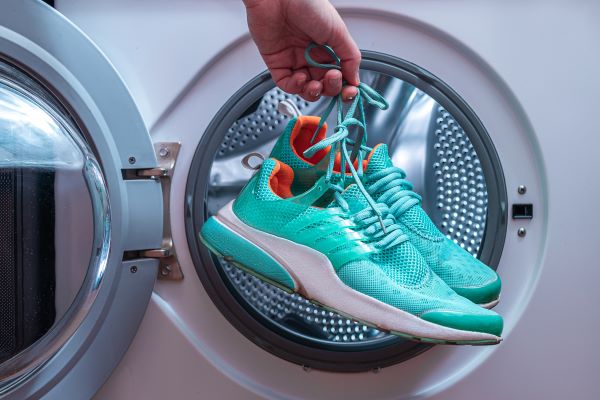
Some shoes, like canvas sneakers and athletic shoes, can be cleaned in a washing machine. But you need to do it carefully to avoid damage.
How To Machine Wash Shoes
- Remove laces and insoles: Wash them in a separate mesh bag.
- Use a laundry bag: Place shoes inside a pillowcase or laundry bag to reduce friction.
- Add towels: Wash with a few old towels to balance the load and prevent banging.
- Select gentle cycle: Use cold water and a mild detergent.
- Skip the dryer: Air dry only.
Key tip: Never put leather, suede, or shoes with glued decorations in the washing machine.
Common Mistakes To Avoid
- Using bleach (it weakens fibers and ruins color)
- Washing with hot water (can shrink or warp shoes)
- Overloading the washer (shoes need space to move)
Drying Shoes: Best Practices
Drying shoes correctly is as important as washing. The wrong method can lead to shrinking, cracking, or bad smells.
Air Drying
- Remove as much water as possible: Pat with a towel; don’t twist or wring.
- Stuff with paper: Insert crumpled paper towels or newspaper to hold shape and absorb moisture.
- Air dry in shade: Avoid direct sunlight, which can fade or warp shoes.
What To Avoid
- No dryers: Heat can damage glue and deform shoes.
- No radiators or fireplaces: Extreme heat risks shrinking and cracks.
Drying Time Comparison
Here’s an overview of average drying times for common shoe materials:
| Material | Approx. Drying Time | Best Drying Method |
|---|---|---|
| Canvas | 12–24 hours | Air dry, stuffed with paper |
| Leather | 24–48 hours | Air dry, away from heat |
| Mesh | 8–12 hours | Air dry, open area |
| Rubber | 4–8 hours | Wipe, air dry |
Practical tip: Replace damp paper every few hours for quicker drying.
Special Care For Leather, Suede, And Delicate Shoes
Leather Shoes
Leather needs gentle treatment. Use only a damp cloth and mild soap. After cleaning, apply a leather conditioner to keep the material soft. Never soak or scrub hard.
Suede Shoes
Suede is very sensitive to water. Use a suede brush to remove surface dirt. For stains, try a small amount of white vinegar on a cloth. Always let suede air dry and brush again when dry to restore the texture.
Dress Shoes And Designer Sneakers
Always check the manufacturer’s recommendations. For expensive or limited-edition shoes, professional cleaning is often safer.
Example: Brands like Nike and Adidas often include specific care guides for high-end sneakers. Following their advice can protect your investment.
Cleaning Insoles And Laces
Insoles and laces collect sweat, dirt, and bacteria. Cleaning them separately is essential for truly fresh shoes.
- Laces: Soak in soapy water, scrub gently, rinse, and air dry.
- Insoles: Wipe with a damp cloth and mild detergent. Don’t soak, as insoles can lose shape or develop mold. For strong odors, sprinkle baking soda and let sit before wiping.
Extra insight: Letting insoles dry completely before reinserting stops bacteria growth and odor.
Dealing With Odor And Disinfecting Shoes
Even after cleaning, shoes can smell. Here’s how to keep them fresh:
- Baking soda: Sprinkle inside and leave overnight, then shake out.
- Vinegar spray: Mix equal parts water and white vinegar. Lightly spray inside and air dry.
- Freezer method: Put shoes in a sealed bag, freeze overnight. The cold kills odor-causing bacteria.
For sports or gym shoes, consider shoe-specific sprays with antibacterial action. But avoid strong chemicals, which may damage materials or irritate skin.
Bonus tip: Let shoes air out between wears to reduce future odor.
Cleaning Different Types Of Shoes
Different shoes need different approaches. Here are some practical examples:
Canvas Sneakers
- Best for machine or hand washing.
- Use gentle detergent and cold water.
- Air dry, stuffed with paper to keep shape.
Running Shoes
- Remove excess mud with a brush before washing.
- Machine wash is usually safe, but check label.
- Don’t use fabric softener; it can damage padding.
Leather Dress Shoes
- Wipe with a damp cloth.
- Use leather cleaner and conditioner.
- Buff with a soft cloth for shine.
Suede Boots
- Brush dirt when dry.
- Spot clean stains with white vinegar.
- Avoid water, and let dry naturally.
Kids’ Shoes
- Machine washing is often fine for synthetic or canvas.
- Always check labels for lights or electronics.
White Shoes
- For tough stains, make a paste with baking soda and water. Scrub gently with a brush.
- Avoid bleach, which can yellow white fabrics over time.
Spot Cleaning: Quick Fixes For Everyday Stains
If you notice a mark or spill, act fast. The sooner you clean, the less likely the stain will set.
Steps:
- Blot the stain (don’t rub).
- Use a damp cloth with mild soap for most marks.
- For greasy stains, use a small amount of dish soap.
- Let air dry.
For stubborn stains on light fabrics, try a small amount of hydrogen peroxide. Test first on an inconspicuous area.

Cleaning Shoe Soles
Shoe soles pick up the most dirt, but they’re also the easiest part to clean.
- Use a brush or old toothbrush to scrub with soapy water.
- For white rubber soles, a magic eraser works well on scuffs.
- Rinse and dry fully before wearing.
Safety tip: Make sure soles are fully dry before use to avoid slips.
Shoe Care After Washing: Protecting Your Investment
Clean shoes last longer with a little extra care.
- Waterproofing spray: Especially useful for canvas, suede, and leather.
- Polish leather: Keeps shoes looking new and prevents cracks.
- Rotate pairs: Don’t wear the same shoes every day; let them air out between wears.
- Use shoe trees: Helps keep shape, especially for leather shoes.
- Store in dry, cool place: Avoid damp closets or leaving shoes in hot cars.
Common Myths About Washing Shoes
Many people believe shoes can’t go in the washing machine or that water always ruins leather. In reality, most shoes can be washed safely with the right approach. Some machine cycles are gentler than hand scrubbing, and air drying is almost always better than using heat.
Another myth: Bleach is the best way to make shoes white again. In fact, bleach can weaken fibers, cause yellowing, and ruin glue. Mild soap and baking soda work better in most cases.
When To Seek Professional Help
Some shoes are too valuable or delicate to risk home washing. If your shoes are expensive, vintage, or made from special materials, consider a professional cleaner. They have the right tools and knowledge to handle challenging stains or repairs.
Example: Professional cobblers can restore leather shine, repair soles, or clean suede without damage.
Eco-friendly Shoe Cleaning
Caring for your shoes doesn’t have to harm the environment.
- Choose biodegradable soaps and avoid harsh chemicals.
- Reuse towels and cleaning cloths.
- Air dry instead of using energy-hungry dryers.
- Donate or recycle old shoes instead of tossing them.
Fact: According to the EPA, Americans throw away over 300 million pairs of shoes each year. Extending shoe life by cleaning helps reduce landfill waste.
Troubleshooting: What To Do If Something Goes Wrong
Even with care, mistakes can happen. Here’s how to fix common problems:
- Shoes shrunk or warped: Stuff tightly with paper and let air dry. Sometimes shape returns as they dry.
- Colors faded: Use fabric dye or special color restorer for canvas or leather.
- Moldy smell after washing: Wipe with vinegar, dry in sunlight, and sprinkle baking soda inside.
- Stiffness after drying: Bend shoes gently, or use a little conditioner on leather to soften.
Shoe Cleaning Products: What Works Best?
With so many products available, it’s easy to get confused. Here’s a quick comparison of popular options:
| Product | Best For | Pros | Cons |
|---|---|---|---|
| Mild detergent | Most fabrics | Gentle, cheap | May not remove tough stains |
| Shoe cleaner spray | All materials | Easy to use | Can be expensive |
| Baking soda | Odor, whitening | Natural, safe | Needs time to work |
| Magic eraser | Rubber soles | Removes scuffs | Wears down quickly |
| Leather conditioner | Leather shoes | Prevents drying | Not for other materials |
Tip: You don’t need fancy products. For most shoes, mild soap, water, and a brush are enough.
Frequently Asked Questions
How Often Should I Wash My Shoes?
It depends on use and material. Athletic shoes may need cleaning every 2–4 weeks. Casual shoes need it less often. Clean shoes when they look dirty or start to smell.
Can I Put My Shoes In The Dryer?
No, using a dryer can shrink, warp, or damage shoes. Always air dry, away from direct heat or sunlight.
What’s The Best Way To Get Rid Of Shoe Odor?
Sprinkle baking soda inside, let sit overnight, and shake out. For strong odors, try a vinegar spray or use odor-fighting insoles.
Is It Safe To Use Bleach On White Shoes?
Bleach can damage fabric, cause yellow stains, and weaken glue. Use mild soap and baking soda for safer cleaning.
Where Can I Find More Information About Shoe Care?
For more shoe cleaning tips and care guides, check out the Nike official shoe cleaning guide.
Cleaning your shoes doesn’t have to be difficult or risky. With the right methods and a little care, you can keep every pair looking fresh, feeling comfortable, and lasting longer. Remember, the best approach always depends on your shoe’s material and construction.
Take time to read labels, use gentle products, and let shoes dry naturally. Good shoe care is a simple way to save money and reduce waste—while always stepping out in style.
:max_bytes(150000):strip_icc()/SPR-how-to-wash-sneakers-7372298-part-01-step-03-18e135c312d8446daf3ea440c1187ecc.jpg)

