

Can Massage Guns Be Used On The Neck?
Neck pain is one of the most common complaints for people today. Many people spend hours looking down at phones, working at desks, or carrying stress in their shoulders. Because of this, muscle tension and stiffness in the neck are everyday problems. With the rise of massage guns—those powerful, handheld devices that claim to relieve muscle pain—people naturally wonder if these tools can help with neck discomfort. But is using a massage gun on your neck safe, or could it cause harm?
If you’ve ever thought about using a massage gun for neck pain, you’re not alone. These devices are everywhere: in gyms, physical therapy clinics, and even homes. They promise quick relief for tired muscles. But the neck is different from the rest of the body. It has delicate structures like blood vessels, nerves, and the spinal cord. So, before you reach for your massage gun, it’s important to understand the facts, risks, and safe practices.

36% off Today’s Exclusive Deals
Limited-time Exclusive Deals. Check current discount on Amazon.
Check Price on Amazon As an Amazon Associate I earn from qualifying purchases.This article looks deeply at whether massage guns can be used on the neck, how to do it safely, and what to avoid. You’ll also learn about alternatives and expert advice. Let’s clear up the confusion and help you make the best choices for your neck health.
Understanding Massage Guns
Massage guns, also called percussion massagers, use rapid, repetitive pressure to target muscle tissue. Most massage guns have a motor that moves an attachment back and forth quickly—sometimes up to 3,200 times per minute. The idea is to deliver percussive therapy, which can:
- Increase blood flow
- Reduce muscle soreness
- Improve flexibility
- Speed up recovery
Many athletes and people with muscle tension use them for legs, arms, and backs. The main selling point is that you can get a deep tissue massage at home, without a professional. Some popular brands include Theragun, Hypervolt, and Ekrin.
However, not all body parts are equal when it comes to massage gun use. The neck, in particular, requires extra care due to its sensitive anatomy.
Anatomy Of The Neck: Why It’s Special
The neck, or cervical region, supports the head and allows movement in many directions. It contains:
- Seven cervical vertebrae (C1–C7)
- The spinal cord
- Major blood vessels (like the carotid artery and jugular vein)
- Many nerves
- Muscles, ligaments, and tendons
The skin and muscles over the neck are thinner than in the back or thighs. Just below the surface are structures vital for life and movement. For example, the carotid arteries supply blood to the brain. Sudden pressure or trauma to this area can be dangerous.
This means that aggressive use of a massage gun on the neck carries more risk than other areas.
Benefits Of Using Massage Guns On The Neck
If used carefully and correctly, massage guns may offer some benefits for neck tension:
- Relief from muscle tightness: Gentle percussion can help loosen stiff muscles.
- Reduced tension headaches: Relaxing the neck and shoulder muscles can sometimes lessen headaches caused by muscle tension.
- Improved blood flow: Mild stimulation may increase circulation, which helps healing.
- Enhanced range of motion: By reducing tightness, people may find it easier to turn or tilt their heads.
It’s important to note that these benefits depend on using the massage gun properly. Overuse or incorrect use can quickly turn benefits into risks.
Dangers And Risks Of Using Massage Guns On The Neck
For many people, the risks of using a massage gun on the neck are not obvious. But this area is highly vulnerable. Here’s why:
1. Risk Of Blood Vessel Injury
The carotid artery and vertebral arteries run close to the surface on both sides of the neck. Strong pressure or percussion could damage these arteries, leading to:
- Bruising
- Blood clots
- Stroke (if a clot travels to the brain)
Even gentle pressure can be dangerous if applied for too long or in the wrong spot.
2. Nerve Damage
Many important nerves, such as the vagus nerve and cervical plexus, pass through the neck. These control things like swallowing, heart rate, and arm movement. Misuse of a massage gun could irritate or injure these nerves, causing:
- Numbness or tingling
- Weakness
- Pain that spreads to the arms
3. Damage To The Spinal Cord
The spinal cord is protected by bone, but the neck’s vertebrae are smaller and more fragile than in the back. Too much vibration or pressure can cause injury, especially for people with herniated discs or spinal stenosis.
4. Aggravation Of Existing Problems
People with conditions like arthritis, osteoporosis, or previous neck injuries are at higher risk. Massage guns can make symptoms worse in these cases.
5. Other Possible Side Effects
Some users have reported:
- Dizziness or lightheadedness
- Headaches
- Skin irritation or bruising
These effects may seem minor but can be signs of deeper injury.
When Is It Safe To Use A Massage Gun On The Neck?
Despite the risks, careful use in some situations may be safe. Here are the key rules:
1. Avoid The Front And Sides Of The Neck
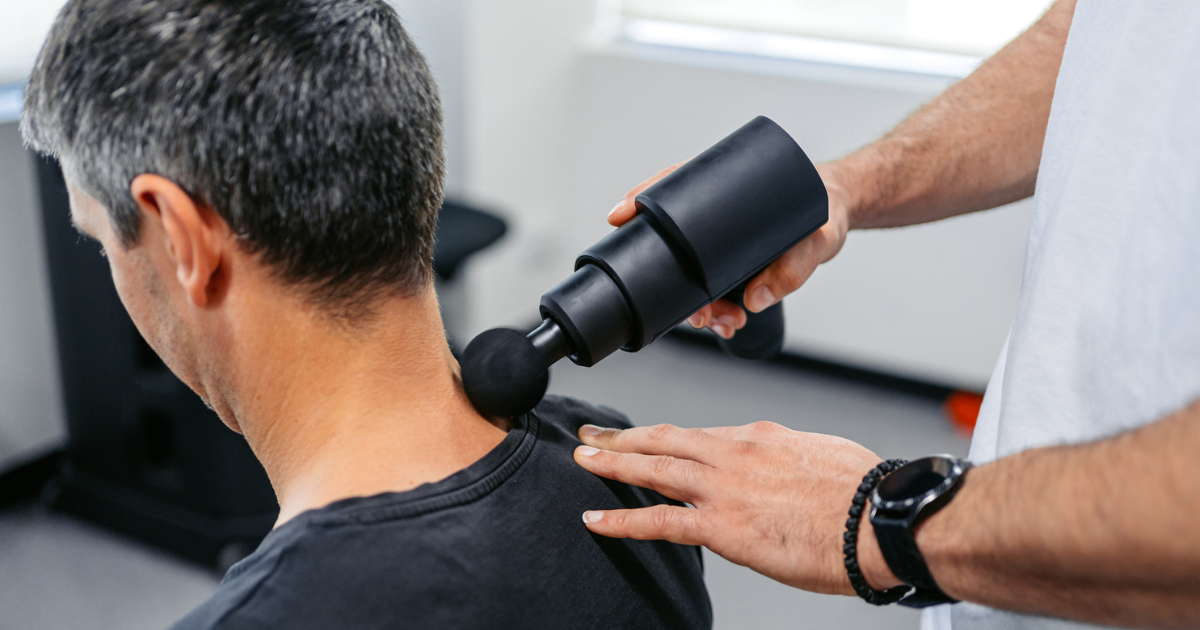
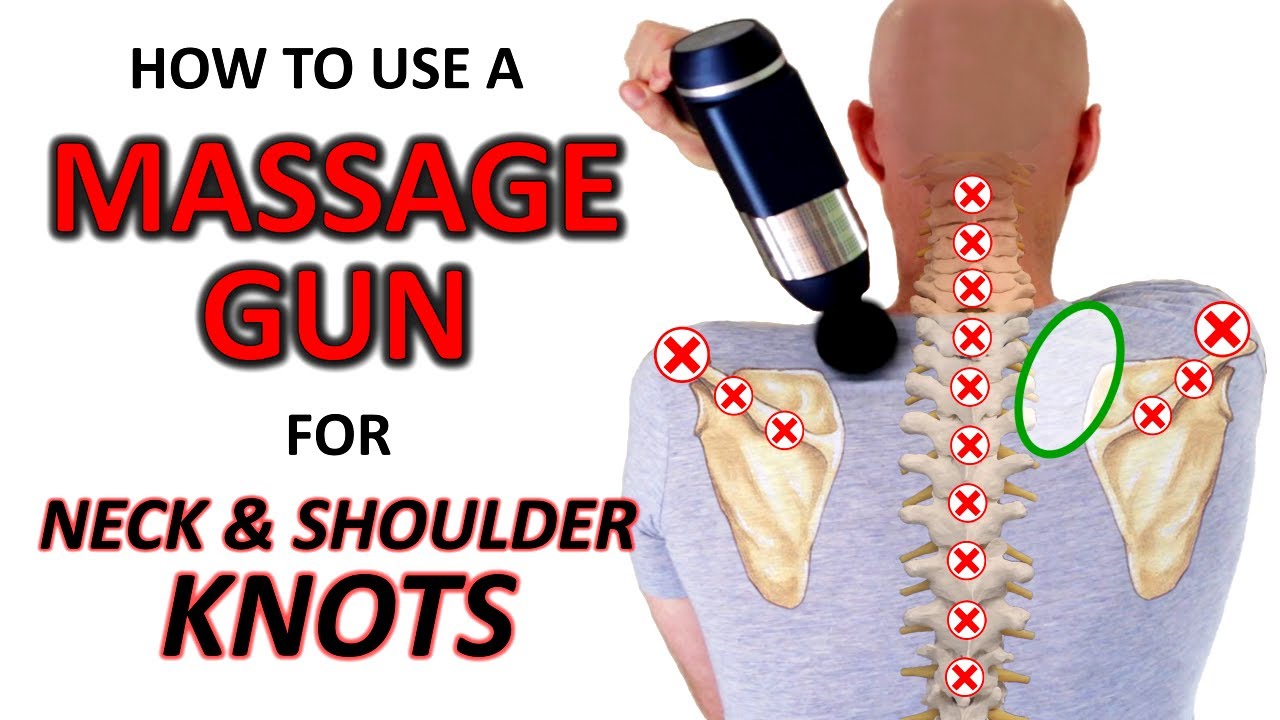
Never use a massage gun over the throat, carotid artery, or jugular vein (the front and sides of the neck). This is where the most important blood vessels and nerves are located. Stick to the upper trapezius muscle—the area between the base of your skull and the top of your shoulders.
2. Use The Lowest Speed And Softest Attachment
Most massage guns come with different attachments. For the neck, always use the softest head—usually a foam ball. Start at the lowest speed setting.
3. Limit The Duration
Keep sessions very short. Do not use the massage gun on your neck for more than 10–15 seconds at a time, and avoid repeated sessions in a short period.
4. Stay Away From The Spine
Do not use the device directly over the bones of your neck. Focus on the muscles above the shoulders, not the cervical spine itself.
5. Check For Pain Or Discomfort
If you feel pain, tingling, dizziness, or any discomfort, stop immediately. These can be signs of nerve or blood vessel irritation.
6. Ask A Professional First
If you have any neck injury, herniated disc, arthritis, or medical conditions, talk to a doctor or physical therapist before using a massage gun.
How To Use A Massage Gun On The Neck (step By Step)
If you decide to try a massage gun on your neck, follow these careful steps:
- Choose the right attachment: Use the softest head (usually a ball).
- Set the speed: Begin with the lowest possible setting.
- Target the right area: Only use the gun on the upper trapezius muscle—never the front or sides of the neck.
- Hold the device lightly: Do not press down. Let the gun’s own weight do the work.
- Move slowly: Glide the gun gently over the muscle for 10–15 seconds.
- Stop and check: Pay attention to how you feel. Stop if you notice pain, dizziness, or numbness.
- Repeat if needed: Only after a break, and never more than 2–3 times per session.
Example: Safe Massage Gun Use For Neck Tension
Let’s say you have tension at the base of your skull after a long day at work. You could:
- Sit upright in a chair with good support.
- Turn the massage gun on to the lowest setting.
- Gently glide the soft ball attachment over the muscles at the top of your shoulders, just below the neck.
- Spend no more than 15 seconds in each area.
- Stop if you feel any discomfort.
This approach can help ease tightness without putting your neck at risk.
Areas To Avoid With A Massage Gun
It’s important to know where not to use a massage gun. Here’s a quick summary:
| Body Area | Safe to Use? | Reason |
|---|---|---|
| Front of Neck (Throat) | No | Blood vessels and nerves are exposed |
| Sides of Neck | No | Carotid artery and jugular vein risk |
| Cervical Spine (bones in neck) | No | Protects spinal cord; can be injured easily |
| Upper Trapezius (top of shoulders) | Yes, with caution | Thicker muscle; less risk |
Comparing Massage Guns To Other Neck Pain Relief Methods
How do massage guns stack up against other methods? Here’s a comparison:
| Method | Effectiveness | Safety | Ease of Use |
|---|---|---|---|
| Massage Gun | Moderate (if used correctly) | Medium risk (needs caution) | Easy, but must learn proper technique |
| Manual Massage | High (especially by professionals) | Low risk | Easy, but may need help |
| Heat Therapy | Moderate | Very low risk | Very easy |
| Stretching Exercises | High (with regular use) | Low risk | Easy (with instruction) |
| Pain Medication | Temporary relief | Possible side effects | Easy |
As you can see, massage guns can help, but they are not always the best or safest first choice for neck pain.
Common Mistakes People Make With Massage Guns On The Neck
New users often make errors that can lead to problems. Here are some mistakes to avoid:
- Using high speed or hard attachments: This can cause bruising or deep tissue damage.
- Placing the gun over arteries or the spine: Increases the risk of serious injury.
- Applying too much pressure: Light contact is enough; pushing hard does not help.
- Using for too long: Overuse can irritate nerves and muscles.
- Ignoring warning signs: Pain, tingling, or dizziness are signs to stop immediately.
- Not consulting a professional: If you have a medical condition or history of neck injury, always check with a doctor first.
Who Should Not Use Massage Guns On The Neck?
Some people should avoid massage guns on the neck completely. This includes anyone with:
- A history of stroke
- Blood clotting disorders
- Aneurysms
- Previous neck injuries or surgeries
- Spinal cord problems
- Severe osteoporosis
- Pacemakers or other medical devices in the chest/neck area
For these groups, the risk is simply too high.
Alternatives To Massage Guns For Neck Pain
If you’re unsure about using a massage gun, there are other safe and effective ways to relieve neck tension:
1. Manual Self-massage
Using your hands, gently rub the neck and shoulder muscles. This gives you better control over the pressure and area.
2. Heat Therapy
A warm towel or heating pad on the neck can relax muscles and improve blood flow. Apply heat for 15–20 minutes at a time.
3. Stretching Exercises
Gentle stretches, such as tilting the head side to side or rolling the shoulders, help keep the neck flexible. Hold each stretch for 15–30 seconds.
4. Physical Therapy
A physical therapist can teach specific exercises and manual techniques tailored to your needs.
5. Foam Rollers Or Massage Balls
These tools can help release tension in the upper back and shoulders, which often contribute to neck pain.
6. Professional Massage
A certified massage therapist knows how to safely work on the neck and surrounding muscles.
Expert Opinions And Research
Most health professionals recommend great caution with massage guns on the neck. According to the American Physical Therapy Association, the neck is a “no-go” zone for most percussion devices, especially for untrained users.
A 2021 review published in the Journal of Clinical Medicine found that while percussive therapy can reduce muscle pain, the risks in the neck area outweigh the benefits for many people. The review stressed the importance of:
- Professional guidance
- Using the lowest possible settings
- Avoiding sensitive structures
Some manufacturers, like Therabody (makers of Theragun), state clearly in their manuals: “Do not use on the front of the neck or over the carotid artery.”
For more information, see this research review on percussive therapy safety.
Non-obvious Insights For Beginners
- Muscle tension in the neck often comes from the upper back and shoulders. Working on these areas can help neck pain without touching the neck itself.
- The feeling of ‘tightness’ is sometimes caused by weak muscles, not just stiff ones. Strengthening exercises can help long-term.
- Hydration matters. Dehydrated muscles are more likely to cramp and feel sore after using a massage gun.
- Massage guns do not ‘break up knots’. They improve blood flow and help muscles relax, but cannot dissolve scar tissue or fix serious injuries.
Frequently Asked Questions
:max_bytes(150000):strip_icc()/Health-GettyImages-1348229358-5226caa9421b4ed99843dc2c5a7d1543.jpg)
What Happens If I Use A Massage Gun On The Front Of My Neck?
Using a massage gun on the front of your neck can be very dangerous. This area contains the carotid arteries and important nerves. Pressure here can cause bruising, blood clots, or even trigger a stroke. Always avoid the front and sides of your neck.
Can I Use A Massage Gun For Tension Headaches?
A massage gun should not be used directly on the neck or head to treat headaches. However, gentle use on the upper back and shoulders may help if your headaches are caused by muscle tension. If you have frequent headaches, talk to a healthcare professional.
How Often Can I Use A Massage Gun On My Neck?
If cleared by a doctor, limit use to once per day, for no more than 10–15 seconds per area. Overuse increases the risk of injury. Most people do not need daily use—2–3 times per week is enough.
Are Massage Guns Safe For Everyone?
No. People with blood clotting problems, neck injuries, or cardiovascular issues should avoid massage guns on the neck. When in doubt, always ask a healthcare provider before use.
What Should I Do If I Feel Pain, Tingling, Or Dizziness While Using A Massage Gun?
Stop immediately. These symptoms can signal nerve or blood vessel irritation. If symptoms do not go away quickly, seek medical advice. Do not continue using the massage gun until you know it is safe.
Taking care of your neck is important for your overall health. Massage guns can be a helpful tool for muscle relaxation, but the neck is a sensitive area that needs special attention. When in doubt, choose safer options or consult a professional. Always listen to your body and act with caution. If you want more in-depth medical information, check out this Mayo Clinic overview on neck pain. Your neck supports your entire head—treat it with the care it deserves.

