

Many people have seen videos of athletes sitting in ice baths after intense workouts. They might notice the metal or plastic tubs filled with cold water and ice. But if you’re thinking of setting up an ice bath at home, you might wonder: Do ice bath tubs require electricity? The answer is not as simple as you might think. There are many types of ice bath tubs, and each works differently. Some need electricity, while others do not. Understanding this can help you make a better decision for your health, budget, and space.
The world of ice baths is bigger than most beginners expect. You will find everything from basic barrels to high-tech tubs with cooling systems. Many people buy the wrong product and regret it later, often because they didn’t understand these differences.

36% off Today’s Exclusive Deals
Limited-time Exclusive Deals. Check current discount on Amazon.
Check Price on Amazon As an Amazon Associate I earn from qualifying purchases.In this article, you’ll learn how ice bath tubs work, when you need electricity, and what to consider before you buy. You’ll also discover hidden costs and practical tips that most first-time buyers miss.
What Is An Ice Bath Tub?
An ice bath tub is a container designed for full-body or partial-body cold water immersion. The main goal is to reduce muscle soreness, speed up recovery, or help with inflammation. While the idea is simple—sit in cold water—how you create and maintain that cold water can vary.
Some ice bath tubs are just large, insulated containers that you fill with water and ice. Others have built-in chillers, filters, and even massage jets. The type of tub you choose affects whether you’ll need electricity.
Types Of Ice Bath Tubs
There are three main types of ice bath tubs:
- Manual ice bath tubs
- Plug-in (electric) ice bath tubs
- Hybrid or advanced models
Each one works differently and comes with its own pros and cons.
Manual Ice Bath Tubs: No Electricity Needed
The simplest form of an ice bath tub is a manual version. These are just containers you fill with water and ice. They don’t have any pumps, chillers, or heaters.
Common Examples
- Large plastic barrels
- Portable foldable tubs
- Galvanized steel tanks
- Standard bathtubs
How They Work
You fill the tub with water, then add bags of ice until the temperature drops to your desired level, usually between 10°C to 15°C (50°F to 59°F). That’s it—no plugs, no wires, just manual labor.
Benefits
- No electricity required
- Lower cost (usually $50–$300)
- Easy to set up and move
- No risk of electrical hazards
Drawbacks
- You need to buy or make ice every time
- Water warms up quickly, especially in hot weather
- Hard to control and maintain exact temperature
- Draining and cleaning can be messy
Who Should Choose Manual Tubs?
Manual tubs are good for people who:
- Only want to use ice baths occasionally
- Have a small budget
- Don’t mind the work of adding ice
- Don’t have access to outdoor power
A Real-life Example
Sarah, a runner, uses a large plastic barrel in her backyard. She buys ice from a local gas station after long runs. She says it’s cheap, but sometimes she wishes the water stayed cold longer, especially in summer.
Plug-in Ice Bath Tubs: Electricity Required
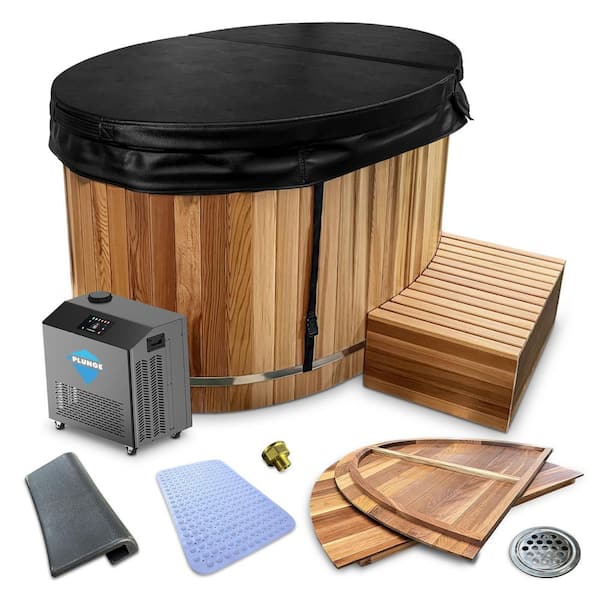
Plug-in ice bath tubs are a step up in convenience and technology. These tubs have built-in chillers or refrigeration units that cool the water automatically. You set the desired temperature, and the machine does the rest.
How Electric Ice Bath Tubs Work
These tubs use electric-powered chillers, similar to the cooling system in a home air conditioner or refrigerator. The chiller pulls heat from the water and releases it outside the tub, keeping the water cold for hours or even days.
Key Features
- Digital temperature controls
- Built-in filtration systems
- Often include ozone or UV sanitation
- Some have jets for gentle massage
Benefits
- Set and forget: Maintain cold water with no effort
- Exact temperature control (sometimes down to 1°C/34°F)
- No need to buy ice
- Clean and filtered water
Drawbacks
- Require electricity to run
- High upfront cost ($1,200–$5,000+)
- Can be heavy and hard to move
- Need access to a reliable power source
- Higher maintenance
Typical Power Usage
Most electric ice bath chillers use between 250 to 800 watts per hour, depending on their size and efficiency. If you run the chiller for 4 hours a day at 500 watts, it will use about 2 kilowatt-hours (kWh). With electricity prices in the US averaging $0.
16 per kWh, that’s about $0. 32/day or $9. 60/month.
Who Should Choose Plug-in Tubs?
Electric tubs are best for people who:
- Use ice baths often (3+ times per week)
- Want consistent cold temperatures
- Dislike buying or making ice
- Have space and a safe outdoor power outlet
A Real-life Example
Mark, a CrossFit coach, uses a plug-in ice bath in his home gym. He likes that the water is always ready and clean. He pays more upfront but saves time and avoids buying ice. He checks the chiller every month for filter cleaning.
Comparing Manual Vs. Electric Tubs
Here’s a quick comparison of the two main types.
| Feature | Manual Tub | Electric Tub |
|---|---|---|
| Electricity Needed | No | Yes |
| Upfront Cost | Low | High |
| Temperature Control | Manual (ice) | Digital/automatic |
| Convenience | Low | High |
| Water Quality | Needs frequent changing | Filtered & sanitized |
Hybrid And Advanced Ice Bath Tubs
Some tubs combine both worlds. They may have insulation, optional chillers, or solar-powered features. These models aim to save energy, water, and your time.
Hybrid Types
- Insulated tubs: These keep water cold longer with thick walls and lids, so you need less ice or electricity.
- Removable chillers: Some tubs let you add or remove a plug-in chiller, giving you flexibility.
- Solar-powered chillers: Still rare and expensive, but useful where electricity is limited.
Do Hybrids Require Electricity?
- If you use only the insulated tub with ice: No electricity needed
- If you attach a chiller unit: Electricity required
- With solar: May need sunlight and backup battery
Why People Choose Hybrids
- They want flexibility (sometimes manual, sometimes electric)
- Save money and energy
- Use in places with unreliable power
Real-world Insight
Not all hybrids are as efficient as they claim. Insulation helps, but in hot climates, even thick walls can’t keep water cold for long without extra ice or power.

What About Built-in Home Spa Tubs?
Some high-end home spa tubs include cold plunge settings. These are usually powered by the home’s electrical system and plumbing. They need professional installation and always require electricity.
Key Points
- Offer luxury features (lights, jets, automatic cleaning)
- Very expensive ($5,000–$15,000)
- Always need electricity and plumbing
- Not portable
Do All Ice Bath Tubs Require Electricity?
The short answer: No, not all ice bath tubs require electricity. Only those with built-in chillers or active cooling systems need power. Simple tubs, barrels, or DIY options do not. However, using electricity offers benefits in convenience and temperature control.
When You Don’t Need Electricity
- If you are okay adding ice manually
- If you use the tub only on special occasions
- If you want a low-cost solution
- If you will use the tub outdoors, away from outlets
When You Must Have Electricity
- If you want exact, stable cold temperatures
- If you use the tub daily or with multiple users
- If you dislike buying or making ice all the time
- If you want filtered, sanitized water
Example Of User Needs
A sports team with 20 athletes will have different needs than a single runner. Teams often use electric models for hygiene and ease, while solo users might be happy with a barrel and ice.
Common Mistakes When Choosing An Ice Bath Tub
First-time buyers often make costly mistakes. Here are the most common:
- Ignoring power requirements: Some people buy an electric tub but have no outdoor power outlet.
- Underestimating ice needs: Manual tubs can require 10–30 lbs (4.5–13.5 kg) of ice per use.
- Forgetting about water drainage: Where will you empty the tub? Not all tubs have easy drains.
- Overlooking maintenance: Plug-in tubs need filters cleaned and water checked for bacteria.
- Misjudging portability: Large electric tubs are heavy and hard to move.
- Not checking local weather: In hot climates, manual tubs warm up fast. In cold climates, water might freeze.
Pro Tip
If you plan to use your ice bath more than twice a week, the convenience of an electric model often outweighs the cost and setup.
Practical Considerations Before You Buy
Choosing between manual and electric comes down to your needs, habits, and budget.
Budget
- Manual tubs: $50–$300
- Electric tubs: $1,200–$5,000+
- Hybrid: $300–$2,500
Don’t forget to factor in the cost of ice or the extra electricity.
Space And Placement
- Electric tubs need a nearby outlet and must stay dry.
- Manual tubs can go anywhere, even camping.
- All tubs need a flat, stable surface.
Maintenance
Manual tubs are simple but need regular scrubbing. Electric tubs need filter changes and sometimes chemical balancing.
Frequency Of Use
- Occasional use: Manual is fine.
- Daily or group use: Electric is better.
Health And Safety
- Cold water can be dangerous if you have heart issues. Check with a doctor first.
- Never use electric tubs in wet, unsafe conditions.
Water Use And Environmental Impact
Electric tubs use the same water for weeks, saving water. Manual tubs are emptied after every use. Both use resources, but you can reduce waste with proper care.

How Much Electricity Do Ice Bath Tubs Use?
This is a question many people miss. Plug-in ice baths can use as little as 0. 2 kWh per hour (for efficient models) or as much as 1 kWh per hour for large units. Most run 2–6 hours per day, depending on climate and target temperature.
Sample Electricity Use (per Month)
| Chiller Power (Watts) | Hours/Day | Monthly kWh | Cost/Month (USD) |
|---|---|---|---|
| 250 | 3 | 22.5 | $3.60 |
| 500 | 4 | 60 | $9.60 |
| 800 | 6 | 144 | $23.04 |
*Assumes average US electricity price of $0. 16 per kWh. *
Two Non-obvious Insights
- Startup Surge: Chillers often use more power in the first hour when cooling warm water. After reaching the target temperature, they switch to low-power mode, so average use may be lower than you expect.
- Ambient Temperature Effect: In hot climates, chillers work harder and use more electricity. Placing your tub in a shaded or insulated spot can reduce costs.
How To Use An Ice Bath Without Electricity
If you don’t want to use electricity, you still have options.
Steps For A Manual Ice Bath
- Choose a strong, large container (barrel, tub, or steel tank).
- Fill with cold tap water.
- Add ice (about 1/3 the water volume for 10–15°C/50–59°F).
- Stir to mix water and ice.
- Check temperature with a waterproof thermometer.
- Enter carefully—limit sessions to 5–15 minutes.
- Empty and clean the tub after use.
Ways To Reduce Ice Use
- Use the tub early in the morning when air is cool.
- Place the tub in shade or cover it.
- Pre-chill water overnight if possible.
- Use insulated covers between uses.
Are There Alternatives To Plug-in Ice Bath Tubs?
If you want cold water immersion without the cost or energy use, consider these alternatives:
- Cold showers: Not as effective but easy and free.
- Natural bodies of water: Lakes, rivers, or even the sea.
- Portable cooling packs or ice blankets: For local cold therapy.
- Commercial cryotherapy centers: Quick but expensive per session.
Environmental Impact: Manual Vs. Electric
Many people forget about the environmental cost. Manual tubs use more water and single-use ice, while electric tubs use more power but less water over time. If you care about sustainability:
- Use filtered water and change less often in electric tubs.
- Use reusable ice packs in manual tubs.
- Power chillers with solar panels if possible.
Expert Recommendations
- If you’re new or on a tight budget, start with a manual tub.
- If you’re an athlete or need regular therapy, invest in a good electric model.
- Always check for safety certifications and real user reviews.
- Consider long-term running costs, not just the price tag.
Popular Brands And Models
Here are a few brands to help your research:
- The Cold Plunge: High-end electric tubs, reliable cooling.
- Renu Therapy: Well-insulated, both manual and plug-in models.
- Ice Barrel: Popular manual barrel, good for small spaces.
- Plunge Pro: Advanced filtration and temperature controls.
Always check the power requirements before buying, especially if you live outside North America.
Final Thoughts
So, do ice bath tubs require electricity? Only if you choose a model with a built-in chiller or active cooling system. Manual tubs—barrels, steel tanks, or simple bathtubs—do not. Your choice should depend on how often you use the tub, your budget, and how much convenience you want.
There are benefits and drawbacks to both, but knowing these details will help you make a decision that fits your lifestyle and goals.
For more on the science behind cold water therapy, see this Cryotherapy overview.
Frequently Asked Questions
Do Plug-in Ice Bath Tubs Need A Special Electrical Outlet?
Most electric ice bath tubs can use a standard 110V or 220V outlet, depending on your country. Some high-powered units may require a dedicated circuit or GFCI outlet for safety. Always check the manufacturer’s instructions before installation.
How Much Ice Do I Need For A Manual Ice Bath?
For a typical 100-gallon (380-liter) tub, you’ll need about 30–50 lbs (13–22 kg) of ice to reach 10–15°C (50–59°F) in warm weather. The amount will vary with starting water temperature and air temperature.
Can I Use My Regular Bathtub As An Ice Bath?
Yes, you can use a standard bathtub for cold immersion. Just fill it with cold water and add ice. Bathtubs are less insulated than dedicated ice bath tubs, so the water warms up faster.
Is It Safe To Use An Electric Ice Bath Outdoors?
It can be safe if the unit is rated for outdoor use and connected to a GFCI outlet. Always keep electrical connections dry and protected from rain. Follow all safety instructions to prevent shock or damage.
How Often Should I Change The Water In An Ice Bath Tub?
Manual tubs should be emptied and cleaned after every use. Electric tubs with filtration and sanitation can keep water clean for 1–4 weeks, depending on usage and local water quality. Always follow the cleaning guide from the manufacturer.

