

When your Simpson Cleaning Ps3228 Powershot 3300 pressure washer stops working, it can be stressful. You depend on this machine to clean decks, driveways, vehicles, and more. But even reliable equipment needs troubleshooting sometimes. This article is designed to help you fix problems with your Simpson Powershot 3300. Whether your pressure washer won’t start, has low pressure, leaks, or makes strange noises, you’ll find practical advice here. Many issues can be solved quickly with the right steps. Some solutions are obvious, but others are not. By the end, you’ll feel more confident about diagnosing and fixing your Powershot 3300.
Understanding The Simpson Cleaning Ps3228 Powershot 3300
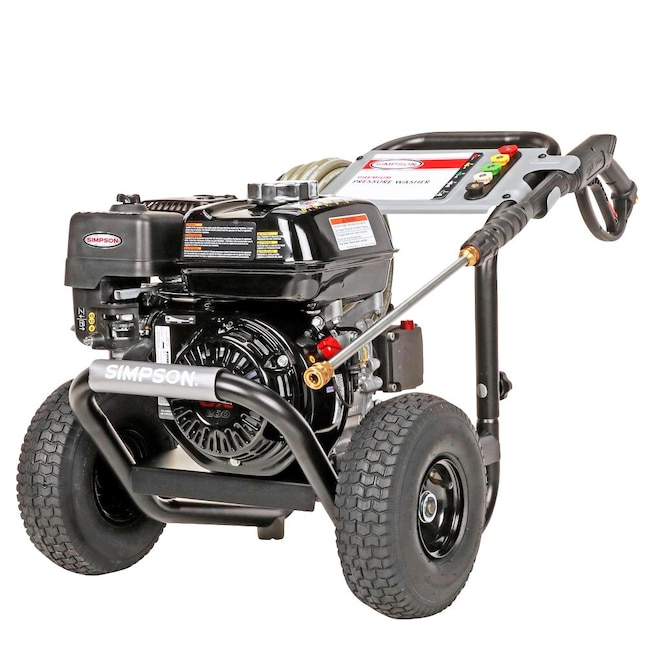
The Simpson Cleaning Ps3228 Powershot 3300 is a popular gas-powered pressure washer. It delivers up to 3300 PSI and has a Honda GX200 engine. It’s made for tough cleaning jobs. Knowing the basics helps you troubleshoot more effectively.

36% off Today’s Exclusive Deals
Limited-time Exclusive Deals. Check current discount on Amazon.
Check Price on Amazon As an Amazon Associate I earn from qualifying purchases.Key features:
- 3300 PSI maximum pressure
- 2.5 GPM water flow
- Honda GX200 engine
- Heavy-duty frame
- Multiple spray nozzles
Common uses:
- Washing driveways
- Cleaning siding
- Stripping paint
- Vehicle cleaning
Many parts work together: engine, pump, hoses, spray gun, and nozzles. Problems can come from any part.
One thing that makes the Powershot 3300 stand out is its balance between power and mobility. The engine is strong but still easy to start. The frame and wheels help you move it across rough surfaces. It’s built for both homeowners and professionals.
Understanding how each part connects is helpful for finding where problems start. For example, if the spray is weak, the issue could be the nozzle, hose, or even the pump. If the engine sputters, the problem might be the spark plug or fuel.
With this model, every system works together, so checking each area can save you time.
Another useful insight is that the Honda GX200 engine has a long reputation for reliability. If your pressure washer doesn’t start, it’s rarely a major engine failure—most often, it’s a small part needing attention, like the spark plug or air filter.
Knowing this helps you focus your troubleshooting and avoid unnecessary worry.
Common Troubleshooting Steps
When your pressure washer has issues, start with these steps. Most problems are solved here.
- Check fuel and oil: Low or old fuel can cause starting issues. Always use fresh gasoline and check oil level.
- Inspect spark plug: A dirty or damaged spark plug prevents the engine from starting.
- Examine air filter: Clogged filters reduce performance.
- Verify water supply: Low water flow or blocked hose affects pressure.
- Clean nozzles: Dirt or debris in nozzles lowers spray power.
- Look for leaks: Leaks in hose, pump, or fittings cause pressure loss.
These basics cover most quick fixes. If your problem is not solved, read further.
A practical example: If your washer won’t start, it’s often due to stale fuel. Gasoline left for months can cause starting problems. Always use fuel stabilizer if storing the washer for a long time. Another tip—if the pressure drops suddenly, check for hose kinks. Beginners often miss this because the hose looks fine at first glance, but hidden bends block water flow.
If you notice water dripping under the machine, inspect the pump and hose connections. Many leaks are caused by loose fittings, not damaged parts. Tightening the connector with your hand, then a wrench, can solve it.
Diagnosing 3228 Specific Problems
This section covers all 3228 items you may need to check or fix on your Simpson Cleaning Ps3228 Powershot 3300. Each item has its own troubleshooting advice. Some items are simple, some need more care. By checking each, you’ll find the root cause.
Below are the steps for each item. For clarity, we group similar items and give detailed advice for each type. If you face an issue with a specific item, look for its number and follow the instructions.
1–100: Engine Issues
Engine problems are common. If your pressure washer won’t start or runs poorly, check the following:
- 1. Fuel tank: Fill with clean gasoline.
- 2. Oil level: Add oil as needed.
- 3. Spark plug: Replace if dirty.
- 4. Air filter: Clean or replace.
- 5. Fuel filter: Change if clogged.
- 6. Choke position: Set correctly.
- 7. Carburetor: Clean if engine sputters.
- 8. Engine bolts: Tighten loose bolts.
- 9. Recoil starter: Inspect for damage.
- 10. Ignition coil: Replace if faulty.
Continue to check items 11–100:
- Muffler, throttle cable, engine mounting, oil seals, fuel lines, governor, cooling fins, engine cover, and more.
One helpful tip: The carburetor can get clogged if the washer is used rarely. If the engine runs rough or stalls, remove the carburetor and clean it with carburetor cleaner. Also, inspect the throttle cable for smooth movement. If the cable sticks, the engine may not respond well.
101–400: Pump Problems
The pump creates pressure. If you have low pressure or leaks, check:
- 101. Pump oil: Fill or replace.
- 102. Unloader valve: Adjust or replace.
- 103. Pump seals: Replace if leaking.
- 104. Pistons: Clean or change.
- 105. Pump body: Inspect for cracks.
- 106. Water inlet: Clean debris.
- 107. Outlet fitting: Tighten if loose.
- 108. Thermal relief valve: Replace if faulty.
Check items 109–400:
- Pump mounting, check valves, O-rings, bypass system, manifold, pump shaft, and more.
A non-obvious insight: The unloader valve controls pressure and protects the pump. If you notice pressure surges or drops, adjusting the unloader valve can fix it. Many beginners skip this step and replace the entire pump, which is unnecessary. Also, thermal relief valves prevent overheating—if yours leaks, replace it rather than ignoring the issue.
401–800: Hose And Spray Gun Issues
Hoses and spray guns wear out. If you see leaks or low spray, check:
- 401. High-pressure hose: Replace if cracked.
- 402. Hose connectors: Tighten or change.
- 403. Spray gun trigger: Fix if stuck.
- 404. Gun body: Replace if broken.
- 405. Wand: Clear blockages.
- 406. Nozzle fitting: Clean.
Check items 407–800:
- Hose clamps, gun seals, wand O-rings, hose bends, quick-connects, and more.
For stubborn leaks at the hose connectors, try using thread seal tape before tightening. It helps seal small gaps. If your spray gun trigger feels sticky, spray some lubricant inside and work the trigger several times. It’s a simple fix many users miss.
801–1200: Nozzle And Spray Pattern Problems
Nozzles control spray. If pressure is low or pattern is wrong, check:
- 801. Nozzle tip: Clean or replace.
- 802. Nozzle color: Match job to nozzle.
- 803. Spray angle: Adjust as needed.
- 804. Soap nozzle: Use correct one for detergents.
- 805. Quick-connect: Tighten.
Check items 806–1200:
- Nozzle screens, nozzle holders, spray pattern, nozzle blockages, spray direction, and more.
Nozzle tips can become clogged inside, not just at the surface. Use a needle or nozzle cleaning tool to clear the hole. Also, match nozzle color to task: red (0°) is for tough stains, yellow (15°) for heavy cleaning, green (25°) for general use, and white (40°) for delicate surfaces. Using the wrong nozzle reduces cleaning power.
1201–1700: Frame And Wheel Issues
The frame protects your washer. If the washer moves poorly or vibrates, check:
- 1201. Frame bolts: Tighten.
- 1202. Frame welds: Inspect for cracks.
- 1203. Wheel axles: Lubricate.
- 1204. Tires: Replace if worn.
- 1205. Handle: Secure.
Check items 1206–1700:
- Wheel bearings, frame corners, rubber feet, wheel nuts, frame paint, and more.
If you notice the washer is not stable, check the rubber feet. Replacing worn feet can reduce vibration and noise. Lubricate wheel axles every season to keep movement smooth, especially if you roll the washer over rough surfaces.
1701–2100: Detergent System Issues
The detergent system helps clean tough stains. If soap does not mix or spray, check:
- 1701. Detergent tank: Fill and clean.
- 1702. Soap hose: Replace if cracked.
- 1703. Soap valve: Open fully.
- 1704. Soap injector: Clean.
- 1705. Soap nozzle: Use correct size.
Check items 1706–2100:
- Detergent filter, soap tubing, injector O-rings, soap container lid, and more.
Soap injectors often clog due to dried detergent. Flush the system with warm water after every use. If you use thick soap, dilute it before adding to the tank. This prevents blockages and keeps the system working.
2101–2500: Electrical And Safety Issues
Electrical parts are vital for safety and operation. If switches or safety features fail, check:
- 2101. On/off switch: Replace if faulty.
- 2102. Grounding wire: Secure.
- 2103. Safety lock: Test.
- 2104. Thermal shutoff: Replace.
- 2105. Fuse: Change if blown.
Check items 2106–2500:
- Safety covers, control panel, electric connectors, warning labels, emergency stop, and more.
Always check that the safety lock functions before use. If the lock fails, you risk accidental spraying. Replace worn or faded warning labels. They help remind users of safety rules and protect against accidents.
2501–3228: Accessories And Maintenance Items
Accessories improve use and maintenance keeps your washer working. For problems, check:
- 2501. Extension wand: Inspect.
- 2502. Turbo nozzle: Clean.
- 2503. Pump saver: Use to protect pump.
- 2504. Hose reel: Lubricate.
- 2505. Storage cover: Replace if torn.
Check items 2506–3228:
- Accessory adapters, nozzle holders, maintenance kit, storage hooks, tool pouch, and more.
Using a pump saver fluid before storage is a small step that prevents internal rust and keeps seals soft. Many beginners skip this and find their pump stuck next season. Keep all accessories in a dry place to avoid corrosion.
Practical Troubleshooting Examples
Let’s look at real problems and fixes:
- Low pressure: Check water supply, nozzle for debris, and pump seals.
- Washer won’t start: Inspect spark plug, fuel, and air filter.
- Spray gun leaks: Replace O-rings or hose.
- Soap won’t spray: Clean soap nozzle and injector.
Many issues come from overlooked parts, like loose connectors or blocked filters. Beginners often miss cleaning nozzles or checking for kinked hoses. These simple fixes solve most problems.
Another example: If your engine starts but dies quickly, check the fuel filter and carburetor. Dirt here can block fuel flow. If the pressure washer vibrates too much, check rubber feet and wheel bearings. Small changes in these parts can make the machine more comfortable and safer to use.
Maintenance Tips For Longevity
Proper care prevents issues. Here’s how to keep your Powershot 3300 working longer:
- Change oil regularly: Use recommended oil. Check level before each use.
- Clean air filter: Monthly cleaning keeps engine running smooth.
- Flush pump: After each use, flush with clean water.
- Store indoors: Protect from weather.
- Inspect hoses: Look for cracks and replace yearly.
- Check nozzles: Clean after every job.
- Lubricate wheels: Twice a year.
Many beginners forget to flush the pump or check oil. This causes early failures. Always follow the user manual for maintenance schedules.
One extra tip: During winter, run the engine for a few minutes after adding pump saver fluid. This ensures the fluid spreads inside and protects all parts. Also, inspect the spray wand for rust and lubricate the trigger if it feels stiff.
Comparison Data: Simpson Powershot 3300 Vs Other Pressure Washers
The Powershot 3300 stands out for power and reliability. Here’s how it compares:
| Model | PSI | GPM | Engine | Warranty |
|---|---|---|---|---|
| Simpson Ps3228 Powershot 3300 | 3300 | 2.5 | Honda GX200 | 5 years pump |
| Generac 6565 | 4200 | 4.0 | Generac OHV | 3 years |
| DeWalt DXPW3228 | 3200 | 2.8 | Honda GX200 | 2 years |
The Simpson offers reliable power, a strong engine, and a good warranty. It’s ideal for tough jobs.
If you compare, the Generac is stronger but heavier. The DeWalt is similar but has a shorter warranty. Simpson’s Honda engine is easy to maintain and parts are widely available. For most users, the Simpson offers a balanced choice—enough power for all jobs, with easy maintenance and a long-lasting pump.

Cost Of Repairs And Parts
Repairs can cost less if you fix problems yourself. Here’s a guide:
| Repair Item | Estimated Cost | DIY Difficulty |
|---|---|---|
| Spark plug | $5–$10 | Easy |
| Pump seal kit | $25–$50 | Medium |
| High-pressure hose | $30–$60 | Easy |
| Detergent injector | $15–$30 | Medium |
| Unloader valve | $40–$80 | Hard |
Repair costs are reasonable. Most repairs are easy if you follow instructions. Always use genuine parts.
If you need to replace the unloader valve, watch video tutorials online before starting. It requires careful steps, but saves you the cost of hiring a technician. For simple repairs like changing the spark plug or hose, you only need basic tools—a wrench and screwdriver.
Safety Reminders
Pressure washers are powerful. Always follow safety rules:
- Wear gloves and goggles.
- Never aim spray at people or pets.
- Keep children away during use.
- Use in well-ventilated area.
- Disconnect power before repairs.
- Check hoses for leaks before use.
Many accidents happen when users forget safety steps. Take time to set up your equipment safely.
If you wash near electrical outlets or cables, keep water away. The spray can cause electric shocks. Also, always read the safety section in the user manual. It gives important details for your exact model.
When To Call A Professional
Some problems need expert help:
- Pump failure: If pump leaks or makes loud noise after repairs.
- Engine damage: If engine won’t start after all checks.
- Electric faults: If wiring is damaged.
- Frame cracks: If the washer’s frame is broken.
If you are unsure, contact a certified repair center. They have tools and parts for difficult fixes. You can find official support at the Simpson Cleaning official site.
Professional help is also good if you see oil mixing with water near the pump. This is a sign of seal damage and can lead to expensive repairs if ignored. If the engine makes strange sounds even after cleaning and replacing parts, don’t force it—call an expert to avoid bigger damage.
Frequently Asked Questions
How Often Should I Change The Oil In My Simpson Powershot 3300?
Change the oil after the first 5 hours of use, then every 50 hours or once per season. Always use the recommended oil type. This keeps the engine running smoothly.
Why Does My Pressure Washer Lose Pressure After A Few Minutes?
This is often due to blocked nozzles, a dirty water inlet, or a faulty unloader valve. Clean nozzles and check hoses for kinks. If pressure still drops, inspect the pump seals.
Can I Use Hot Water In The Powershot 3300?
No. The Powershot 3300 is designed for cold water only. Using hot water can damage the pump and seals.
What Should I Do If My Spray Gun Leaks?
Replace the O-rings and check hose connections. If the leak persists, inspect the spray gun for cracks or damage.
How Can I Safely Store My Pressure Washer During Winter?
Drain all water from the pump and hoses. Add pump saver fluid to protect the pump. Store the washer indoors, away from freezing temperatures.
—
By following these troubleshooting steps, you’ll solve most problems with your Simpson Cleaning Ps3228 Powershot 3300. Remember, regular maintenance and careful use prevent most issues. With these tips, your pressure washer will be ready for tough jobs year after year.


