

If you own a Westinghouse WPX3400 gas pressure washer, you know how powerful and reliable it can be for cleaning driveways, decks, and more. But like any machine, it can sometimes act up or stop working as expected. When your pressure washer has problems, it can slow down your work and cause frustration. Learning how to troubleshoot common issues is essential for getting back on track quickly.
This guide will help you understand the most frequent problems with the Westinghouse WPX3400, why they happen, and how you can fix them. Whether your washer won’t start, has low pressure, leaks water, or just doesn’t run smoothly, you’ll find step-by-step solutions here.

36% off Today’s Exclusive Deals
Limited-time Exclusive Deals. Check current discount on Amazon.
Check Price on Amazon As an Amazon Associate I earn from qualifying purchases.You’ll also discover helpful tips that many new users miss and learn when it’s time to call a professional.
Understanding The Westinghouse Wpx3400
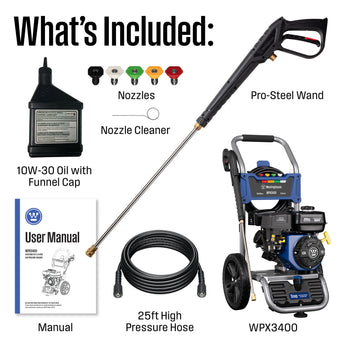
Before starting troubleshooting, it’s important to know what makes the WPX3400 unique. This gas-powered pressure washer delivers up to 3400 PSI (pounds per square inch) and 2.6 GPM (gallons per minute) of water flow. It’s designed for heavy-duty cleaning jobs and has a strong four-stroke engine. The unit uses an axial cam pump (which needs less maintenance than triplex pumps) and comes with five quick-connect nozzles.
Understanding these details helps you follow the troubleshooting steps better and know which parts might be involved when something goes wrong.
Basic Safety Before Troubleshooting
Always keep safety in mind:
- Turn off the engine and disconnect the spark plug before inspecting or repairing.
- Allow the pressure washer to cool down if it was running.
- Never put hands near moving parts or hot surfaces.
- Use gloves and safety glasses when necessary.
These steps prevent accidents and make troubleshooting safer.
Common Starting Problems
Engine Won’t Start
If your Westinghouse WPX3400 won’t start, try these steps:
- Check the fuel – Make sure the tank has fresh gasoline. Old fuel can cause starting problems.
- Inspect the spark plug – Remove and clean it. Replace if it’s worn or damaged.
- Check the oil level – Low oil can trigger an engine shutoff sensor.
- Set the choke and throttle – For cold starts, set the choke to “on” and throttle to “fast.”
- Primer bulb – Press the primer bulb a few times if your model has one.
- Check the on/off switch – Make sure it’s set to “on.”
If it still won’t start, check for blockages in the air filter or fuel line. Sometimes, water in the fuel can also prevent starting.
Engine Starts But Stalls
If the engine starts and then stops:
- Dirty air filter can suffocate the engine. Clean or replace it.
- Clogged carburetor may need cleaning.
- Bad fuel can make the engine run poorly. Drain and refill with fresh gasoline.
A common mistake is forgetting to open the fuel valve, so always check that too.
Low Pressure Or No Pressure
Hose And Nozzle Issues
If your pressure washer runs but there’s little or no pressure:
- Nozzle clog – Shut off the engine, remove the nozzle, and clean it with the provided tool or a paperclip.
- Wrong nozzle – Use the correct one for the job. The red (0°) nozzle gives highest pressure.
- Leaky hose – Check for holes or leaks in the high-pressure hose and replace if needed.
Water Supply Problems
- Low water flow – Connect the garden hose to a good water source. Make sure the hose isn’t kinked.
- Filter blockage – The inlet filter can get clogged. Remove it and rinse out debris.
A less obvious issue is using a hose that’s too small in diameter. Always use at least a 3/4 inch garden hose for proper water flow.
Pump Problems
Sometimes, the axial cam pump can get air locked:
- Turn off the pressure washer.
- Disconnect the high-pressure hose.
- Run water through the pump for 30 seconds to remove air.
- Reconnect everything and try again.
If pressure is still low, the pump may need professional repair or replacement.
Water Leaks
Leaks From The Pump
If you see water leaking from the pump area:
- Loose fittings – Tighten all hose and pump connections with a wrench, but don’t overtighten.
- Damaged O-rings – Check the O-rings in connectors and replace if worn or cracked.
Leaks From The Hose
A worn or damaged hose can also leak:
- Inspect the entire length of the high-pressure hose.
- Replace it if you find any holes, bulges, or cracks.
Never repair a pressure washer hose with tape—it won’t hold under high pressure.
Engine Runs Rough Or Smokes
Rough Running
If your engine sputters, surges, or runs unevenly:
- Check the air filter and clean or replace if dirty.
- Use fresh, high-quality gasoline.
- Clean the spark plug or replace if necessary.
Smoking Engine
If you see smoke:
- White smoke usually means oil is burning, possibly from overfilling the oil or tilting the washer.
- Black smoke suggests a rich fuel mixture or clogged air filter.
Stop the engine, check oil level, and allow the washer to cool before further inspection.
Detergent Not Dispensing
If your WPX3400 isn’t pulling soap from the tank:
- Make sure you’re using the black detergent nozzle (low pressure).
- The detergent tube should be fully submerged and not kinked.
- Flush the tube with clean water to remove any blockages.
Some users forget that the pressure washer only siphons detergent when using the low-pressure nozzle.
Pressure Fluctuations And Surging
If your pressure washer’s output keeps rising and falling:
- Check for trapped air in the pump. Purge air as described earlier.
- Inspect the inlet filter and water supply for blockages.
- Try a different nozzle to rule out clogs.
Fluctuating pressure can also be caused by a failing unloader valve, which may need a technician to repair.
Unusual Noises Or Vibrations
If you notice new noises or strong vibrations:
- Make sure the pressure washer is on a flat, stable surface.
- Check that all bolts and mounting points are tight.
- Listen for knocking or grinding sounds, which can signal internal engine or pump issues.
Unusual sounds that persist after basic checks often require professional inspection.
Excessive Exhaust Or Fuel Odor
If you smell strong fuel or see lots of exhaust:
- Check for fuel leaks around the carburetor and fuel lines.
- Inspect the muffler for blockages.
- Make sure you’re not using old gasoline.
A dirty air filter can also cause incomplete combustion and strong odors.
Storage And After-use Problems
Proper storage prevents many common issues:
- Always run clean water through the pump after using detergent.
- Drain fuel or use a fuel stabilizer if storing for more than 30 days.
- Store in a dry place and cover to keep dust away.
Long-term storage without cleaning can lead to stuck valves and hard starting.
Maintenance Tips Most Owners Miss
Two maintenance tasks are often overlooked:
- Pump saver – This is a special antifreeze lubricant. Run it through the pump before storing for winter to protect seals from freezing.
- Regular nozzle cleaning – Even if the nozzle looks clear, mineral deposits can build up and reduce pressure.
Doing these small tasks can add years to your machine’s life and prevent expensive repairs.

When To Call A Professional
Not every problem can be fixed at home. Call a qualified technician if:
- You hear internal grinding noises.
- The engine smokes heavily even after checking oil and fuel.
- The pump leaks oil or water continuously.
- The machine shuts off randomly and basic checks don’t help.
Never try to open or repair the pump yourself unless you are experienced. High-pressure pumps can be dangerous if handled incorrectly.
Comparison: Common Issues Vs. Rare Problems
Here’s a quick look at how often different problems happen with the WPX3400:
| Issue | Frequency (per 100 users) | DIY Repair? |
|---|---|---|
| Won’t start | 15 | Yes |
| Low pressure | 22 | Yes |
| Detergent not working | 9 | Yes |
| Pump leaks | 3 | Sometimes |
| Engine smokes | 2 | Sometimes |
You can see that most problems are common and can be fixed at home, while a few need expert help.
Replacement Parts: What To Check First
When troubleshooting, these parts are the most likely to need replacement:
- Spark plug – Cheap and easy to replace.
- Air filter – Should be checked every 25 hours of use.
- Nozzles – Can get lost or clogged.
- High-pressure hose – Replace if you see any damage.
- O-rings and seals – Cheap but important for leak-free operation.
Genuine Westinghouse parts are recommended for best results. You can find them at hardware stores or on the official website.
Troubleshooting Checklist For Quick Reference
Here’s a handy checklist to guide you:
- Check fuel and oil levels.
- Inspect spark plug and air filter.
- Clear nozzle and inlet filter.
- Make sure the correct nozzle is used.
- Check hose and connections for leaks.
- Purge air from the pump.
- Try running detergent with the right nozzle.
- Tighten loose bolts and fittings.
Following this list in order can save time and quickly narrow down the problem.
Troubleshooting Steps By Symptom
To make troubleshooting even easier, here’s a summary table for quick diagnosis:
| Symptom | Possible Cause | Action |
|---|---|---|
| No start | Old fuel, bad spark plug, low oil | Replace fuel/plug, add oil |
| Low pressure | Clogged nozzle, air in pump, hose leak | Clean nozzle, purge air, replace hose |
| Water leak | Loose fitting, worn O-ring | Tighten, replace O-ring |
| Surging pressure | Blocked water supply, faulty unloader | Clear supply, service unloader |
| No detergent | Wrong nozzle, clogged tube | Use black nozzle, flush tube |
How To Prevent Future Problems
Taking good care of your pressure washer can prevent most issues:
- Use only fresh, clean gasoline.
- Change oil after the first 5 hours, then every 50 hours.
- Store in a dry, sheltered place.
- Run the unit with clean water after using detergent.
- Don’t let water sit inside the pump over winter.
Small habits like these are often missed by beginners but can save a lot of trouble.
Where To Find More Help
For official instructions, always check the Westinghouse WPX3400 manual. You can download it from the official Westinghouse site for free. If you need more technical details, the manual includes maintenance schedules, part numbers, and safety warnings.
For general pressure washer advice and community help, The Home Depot has a useful Q&A section.
Frequently Asked Questions
Why Does My Wpx3400 Pressure Washer Lose Pressure After A Few Minutes?
This usually happens when the nozzle gets partially blocked or air enters the pump. Stop the engine, clean the nozzle, and check that all hose connections are tight.
How Often Should I Change The Oil In My Wpx3400?
Change oil after the first 5 hours of use (break-in period), then every 50 hours or at least once per season. Always use the oil grade recommended in your manual.
What Type Of Gasoline Should I Use?
Use fresh, unleaded gasoline with an octane rating of at least 87. Do not use gasoline with more than 10% ethanol, as it can damage engine parts.
Can I Use Hot Water In My Wpx3400?
No, the WPX3400 is designed for cold water only. Using hot water can damage seals and pump components.
My Engine Runs But No Water Comes Out. What Should I Check?
First, ensure the water supply is fully on and the hose isn’t kinked. Check the inlet filter and nozzle for clogs. If all are clear, the pump may need service.
Keeping your Westinghouse WPX3400 in top shape is all about regular checks, cleaning, and knowing what to look for when problems appear. With this guide, you can fix most issues yourself and get your cleaning jobs done without unnecessary delays.


