

Quick fix: Most Goodman issues are simple — check power, thermostat, filters, and error codes first.
I’ve worked on dozens of HVAC systems and written this Goodman Troubleshooting Guide to help you find fast, safe answers. This guide explains common faults, clear steps to diagnose problems, and real tips from hands-on experience. I will walk you through checks you can do at home, when to call a pro, and how to avoid repeat issues. Read on to save time and money while keeping your Goodman system reliable.

36% off Today’s Exclusive Deals
Limited-time Exclusive Deals. Check current discount on Amazon.
Check Price on Amazon As an Amazon Associate I earn from qualifying purchases.
How Goodman systems work: a short overview
Goodman systems include furnaces, heat pumps, and air conditioners. Each system moves heat by using a blower, compressor, refrigerant, and control board. The thermostat tells the system what to do. Knowing these parts makes troubleshooting easier.
Most problems start with power, airflow, or controls. A simple part or setting can stop the whole system. This Goodman Troubleshooting Guide breaks down where failures happen and how to isolate them.
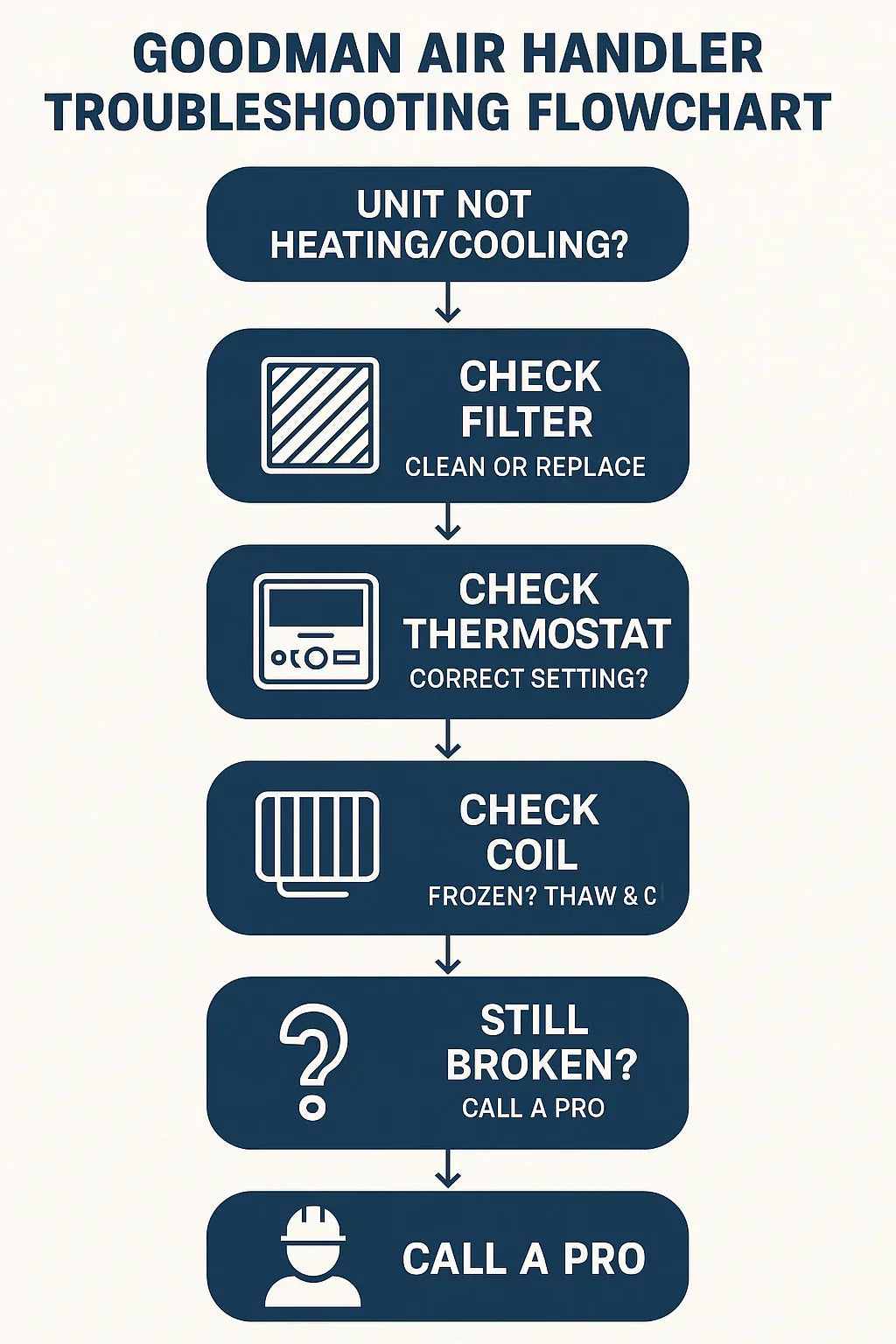
Common problems and likely causes
Airflow weak or no cool
- Dirty filter reducing airflow.
- Blocked vents or closed dampers.
- Faulty blower motor or capacitor.
No heat or no cool
- Thermostat mis-set or dead batteries.
- Tripped breaker or blown fuse.
- Faulty compressor, gas valve, or ignitor.
Strange noises or smells
- Rattles from loose panels or fan blades.
- Squeal from worn belt or bearing.
- Burnt smell from wiring or motor overheating.
Short cycling or runs too long
- Oversized unit or bad thermostat placement.
- Refrigerant leak or clogged coils.
- Control board or safety switch fault.
Water leaks or icing
- Condensate drain clog or pump failure.
- Frozen evaporator coil from low refrigerant.
- Poor insulation on refrigerant lines.
This Goodman Troubleshooting Guide lists these issues and shows how to check each cause. Small fixes often stop many of the common faults.
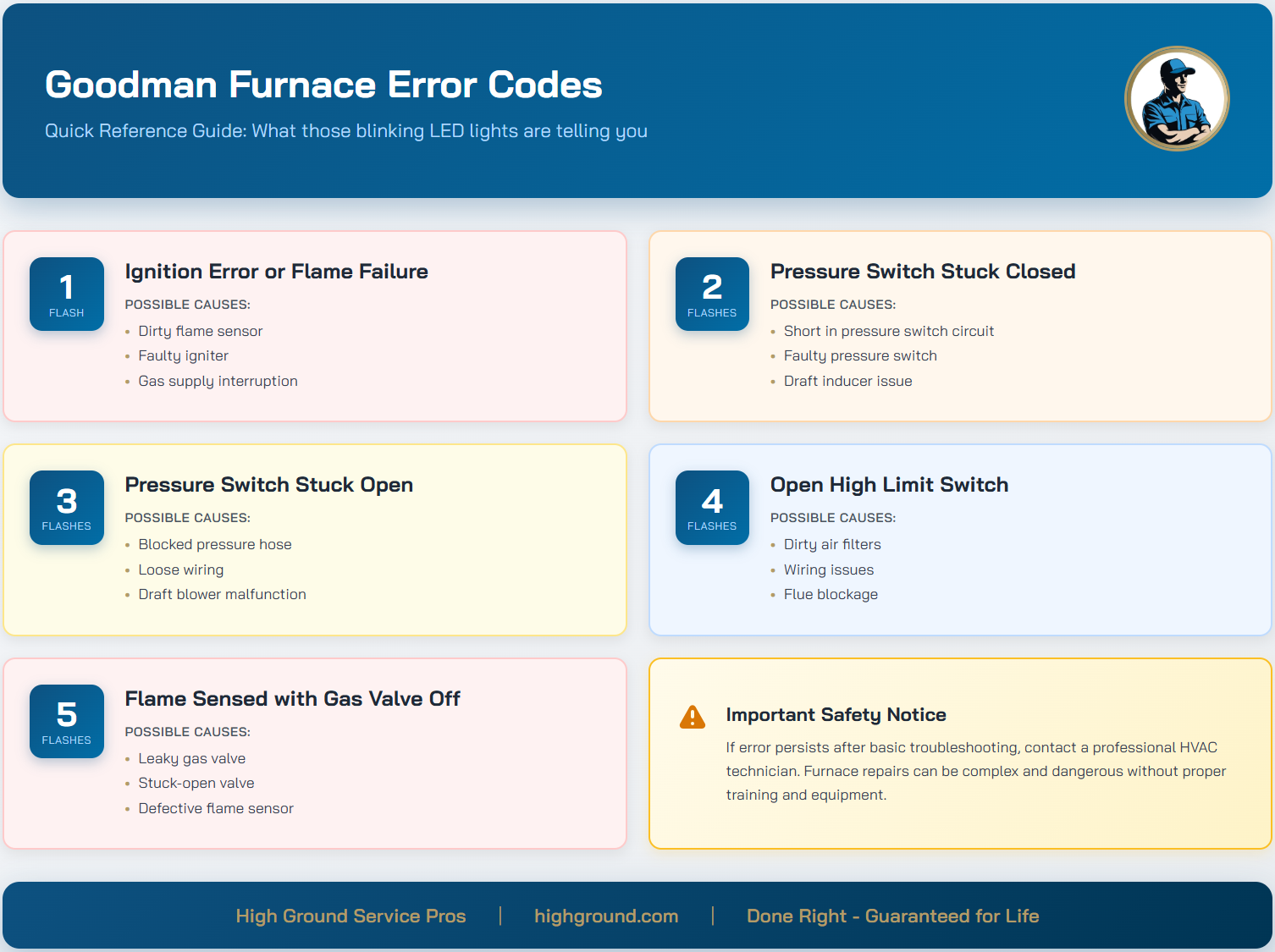
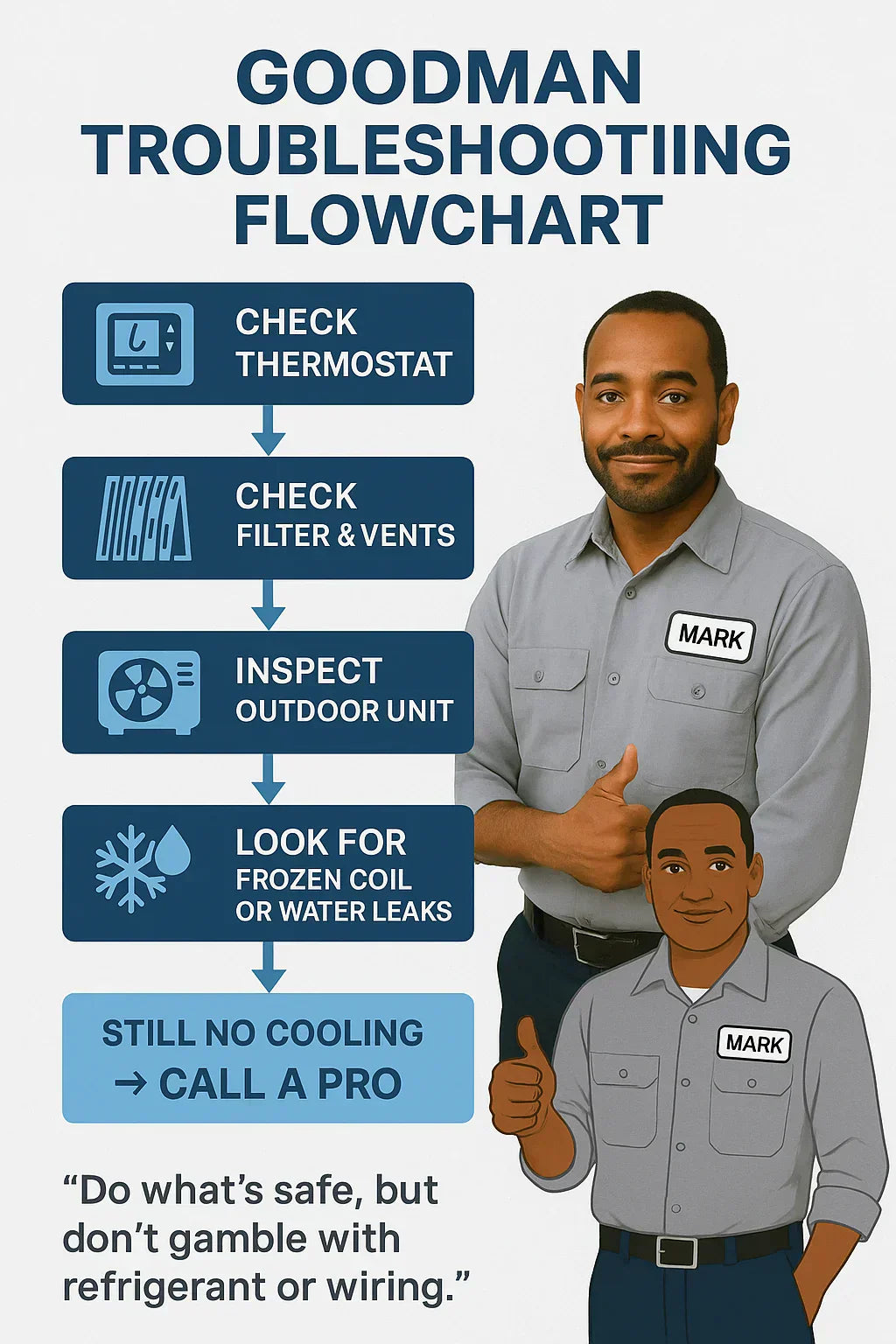
Step-by-step troubleshooting checklist
Power and controls
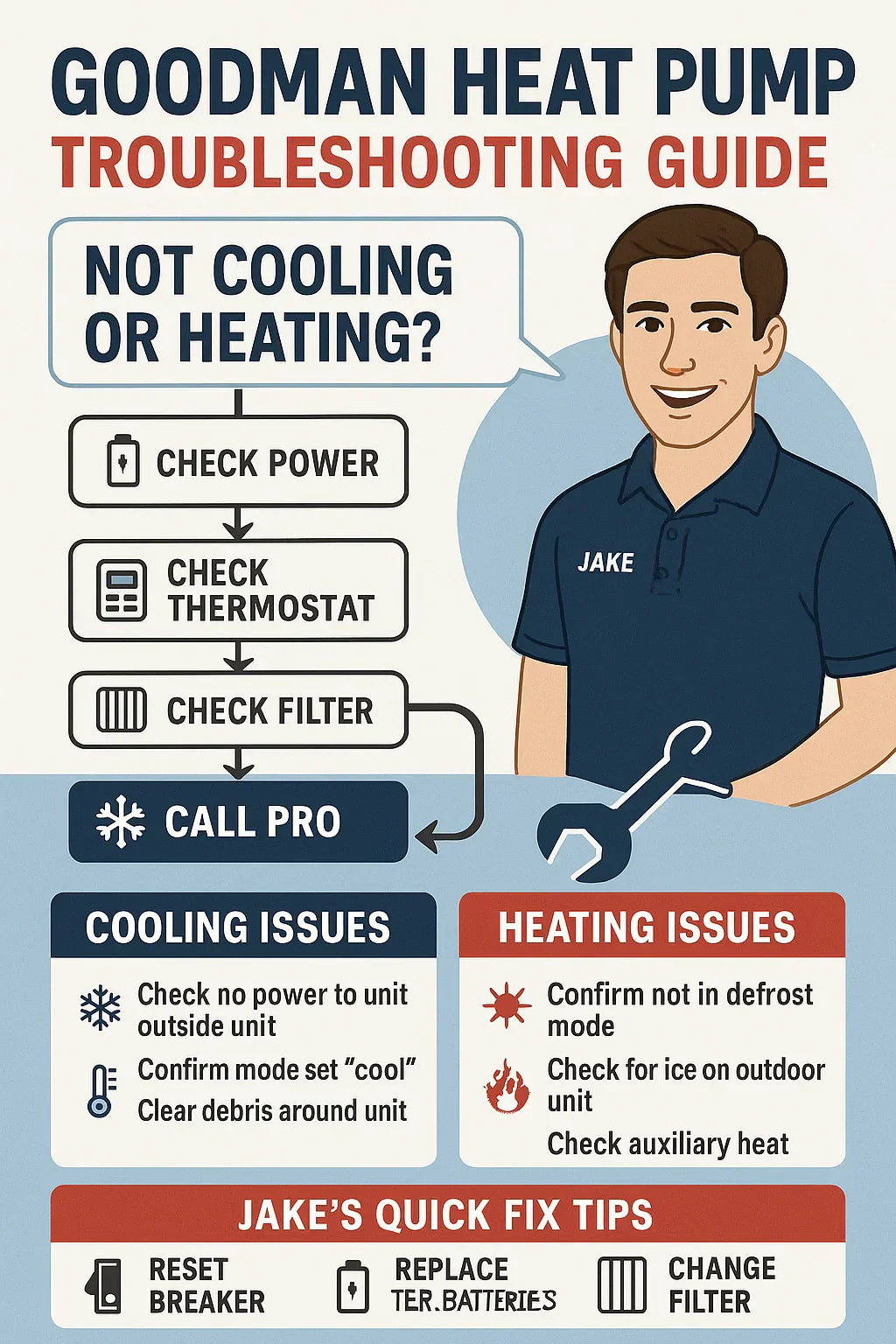
- Check thermostat settings and batteries. Make sure mode and temperature are correct.
- Verify breaker and disconnect switch are on. Reset if tripped.
- Inspect the control board LED or display for error codes.
Airflow and filters
- Replace or clean the air filter. A clogged filter cuts airflow fast.
- Check vents and registers. Open them fully.
- Inspect the blower compartment for dust and obstructions.
Refrigeration and outdoor unit
- Clear debris around the condenser. Two feet clearance is ideal.
- Look for ice on the evaporator or outdoor coils. If ice is present, turn off the system and call a tech.
- Listen for the compressor start. Hard starts point to a bad capacitor or relay.
Safety and sensors
- Check the condensate drain and float switch. High water can shut the unit off.
- Confirm the flame sensor or ignitor is working on gas furnaces.
- Test limit switches and pressure switches as per the manual.
Use this Goodman Troubleshooting Guide checklist each time you start a diagnosis. Work in order from simple to complex to save time.
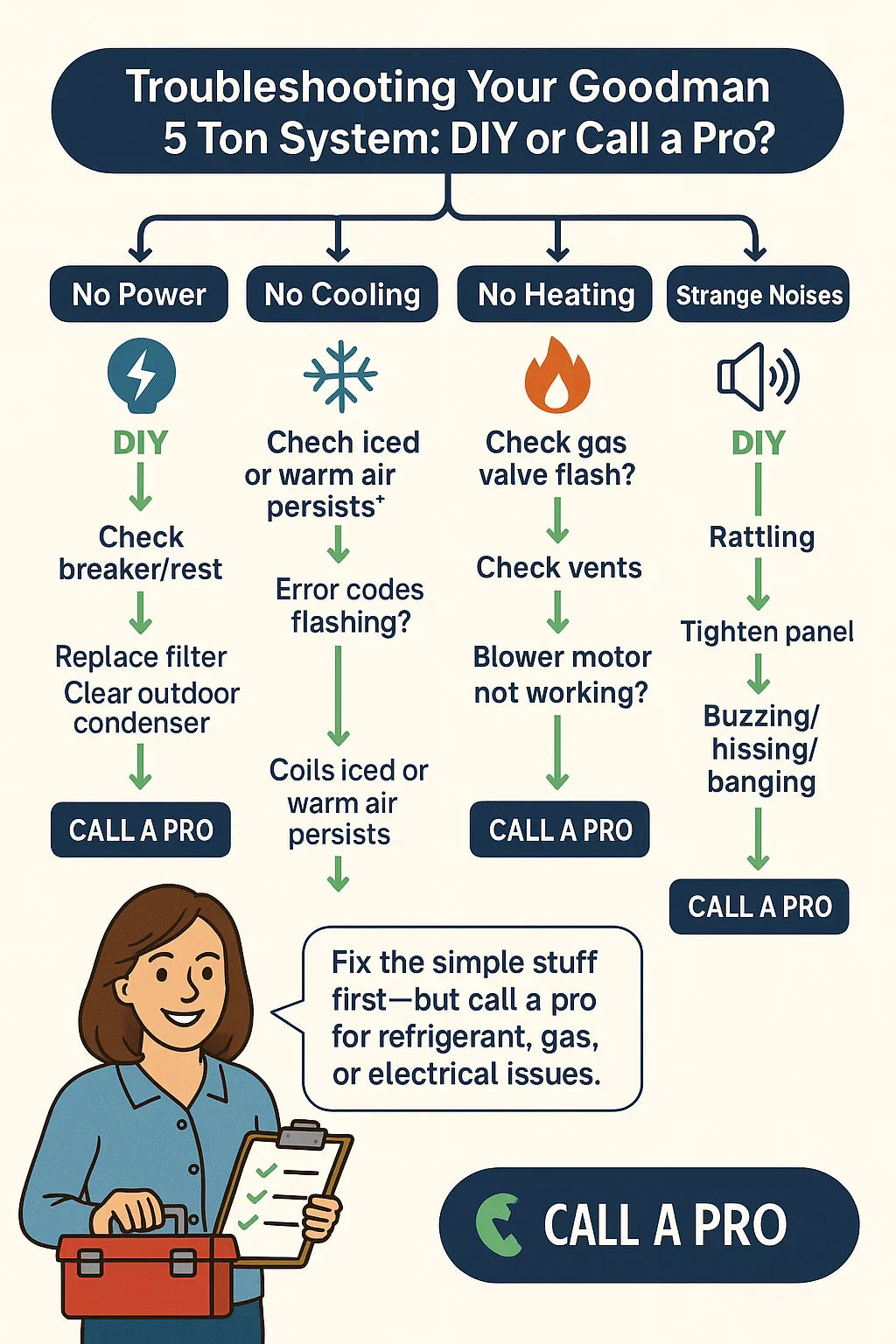
Error codes, LEDs, and what they mean
Control boards often show status lights or codes. Write down any blinks or codes. Then check the service manual or label in the unit for meaning.
Common LED signals
- One blink: normal operation or minor alert.
- Repeated blinks: specific fault such as ignition failure or sensor open.
- Solid off: no power or failed board.
If you see an error code, follow these steps
- Turn off power, wait five minutes, then restart. This resets some faults.
- If code returns, note the exact pattern and consult the service guide.
- Replace parts only when you know the code points to that part.
A clear approach to codes is key in this Goodman Troubleshooting Guide. Codes save time when used correctly.

Tools, safety, and when to stop
Basic tools to have
- Multimeter for voltage and continuity checks.
- Screwdrivers and nut drivers for panels.
- Flashlight, work gloves, and safety glasses.
Safety steps
- Always shut power at the breaker before opening panels.
- Wear gloves when handling sharp fins or heavy parts.
- Avoid work on refrigerant lines. That requires a certified tech.
When to call a pro
- You smell gas or burning.
- You must handle refrigerant or high-voltage wiring.
- The unit has repeated failures after fixes.
This Goodman Troubleshooting Guide stresses safety. Know your limits and call trained technicians when needed.
Maintenance tips to prevent problems
Routine tasks that help
- Change filters every 1–3 months depending on use.
- Keep outdoor unit clear of plants and debris.
- Schedule annual tune-ups for heating and cooling.
Seasonal actions
- Inspect ducts for leaks before heavy use seasons.
- Test thermostat and change batteries each spring and fall.
- Clean evaporator and condenser coils annually.
Small steps prevent large repairs. My experience shows consistent maintenance cuts emergency calls by half. Use this Goodman Troubleshooting Guide to build a simple maintenance plan.
Parts, warranties, and replacement tips
Common parts to check or replace
- Filters, capacitors, contactors, and thermostats.
- Blower motors, ignitors, and flame sensors.
- Condensate pumps and drain lines.
Warranty and records
- Keep installation and service records. Warranties often require proof of maintenance.
- Check serial numbers to verify age and warranty status.
Replacing vs repairing
- Repair small parts on units less than 10 years old if cost is low.
- Consider replacement for frequent compressor or coil failures.
- Factor energy savings and new efficiency ratings when choosing replacement.
This Goodman Troubleshooting Guide helps you weigh repair costs against replacement value.
Personal experience: lessons and common mistakes
I once diagnosed a no-cool call as a compressor fault. It turned out to be a clogged filter and closed vent. The homeowner saved over a thousand dollars. Lesson: always start with the basics.
Another time a system cycled off due to a dirty condensate switch. Cleaning fixed it in 15 minutes. Avoid jumping to expensive parts. Follow this Goodman Troubleshooting Guide checklist first for faster wins.

Troubleshooting examples with steps
Example 1: Unit won’t start
- Check thermostat and power. Replace dead thermostat batteries.
- Check breaker and service switch.
- Inspect control board LED for codes. Call tech if board is dead.
Example 2: Weak cooling
- Change filter and open all vents.
- Clean outdoor coil and ensure fan runs.
- Call for refrigerant check only if coils are clean and fan works.
Example 3: Strange noise
- Tighten loose panels and screws.
- Inspect fan blades and blower wheel.
- If the sound persists, isolate motor or compressor and call a technician.
Use these step-by-step examples from the Goodman Troubleshooting Guide to guide real repairs.
PAA-style questions (People also ask)
What is the first thing to check on a Goodman unit?
- Start with power and thermostat. Confirm breakers, switches, and thermostat settings before deeper checks.
How do I reset my Goodman furnace?
- Turn off power at the thermostat and breaker, wait five minutes, then restore power. If the fault returns, record codes and call a pro.
Why is my Goodman AC freezing up?
- A frozen coil often means low refrigerant or poor airflow. Replace the filter and check for airflow blockages, then call for a refrigerant check.
Can I replace a Goodman capacitor myself?
- If you have electrical experience and follow safety steps, you can replace a capacitor. Otherwise, hire a licensed technician to avoid shock risk.
How often should Goodman units be serviced?
- Schedule service once a year for each heating and cooling system. Regular checks cut failures and keep efficiency high.
Frequently Asked Questions of Goodman Troubleshooting Guide
What does a blinking light on my Goodman unit mean?
Blinking lights are codes from the control board. Note the pattern and consult the service label to identify the fault quickly.
How do I know if the compressor is bad?
If the compressor hums but does not start, or trips breakers, it may be failing. A licensed tech can test amp draw and confirm the diagnosis.
Is a frozen coil an emergency?
Yes, it can damage the compressor if ignored. Turn off cooling, thaw the coil, and check airflow and refrigerant levels.
Can a dirty filter cause a system shutdown?
Yes. A very dirty filter can trigger safety switches and lead to overheating or frost. Replace filters regularly to avoid shutdowns.
How long do Goodman units usually last?
A well-maintained Goodman unit can last 10–15 years for AC and 15–20 years for furnaces. Regular maintenance and timely repairs extend life.
How do I find the model and serial number on my Goodman unit?
Check the data plate on the unit cabinet or inside the access panel. Record these numbers for warranty and service.
When will I need a professional for refrigerant issues?
Always call a licensed HVAC technician for refrigerant leaks or recharge. Handling refrigerant requires certification and special tools.
Conclusion
This Goodman Troubleshooting Guide gives simple checks, safe steps, and clear calls for help. Start with power, thermostat, and filters. Use error codes and step lists to narrow faults. Keep regular maintenance to avoid most common failures.
Take action today: use the checklist, change a filter, and note any error codes. If you need help, contact a licensed HVAC pro and share the steps you took. Leave a comment with your question or subscribe for more hands-on HVAC tips.

