

Most Bryant AC issues are caused by airflow, thermostat, or electrical faults.
I write from hands-on work with HVAC teams and many Bryant systems. This guide walks you through Bryant Air Conditioner Troubleshooting in plain language. You will learn clear checks, step-by-step fixes, safety tips, and when to call a pro. Read on to diagnose common Bryant problems fast and keep your system running reliably.

36% off Today’s Exclusive Deals
Limited-time Exclusive Deals. Check current discount on Amazon.
Check Price on Amazon As an Amazon Associate I earn from qualifying purchases.
How a Bryant Air Conditioner Works — quick primer
A Bryant air conditioner moves heat from inside your home to the outside. The indoor evaporator coil absorbs heat. The outdoor condenser and compressor release that heat. A thermostat, blower, and refrigerant loop must all work together for cooling.
Bryant Air Conditioner Troubleshooting often starts by confirming these basics. If airflow, refrigerant, or control signals fail, the unit won't cool. Understanding the simple flow helps you narrow the issue quickly.
Common Bryant Air Conditioner Problems
Most homeowners see the same set of issues. This list helps you recognize them fast.
- No cooling. The unit runs but air is warm. Bryant Air Conditioner Troubleshooting starts with filters, thermostat, and outdoor unit checks.
- Unit won't turn on. Could be power, tripped breaker, or a failed control board.
- Short cycling. The system turns on and off too often. That stresses the compressor and wastes energy.
- Frozen evaporator coil. Caused by low airflow or low refrigerant.
- Loud noises. Rattles, grinding, or buzzing point to loose parts, motor issues, or electrical problems.
- High electric bills. Reduced efficiency from dirty coils or a failing compressor is common.
Each problem has simple tests you can do before calling for repairs. Bryant Air Conditioner Troubleshooting focuses first on safety and basic visual checks.

Step-by-Step Bryant Air Conditioner Troubleshooting Guide
Follow a clear sequence. Start with easy checks and move to deeper diagnostics.
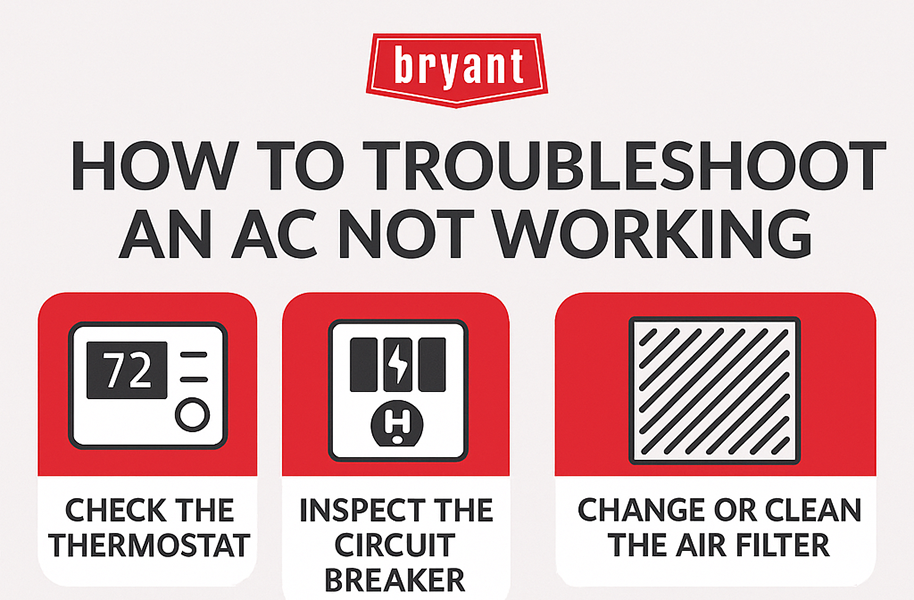
- Confirm power and thermostat
- Check circuit breakers and the outdoor disconnect switch.
- Ensure thermostat settings are correct and batteries are fresh.
- Inspect the air filter and airflow
- Replace dirty filters. Restricted airflow causes many Bryant Air Conditioner Troubleshooting cases.
- Check vents and blower fan operation.
- Examine the outdoor unit
- Clear debris and ensure the fan spins freely.
- Look for ice on the coils or oil stains that suggest leaks.
- Listen for unusual sounds
- Buzzing can be a contactor or capacitor.
- Grinding likely means motor bearings or a failed fan motor.
- Check refrigerant signs (visual only)
- Frost or ice on lines may indicate low refrigerant.
- Do not attempt to add refrigerant yourself unless certified.
- Test electrical components safely
- Inspect wiring for burns or loose connections.
- Capacitor and contactor checks require a multimeter and caution.
- Reset and observe
- Turn power off for a minute, then restore. Watch for normal startup sequence.
- Note any error codes on thermostats or control boards.
Bryant Air Conditioner Troubleshooting follows these steps to isolate cause and fix it without guessing. If you hit a wall, stop and call a licensed technician.
Diagnostic Tips for Bryant-specific features and error codes
Bryant systems often pair with smart thermostats and modular control boards. Use these tips to interpret behavior.
- Check thermostat communication. Smart thermostats can show error messages when control signals fail.
- Observe LED indicators on the furnace or outdoor unit. Blink codes often match a small set of common faults.
- Model-specific apps or control boards sometimes store fault logs. Use them to see recent faults and compressor run times.
- Bryant systems use standard parts like capacitors, contactors, and motors; their failure signs are similar to other brands.
When using Bryant Air Conditioner Troubleshooting, log what you find. A short note helps technicians diagnose recurring issues faster.

Tools, Parts, and Estimated Costs
Have basic tools before you start Bryant Air Conditioner Troubleshooting. Here are essentials and rough price ranges.
- Screwdrivers, pliers, and nut drivers. Low cost and needed for access.
- Multimeter. Useful for voltage and capacitor checks. Mid-range price.
- Fin comb and coil cleaner. For outdoor coil care.
- Replacement filters. Cheap and first-line maintenance.
- Capacitor or contactor. Moderate cost; common DIY replacement if comfortable.
- Refrigerant service and compressor replacement. High cost and require certified tech.
Parts prices vary by model and region. Always compare OEM Bryant parts with quality aftermarket options. Keep receipts and model numbers to order the right components.
Safety and When to Call a Professional
Safety first. Some Bryant Air Conditioner Troubleshooting steps are safe for homeowners. Others are not.
- Safe to do yourself
- Replace filters and clear debris.
- Reset breakers and inspect visible wiring for damage.
- Check thermostat settings and batteries.
- Call a pro when
- Refrigerant work is needed. Handling refrigerant requires certification.
- You smell burning or see electrical arcing.
- The compressor fails or the system is under warranty.
- Complex control board or sealed-system repairs are required.
If you suspect a refrigerant leak, unusual electrical odors, or compressor issues, shut the system off and call a licensed HVAC technician. Quick professional action can prevent bigger expenses later.

Preventive Maintenance to Reduce Future Breakdowns
Regular care reduces the need for Bryant Air Conditioner Troubleshooting. Follow a seasonal checklist.
- Every month during cooling season: Check and replace air filters.
- Twice a year: Clean evaporator and condenser coils.
- Annually: Schedule a professional tune-up for refrigerant, electrical checks, and airflow testing.
- Keep the outdoor unit clear of plants, paint, and debris.
- Replace old thermostats with programmable or smart models to improve control and diagnostics.
Routine maintenance keeps performance strong and saves money. I’ve seen units last longer and run quieter with simple seasonal care.

Personal Experience and Lessons Learned
From working with HVAC teams on Bryant systems, a few lessons stand out.
- Don’t skip the basics. Most calls were fixed by replacing a filter or resetting a breaker.
- Document symptoms. Photos and notes speed diagnosis when a pro arrives.
- Avoid guessing on refrigerant. Adding refrigerant without finding leaks can hide problems.
- Invest in a quality thermostat. It helps with diagnostics and avoids many service calls.
One home I worked on had short cycling for months. Replacing a cheap thermostat and cleaning the coils fixed it. Small, cheap fixes often prevent big failures.
Frequently Asked Questions of Bryant Air Conditioner Troubleshooting
What should I check first when my Bryant AC isn't cooling?
Check the thermostat settings, replace a dirty air filter, and confirm the outdoor unit has power. These simple steps solve many Bryant Air Conditioner Troubleshooting calls.
Why is my Bryant AC short cycling?
Short cycling is usually caused by restricted airflow, an oversized system, or thermostat issues. Fix airflow and check thermostat placement before calling a technician.
Can I add refrigerant to my Bryant unit myself?
No. Adding refrigerant requires certification and specialized gauges. Improper handling can harm the system and is illegal in many areas.
How often should I schedule maintenance for a Bryant air conditioner?
Schedule professional maintenance once a year, plus filter checks monthly. Regular service reduces the need for emergency Bryant Air Conditioner Troubleshooting.
What does it mean if the outdoor unit runs but the indoor blower doesn't?
This often points to a blower motor, control board, or fan relay issue inside the air handler. Turn off the system and call a pro if you’re not comfortable testing components.
Conclusion
You now have a clear roadmap for Bryant Air Conditioner Troubleshooting. Start with power, thermostat, and airflow checks. Use safe DIY steps for filters and cleaning, then escalate to electrical or refrigerant work with a professional. Keep a simple maintenance routine to prevent most problems and save money. Try the basic checks today, note what you find, and share your experience or questions below to get more tailored help.

