

Most Westinghouse 9500 problems come from fuel, spark, oil sensor, or overload issues.
I have worked on portable generators for years and have hands-on experience with Westinghouse Generator 9500 troubleshooting. This guide breaks down common faults, safe diagnostics, step-by-step fixes, and preventive care. Read on to learn clear, practical steps to spot and solve issues fast, with tips I use in the field.

36% off Today’s Exclusive Deals
Limited-time Exclusive Deals. Check current discount on Amazon.
Check Price on Amazon As an Amazon Associate I earn from qualifying purchases.
Common problems and quick diagnostics
Many owners face the same few issues with the Westinghouse Generator 9500. Below are common faults and quick checks to find the likely cause.
-
No start or hard start
- Check fuel level and fresh fuel. Old gas gums up the carburetor.
- Verify the spark plug for fouling or damage.
- Confirm the battery is charged if electric start is used.
-
Starts then stalls
- Inspect the fuel filter and fuel line for blockages.
- Check choke and idle settings.
- Look for clogged carburetor jets from stale fuel.
-
Low or no output (voltage or frequency issues)
- Measure voltage with a meter at the outlets and at the alternator terminals.
- Test under no-load and under load to spot AVR or regulator faults.
- Confirm the ground and neutral connections are secure.
-
Oil shutdown or low-oil light
- Check oil level and oil sensor wiring.
- Replace oil and filter if dirty or overdue.
-
Overheating or surging
- Clear air intake and cooling fins.
- Verify fuel mixture and governor settings.
These checks form the backbone of Westinghouse Generator 9500 troubleshooting and narrow most problems quickly.

Step-by-step troubleshooting guide
Follow these safe steps to diagnose most faults. Work in a well-ventilated area and use gloves and eye protection.
-
Safety first
- Turn the unit off and remove the spark plug cap before doing internal work.
- Disconnect battery cables for electric start models.
- Let the engine cool before touching hot parts.
-
Verify fuel and fuel flow
- Drain a small amount of fuel into a clear container. Smell it. Bad gas often smells sour.
- Replace old fuel and add stabilizer for storage.
- Inspect and replace clogged fuel filter and clean the fuel petcock.
-
Check spark and ignition
- Remove the spark plug and inspect the tip for carbon or oil. Replace if fouled.
- Test for spark by grounding the plug against the block and cranking the engine. No spark suggests ignition coil or kill switch issues.
-
Inspect air and carburetor
- Clean or replace the air filter.
- If it runs rough, remove and clean the carburetor bowl and jets. Use carb cleaner and compressed air.
- Rebuild kits are inexpensive if jets are corroded from stale gas.
-
Test oil and sensors
- Check oil level, viscosity, and color. Change oil if dark or gritty.
- Inspect the low oil sensor wiring and connections for corrosion.
-
Measure output and electrical health
- Use a multimeter to confirm AC voltage at outlets.
- Test frequency with a meter capable of Hz reading.
- If voltage is unstable, inspect the AVR and brush/rotor (if applicable).
-
Load test
- Start with small loads. Add appliances gradually.
- Watch for shutdowns or dips. Overload will trip the breaker or cause voltage sag.
From my shop work, most home fixes fall into the fuel, spark, or simple electrical checks. If you follow these steps, you will solve many issues on the Westinghouse Generator 9500.
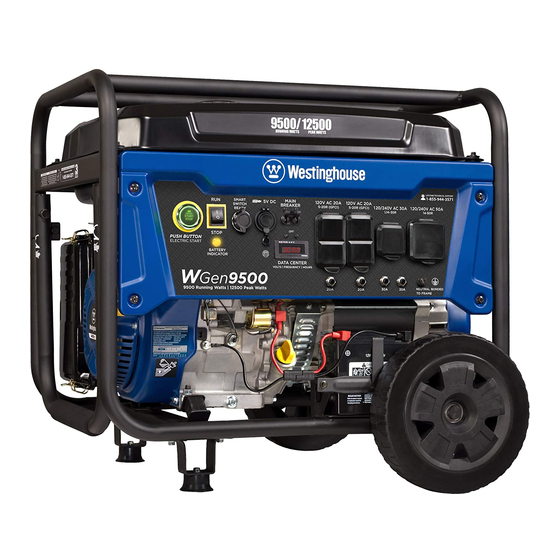
Parts, tools, and when to call a pro
Having the right parts and tools speeds Westinghouse Generator 9500 troubleshooting and repair. Here’s what I keep in my kit.
-
Essential tools
- Multimeter for voltage, continuity, and frequency.
- Spark plug wrench and gap tool.
- Basic socket set and screwdrivers.
- Fuel line clamps and pliers.
- Carburetor cleaner and compressed air.
-
Common replacement parts
- Spark plugs and air filters.
- Fuel and oil filters.
- Carburetor rebuild kit.
- Voltage regulator or AVR.
- Replacement wiring or sensor harnesses.
-
When to call a pro
- If the alternator needs rewinding or stator replacement.
- Persistent AVR faults or complex electrical failures.
- Repeated oil pressure sensor faults after wiring checks.
- If you are uncomfortable with fuel system or ignition coil work.
I once replaced an AVR after repeated voltage swings. The job saved the unit and cost less than a new generator. If you lack tools or comfort with electrical work, hire a certified technician.

Maintenance schedule and preventive tips
A clear maintenance routine prevents most Westinghouse Generator 9500 troubleshooting headaches. Keep a log and stick to these intervals.
-
After every use
- Run the unit for 10 minutes with no load to burn off moisture.
- Check fuel and oil levels.
-
Monthly
- Run the generator under load for 30 minutes.
- Inspect air filter and clean if needed.
- Check battery charge.
-
Every 3 months or 50 hours
- Change oil if used heavily.
- Replace or clean spark plug and air filter.
-
Annually or 100 hours
- Replace fuel filter and inspect carburetor.
- Test AVR and alternator bearings.
- Flush and refill coolant if liquid-cooled (if applicable).
-
Storage tips
- Add fuel stabilizer and run for a few minutes to circulate.
- Store with a full tank to reduce condensation.
- For long-term storage, drain carburetor and fuel lines.
Good care reduces the time you spend on Westinghouse Generator 9500 troubleshooting. My rule: preventive care beats late-night repairs.
Common error indicators and sensor checks
The generator may use lights, meters, or simple mechanical switches to signal faults. Knowing these signs speeds up troubleshooting.
-
Low oil warning
- Often triggered by a float or pressure sensor.
- Check oil level and wiring. Replace sensor if wiring is intact but light persists.
-
Overload or breaker trips
- Breaker will open if load exceeds rating.
- Reduce load and reset. Persistent trips can mean a bad AVR or winding fault.
-
No-charge or weak battery
- Check charging circuit and alternator output.
- Test battery under load. Replace old batteries.
-
Loss of output under load
- Could point to AVR, brush wear, or rotor/stator damage.
- Measure output at the alternator to isolate the issue.
-
Engine misfire or rough idle
- Inspect spark plug, air filter, and carburetor.
- Replace worn ignition components.
If codes or lights are ambiguous, consult the manual or a technician. In my experience, tracing wiring harnesses and cleaning connections resolves many false warnings.

Frequently Asked Questions of Westinghouse Generator 9500 Troubleshooting
Why won't my Westinghouse Generator 9500 start?
Most no-start cases come from bad fuel, a fouled spark plug, or a weak battery. Check fuel, spark, and battery first.
What do I do when the generator runs but has low voltage?
Test voltage with a meter at idle and under load. If voltage drops under load, inspect the AVR, brushes, and connections.
How often should I change the oil on a Westinghouse Generator 9500?
Change oil after the first 20 hours, then every 50 to 100 hours depending on use. Always use the manufacturer’s recommended oil grade.
Can stale fuel cause hard starting and stalling?
Yes. Stale fuel clogs carburetor jets and causes rough running. Drain old fuel and clean the carburetor if needed.
When should I call a professional for Westinghouse Generator 9500 troubleshooting?
Call a pro for complex electrical faults, alternator repairs, or if you are unsure about fuel and ignition system work. Safety and correct diagnosis save money.
Conclusion
This guide gives a clear path for Westinghouse Generator 9500 troubleshooting. Start with simple checks: fuel, spark, oil, and output. Use the step-by-step guide and maintenance tips to prevent problems and save time. If you hit a complex electrical or mechanical issue, get a qualified technician to avoid risk. Try these steps, keep a maintenance log, and share your results or questions below to help others.

