

Are Anker Iphone Chargers Certified For Apple Devices?
Finding the right charger for your iPhone can feel confusing. There are many options—some cheap, some expensive, some branded, and many from third-party makers. Anker is one of the most popular brands outside of Apple, with millions of units sold worldwide. But are Anker iPhone chargers really certified for Apple devices? Do they work as safely and efficiently as Apple’s own chargers? If you want to keep your iPhone battery healthy and avoid annoying “Accessory Not Supported” messages, it’s smart to know the facts.
This guide breaks down what “certified” means for iPhone chargers, how Anker’s products stack up, and what to watch out for when shopping. You’ll get clear answers, practical advice, and a few things most new iPhone owners miss. Let’s dive in.

36% off Today’s Exclusive Deals
Limited-time Exclusive Deals. Check current discount on Amazon.
Check Price on Amazon As an Amazon Associate I earn from qualifying purchases.What Does “certified” Mean For Iphone Chargers?
When Apple talks about certification, it usually means MFi certification—short for “Made for iPhone/iPad/iPod.” This is an official program where Apple tests accessories (like chargers, cables, and headphones) to make sure they meet their standards.
If a charger or cable is MFi certified, you’ll see the MFi logo on the box or product page. This means:
- The product has passed Apple’s safety and compatibility tests.
- It uses special chips to communicate with your iPhone.
- It’s less likely to damage your device or cause errors.
Non-certified chargers might work, but there’s a higher risk. They can cause overheating, slow charging, battery wear, or even fire hazards in rare cases. Some may stop working after a software update, as Apple sometimes blocks non-MFi accessories.
Anker’s Place In The Iphone Charger Market
Anker started in 2011 and quickly became known for reliable, affordable charging accessories. Today, Anker chargers are sold in over 100 countries and have a strong reputation on websites like Amazon, Best Buy, and Walmart.
Anker’s popularity comes from a few things:
- Consistently high customer ratings (many models have 4.5+ stars).
- Lower prices than Apple-branded chargers.
- Broad range: Wall adapters, car chargers, portable batteries, and cables.
But is popularity the same as Apple certification? Not always. Let’s see how Anker’s products measure up.
Are Anker Iphone Chargers Mfi Certified?
Cables
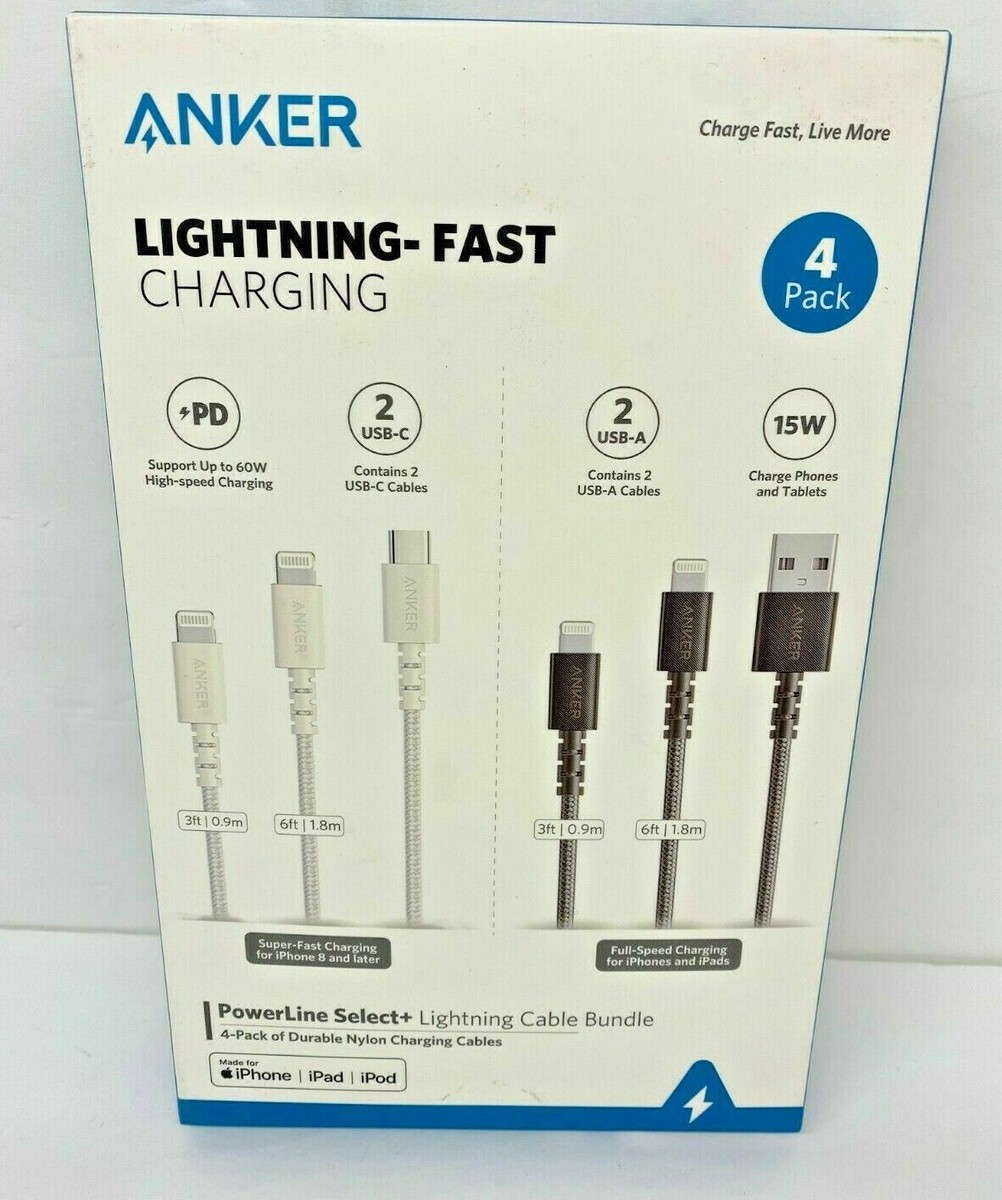
Anker’s Lightning cables—the type you use to connect your iPhone to a charger or computer—are MFi certified. You’ll see the MFi logo on most of their packaging and websites. For example, the popular Anker PowerLine II and PowerLine III cables are both MFi certified.
Why does this matter? MFi-certified cables:
- Avoid “Accessory Not Supported” errors.
- Charge at full speed.
- Keep your device safe from electrical surges.
Anker uses Apple’s original Lightning connector chips in these cables. That’s why they work reliably with all iPhones since the iPhone 5.
Wall Chargers (power Adapters)
This is where things get more interesting. Apple does not run an MFi program for wall adapters (the plug that goes into the wall). Instead, Apple recommends using USB Power Delivery (USB-PD) for fast charging. Anker’s top wall chargers (like the Nano, Nano II, and Nano Pro) support USB-PD and are tested for safety.
While you won’t see an MFi logo on the charger itself, Anker’s main models are designed specifically for Apple devices. They match Apple’s own power output levels (such as 20W for iPhone fast charging). Anker publishes compatibility lists for each charger, showing which iPhones, iPads, and other devices are supported.
Wireless Chargers
Anker also makes wireless chargers (like the PowerWave series). These use the Qi standard, which is what Apple uses for iPhones from the iPhone 8 onward. Apple doesn’t require MFi for Qi wireless chargers, but Anker’s models are tested to work well with iPhones.
Power Banks
For portable charging, Anker’s power banks (such as the PowerCore series) are also widely used with iPhones. These don’t need MFi certification, but Anker works to match Apple’s charging requirements, including proper voltage and current.
Comparing Anker And Apple Chargers
It’s natural to wonder: How does an Anker charger compare to Apple’s official charger? Is it as safe, fast, and reliable? Here’s a side-by-side look at the main factors.
| Feature | Anker Charger | Apple Charger |
|---|---|---|
| Certification | MFi for cables; USB-PD for adapters | MFi for cables; Apple standard for adapters |
| Charging Speed | Up to 20W (iPhone fast charge supported) | Up to 20W (for iPhone 12 and newer) |
| Safety Features | Short-circuit, overheat, overcharge protection | Built-in Apple safety controls |
| Price Range | Lower ($10–$25 typical) | Higher ($19–$29 typical) |
| Warranty | 18 months to lifetime (model dependent) | 1 year |
As you can see, Anker chargers meet or beat Apple’s own specs in most areas, especially for cables. Wall adapters are not MFi certified, but they use the right power standards and safety systems.
How To Check If Your Anker Charger Is Certified
With so many lookalike products online, you need to be sure you’re buying a real, certified Anker charger. Here’s how:
- Look for the MFi logo: Genuine Anker Lightning cables have the official MFi badge on the box or product page.
- Buy from trusted stores: Get your charger from Anker’s official website, Amazon, Best Buy, or other big retailers. Avoid unknown sellers with deep discounts.
- Check the packaging: Anker’s boxes are professionally printed and include contact info, serial numbers, and warranty details.
- Test the cable: Plug it into your iPhone. If you see “Accessory Not Supported,” it’s likely not genuine or not certified.
- Visit Anker’s website: They list all MFi-certified cables and show how to spot counterfeits.
It’s worth noting that fake Anker products do exist. If a deal looks too good to be true, it probably is. Always check the seller’s reputation.
Real-world Charging: Anker Vs. Apple
Let’s look at what happens when you use an Anker charger with your iPhone. Here are some real data points and user experiences:
- Charging time: Anker’s 20W Nano charger can take an iPhone 13 from 0% to 50% in about 30 minutes, matching Apple’s own 20W USB-C charger.
- Heat management: Both Anker and Apple chargers stay cool under normal use, thanks to built-in safety chips.
- Battery health: No evidence shows that using Anker’s certified chargers harms your iPhone’s battery. They deliver the correct voltage and current, just like Apple’s.
- Travel compatibility: Anker offers multi-port chargers and international plug options, making them popular for travel.
- Warranty support: Anker’s support team is known for fast replacements if something goes wrong.
Most users report that Anker chargers work as smoothly as Apple’s, with the added bonus of lower prices and more choices. However, using non-certified cables (even with a good charger) can still cause problems.

The Importance Of Using Certified Cables
Many people focus on the wall charger, but the cable is just as important. Here’s why:
- The Lightning cable has a chip that talks to your iPhone. If it’s not MFi certified, it may not charge at all or could charge slowly.
- Poor-quality cables can overheat or fray, causing safety issues.
- Apple’s software updates sometimes block non-MFi cables, even if they worked before.
Anker’s MFi-certified cables are made to last. For example, the PowerLine II is rated to survive 12,000 bends—much higher than cheap alternatives. This means fewer replacements and less hassle.
What About Usb-c To Lightning Cables?
With newer iPhones, fast charging uses a USB-C to Lightning cable and a USB-C power adapter. Apple’s own cable is expensive, so many people look for third-party options.
Anker makes several MFi-certified USB-C to Lightning cables, including the PowerLine+ and PowerLine III series. These support fast charging (up to 20W or more) and work with all iPhones from the iPhone 8 onward.
If you want to use fast charging, make sure:
- Your cable is MFi certified.
- Your adapter supports USB Power Delivery (PD) and has enough wattage (18W or higher).
This setup can charge your iPhone to 50% in about 30 minutes—much faster than older 5W chargers.
Wireless Charging And Magsafe: Is Anker Compatible?
Since the iPhone 8, Apple has supported Qi wireless charging. Starting with the iPhone 12, Apple introduced MagSafe—a magnetic wireless charging system.
Qi Wireless Chargers
Anker’s PowerWave wireless pads and stands use the Qi standard. These work with all Qi-enabled iPhones, delivering up to 7. 5W (the max allowed for iPhone wireless charging). You do not need MFi certification for Qi chargers, but you should choose a reputable brand for safety.
Magsafe
Anker also offers MagSafe-compatible chargers, like the Anker 622 Magnetic Battery and MagGo series. These use strong magnets to snap onto your iPhone. However, only Apple’s own MagSafe charger is fully certified for 15W charging. Anker’s models usually charge at 7.
5W, which is still good for overnight or desk use.
If you want true MagSafe (15W) speeds, stick with Apple’s charger. For convenience and price, Anker’s magnetic options are a strong choice.
| Wireless Charger | Type | iPhone Charging Speed | Certification |
|---|---|---|---|
| Anker PowerWave Pad | Qi | Up to 7.5W | Qi Certified |
| Apple MagSafe Charger | MagSafe | Up to 15W | Apple Certified |
| Anker MagGo 622 | MagSafe-Compatible | Up to 7.5W | Qi Certified |
Common Buyer Mistakes With Anker Chargers
Even though Anker chargers are reliable, some buyers run into problems. Here are a few mistakes to avoid:
- Buying non-certified cables: Not all cheap cables are MFi certified. Look for the MFi logo and buy from known sellers.
- Mixing brands: Using a non-certified cable with a certified charger can still cause errors.
- Expecting full MagSafe speed: Only Apple’s own MagSafe charger delivers 15W charging. Third-party models (including Anker) max out at 7.5W.
- Ignoring power requirements: Using a low-wattage charger (like 5W) will charge your iPhone slowly, even with a good cable.
- Not checking device compatibility: Some Anker chargers have multiple ports. Check which port supports fast charging for your iPhone.
- Falling for fakes: Counterfeit Anker products exist. Buy from official channels.

How Anker Chargers Are Tested For Safety
Safety is a top concern with any charger. Anker follows strict testing for all products:
- Electrical safety: Chargers are tested for short circuits, over-voltage, and overheating.
- Fire resistance: Materials meet UL94 standards for safety.
- Real-world stress: Cables are bent thousands of times; adapters are plugged and unplugged repeatedly.
- Certification: Besides MFi (for cables), adapters are certified by standards like FCC, CE, and RoHS.
This attention to detail explains why Anker products rarely fail and why they get strong reviews. Still, it’s smart to replace any charger or cable that gets hot, frayed, or stops working.
The Latest Iphone Models And Usb-c: What’s Changing?
In 2023, Apple switched the iPhone 15 series from Lightning to USB-C. This is a big change for accessory buyers.
- USB-C is now the standard charging port for iPhone 15 and newer.
- Anker already makes USB-C to USB-C cables and chargers that work with iPhones, iPads, and Macs.
- You do not need MFi for USB-C to USB-C cables—these use open standards.
Anker’s USB-C chargers (like the Nano II 30W or 45W) are a great match for the iPhone 15, offering full-speed charging and wide compatibility. Just make sure you get a cable and charger with enough wattage for your device.
Practical Tips For Choosing The Right Anker Charger
If you want the best performance and safety, here’s what to do:
- Match your device: Check your iPhone model and its charging needs. For fast charging, pick a charger with at least 18W output.
- Choose MFi-certified cables: For Lightning devices, always use MFi cables. For iPhone 15 and newer, use reputable USB-C cables.
- Think about your use case: Want to charge multiple devices? Anker makes multi-port chargers. Need wireless? Try the PowerWave series.
- Read reviews: Check ratings and feedback on major stores before buying.
- Register your product: Anker offers extra warranty if you register your charger on their site.
When To Choose Apple Vs. Anker
Both Apple and Anker chargers are safe for your iPhone, but there are times when one might be better:
- Go with Apple if you want full MagSafe speeds, care about matching the Apple brand, or want to keep everything official.
- Choose Anker if you want to save money, need extra features (like multiple ports or travel adapters), or want longer warranties.
- For cables, both brands are equal as long as the cable is MFi certified.
- For wall adapters, check for USB-PD support and enough wattage.
What Most People Miss About Anker And Apple Chargers
Here are two insights beginners often miss:
- Anker’s wall chargers are not MFi certified—but they don’t need to be. Apple’s MFi program only covers cables and certain accessories, not wall adapters. What matters is USB-PD support and safety certifications (which Anker has).
- Fast charging depends on both the cable and adapter. You need both to support the right standard (like USB-PD) for the best speeds. Using a non-certified cable, even with a good charger, will slow things down or cause errors.
Where To Find Official Information
For full peace of mind, check the official MFi database on Apple’s website. You can also see Anker’s certification details and compatibility guides on their official support pages.
If you want to learn more about the MFi program and certification process, visit the Apple MFi Program page.
Frequently Asked Questions
Are All Anker Iphone Chargers Mfi Certified?
No. Only Anker’s Lightning cables are MFi certified. Wall chargers and wireless chargers are not part of the MFi program, but they use Apple-approved standards like USB Power Delivery and Qi.
Can Using A Non-certified Charger Damage My Iphone?
Yes, using non-certified chargers or cables can cause problems like overheating, slow charging, or error messages. Always choose MFi-certified cables and reputable chargers to protect your device.
Will Anker Chargers Work With The Latest Iphone Models?
Yes, Anker’s latest USB-C chargers and cables work with iPhone 15 and newer. Their MFi-certified Lightning cables still work perfectly with older iPhones.
What’s The Difference Between Magsafe And Qi Wireless Charging?
MagSafe is Apple’s system for magnetic wireless charging, offering up to 15W on supported iPhones. Qi is a universal wireless charging standard, which charges iPhones up to 7.5W. Anker offers both Qi and MagSafe-compatible chargers, but only Apple’s MagSafe charger gives full 15W speed.
How Can I Tell If My Anker Cable Is Genuine?
Buy from official retailers, check for the MFi logo, and look for Anker’s packaging details. You can also register your product on Anker’s website for warranty support.
Choosing the right charger matters for your iPhone’s performance and battery health. Anker offers safe, affordable, and certified options for almost every Apple device. Just remember to check for MFi certification on cables and buy from trusted stores. With the right setup, you can charge your iPhone quickly and safely—without breaking the bank.

