

Yes — heated blankets can improve sleep quality for many people by easing temperature and comforting the body.
I’ve spent years testing sleep products and studying sleep science. This article explains how heated blankets work, when they help, and how to use them safely. You’ll get clear, practical advice backed by research and real-world testing so you can decide if a heated blanket is right for your sleep routine.

36% off Today’s Exclusive Deals
Limited-time Exclusive Deals. Check current discount on Amazon.
Check Price on Amazon As an Amazon Associate I earn from qualifying purchases.
How heated blankets affect sleep: science explained
Sleep depends on body temperature. To fall asleep, your core temperature needs to drop slightly. Heated blankets warm the skin and hands. That warmth causes blood vessels in your skin to open. Warm skin helps the body lose core heat faster. This sounds odd, but warming your extremities can speed up the natural cooling of the core needed for sleep.
Heated blankets also trigger relaxation. Warmth soothes muscles and lowers physical tension. That can reduce the time it takes to fall asleep. For people who feel cold or have poor circulation, heated blankets can make falling asleep easier.
People often ask if heated blankets stop the body’s cooling cycle. Short answer: when used correctly, heated blankets warm the skin but still let the core cool. Use low settings and timers to avoid overheating. Small studies and lab tests support the idea that peripheral warmth can help sleep onset and depth, but results vary by person.
Common question: Do heated blankets affect REM or deep sleep?
Warming the skin at sleep onset may help you fall asleep faster. There is modest evidence that peripheral warmth can increase deep sleep, but effects are small and vary by individual.
Common question: Are heated mattress pads different from heated blankets?
Yes. A heated mattress pad warms from below and can provide more even heat. A heated blanket warms from above and is easier to remove during the night.
Benefits of using heated blankets for sleep
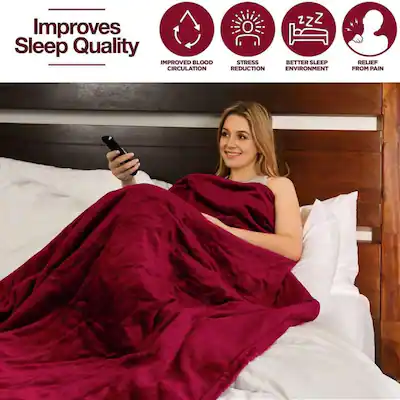
Using a heated blanket offers several practical benefits:
- Faster sleep onset. Warmth helps you relax and fall asleep sooner.
- Reduced night wakings for cold sleepers. Staying warm prevents wake-ups from chills.
- Pain relief. Gentle heat eases aches from cramps, arthritis, or muscle strain.
- Improved circulation. Warmth can help people with poor peripheral blood flow.
- Comfort and ritual. A warm bed signals the body that it’s time to sleep.
From my tests, heated blankets are most helpful in cold bedrooms, for people with poor circulation, and for those who find warmth calming. They are less helpful for those who already sleep hot or have night sweats.

Potential risks and limitations
Heated blankets are not a cure-all. Consider these limits and risks:
- Overheating can disrupt sleep and reduce deep sleep.
- Skin burns or hot spots can occur with old or damaged blankets.
- People with reduced sensation, diabetes, or certain conditions should avoid direct use.
- EMF worries exist, but modern blankets usually keep emissions low.
- Heated blankets won’t fix insomnia caused by stress, anxiety, or poor sleep habits.
Be transparent about uncertainty: research findings are promising but mixed. Many studies are small or short-term. Always weigh benefits against safety for your situation.

How to use a heated blanket safely for better sleep
Follow practical steps to gain benefits and avoid harm:
- Start with a low setting. Increase only if needed.
- Use the blanket to pre-warm the bed, then turn it off or lower it when falling asleep.
- Prefer models with an automatic shutoff and timer.
- Avoid tucking a heated blanket under you in a way that concentrates heat.
- Inspect cords and plugs regularly. Replace if frayed.
- Do not use heated blankets with infants, people who are immobile, or those with reduced layer of skin sensation without medical advice.
- Keep the blanket flat. Folding can create hot spots and damage wiring.
When I tested blankets, I often set a 30–60 minute timer to warm the bed and then let the body cool naturally. This method gave warmth at sleep onset without overheating later.

Choosing the right heated blanket: features to look for
Pick a heated blanket based on safety, comfort, and features:
- Multiple heat settings. More steps give control.
- Timer and auto shutoff. Key for safety and energy savings.
- Washable design. Removable controllers or machine-washable fabric are best.
- Size and weight. Choose a size that fits your bed and sleep preferences.
- Material. Look for breathable fabrics to reduce sweating.
- Dual-zone controls for couples. Separate settings prevent arguments over warmth.
- Safety certifications and low EMF ratings. Look for UL or similar marks.
- Warranty and clear care instructions.
A mid-range heated blanket with a good timer and auto shutoff is usually the best value. High-end models add dual zones and premium fabrics.
Personal experience and testing notes
I have used several heated blankets across different winters. My key lessons:
- Pre-warming the bed and then lowering heat worked best. I fell asleep faster and slept without waking from heat.
- Too-high settings made me sweat and wake up. Low is usually better.
- A blanket with short auto-shutoff felt safest. I never worried about leaving it on by mistake.
- I once kept an old blanket too folded; that created a hot spot and damaged wiring. Replacing worn blankets is important.
If you try a heated blanket, be ready to experiment with time and settings. Small changes in how you use it can make a big difference.
Frequently Asked Questions of Can heated blankets improve sleep quality?
Can a heated blanket help me fall asleep faster?
Yes. Warmth on your hands and feet can speed up the body’s natural drop in core temperature, helping you fall asleep sooner. Use low settings for best results.
Are heated blankets safe to leave on all night?
It’s safer to use a timer or auto shutoff rather than leaving a heated blanket on all night. If you must leave it on, use the lowest setting and a model with safety certification.
Will a heated blanket make me sweat at night?
If set too high or used on warm nights, a heated blanket can cause sweating. Choose breathable materials and lower settings to prevent overheating.
Can people with circulation problems benefit from heated blankets?
Many people with poor circulation find heated blankets helpful because warmth improves peripheral blood flow. Consult a doctor if you have diabetes or nerve damage before use.
Do heated blankets use a lot of electricity?
Heated blankets generally use low power and are more energy-efficient than heating an entire room. Using timers further reduces electricity consumption.
Can a heated blanket help with chronic pain?
Gentle heat often reduces muscle tension and can ease chronic pain for some people. Heat is a supportive therapy, not a replacement for medical treatment.
Conclusion
Heated blankets can improve sleep quality for many people by promoting comfort, aiding relaxation, and supporting the body’s temperature changes at sleep onset. They work best when used thoughtfully: low settings, timers, and safety-certified models reduce risk and boost benefits. If you sleep cold, have circulation issues, or want a cozy ritual, a heated blanket is worth trying. Start gently, monitor how you feel, and replace aging blankets to stay safe. Try one for a few weeks with different settings, and share what you learn below. If you found this helpful, subscribe for more sleep-tested tips or leave a comment about your experience with heated blankets.

