

Singles is one-on-one tennis; doubles is two-on-two, requiring wider court play and more teamwork.
I’ve coached and played both formats for years, so I know the real-world difference between singles and doubles tennis — from court lines to tactics to how you train. Read on for a practical, experience-based guide that explains rules, strategy, physical demands, drills, and simple tips you can use right away.

36% off Today’s Exclusive Deals
Limited-time Exclusive Deals. Check current discount on Amazon.
Check Price on Amazon As an Amazon Associate I earn from qualifying purchases.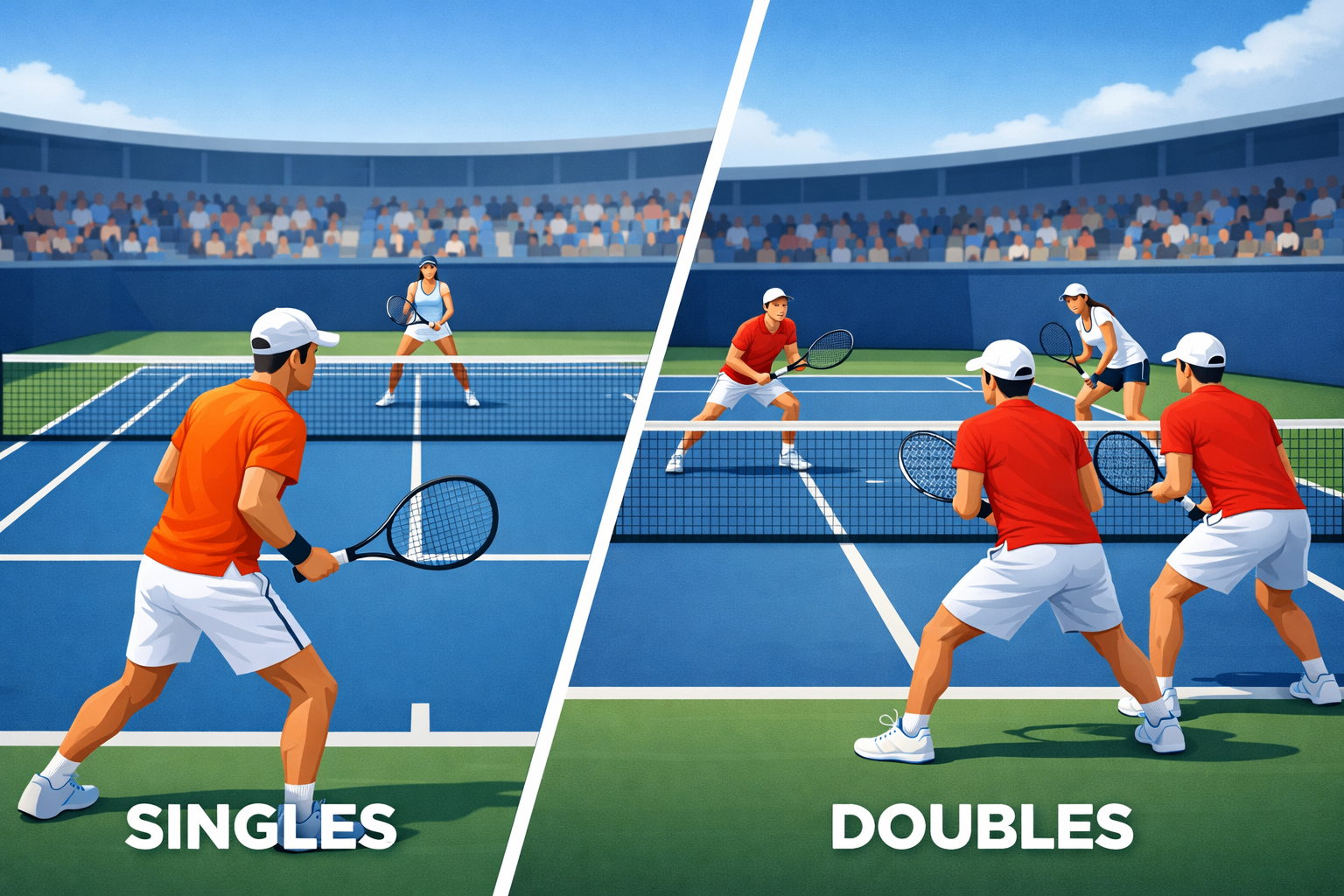
Key differences at a glance
- Players
- Singles: one player versus one player.
- Doubles: two players on each side (four total).
- Court use
- Singles uses the narrower court inside the doubles alleys.
- Doubles uses the full court width, including alleys.
- Primary emphasis
- Singles focuses on movement, endurance, and baseline control.
- Doubles focuses on teamwork, net play, and quick reflexes.
- Scoring and formats
- Basic scoring is the same, but many doubles events use match tiebreaks or no-ad scoring.
- Social and tactical differences
- Doubles is more social and strategic; singles is more about personal tactics and fitness.
These points summarize the practical difference between singles and doubles tennis and set the stage for deeper detail below.

Rules and court layout differences
Court dimensions and lines
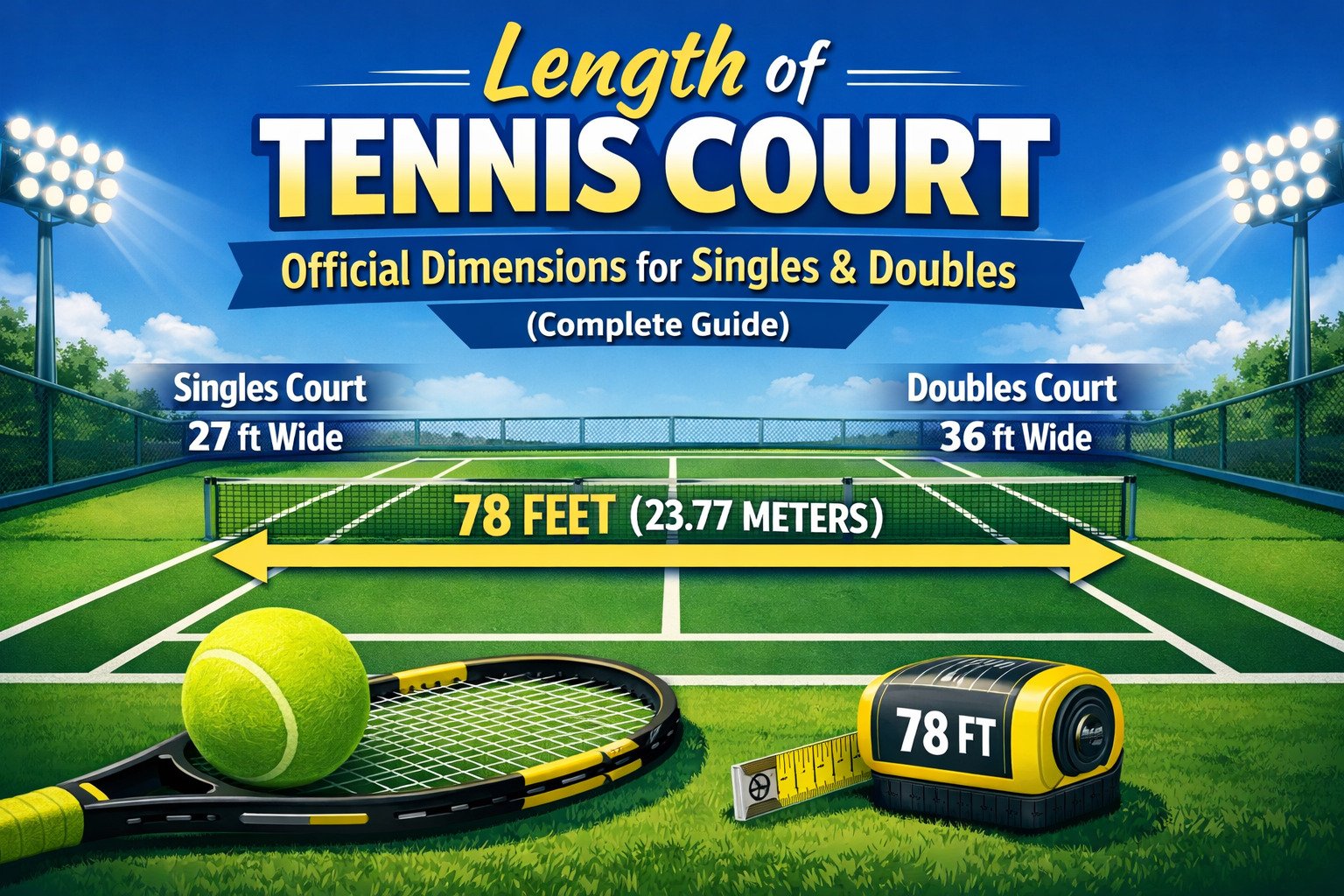
- The singles court excludes the alleys. The doubles court adds the alleys, making it 9 feet wider in total.
- Net height, baseline distance, and service boxes are the same for both formats.
Serving and order
- Singles: server alternates games; receiver stays in position.
- Doubles: teams rotate servers and receive in a set order; partners decide serving sequence before a set.
Scoring tweaks often used in doubles
- No-ad scoring: at deuce the next point wins the game.
- Match tiebreak: many doubles matches use a 10-point tiebreak instead of a third set.
- These rules speed play and make doubles more spectator-friendly.
Knowing the rule and court differences is essential to understand the strategic gap between singles and doubles tennis.
Strategy and tactics: singles vs doubles
Singles strategy
- Control the center of the court with deep, consistent shots.
- Use pace and placement to move your opponent and create openings.
- Patterns: baseline rally, approach, finish with a well-timed winner.
Doubles strategy
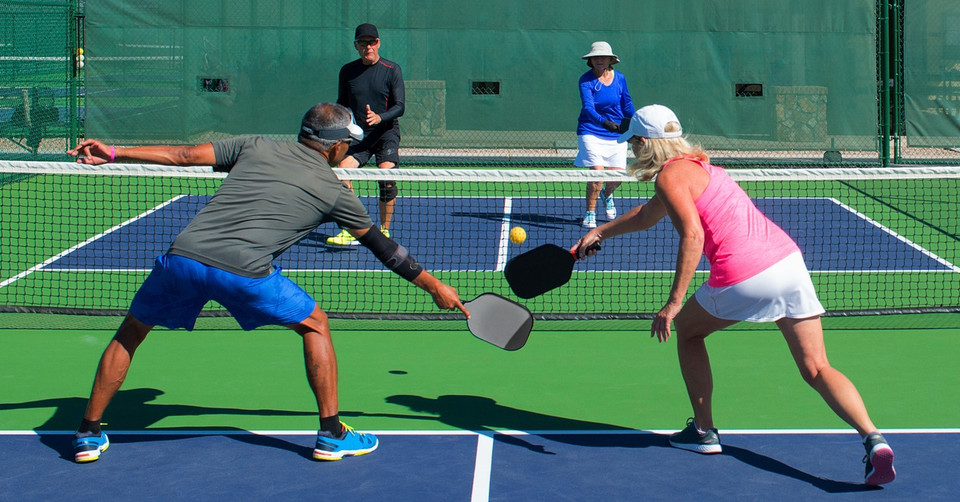
- Aim to control the net as a team.
- Use the serve and return to set up poaches and angled volleys.
- Communication and positioning matter: cover lobs, call poaches, and coordinate movement.
Practical tactical tips
- In singles, train for long rallies and construct points with patient shot selection.
- In doubles, practice quick exchanges, serve placement to the body, and coordinated poaches.
- The difference between singles and doubles tennis often comes down to how you use space and partners.
From my experience coaching club players, beginners who try to apply singles tactics in doubles tend to get beaten at the net. Learning simple signals and practicing cross-court patterns quickly improves doubles results.
Skills and physical demands
Singles physical demands
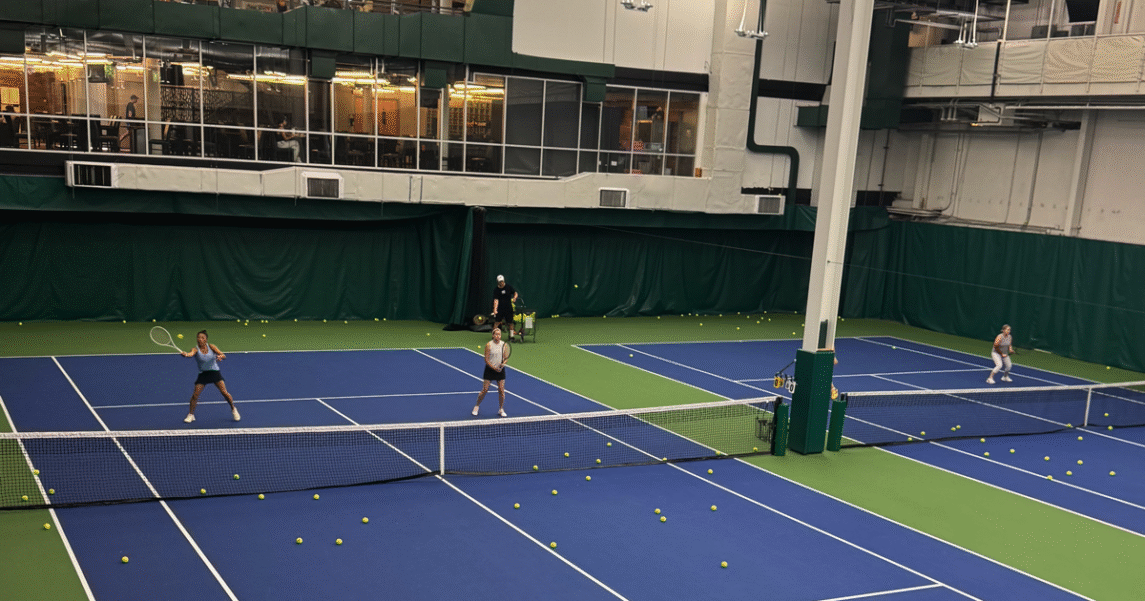
- High endurance and court coverage.
- Emphasis on lateral speed and recovery.
- Longer rallies require sustained focus and aerobic capacity.
Doubles physical demands
- Short bursts of speed and explosive reactions.
- Quick footwork near the net and fast hand-eye coordination.
- Less continuous running but more rapid direction changes.
Technical skills
- Serve: both formats need a reliable first serve, but doubles servers often focus on placement to set partner at net.
- Return: singles returns aim to neutralize pace; doubles returns aim to set up the net player.
- Volleys: critical in doubles; used less often but more decisively in singles.
I once shifted from singles to doubles mid-season. My baseline consistency helped me return well, but I needed focused volley drills to stop being passed at the net. The experience highlighted how the difference between singles and doubles tennis shows up in daily practice needs.

Equipment, scoring, and etiquette differences
Equipment and setup
- Racket choice is similar across both formats. Some players choose slightly more control or a lighter racket for doubles due to reflex volleys.
- Shoes are the same, but doubles players often favor quicker lateral support over long-distance cushioning.
Scoring nuances
- Standard scoring applies to both, but local doubles leagues may use match tiebreaks and no-ad scoring.
- Mixed doubles has the same basic rules but may introduce tactical differences based on player matchups.
Etiquette and court behavior
- Communication with your partner is expected in doubles; subtle calls like “mine” or “yours” prevent collisions.
- Avoid blaming partners publicly. Doubles rewards calm, positive teamwork.
- In singles, sportsmanship is more one-on-one; steady focus with polite handshakes at match end is standard.
Understanding these small but important differences between singles and doubles tennis helps you adapt gear and behavior to each format.
How to train for each format
Training tips for singles
- Endurance sets: 20–30 minute point play with baseline emphasis.
- Movement drills: side-to-side split-step and recovery drills.
- Pattern play: work on constructing points and finishing with an approach.
Training tips for doubles
- Net drills: reflex volley exchanges with a partner, practicing poaches.
- Serve and return drills: practice serving to set up partner positioning; practice returns to the feet or down the T.
- Communication drills: practice calling lobs, switching, and signaling planned poaches.
Sample weekly plan (two sessions)
- Session 1 (Singles focus): 40 minutes endurance, 20 minutes stroke work, 10 minutes serving.
- Session 2 (Doubles focus): 30 minutes net drills, 20 minutes serving/return patterns, 20 minutes match play focusing on positioning.
From my coaching notes: allocate at least one drill-focused session for doubles per week if you want to improve quick. Players who only hit baseline lose easy net points in doubles.

Quick PAA-style questions
How do court sizes differ in singles and doubles?
Singles uses the narrower court inside the doubles alleys; doubles uses the full width including alleys. The extra width changes angles and shot choices.
Is scoring different between singles and doubles?
Basic scoring is the same, but doubles often uses no-ad scoring and match tiebreaks to shorten matches. Tournament formats vary.
Should I train differently for singles versus doubles?
Yes. Singles needs endurance and movement drills, while doubles needs volley drills, serve placement, and partner communication practice.
Frequently Asked Questions of What is the difference between singles and doubles tennis?
What is the main difference between singles and doubles tennis?
The main difference is the number of players and how the court is used. Singles is one-on-one on a narrower court; doubles is two-on-two using the full court width and emphasizing team tactics.
Do singles and doubles use the same scoring system?
They use the same basic scoring, but doubles may use no-ad scoring or a match tiebreak in place of a third set. Tournament rules determine which variations apply.
Which format is better for beginners?
Doubles can be friendlier for beginners because court coverage is shared and points are often shorter. Singles builds fitness and consistency faster but can be more physically demanding.
Can the same player be good at both formats?
Yes. Some players excel at both, but each format rewards different strengths. Good singles players who want doubles success must add net skills and team communication.
How should I choose between singles and doubles for practice?
Choose based on goals: pick singles to improve stamina and point construction, pick doubles to improve volleys, serving strategy, and teamwork. Balance both to become a well-rounded player.
Conclusion
Understanding the difference between singles and doubles tennis helps you choose training, tactics, and match play that fit your goals. Singles rewards endurance and solo decision-making, while doubles rewards teamwork, net control, and quick reflexes. Pick practices that target the specific demands of each format, try both on court, and use small, focused drills to improve fast. Share your experiences or questions below, sign up for drills, or book a practice session to put these ideas into action.

