

Building a campfire is one of those classic outdoor skills that almost everyone wants to master. Whether you’re camping for the first time or looking to improve your wilderness know-how, the ability to build a safe, effective campfire connects you to nature in a special way.
But there’s more to it than just piling up some wood and lighting a match. From choosing the right spot to understanding fire safety, good campfire building is about preparation, knowledge, and respect for the environment. Let’s dive deep into the practical steps, tips, and science behind building a campfire that’s both enjoyable and safe.

36% off Today’s Exclusive Deals
Limited-time Exclusive Deals. Check current discount on Amazon.
Check Price on Amazon As an Amazon Associate I earn from qualifying purchases.Understanding The Purpose Of Your Campfire
Before you gather a single stick, think about why you need a campfire. Campfires serve multiple purposes:
- Cooking food
- Providing warmth
- Light for your campsite
- Social gathering point
- Emergency signaling
Each use can influence how you build your fire. For example, if you plan to cook, you’ll want a stable base and predictable heat. If it’s just for warmth, you might prefer a larger, longer-lasting fire. Deciding your goal helps you choose the right design and materials.
Safety First: Essential Campfire Precautions
Building a campfire comes with serious responsibility. Out-of-control fires can cause wildfires, injuries, and even death. Always follow these core safety rules:
- Check local regulations. Many parks and forests ban fires during dry seasons or require permits.
- Pick a safe spot. Use established fire rings or clear a 10-foot area free of grass, leaves, and overhanging branches.
- Keep water and a shovel nearby. Never start a fire without tools to control or put it out.
- Never leave a fire unattended. Assign a fire watch if you step away.
- Extinguish completely. Drown with water, stir ashes, and repeat until everything is cold.
Hidden Dangers Beginners Miss
- Roots underground: Fires built on top of roots can cause “ground fires” that smolder for days.
- Wind shifts: Even light breezes can blow sparks far from your campfire.
Always be extra cautious if it’s dry or windy. The smallest spark can become a disaster.
Gathering Materials: Fuel Types And Their Roles
A successful campfire needs three types of fuel:
- Tinder: Catches fire easily and starts the flame.
- Kindling: Small sticks that catch from the tinder and burn long enough to ignite larger wood.
- Firewood (fuelwood): Larger logs that keep the fire going.
Let’s look closer at each:
Tinder
Tinder is the foundation. Good tinder is dry, light, and fluffy. Examples include:
- Dry grass
- Pine needles
- Birch bark
- Cotton balls (especially with petroleum jelly)
- Commercial fire starters
Kindling
Kindling bridges the gap between tinder and firewood. It should be dry sticks or twigs, about the thickness of a pencil or your thumb.
Firewood
Larger pieces keep your fire burning. Use logs about as thick as your wrist or thicker. Hardwoods (like oak or maple) burn longer and hotter than softwoods (like pine or fir).
Here’s a simple table comparing common fuel types:
| Fuel Type | Ignition Speed | Heat Output | Best Use |
|---|---|---|---|
| Tinder (dry grass, birch bark) | Very Fast | Low | Starting fire |
| Kindling (small twigs) | Fast | Moderate | Building up flame |
| Firewood (logs) | Slow | High | Long-lasting fire |
Pro Tip: Beginners often forget to gather enough kindling. Always collect more than you think you’ll need.
Choosing The Best Campfire Location
Picking the right spot is just as important as building the fire itself. Follow these steps:
- Use existing fire rings if available. Never create a new scar unless absolutely necessary.
- Look for a flat, open area away from tents, low-hanging branches, and anything flammable.
- Clear a space at least 10 feet wide, scraping away leaves, grass, and debris down to bare soil.
- Avoid windy hilltops or deep valleys where smoke can settle.
Here’s a quick comparison of good and bad campfire locations:
| Location | Pros | Cons |
|---|---|---|
| Established fire ring | Safe, low environmental impact | May be crowded in busy campgrounds |
| Open sandy/gravel area | Easy to clear, less fire risk | Not always available |
| Under trees/in tall grass | None | High fire risk, damages roots and plants |
Insider Insight: Even if you’re in a hurry, never skip clearing the area. Fires spread faster than most people expect.
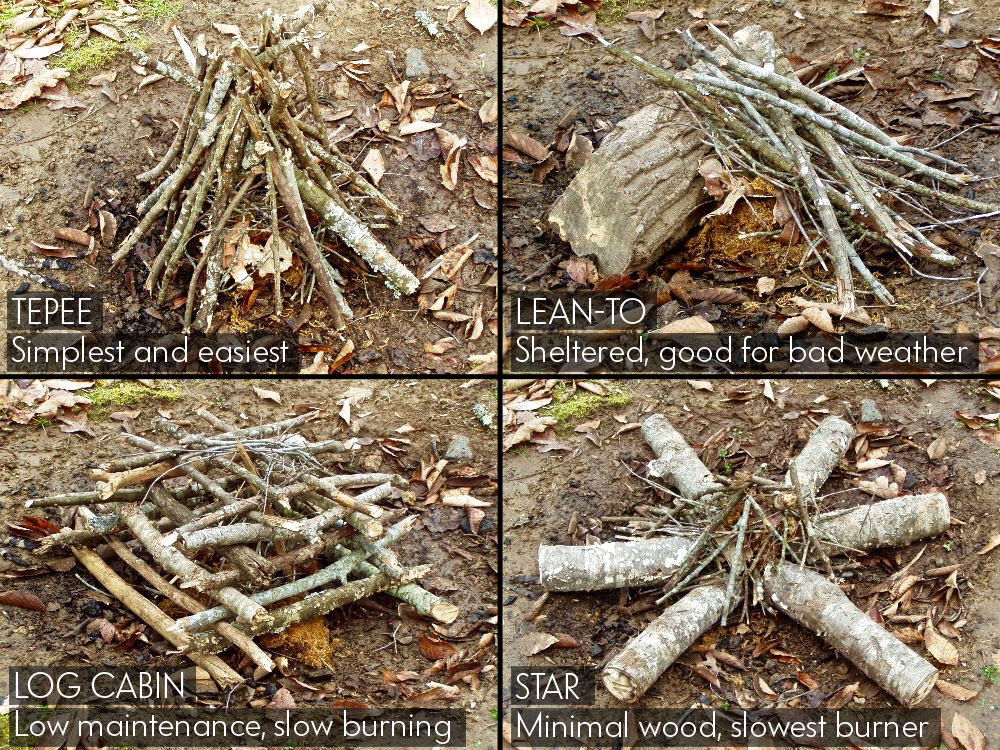
Campfire Designs: Which Shape To Build?
There are several classic ways to arrange your wood. Each has its own strengths. Here are the most common:
Teepee
Arrange tinder in the center. Lean kindling and small sticks around it like a teepee. Add larger sticks on the outside.
- Best for: Quick, hot fires that are easy to light.
- Downside: Can collapse as wood burns.
Log Cabin
Stack two logs parallel on the ground. Lay two more on top at a right angle, creating a square. Place tinder and kindling inside.
- Best for: Cooking, steady heat.
- Downside: Takes longer to start than a teepee.
Lean-to
Push a large stick into the ground at an angle. Lean smaller sticks against it, forming a “wall. ” Place tinder underneath.
- Best for: Windy conditions.
- Downside: Not as stable for big fires.
Star
Place the ends of several logs in a star shape, with tinder and kindling in the center. As the fire burns, push the logs inward.
- Best for: Conserving wood, long-lasting fires.
- Downside: Requires more attention as logs burn down.
Practical Note: For beginners, the teepee is usually the easiest to start. But if you plan to cook, try the log cabin for its stable base.
Step-by-step: How To Build And Light Your Campfire
Follow these clear steps for a safe, reliable campfire:
- Clear the Area
- Remove leaves, pine needles, and all debris.
- Dig a shallow pit if allowed and surround it with rocks.
- Lay Your Tinder
- Place a loose pile of tinder in the center. Don’t pack it too tightly; air helps the fire start.
- Build Your Structure
- Choose your design (teepee, log cabin, etc. ).
- Arrange kindling around or over the tinder.
- Stack firewood as needed, but don’t overload.
- Light the Tinder
- Use matches or a lighter. Light the tinder from multiple sides for best results.
- Blow gently at the base to feed oxygen.
- Add Fuel Gradually
- Once kindling is burning well, add small firewood.
- Increase to larger logs as the fire grows.
- Maintain the Fire
- Add wood as needed.
- Move embers around for even burning.
- Watch for shifting wind or sparks.
- Extinguish Fully
- Pour water over the fire.
- Stir the ashes and add more water.
- Repeat until everything is cold to the touch.
Non-Obvious Tip: If it’s been raining, look under fallen logs or inside dead branches for dry tinder. Surface wood may be wet, but the inside can be dry.
Fire Starting Methods: Matches, Lighters, And Beyond
The classic method is simple matches or a lighter. But what if you forget them, or they fail? Here’s a look at common and alternative fire starting methods:
Matches
- Pros: Cheap, easy, light.
- Cons: Don’t work well when wet or windy.
Lighters
- Pros: Reliable, reusable.
- Cons: Can run out of fuel, don’t work well in extreme cold.
Ferrocerium Rod (“ferro Rod”)
- Pros: Works when wet, lasts thousands of strikes.
- Cons: Requires good tinder and technique.
Magnesium Fire Starter
- Pros: Shavings burn very hot, works in wet weather.
- Cons: Takes practice to use effectively.
Fire Plough, Bow Drill (friction)
- Pros: No modern gear needed, great survival skill.
- Cons: Very difficult without training.
Chemical Fire Starters
- Pros: Fast, reliable even in wet conditions.
- Cons: Not environmentally friendly, adds weight to your pack.
Real-World Insight: Even experienced campers carry backup fire starters. Don’t rely on just one method.
Practical Campfire Cooking Tips
Campfire cooking is both fun and challenging. Here’s how to make it easier:
- Wait for your fire to burn down to hot coals. Flames are unpredictable for cooking.
- Use a camp grill or flat rocks to support pots and pans.
- Aluminum foil meals (“hobo packs”) cook well in coals.
- Rotate food often for even cooking.
- Never cook directly on flames; it leads to burnt outsides and raw insides.
Example: Simple Campfire Meal
Campfire Grilled Cheese Sandwich
- 2 slices bread
- 2 slices cheese
- 1 tablespoon butter
Spread butter on bread, place cheese in between, and wrap sandwich in foil. Place in hot coals for 3-5 minutes per side. Open carefully and enjoy.

Campfire Safety For Kids And Pets
Campfires are exciting, especially for children and animals. But they require extra caution:
- Set clear boundaries: Draw a “no-go” circle around the fire with a stick.
- Never allow running or horseplay near the fire.
- Supervise children at all times.
- Keep pets on a leash or away from the fire area.
Hidden Risk: Ashes and embers can stay hot for hours. Teach kids and pets not to dig in the ashes, even the next morning.
Environmental Responsibility And Leave No Trace
Campfires can have lasting impacts on nature. Follow Leave No Trace principles:
- Use established fire rings whenever possible.
- Burn only dead and downed wood—never cut live branches.
- Keep fires small and under control.
- Scatter cold ashes and return rocks to their place when finished.
- If fires are banned, respect the rules and use a camp stove instead.
For more on minimum-impact camping, visit the Leave No Trace Center for Outdoor Ethics.
Weather Factors: How Conditions Change Your Approach
Weather greatly affects how you build and manage a campfire.
- Rain: Collect and store dry tinder in a waterproof bag before you need it. Use bark or fatwood as they burn even when damp.
- Wind: Build a windbreak with rocks or logs. Use the lean-to design to shield the fire.
- Cold: Fires burn slower in freezing temperatures. Use extra tinder and kindling.
Here’s a quick table showing weather challenges and solutions:
| Weather Condition | Challenge | Solution |
|---|---|---|
| Rain | Wet wood, hard to light | Use bark, fatwood, or commercial starters |
| Wind | Sparks, hard to control flame | Build windbreak, use lean-to design |
| Cold | Slower burning, fuel freezes | Use more tinder/kindling, dry wood under shelter |
Underrated Tip: Carry a small piece of waxed cardboard. It lights easily and burns long enough to help start stubborn fires in wet weather.
Common Mistakes And How To Avoid Them
Many campfire problems come from simple mistakes. Here’s how to avoid the most common ones:
- Using wet or green wood: Only dry wood burns well.
- Building too large a fire: Start small and add wood as needed.
- Insufficient kindling: Gather more than you think necessary.
- Poor fire structure: Loose stacking lets air in, which is vital.
- Leaving fire unattended: Always keep an eye on your fire.
- Not putting fire out completely: Always check for lingering heat.
Expert Advice: If your fire goes out, don’t panic. Let it cool, then rebuild your structure and try again with fresh tinder and kindling.
Mastering Campfire Efficiency: Less Wood, More Heat
An efficient campfire gives you more warmth and cooking power with less wood. Here are strategies to maximize efficiency:
- Use dry hardwoods like oak or hickory for longer, hotter burns.
- Stack wood so air can flow freely.
- Build a small, dense fire for cooking and warmth; large fires waste fuel.
- Reflect heat back into your camp with rocks or a “fire wall.”
Comparing Firewood Efficiency
Here’s a brief look at how different wood types stack up:
| Wood Type | Burn Time | Heat Output | Smoke Level |
|---|---|---|---|
| Oak | Long | High | Low |
| Pine | Short | Medium | High (resinous) |
| Birch | Medium | Medium | Low |
Little-Known Insight: Splitting logs increases surface area, making them burn hotter and faster. Carry a small hatchet for splitting if possible.
Cleaning Up: Leaving No Trace
When you’re ready to leave, take time to clean up properly:
- Drown the fire with water, not just dirt. Dirt can insulate embers, keeping them hot.
- Stir ashes and embers with a stick or shovel.
- Touch the ashes to check for heat (use the back of your hand).
- Scatter cold ashes over a wide area, away from the campsite.
- Replace any rocks or logs you moved.
Leaving a clean campsite is a sign of respect for nature and the next campers.

Frequently Asked Questions
How Do I Start A Campfire If All The Wood Is Wet?
Look for dry wood under logs or inside standing dead trees. Carry a fire starter, like waxed cotton or a commercial cube. Use bark (especially birch) and break open branches to find dry core wood. Start with lots of tinder and small kindling, and protect your fire from rain with a tarp or your body.
Is It Safe To Cook Food Directly Over A Campfire?
Yes, but wait until the flames die down and you have a bed of hot coals. Coals provide even, steady heat. Cooking over flames often burns the outside and leaves the inside raw. Use a grill grate or foil for best results.
What Should I Do If My Campfire Starts To Spread?
Stay calm. Use water or dirt to smother the fire. If it grows beyond your control, alert others, move to safety, and call emergency services immediately. Never try to fight a large wildfire on your own.
Can I Use Charcoal In A Campfire?
Yes, but only if allowed by local rules. Charcoal burns hot and steady, making it good for cooking. However, it produces less flame and doesn’t create the “campfire experience” of crackling logs. Always dispose of charcoal safely.
Why Shouldn’t I Burn Trash In My Campfire?
Burning trash, especially plastic or foil, releases toxic fumes that harm you and the environment. Food wrappers can create strong smells that attract animals. Always pack out all trash and never burn anything but natural wood and paper.
Building a campfire is a skill that grows with experience. Every fire you build teaches you something new about wood, weather, and safety. With practice, you’ll find that a well-made campfire is more than warmth or light—it’s a memory in the making.
Always respect the power of fire, care for the land, and enjoy the deep satisfaction of mastering a classic outdoor tradition.

