

Meditation is no longer just for monks or spiritual seekers. Today, people from all walks of life turn to meditation to find peace, reduce stress, and improve their well-being. If you are new to meditation, you might feel a bit lost or unsure where to start.
Meditation seems simple—you just sit and breathe, right? But in reality, starting and maintaining a meditation practice can be challenging, especially with a busy mind or a busy life.

36% off Today’s Exclusive Deals
Limited-time Exclusive Deals. Check current discount on Amazon.
Check Price on Amazon As an Amazon Associate I earn from qualifying purchases.Learning how to meditate is like learning any new skill. At first, it may feel strange or even uncomfortable. You might wonder if you are doing it “right. ” You may get distracted or impatient. These feelings are normal. With the right guidance and some practice, meditation can become a natural and rewarding part of your daily routine.
This article will show you, in simple steps, how to meditate, explain common methods, offer practical tips, and help you avoid beginner mistakes.
What Is Meditation?
Meditation is a mental exercise that trains your attention and awareness. The goal is usually to calm the mind, improve focus, and sometimes reach a deeper understanding of yourself. Many people use meditation to manage stress, improve mental clarity, or simply find a few minutes of peace.
There are many types of meditation, but most share a few key elements:
- A quiet environment
- A comfortable posture
- Focused attention (on breath, sounds, a word, or sensations)
- An open, accepting attitude
Meditation is not about stopping your thoughts or emptying your mind. Instead, it is about observing thoughts without getting caught up in them.
The Science Behind Meditation
Research shows that regular meditation can bring real benefits. Studies have found that meditation can:
- Lower levels of the stress hormone cortisol
- Improve focus and memory
- Reduce symptoms of anxiety and depression
- Help with insomnia
- Lower blood pressure
A large study from Johns Hopkins University reviewed over 18,000 meditation studies and found that mindfulness meditation can help reduce psychological stress and anxiety. Even a few minutes a day can make a difference over time.
Different Types Of Meditation
There are many forms of meditation. Each has its own focus and benefits. Here is a quick comparison of some popular types:
| Meditation Type | Main Focus | Typical Practice |
|---|---|---|
| Mindfulness | Awareness of present moment | Observe thoughts, feelings, sensations |
| Guided | Visualization or instruction | Listen to a teacher or recording |
| Transcendental | Mantra repetition | Silently repeat a specific word/phrase |
| Loving-Kindness (Metta) | Cultivating compassion | Send positive wishes to self and others |
| Body Scan | Physical awareness | Focus on different body parts in turn |
For beginners, mindfulness and guided meditations are often the easiest to start with. Both help you learn how to notice your thoughts and feelings without judgment.
How To Prepare For Meditation
Before you begin meditating, some simple preparation can help make your experience more comfortable and effective.
1. Choose A Quiet Place
Find a space where you will not be disturbed. It does not need to be silent, but avoid loud noises and interruptions. Many people sit on the floor, a chair, or a cushion.
2. Pick A Comfortable Posture
You do not have to sit cross-legged on the floor. You can sit on a chair, on your bed, or even lie down (though lying down can sometimes make you sleepy). The most important thing is to keep your back straight but relaxed.
3. Set A Time Limit
If you are new, start with 5–10 minutes. You can increase the time as you get more comfortable. Setting a timer prevents you from worrying about the clock.
4. Decide On A Meditation Style
Choose a style that feels right for you. If you are unsure, start with mindfulness meditation or a guided meditation app.
5. Remove Distractions
Silence your phone and let others know not to disturb you for a few minutes. Some people like to dim the lights or light a candle to set a calm mood.
Step-by-step: How To Meditate For Beginners
If you have never meditated before, these simple steps can help you get started with basic mindfulness meditation:
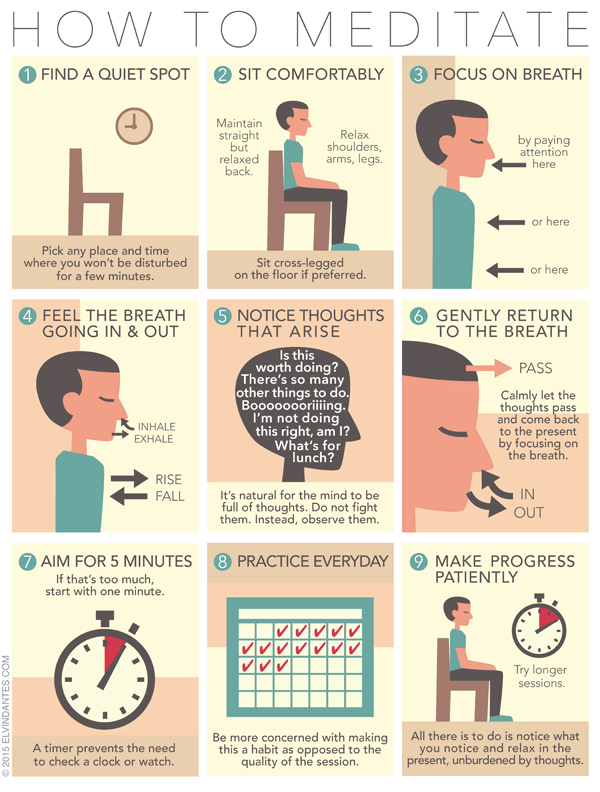
Step 1: Sit Comfortably
Find a relaxed but upright position. Sit in a chair with your feet on the floor, on a cushion with your legs crossed, or wherever feels comfortable. Rest your hands on your lap or knees.
Step 2: Close Your Eyes (if Comfortable)
Closing your eyes helps you focus inward. If you prefer, you can keep your eyes slightly open and focus on a spot in front of you.
Step 3: Notice Your Breath
Pay attention to your breathing. Feel the air moving in and out of your nose or mouth. Notice the rise and fall of your chest or belly.
Step 4: Focus Your Attention
Gently bring your attention to your breath. If your mind wanders (which it will! ), notice the thought, and gently return your focus to your breath.
Step 5: Be Kind To Yourself
Do not judge yourself for getting distracted. Everyone’s mind wanders. Each time you notice and return to your breath, you are training your attention.
Step 6: Finish Gently
When your timer rings, slowly open your eyes if they were closed. Notice how you feel. Take a moment before moving on with your day.
Common Challenges And How To Overcome Them
Every beginner faces some obstacles. Here are some common problems and solutions:
Restlessness Or Impatience
It is normal to feel restless or bored at first. Meditation is not about “doing nothing. ” You are training your mind to focus. If you feel restless, try shorter sessions or use a guided meditation.
Falling Asleep
If you often get sleepy, try meditating sitting up instead of lying down. Practice at a time when you are alert, not right before bed.
Too Many Thoughts
Your mind will not go silent. The goal is not to stop thinking but to observe thoughts as they come and go. Treat each thought like a cloud passing in the sky.
Discomfort Or Pain
You do not have to sit in a difficult posture. If you feel pain, adjust your position. Use a cushion or chair if needed. Meditation should not hurt.
How To Make Meditation A Daily Habit
Making meditation a regular part of your life is key to seeing benefits. Here are some practical ways to build the habit:
1. Attach Meditation To An Existing Routine
It is easier to remember your new habit if you connect it with something you already do. For example, meditate right after waking up, after brushing your teeth, or before bed.
2. Start Small
It is better to meditate for 5 minutes every day than 30 minutes once a week. Consistency is more important than duration.
3. Use Reminders
Set a daily alarm or put a note in a place you will see it. Some meditation apps send reminders.
4. Track Your Progress
Keep a simple log of your meditation sessions. Seeing your progress can be motivating.
5. Find A Meditation Buddy
Meditating with a friend can help keep you accountable. Even checking in with someone about your practice can be helpful.
Benefits Of Meditation: What The Research Shows
The benefits of meditation are not just spiritual or emotional. Many are backed by scientific studies.
Stress Reduction
One of the most well-known benefits is lower stress. Meditation can reduce production of cortisol, the main stress hormone. A study in Psychological Bulletin found that mindfulness-based therapy reduced anxiety, depression, and stress in 209 clinical trials.
Improved Focus And Attention
Meditation trains your attention. Regular practice can help you concentrate longer and be less distracted. Studies show that even a few weeks of meditation can improve attention span and working memory.
Better Emotional Health
Meditation is linked with reduced symptoms of anxiety and depression. Mindfulness practices help people become less reactive to negative thoughts and feelings.
Physical Health Benefits
Research suggests that meditation can help lower blood pressure, improve sleep, and boost immune function. Some studies also show benefits for people with chronic pain.
Enhanced Self-awareness
Some meditation styles help you understand yourself better. You become more aware of your habits, reactions, and feelings, which can help you make positive changes.
Here is a quick look at some key research findings:
| Benefit | Scientific Evidence | Time to Notice Change |
|---|---|---|
| Stress Reduction | Lowered cortisol in 8-week studies | 2–8 weeks |
| Improved Focus | Better scores in attention tests | 4–6 weeks |
| Better Sleep | Reduced insomnia in clinical trials | 4–8 weeks |
| Less Anxiety/Depression | Meta-analyses show moderate effect | 6–12 weeks |
Meditation Tools And Resources
Starting meditation can be easier with some helpful tools:
Meditation Apps
There are many apps that offer guided meditations, timers, and reminders. Some popular ones are Headspace, Calm, and Insight Timer. These apps make it easy to try different types of meditation and track your progress.
Guided Audio Or Video
If you prefer not to use an app, you can find free guided meditations on YouTube or meditation websites. Listening to a calming voice can help keep you focused.
Meditation Groups
Joining a group (in person or online) can give you support and motivation. Many cities have meditation centers or classes for beginners.
Books And Articles
If you like to read, there are many books on meditation for beginners. “Wherever You Go, There You Are” by Jon Kabat-Zinn is a classic introduction to mindfulness meditation.
For more scientific information, visit the National Center for Complementary and Integrative Health.
Advanced Tips To Deepen Your Practice
Once you are comfortable with basic meditation, you can explore ways to go deeper or try more advanced techniques.
Explore Different Styles
Try other types of meditation, such as loving-kindness, body scan, or mantra meditation. Each style trains your mind in a slightly different way and may offer new insights.
Increase Your Meditation Time
As you get used to meditating, try extending your sessions by a few minutes each week. Aim for 20–30 minutes if possible. Longer sessions can bring deeper calm and focus.
Practice Mindfulness In Daily Life
Meditation does not have to be limited to sitting still. Bring mindfulness into daily activities—eating, walking, or even washing dishes. Try to pay full attention to whatever you are doing.
Attend A Retreat Or Workshop
If you want to deepen your practice, consider joining a meditation retreat or workshop. These offer a chance to learn from experienced teachers and practice for longer periods.
Keep A Meditation Journal
Writing about your meditation experiences can help you notice patterns and track your progress. Note how you feel before and after each session and any insights you gain.
Two Insights Beginners Often Miss
- Discomfort is part of the process. Many beginners expect meditation to feel relaxing right away. But sometimes, you may notice uncomfortable thoughts or feelings. This is normal. Meditation helps you get to know your mind, not just calm it. Over time, you will get better at sitting with discomfort and letting it pass.
- Consistency matters more than technique. You do not need a perfect meditation posture or special skills. What matters most is practicing regularly. Even if your mind wanders a lot, you are still getting the benefits.
Frequently Asked Questions
How Long Should I Meditate As A Beginner?
Starting with 5–10 minutes a day is ideal for beginners. As you get more comfortable, you can slowly increase your meditation time. Many people find that 15–20 minutes is enough to feel the benefits, but even a few minutes can help.
What Is The Best Time Of Day To Meditate?
The best time is when you can practice consistently. Many people prefer to meditate in the morning to start their day calm and focused. Others like to meditate in the evening to unwind. Choose a time that fits your schedule and energy levels.
Do I Need To Sit Cross-legged On The Floor?
No, you can meditate in any comfortable position. You can sit on a chair, a cushion, or even stand or lie down. The key is to keep your back straight and avoid positions that cause pain or discomfort.
Is Meditation A Religious Practice?
Meditation has roots in many religions, but it is not necessarily religious. Many people meditate for health, focus, or stress relief. You do not need to follow any religion to practice meditation.
What If I Keep Getting Distracted?
It is normal to feel distracted, especially as a beginner. When you notice your mind wandering, gently bring your attention back to your breath or focus point. Each time you do this, you are strengthening your attention.
Meditation is a journey, not a race. Start simple, be patient with yourself, and enjoy the process of discovering a calmer, clearer mind. With regular practice, you will soon notice the difference in your day-to-day life.

