

If your garage feels like a dumping ground, you’re not alone. Many homeowners struggle to keep this space tidy. Garages often end up as storage for everything from old paint cans to holiday decorations, sports gear, and tools. Over time, this clutter can make it hard to find what you need—or even park your car.
But a clean, organized garage is possible. With smart planning and the right tools, you can transform your garage into a functional, stress-free space. This guide will show you how to organize a garage, step by step, with practical advice and tips for lasting results.

36% off Today’s Exclusive Deals
Limited-time Exclusive Deals. Check current discount on Amazon.
Check Price on Amazon As an Amazon Associate I earn from qualifying purchases.Why Organizing Your Garage Matters
Organizing your garage does more than make it look better. It can:
- Save time: You’ll find things faster.
- Protect valuables: Proper storage keeps items safe from damage.
- Increase home value: A neat garage can impress buyers.
- Create more space: You may even fit your car inside again.
Surprisingly, a survey by the National Association of Professional Organizers found that 50% of homeowners name the garage as the most disorganized area of their house. Tackling this project can give you a sense of control and accomplishment.
Make A Plan Before You Start
Jumping in without a plan leads to frustration. Before moving anything, take these steps:
- Set a goal: Decide what you want from your garage—storage, workspace, parking, or all three.
- Choose a date: Block off a weekend or a few evenings. Don’t try to do everything in one hour.
- Get supplies: Gather boxes, labels, trash bags, markers, and basic cleaning tools.
- Ask for help: Enlist family or friends. It’s faster and more fun.
Many people skip the planning stage, but this is a common mistake. Setting clear goals helps you make better decisions during the process.
Empty And Clean The Garage
The best way to organize is to start with a blank slate. Take everything out, section by section, and place it in your driveway or yard.
- Sort as you go: Create piles for keep, donate/sell, and toss.
- Sweep and clean: Use a broom and mop. Remove cobwebs and dust from walls and corners.
- Look for issues: Check for water leaks, pests, or mold. Deal with these problems before putting anything back.
Tip: If you find items you haven’t used in over a year, consider whether you really need them. Garages often hide forgotten clutter.
Sort And Categorize Your Items
Once your garage is empty, it’s time to sort. This step is key to staying organized long-term.
Group By Category
Arrange items into clear groups. Some common garage categories are:
- Sports equipment: Balls, bikes, helmets, skates
- Tools and hardware: Power tools, screws, nails, hand tools
- Seasonal items: Holiday decorations, snow shovels, pool gear
- Yard and garden supplies: Fertilizer, pots, hoses, rakes
- Automotive: Car fluids, cleaning supplies, spare parts
- Household overflow: Paper towels, canned goods, pet supplies
Decide What To Keep
Be honest. If it’s broken, outdated, or you have multiples, it’s time to let go. Donate usable items to charity or sell online. Hazardous waste, like old paint and batteries, should be disposed of safely—check your city’s rules.
Non-obvious Insight
Don’t forget to sort vertical space items. Things like ladders, folding chairs, or extension cords can be hung up later, freeing up floor space.
Design Your Storage System
Now that you know what you’re keeping, design a storage plan. The right system depends on your needs, budget, and garage size.
Map Your Space
Sketch your garage on paper. Measure walls, note obstacles like windows, doors, or water heaters. Mark areas for parking, workbench, and storage.
Choose Storage Solutions
Below is a comparison of popular garage storage options.
| Storage Type | Best For | Pros | Cons |
|---|---|---|---|
| Wall Shelves | Boxes, bins, tools | Easy to access, maximizes wall space | Open, can look messy if not tidy |
| Cabinets | Chemicals, valuables | Hidden storage, lockable | Costly, uses floor space |
| Pegboards | Hand tools, small items | Customizable, great visibility | Limited weight capacity |
| Overhead Racks | Seasonal, bulky items | Frees up floor space | Hard to reach, needs sturdy installation |
| Bins/Totes | Loose or small items | Stackable, protects from dust | Must be labeled, can hide mess |
Plan Zones
Divide your garage into zones based on activity or item type. For example:
- Sports zone near the door for easy access
- Tool zone with a workbench and pegboard
- Garden zone by the exterior wall
This makes it easier to find and return items, and keeps unrelated things from piling up together.
Install Storage And Organize
Now, the fun part—setting up your new system. This step makes your plan real.
Wall Storage
Install shelves, hooks, or pegboards. For heavy items like bikes, use wall-mounted racks or ceiling hoists. Always anchor shelves and hooks into studs for safety.
Cabinets And Drawers
Store chemicals, paints, and sharp tools in lockable cabinets—especially if you have kids or pets. Use drawer organizers for screws, nails, and other small hardware.
Overhead Storage
Mount ceiling racks for items you use less often, like holiday decor or camping gear. Always check weight limits. Never store anything flammable or very heavy overhead.
Use Clear Bins
For loose items, clear plastic bins let you see what’s inside. Label each bin clearly. Group similar items, such as “winter hats and gloves” or “car cleaning supplies. ”
Pegboards And Tool Racks
Pegboards are great for hand tools. Outline each tool’s spot with a marker so you always know where it goes. Magnetic strips also work for screwdrivers and pliers.
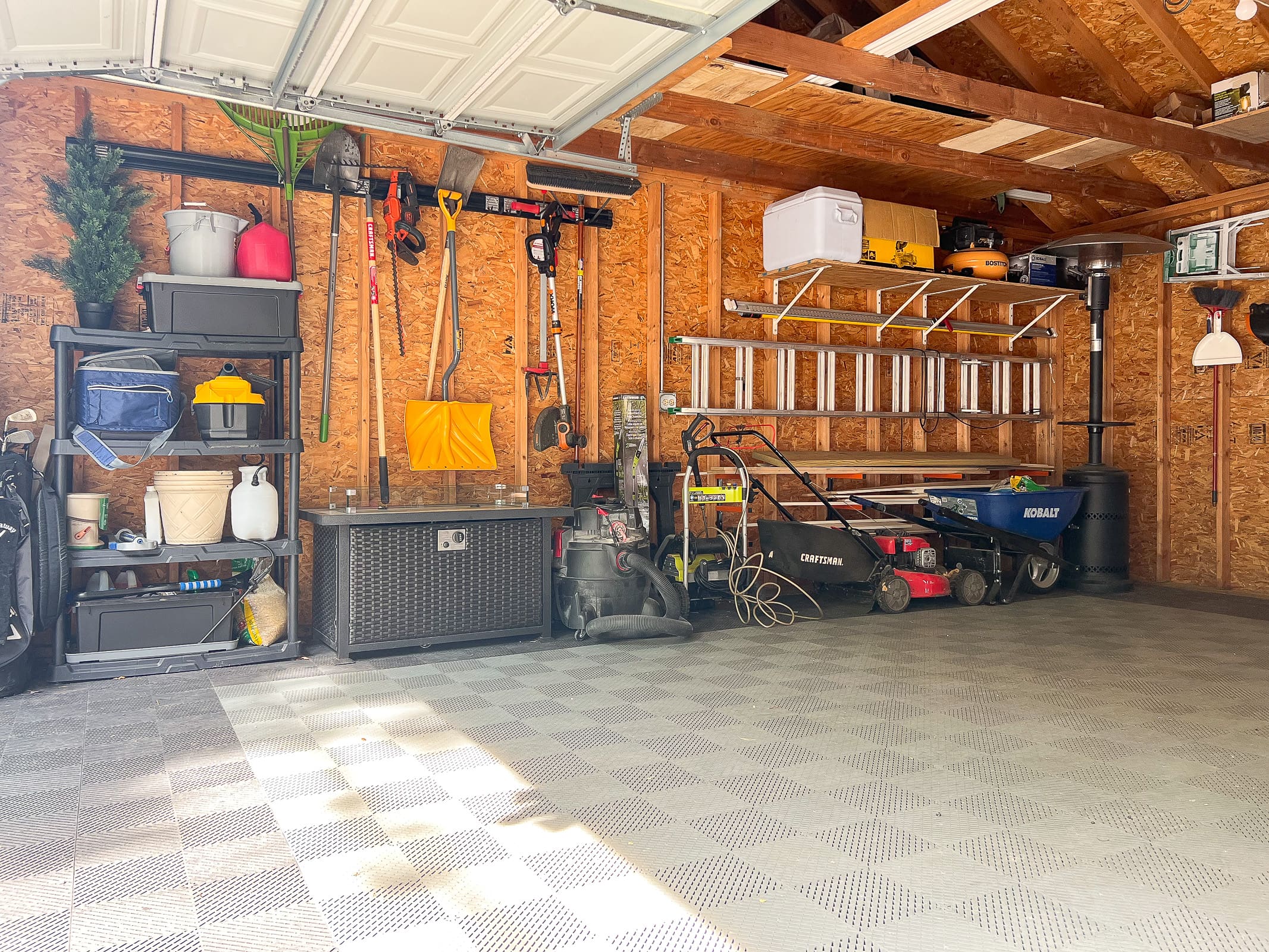
Example Storage Layout
Here’s a simple layout for a single-car garage:
- Left wall: Shelving for bins and yard supplies
- Back wall: Workbench, pegboard, tool storage
- Right wall: Sports racks, hanging bikes
- Ceiling: Overhead rack for holiday items
- Floor: Keep clear for parking
Organize For Safety
Safety is often overlooked in garage makeovers. Remember these points:
- Store chemicals up high or locked away
- Keep sharp tools out of children’s reach
- Don’t block electrical panels, water heaters, or vents
- Use sturdy ladders for overhead storage
- Check weight limits on racks and shelves
If you store gasoline, paint, or propane, make sure containers are sealed and away from heat sources.
Create A Maintenance Routine
Your garage will only stay organized if you build good habits. Try these strategies:
- Return items to their place after every use
- Sweep the floor monthly to spot clutter
- Do a deep clean every spring and fall
- Update labels if you change what’s stored
Many people forget this step. Without a routine, clutter returns quickly.

Common Mistakes To Avoid
Beginners often make these errors when organizing a garage:
- Underestimating time needed: Sorting and cleaning can take longer than you think.
- Buying storage before sorting: You may buy bins or shelves you don’t need.
- Ignoring vertical space: Walls and ceiling offer valuable storage.
- Mixing unrelated items: Keep categories separate to avoid future mess.
- Skipping maintenance: Organization is not a one-time job.
By avoiding these mistakes, your garage will stay neat much longer.
How To Choose The Right Storage Products
With so many options, it’s easy to get overwhelmed by storage products. Here’s how to make smart choices:
Assess Durability
Garages often have wide temperature swings. Choose shelves and bins made of metal or heavy-duty plastic. Avoid cardboard, which absorbs moisture.
Compare Product Features
Let’s look at two popular garage shelving types.
| Feature | Wire Shelves | Solid Plastic Shelves |
|---|---|---|
| Weight Capacity | 300-800 lbs/shelf | 200-600 lbs/shelf |
| Moisture Resistance | High | High |
| Air Flow | Excellent | Poor |
| Cleaning | Easy | Easy |
| Cost | Moderate | Low to Moderate |
Fit Your Space
Measure before you buy. Deep shelves hold more but can block pathways. Adjustable shelves give you flexibility as your needs change.
Read Reviews
Check online reviews for insights about assembly, strength, and customer service. Sites like Consumer Reports offer trusted product comparisons.
Special Tips For Small Garages
Small garages require extra creativity. Try these solutions:
- Use wall-mounted fold-down workbenches for projects
- Hang bikes vertically on hooks to free up floor space
- Install narrow shelves above windows or doors
- Store seasonal tires on wall racks
- Use corner shelves for awkward spaces
Remember: Every inch counts in a tight garage.
When To Call A Professional
Some situations call for expert help:
- Custom cabinets or large shelving units need proper installation.
- Major repairs or mold problems require specialists.
- Electrical upgrades (extra outlets or lighting) should be done by licensed electricians.
Professionals can design a system that fits your exact needs. While it costs more, the results are often safer and longer-lasting.
:max_bytes(150000):strip_icc()/GettyImages-2176939523-e2f15518d71646628c50ac0df485264f.jpg)
Garage Organization For Special Needs
If you use your garage for hobbies or have specific needs, adjust your setup.
Workshop Or Diy Space
Include a sturdy workbench, tool chest, and plenty of outlet access. Use lockable cabinets for power tools.
Home Gym
Install rubber flooring, wall-mounted racks for weights, and mirrors for workout feedback. Store small gear in labeled bins.
Laundry Area
If your washer/dryer is in the garage, place shelves nearby for detergent and cleaning supplies. Keep dirty laundry in hampers to prevent clutter.
Extra Pantry
Use metal shelving for canned goods and bulk household supplies. Keep food off the floor to avoid pests.
Each setup can be customized with the storage solutions already discussed.
Environmental Considerations
Think about the environment as you organize:
- Recycle old paint, batteries, and electronics—don’t toss in the trash
- Donate usable items instead of throwing them out
- Use LED lighting to save energy
- Seal cracks and insulate doors to reduce heating/cooling loss
Many cities offer recycling events for hazardous waste. Check your local government’s website for details.
Real-life Example: The Smith Family’s Garage
The Smiths, a family of four, faced a packed two-car garage. Bikes, camping gear, holiday decorations, and tools were everywhere. They couldn’t park even one car inside. Over one weekend, they:
- Emptied the garage and sorted everything into keep, donate, and toss piles.
- Installed wall shelves and overhead racks.
- Used clear bins with labels for kids’ sports gear and holiday items.
- Set up a workbench and pegboard for Dad’s tools.
- Created a “grab-and-go” zone by the door for backpacks and shoes.
In the end, they fit both cars inside and could find everything they needed. The key was planning, using vertical space, and getting the whole family involved.
Frequently Asked Questions
How Long Does It Take To Organize A Garage?
Most garages can be organized in a weekend if you plan ahead. If your garage is very cluttered, it may take longer. The key is to break the project into steps: empty, sort, clean, and install storage.
What Should Not Be Stored In A Garage?
Avoid storing important papers, photos, or clothing in the garage, as temperature changes and moisture can cause damage. Also, don’t store gasoline, propane, or paint near water heaters or other heat sources, and never keep food items that attract pests.
How Can I Keep My Garage Organized Long-term?
The best way is to return items to their place after every use, do a quick clean-up every month, and do a full re-organization once or twice a year. Labeling, clear bins, and regular checks for clutter help a lot.
What Is The Best Way To Store Bikes And Sports Gear?
Wall hooks, ceiling racks, and freestanding racks are all good choices, depending on your garage layout. Vertical storage saves floor space. Use bins or baskets for smaller items like balls and gloves.
Is It Worth Hiring A Garage Organization Service?
If you have a large or complicated garage, or want custom cabinets or flooring, a professional service can be a good investment. They can design and install solutions you might not think of and save you time. For basic organization, most people can DIY with good planning.
—
An organized garage is within reach, no matter how much clutter you have now. Start with a clear goal, make a plan, and tackle the project step by step. Remember, organizing isn’t just about cleaning up—it’s about creating a space that makes your life easier every day.
With the right approach, your garage can become one of the most useful and welcoming parts of your home.

