

Packing a suitcase seems simple until you’re standing over an open bag, trying to fit in everything you need without creating a wrinkled mess. Whether you’re preparing for a week-long vacation, a quick business trip, or a month abroad, knowing how to pack a suitcase can make your journey smoother and less stressful.
Good packing saves time, protects your belongings, and helps you avoid costly mistakes at airports or during travel.

36% off Today’s Exclusive Deals
Limited-time Exclusive Deals. Check current discount on Amazon.
Check Price on Amazon As an Amazon Associate I earn from qualifying purchases.Many travelers—both new and experienced—still struggle with packing efficiently. Overpacking, forgetting essentials, or ending up with a suitcase that’s too heavy are common problems. But packing is a skill you can master. With a bit of planning, the right techniques, and some smart choices, you can pack like a pro.
This guide covers everything you need to know about packing a suitcase: from choosing the right bag to fitting more in less space, protecting fragile items, staying organized, and avoiding common mistakes. You’ll also find practical tips, real examples, useful tables, and answers to the most frequently asked questions about suitcase packing.
Choosing The Right Suitcase
Your packing experience starts with the suitcase itself. The size, material, and features of your bag can make a huge difference.
Suitcase Sizes And Styles
Suitcases come in various sizes, usually measured by height in inches. The most common types are carry-ons (under 22 inches) and checked luggage (24 inches or larger). Here’s a quick comparison to help you decide:
| Suitcase Type | Best For | Typical Size | Weight Limit (Airlines) |
|---|---|---|---|
| Carry-On | Short trips, business travel | 18–22 inches | 15–22 lbs (7–10 kg) |
| Medium Checked | 1–2 week trips | 24–26 inches | 40–50 lbs (18–23 kg) |
| Large Checked | Long vacations, family travel | 28–32 inches | 50 lbs (23 kg) max |
Hard-sided suitcases protect fragile items but are less flexible for squeezing in extras. Soft-sided suitcases expand more easily but may not shield breakables as well. Four-wheel spinners roll smoothly in airports, while two-wheel bags are better for rough ground.
Key Suitcase Features
Look for these features when choosing a suitcase:
- Strong zippers and locks for security
- Expandable sections for extra space
- Lightweight frame to save weight for your belongings
- Multiple handles for easy lifting
- Internal pockets for organization
A suitcase with a bright color or unique tag can help you spot it quickly at baggage claim.
Planning What To Pack
Packing well starts before you even open your suitcase. A clear plan helps you avoid overpacking and missing essentials.
Make A Packing List
A packing list keeps you organized. Split your list into these categories:
- Clothing
- Toiletries
- Electronics
- Travel documents
- Medication
- Miscellaneous items
Check the weather at your destination. This one step prevents you from packing the wrong clothes—one of the most common mistakes. Research local customs, too. For example, in some countries, you’ll need to cover your shoulders or knees at religious sites.
Understand Airline And Travel Rules
Each airline has its own baggage size and weight limits. Exceeding these can lead to extra fees or forced repacking at the airport. Check your airline’s website before you start packing.
If you’re traveling internationally, some countries have strict rules about what you can bring in (food, plants, medications, etc. ). Always check these rules to avoid problems.
Set Priorities
You don’t need to pack for every possible situation. Instead, focus on:
- Weather-appropriate clothing
- Key toiletries (some can be bought at your destination)
- Travel documents (passport, ID, tickets)
- Chargers and adapters

How To Pack Clothes Efficiently
Clothing usually takes up the most space in a suitcase. Efficient packing can fit more and keep your clothes in better condition.
Choose Versatile Clothing
Pick clothes you can mix and match. A good rule is the 3:1 ratio—for every bottom (pants, skirt), bring three tops. Neutral colors (black, navy, gray, white) work well together.
Bring layers instead of bulky items. For example, a thin sweater and a jacket are better than a big, heavy coat if you need warmth.
Folding Vs. Rolling Vs. Packing Cubes
There’s debate about the best way to pack clothes. Here are the main methods:
| Method | Best For | Pros | Cons |
|---|---|---|---|
| Folding | Structured clothes (shirts, jackets) | Reduces wrinkles | Takes more space |
| Rolling | T-shirts, pants, casual wear | Saves space, easy access | Some wrinkling |
| Packing Cubes | All types, organized travelers | Very organized, compresses clothes | Cubes add slight weight |
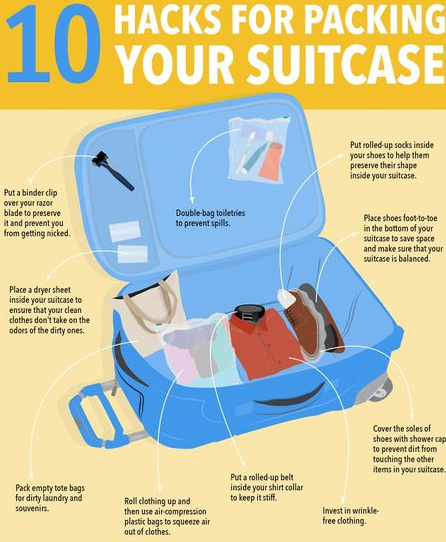
Most expert travelers combine methods. Fold dress shirts and jackets, roll casual clothes, and use cubes or zipper bags for underwear and socks.
Packing Order
Pack heavier items at the bottom (near suitcase wheels) to keep the bag balanced. Lay shoes first, then rolled or folded clothes, then lighter items on top.
If you need to pack a suit or dress, use a dry-cleaning bag around it to prevent wrinkles. Place it flat on top, then fold gently.
Shoes And Accessories
Shoes are heavy and can dirty other items. Place them in shoe bags or plastic bags. Pack socks or small accessories inside shoes to save space.
Limit yourself to two pairs of shoes: one for walking, one for dress or special events. Wear your heaviest pair while traveling.
Packing Toiletries And Liquids
Toiletries are small but can cause big problems if they leak or break rules.
Follow The 3-1-1 Rule
For carry-on bags in the US and many other countries, the 3-1-1 rule applies:
- Liquids, gels, aerosols must be in containers of 3.4 ounces (100 ml) or less
- All containers must fit in a single, clear, quart-sized zip-top bag
- One bag per passenger
Check for this rule if you’re flying, as security will confiscate larger items.
Leak-proof Packing
Even well-made bottles can leak due to air pressure changes. To prevent spills:
- Tighten all lids
- Place plastic wrap under caps before closing
- Put all liquids in sealed plastic bags
Solid toiletries (like bar soap, shampoo bars, or toothpaste tablets) won’t leak and often aren’t counted as liquids.
Minimize And Simplify
Bring only what you’ll use. Most hotels provide soap and shampoo. Consider travel-size containers and refillable bottles.
If you need special products (prescription creams, etc. ), pack them in original packaging with a label.
Electronics And Travel Documents
Electronics are valuable and often essential for modern travel. Documents are even more important—you can’t travel without them.
What To Bring
- Phone and charger
- Laptop or tablet (if needed)
- Universal adapter (for international travel)
- Power bank (for charging on the go)
- Headphones or earbuds
Keep all electronics together in a padded case or organizer. Store chargers and cables in small pouches to avoid tangling.
Travel Documents
Always carry original documents in your carry-on, not checked luggage:
- Passport and visas
- Driver’s license or ID
- Boarding passes and tickets
- Hotel and travel reservations (paper or digital copies)
- Emergency contacts
Scan or photograph all documents and email them to yourself in case of loss.
Money And Security
Bring a small amount of local cash, plus a credit or debit card. Use a money belt or neck pouch for extra security in crowded places.
Organizing And Maximizing Space
An organized suitcase is easier to unpack and repack. It also helps you find things quickly and keeps everything in good shape.
Packing Cubes And Compression Bags
Packing cubes divide your suitcase into sections (one for shirts, one for pants, etc.), making it easy to find things. Compression bags squeeze out air to reduce bulk—great for jackets or sweaters.
Use Every Space
Fill shoes with socks or small items. Place belts around the edge of the suitcase to save space. Slide flat items (books, papers) along the sides.
Keep Essentials Accessible
Pack things you might need during travel (medicine, a book, headphones, snacks) at the top or in outside pockets.
If you’re flying, pack a change of clothes in your carry-on, in case your checked bag is delayed.
Packing Fragile Or Special Items
Some items need extra care during packing, like electronics, glass bottles, or souvenirs.
Protecting Fragile Items
Wrap fragile objects in clothing or bubble wrap, and place them in the center of your suitcase, surrounded by soft items. Avoid placing them near the edges, where impacts are most likely.
Carrying Valuables
Never pack jewelry, large amounts of cash, or important documents in checked bags. Carry them with you at all times.
Dealing With Souvenirs
Leave space in your suitcase if you plan to bring back souvenirs or gifts. Bring an extra foldable bag if you expect to shop.
Common Packing Mistakes And How To Avoid Them
Even experienced travelers make packing errors. Here’s how to avoid the most common ones:
- Overpacking – Lay out everything you want to bring, then remove one-third. You rarely need as much as you think.
- Ignoring weight limits – Weigh your suitcase before leaving home. Many airlines charge high fees for overweight bags.
- Forgetting essentials – Double-check your packing list, especially for chargers, medication, and documents.
- Packing for every “just in case” – Stick to what you’ll actually use, not what you might use.
- Not protecting liquids – Always pack liquids in sealed bags, even in checked luggage.
- Leaving no room for souvenirs – Pack a little less than full so you have space for things you buy on your trip.
- Skipping weather research – Check the forecast and pack accordingly.
- Packing valuables in checked luggage – Always keep valuables with you.
- Poor organization – Use cubes, pouches, and bag sections to keep things easy to find.
Special Packing Tips For Different Types Of Travel
Packing can look different depending on your trip. Here’s how to adapt your strategy:
Business Travel
- Use a garment bag or suitcase section for suits and dresses.
- Pack wrinkle-free clothing or bring a travel steamer.
- Keep business materials (laptop, documents) in your carry-on.
Adventure Or Outdoor Trips
- Pack quick-dry clothing and layers.
- Bring sturdy shoes and a rain jacket.
- Use plastic bags for dirty or wet clothes.
Family Travel
- Pack one set of clothes per day for kids, plus extras.
- Use color-coded cubes or bags for each family member.
- Bring snacks, small toys, and first-aid supplies.
Long-term Travel
- Choose clothing you can wash and wear many times.
- Bring travel-size detergent for sink washing.
- Rotate what you wear instead of packing too much.
Sample Packing List For A One-week Trip
Here’s an example for a warm-weather, one-week vacation:
- 4 T-shirts or casual tops
- 2 dress shirts or blouses
- 2 pairs of pants or jeans
- 1 pair of shorts or skirt
- 1 light jacket or sweater
- 1 set of pajamas
- 1 swimsuit
- 5 pairs of underwear
- 4 pairs of socks
- 2 pairs of shoes (walking, sandals/dress)
- Toiletries (toothbrush, toothpaste, deodorant, sunscreen, razor)
- Phone and charger
- Travel documents (passport, ID, tickets)
- Sunglasses, hat, book, snacks
Adjust for your needs and destination. Always check weather and activities planned.
How To Repack For The Return Trip
Packing for the return is often harder due to dirty laundry and souvenirs. Here’s how to manage:
- Use a separate bag for dirty clothes.
- Pack breakables in the center, wrapped in clothing.
- Place souvenirs and gifts at the top, so you can declare them at customs if needed.
- Re-weigh your suitcase to avoid surprise fees.
- Leave out travel-size toiletries that are nearly empty to save space.
Smart Packing: Non-obvious Insights
Travelers often miss these advanced tips:
- Weigh your bag at home using a luggage scale. Even shoes and books can add up quickly. Knowing your bag’s weight saves stress at the airport.
- Photograph your packed suitcase before closing it. If your bag is lost, you’ll have proof of what was inside for airline claims or insurance.
- Use a digital tracker (like AirTag or Tile) in your suitcase for extra peace of mind, especially on international flights.
- Pack a small laundry bag or plastic bag for dirty clothes, so they don’t mix with clean ones.
- Split your belongings if traveling with a partner or family—put some clothes in each bag, so everyone has something if a bag is lost.
These steps may seem small, but they often make a big difference.
Sustainable And Eco-friendly Packing
Travelers can reduce waste and save money by packing smart:
- Use reusable bottles for toiletries.
- Bring a refillable water bottle.
- Pack a small tote bag for shopping to avoid plastic bags.
- Choose clothing made of quick-dry, eco-friendly materials.
You’ll help the planet and make your trip easier.
Useful Packing Resources
For more expert packing tips, you can visit the TSA’s official What Can I Bring? page, which provides up-to-date rules for US flights and useful advice for all travelers.
:max_bytes(150000):strip_icc()/how-to-pack-a-suitcase-2000-4704f7f6898e4f7a9683d5b78db609fc.jpg)
Frequently Asked Questions
What Is The Best Way To Prevent Clothes From Wrinkling?
Fold structured clothes and place them in dry-cleaning bags, as the slippery surface reduces wrinkles. Rolling casual clothes also helps. Unpack and hang items as soon as you arrive.
How Can I Fit More Into My Suitcase Without Overpacking?
Use packing cubes or compression bags, roll your clothes, and wear your bulkiest shoes or jacket while traveling. Stick to a color scheme so you can mix and match outfits.
Should I Lock My Suitcase?
Yes, use a TSA-approved lock for checked bags. This keeps your suitcase secure but lets airport security open it if needed. Never lock your suitcase with a non-approved lock, as it may be cut off.
What Should I Do If My Suitcase Is Lost?
Report the loss immediately at the airport’s baggage counter. Give them your bag’s details and tracking number. Having a photo of your suitcase and its contents helps. Most airlines deliver lost bags within 24–48 hours.
Can I Bring Food Or Liquids In My Suitcase?
Solid foods are usually allowed, but check airline and country rules. Liquids over 3. 4 oz (100 ml) are not allowed in carry-on bags. Always check local regulations, as some foods (meat, dairy, fresh produce) are restricted in many countries.
Packing a suitcase well takes practice, but every trip is a new chance to improve. With the right planning and techniques, you’ll travel lighter, stay organized, and enjoy your journey more. Safe travels!

