

Solving algebra problems can feel confusing, especially when you’re just starting out. But with the right approach, even the toughest equations become easier to manage. Algebra is not just about numbers and letters—it’s about finding patterns, solving puzzles, and developing logical thinking.
Many students worry about making mistakes, but every great problem solver started with the basics. This article is designed to help you master algebra, from understanding simple expressions to solving advanced equations. You’ll find clear explanations, practical examples, and strategies that work in real life.

36% off Today’s Exclusive Deals
Limited-time Exclusive Deals. Check current discount on Amazon.
Check Price on Amazon As an Amazon Associate I earn from qualifying purchases.Let’s explore how to solve algebra problems step by step and build your confidence with every question.
What Is Algebra And Why Does It Matter?
Algebra is a branch of mathematics that uses symbols (like x or y) to represent numbers in formulas and equations. Instead of working only with known values, algebra allows you to solve for unknowns and describe patterns. It’s used in science, engineering, finance, computer programming, and even everyday life. For example, if you want to plan your budget, calculate travel times, or figure out how much paint you need for a wall, you’re using algebra.
Some students think algebra is just for mathematicians, but it’s everywhere. Learning to solve algebra problems helps you improve your problem-solving skills, logical thinking, and ability to break down complex tasks.
The Building Blocks Of Algebra
Before you start solving problems, it’s important to know the basic terms and concepts.
- Variable: A symbol (usually a letter) that stands for an unknown number. Example: x, y, z.
- Constant: A fixed number. Example: 3, -7, 12.
- Coefficient: The number in front of a variable. Example: In 4x, 4 is the coefficient.
- Expression: A combination of variables, numbers, and operations (no equals sign). Example: 2x + 5.
- Equation: Two expressions set equal to each other. Example: 2x + 5 = 11.
Understanding these terms is the first step to solving any algebra problem.

Types Of Algebra Problems
Algebra covers a wide range of problems. Some of the most common include:
- Simplifying Expressions
- Solving Equations
- Solving Inequalities
- Word Problems
- Working with Graphs
Let’s explore each type and how to approach them.
Simplifying Expressions
This means reducing an expression to its simplest form. You combine like terms and use rules of arithmetic.
Example:
Simplify: 3x + 5x – 2
Solution:
Combine like terms (terms with the same variable):
3x + 5x = 8x, so the simplified expression is 8x – 2.
Solving Equations
This is about finding the value of the variable that makes the equation true.
Example:
Solve: 2x + 3 = 11
Solution:
- Subtract 3 from both sides: 2x = 8
- Divide both sides by 2: X = 4
Solving Inequalities
Similar to equations, but instead of an equals sign, you have symbols like >, <, ≥, or ≤.
Example:
Solve: 5x – 2 > 8
Solution:
- Add 2 to both sides: 5x > 10
- Divide both sides by 5: X > 2
Word Problems
These are problems written in sentences, not just numbers and symbols. You need to translate the words into algebraic equations.
Example:
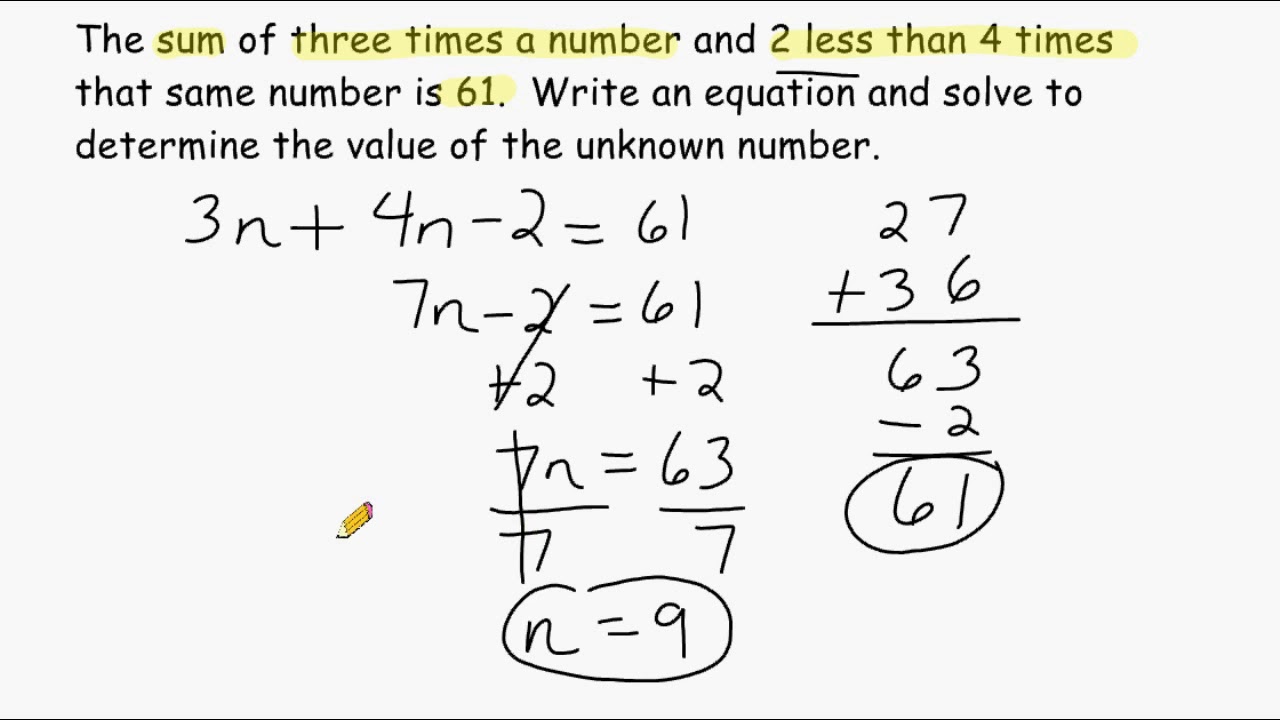
Sarah has three times as many apples as Tom. Together, they have 16 apples. How many apples does Tom have?
Let Tom have x apples.
Sarah has 3x apples.
Total Apples: X + 3x = 16
4x = 16
X = 4
So, Tom has 4 apples.
Working With Graphs
Algebra often involves plotting equations on graphs to visualize solutions and relationships.
For example, the equation y = 2x + 1 is a straight line. Each value of x gives you a value of y.
Step-by-step Approach To Solving Algebra Problems
Let’s break down the steps you should follow, no matter what type of problem you’re solving.
1. Read And Understand The Problem
Take your time. Read the problem carefully. Identify what is given and what you need to find.
2. Translate Words Into Math
If it’s a word problem, rewrite it as an equation. Assign variables to unknowns.
3. Organize Like Terms
Combine terms with the same variables. This makes the equation simpler.
4. Perform The Same Operation On Both Sides
Whether you add, subtract, multiply, or divide, always do the same to both sides of the equation. This keeps the equation balanced.
5. Isolate The Variable
Your goal is to get the variable by itself on one side of the equation.
6. Check Your Answer
Substitute your solution back into the original equation. Make sure both sides are equal.
7. Answer In Context
If it’s a word problem, write a sentence with your answer.
Common Strategies For Different Algebra Problems
Different types of algebra problems need specific strategies. Here’s how to approach them.
Linear Equations
A linear equation is an equation where the highest power of the variable is 1. It looks like ax + b = c.
Steps:
- Move all terms with variables to one side.
- Move constants to the other side.
- Divide to isolate the variable.
Example:
Solve: 5x – 7 = 18
Add 7 To Both Sides: 5x = 25
Divide By 5: X = 5
Equations With Variables On Both Sides
Example:
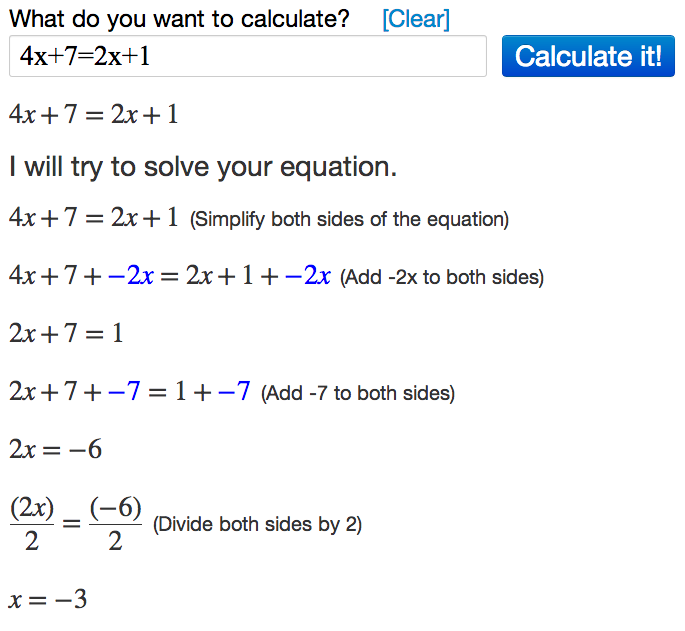
Solve: 3x + 5 = X + 13
Subtract X From Both Sides: 2x + 5 = 13
Subtract 5 From Both Sides: 2x = 8
Divide By 2: X = 4
Systems Of Equations
Here, you solve two or more equations at once.
Example:
X + Y = 10
X – Y = 2
Add both equations:
(x + y) + (x – y) = 10 + 2
2x = 12
X = 6
Now plug x into the first equation:
6 + Y = 10
Y = 4
Quadratic Equations
These have the form ax² + bx + c = 0.
There are several ways to solve:
- Factoring
- Quadratic formula
- Completing the square
Let’s compare the methods in the table below:
| Method | When to Use | Example | Pros/Cons |
|---|---|---|---|
| Factoring | Simple quadratics with integer roots | x² – 5x + 6 = 0 | Quick but not always possible |
| Quadratic Formula | All quadratics | x² + 3x – 4 = 0 | Works every time, but needs calculation |
| Completing the Square | Perfect square trinomials | x² + 6x + 9 = 0 | Useful for certain forms |
Word Problems: Translating Words Into Algebra
Many students find word problems hard. Here’s a step-by-step way to handle them.
- Identify the unknown: What are you trying to find? Assign it a variable.
- Write what you know: Turn information into equations.
- Set up an equation: Match the relationships in the problem.
- Solve: Use algebra skills to find the answer.
- Check: Does your answer make sense in the story?
Example:
A movie theater sold 120 tickets. Child tickets cost $5, adult tickets cost $8. The total income was $780. How many of each ticket were sold?
Let c = number of child tickets, a = number of adult tickets.
C + A = 120
5c + 8a = 780
Now solve this system using substitution or elimination.
Solving Inequalities
Inequalities are similar to equations, but with >, <, ≥, or ≤.
Important note: If you multiply or divide by a negative number, flip the inequality sign.
Example:
-2x + 4 < 10
Subtract 4: -2x < 6
Divide By -2 (flip Sign): X > -3
Graphical Solutions
Graphing helps you see solutions visually. For example, the solution to a system of equations is the point where two lines cross.
Here’s a quick comparison:
| Method | Advantages | Disadvantages |
|---|---|---|
| Graphing | Visual understanding, shows all solutions | Less precise for complex numbers |
| Algebraic | Exact values, works for all equations | Can be time-consuming |
Common Mistakes And How To Avoid Them
Even experienced students make mistakes. Here are some to watch for:
- Forgetting to do the same operation to both sides: This breaks the balance of the equation.
- Dropping negative signs: Always be careful with subtraction and negative numbers.
- Not checking the solution: Plug your answer back into the equation.
- Combining unlike terms: Only combine terms with the same variable and exponent.
- Flipping the inequality sign incorrectly: Only flip when multiplying or dividing by a negative.
How To Practice And Improve Your Algebra Skills
Getting better at algebra takes practice, but smart practice matters more than just doing many problems.
- Start Simple: Master basic equations before moving to harder ones.
- Mix Problem Types: Don’t just do one kind—practice equations, inequalities, and word problems.
- Use Real-Life Examples: Apply algebra to things you care about, like budgeting or travel plans.
- Explain Your Steps: Teaching someone else or writing out your explanation helps you understand better.
- Time Yourself: See how fast you can solve basic problems without making mistakes.
Here’s a brief study schedule to help you improve:
| Day | Focus Area | Practice Time |
|---|---|---|
| Monday | Simplifying expressions | 30 minutes |
| Tuesday | Solving linear equations | 30 minutes |
| Wednesday | Word problems | 30 minutes |
| Thursday | Systems of equations | 30 minutes |
| Friday | Review and test yourself | 30 minutes |
Non-obvious Tips For Mastering Algebra
Some advice is not always taught in class but can make a big difference:
- Draw diagrams for word problems: Visuals can help you understand the relationships in the problem.
- Use estimation to check answers: If your solution is way off from what you expect, look for calculation errors.
- Look for patterns: Many algebra problems repeat similar forms. Spotting these can save time and effort.
- Rewrite problems in your own words: Sometimes, rephrasing a question makes it clearer.
When To Use A Calculator—and When Not To
Calculators are helpful, but don’t become dependent on them. Use them to check your answers, not to do every step. For simple equations, try to solve them by hand first. This builds mental math skills, which are important for exams and real life.
However, for more complex calculations—like the quadratic formula or large numbers—a calculator saves time and reduces mistakes.
Where To Find Quality Algebra Resources
The internet offers many resources for learning algebra, but not all are equal. Some reliable sources include:
- Khan Academy: Free lessons and practice problems.
- Purplemath: Clear explanations and examples.
- Math is Fun: Simple language and lots of visuals.
- Your local library or school resources.
For more advanced topics and proofs, check resources like Wikipedia for deeper reading.
Frequently Asked Questions
What Is The Best Way To Start Learning Algebra?
Start by understanding the basic terms: variables, constants, coefficients, and expressions. Practice simple equations and gradually move to more complex problems. Use everyday situations to make the concepts real.
How Can I Avoid Making Mistakes In Algebra?
Work slowly and carefully. Always do the same operation to both sides of the equation. Check your answer by plugging it back into the original equation. Watch out for negative signs and be careful with arithmetic.
Why Do I Need To Learn Algebra?
Algebra helps you develop logical thinking and problem-solving skills. It’s used in many careers, including science, technology, engineering, and finance. Even in daily life, algebra helps with tasks like budgeting, cooking, and planning.
What Should I Do If I Get Stuck On A Problem?
Break the problem into smaller steps. Look for similar examples in your textbook or notes. Ask a friend or teacher for help, or search online for explanations. Sometimes, taking a short break and returning with fresh eyes helps.
How Can I Get Faster At Solving Algebra Problems?
Practice regularly and focus on understanding, not just memorizing steps. Time yourself as you solve practice problems. Learn to spot patterns and common problem types. Over time, your speed and confidence will grow.
Solving algebra problems is a journey, not just a skill. With patience, practice, and the right strategies, you’ll find that even the hardest problems become manageable. Remember, every expert was once a beginner. Keep practicing, stay curious, and don’t be afraid to ask questions.
Algebra is a powerful tool that will serve you well in school and beyond.

