

Tying fishing knots is a skill every angler must master. No matter how strong your fishing line or advanced your rod, the wrong knot can mean losing a trophy fish—or worse, missing the moment completely. Many beginners struggle with knots that slip, break, or take too long to tie.
In reality, a handful of reliable knots will cover almost any fishing situation. This guide will show you, step by step, how to tie the most essential fishing knots, explain when to use each one, and share real tips from experienced anglers.

36% off Today’s Exclusive Deals
Limited-time Exclusive Deals. Check current discount on Amazon.
Check Price on Amazon As an Amazon Associate I earn from qualifying purchases.By the end, you’ll know exactly which knot to use and how to tie it with confidence.
Why Fishing Knots Matter
The right knot can make the difference between landing a fish and watching it swim away. Fishing knots connect your line to hooks, lures, swivels, and even other pieces of line. Each knot must balance strength, speed, and reliability. Some are best for tying on hooks, others for joining lines, and a few are designed for slippery braided lines.
According to a study by the American Fishing Tackle Manufacturers Association, over 50% of lost fish are due to knot failure. This proves that learning the best knots is just as important as choosing the right bait or finding the perfect spot.
Essential Fishing Knots Every Angler Should Know
Let’s focus on the knots that cover the widest range of fishing needs. Mastering these will handle almost any scenario, from lake bass to saltwater giants.
1. Improved Clinch Knot
This is the go-to knot for attaching a hook, lure, or swivel to your line. It’s quick, simple, and strong.
How to tie:
- Thread the line through the eye of the hook, leaving about 6 inches free.
- Wrap the tag end around the standing line 5–7 times.
- Pass the tag end through the small loop near the eye.
- Pass it through the big loop you just created.
- Moisten the knot and pull both ends to tighten.
When to use: Best for monofilament and fluorocarbon lines. Avoid with slippery braided line.
Common mistake: Wrapping too few times—this weakens the knot.
2. Palomar Knot
A favorite for its strength and simplicity, the Palomar knot is perfect for attaching hooks and lures, especially with braided line.
How to tie:
- Double 6 inches of line and pass the loop through the hook’s eye.
- Tie a loose overhand knot with the doubled line.
- Pass the hook or lure through the loop.
- Moisten and pull all four ends to snug the knot.
When to use: Great for both braided and mono lines.
Non-obvious tip: Always check that the hook is not caught in the knot—this can cut the line under pressure.
3. Uni Knot
The Uni knot is versatile, strong, and easy to learn. It’s used for tying hooks, connecting lines, or even making line loops.
How to tie:
- Pass the line through the hook eye and double back to form a loop.
- Wrap the tag end around the double line and through the loop 5–6 times.
- Moisten and pull the tag end to tighten, then pull on the standing line to slide the knot down.
When to use: Works with all line types.
Practical insight: It’s easier to tie in low light than the improved clinch.
4. Loop Knot (non-slip Loop Knot)
This knot creates a loop that lets lures move freely—important for live bait or artificial lures that need action.
How to tie:
- Tie an overhand knot in the line, about 10 inches from the end.
- Pass the tag end through the hook eye.
- Bring the tag end back through the overhand knot.
- Wrap the tag end around the standing line 4–5 times.
- Pass the tag end back through the overhand knot.
- Moisten and pull tight.
When to use: When you want your lure or bait to move naturally.
Advanced tip: Adjust the loop size before tightening—it can’t be changed afterward.
5. Double Uni Knot
This is the best knot for joining two lines of similar or different diameters. Essential for making leaders or repairing broken line.
How to tie:
- Overlap the two lines to be joined.
- Tie a uni knot with one line around the other (5 wraps).
- Repeat with the other line.
- Pull both standing lines to snug the knots together.
When to use: Connecting mono to braid, or leader to main line.
Surprising insight: Works even if the lines are not the same thickness.
6. Blood Knot
Used mostly by fly anglers, the blood knot joins two lines of similar diameter. It’s slim and slips easily through rod guides.
How to tie:
- Overlap the two lines by 6 inches.
- Wrap one tag end around the other line 5 times, tuck it between the lines.
- Repeat with the other tag end.
- Moisten and pull both standing lines until the coils slide together.
When to use: Making leaders, especially in fly fishing.
Common mistake: Not enough wraps—this can cause slippage.
7. Surgeon’s Knot
Simple, fast, and strong, this knot is perfect for tying two lines together, even if they’re different sizes.
How to tie:
- Overlap the two lines.
- Tie a simple overhand knot, passing both lines through the loop.
- Repeat, making a second overhand knot through the same loop.
- Moisten and tighten.
When to use: Quick fixes, tying leaders to main line.
Practical tip: Trim the ends close—the knot is bulky.
8. Snell Knot
The Snell knot gives a straight, strong connection between the hook shank and the line, preferred by pro anglers for bait fishing.
How to tie:
- Pass the tag end through the hook eye toward the point, leaving 4 inches.
- Lay the tag end along the shank.
- Wrap the tag end around the shank and line 6–7 times.
- Pull the main line to tighten.
When to use: For bait hooks, especially with circle hooks.
Advanced insight: This knot keeps the hook in the right position for solid hooksets.
9. Albright Knot
The Albright knot is ideal for joining different types of line, like mono to braid or mono to wire. It’s slim and strong.
How to tie:
- Make a loop in the thicker line.
- Pass the thinner line through the loop.
- Wrap the thin line around both strands of the loop 10 times.
- Pass the tag end back through the loop.
- Moisten and pull tight.
When to use: Joining leader to main line.
Expert tip: Always dress the knot carefully to avoid slipping.
10. Arbor Knot
This knot attaches your fishing line to the reel spool. Every angler needs to start with this knot before spooling up.
How to tie:
- Wrap the line around the spool.
- Tie an overhand knot around the standing line.
- Tie a second overhand knot at the tag end.
- Pull the standing line to jam the tag knot against the first knot.
When to use: Securing line to a reel.
Non-obvious insight: Works for both spinning and baitcasting reels.

Choosing The Right Knot For The Job
Not all fishing knots perform equally in every situation. The table below compares the most common knots by strength, speed, and best use:
| Knot Name | Best For | Strength (out of 10) | Speed to Tie |
|---|---|---|---|
| Improved Clinch | Hooks, lures | 8 | Fast |
| Palomar | Braided line, lures | 10 | Very fast |
| Uni Knot | All purposes | 9 | Fast |
| Double Uni | Joining lines | 9 | Medium |
| Blood Knot | Fly leaders | 8 | Medium |
| Surgeon’s Knot | Quick line joins | 7 | Very fast |
| Snell Knot | Bait hooks | 9 | Medium |
| Albright Knot | Leader to main line | 8 | Medium |
| Arbor Knot | Attaching to reel | 7 | Fast |
| Loop Knot | Lure action | 8 | Medium |
How To Practice Fishing Knots
Learning knots is more than just watching a video once. Here’s how to practice efficiently:
- Use thick cord at first. It’s easier to see mistakes than with thin fishing line.
- Slow down. Tie each step carefully rather than rushing.
- Check your work. Pull hard on the knot after tying. It should not slip or unravel.
- Repeat regularly. Muscle memory comes from practice.
An extra tip: Try tying knots with your eyes closed after you’ve learned them. This helps you tie them quickly on the water, even in low light or bad weather.
Line Types And Their Effect On Knots
Different types of fishing line affect how knots perform. The three main types are monofilament, fluorocarbon, and braided line.
Monofilament
Most forgiving for knots. Stretches and holds most knots well.
Fluorocarbon
Stiffer and sometimes slippery. Some knots, like the clinch, can slip—double up wraps for strength.
Braided Line
Very strong but slippery. Use knots like the Palomar or double uni for best results.
Here’s a quick comparison:
| Line Type | Ease of Knot Tying | Best Knots | Common Problems |
|---|---|---|---|
| Monofilament | Easy | Clinch, Uni, Palomar | Stretches, weakens with age |
| Fluorocarbon | Medium | Uni, Improved Clinch, Double Uni | Slippery, stiff |
| Braided | Hard | Palomar, Double Uni, Albright | Slips, cuts itself |
Common Mistakes When Tying Fishing Knots
Even experienced anglers make mistakes. Watch for these to avoid knot failure:
- Not moistening the knot. Friction weakens the line—always wet knots before tightening.
- Too few wraps. Most knots need at least 5–7 wraps for security.
- Cutting tag ends too short. Leave at least 1/8 inch to prevent slippage.
- Using the wrong knot. Some knots work poorly with certain line types.
- Not checking the knot. Always test by pulling hard before fishing.
A less obvious mistake: Some anglers tie knots with gloves on, missing small twists or overlaps. Bare hands are best for final tightening.

When To Retie Your Knots
A knot is only as strong as its condition. Here’s when you should retie:
- After every big fish.
- When you feel nicks or roughness near the knot.
- If the knot slips or looks uneven.
- Every few hours when using abrasive lines or fishing rocky areas.
Professional guides retie knots often, especially with expensive lures or tough fish. This habit saves gear and increases catch rates.
How Strong Are Fishing Knots?
Knot strength is not 100% of the line’s rated strength. Even the best knots weaken the line somewhat. On average:
- Palomar knot retains up to 95% of line strength.
- Uni knot keeps about 90%.
- Improved clinch is around 85–90%.
Why does this matter? If you use 10 lb. Test line, the knot could break at 8 or 9 lbs. That’s why using fresh, high-quality line and good knots is critical.
Real-world Example: Choosing And Tying On The Water
Imagine you’re fishing for bass with 20 lb. braided line. You want to use a fluorocarbon leader for invisibility. Here’s what to do:
- Use the double uni knot or Albright knot to join the braid to the fluorocarbon leader.
- Tie a Palomar knot to attach your hook or lure to the leader.
- Moisten each knot, pull tight, and test before casting.
This combination gives you strength, invisibility, and action.
Advanced Tips For Knot Success
- Color matters: Some knots are hard to see with clear line. Use a marker to color the tag end before tying.
- Always trim tag ends at an angle. This reduces catching on weeds or rod guides.
- Use a knot-tying tool if your fingers are cold or you have reduced dexterity.
- Rehearse with both hands. Sometimes wind or current requires using your non-dominant hand.
One overlooked tip: After tying, pull the standing line and tag end at the same time to set the coils evenly. This reduces weak spots.
Resources For Learning And Practicing Knots
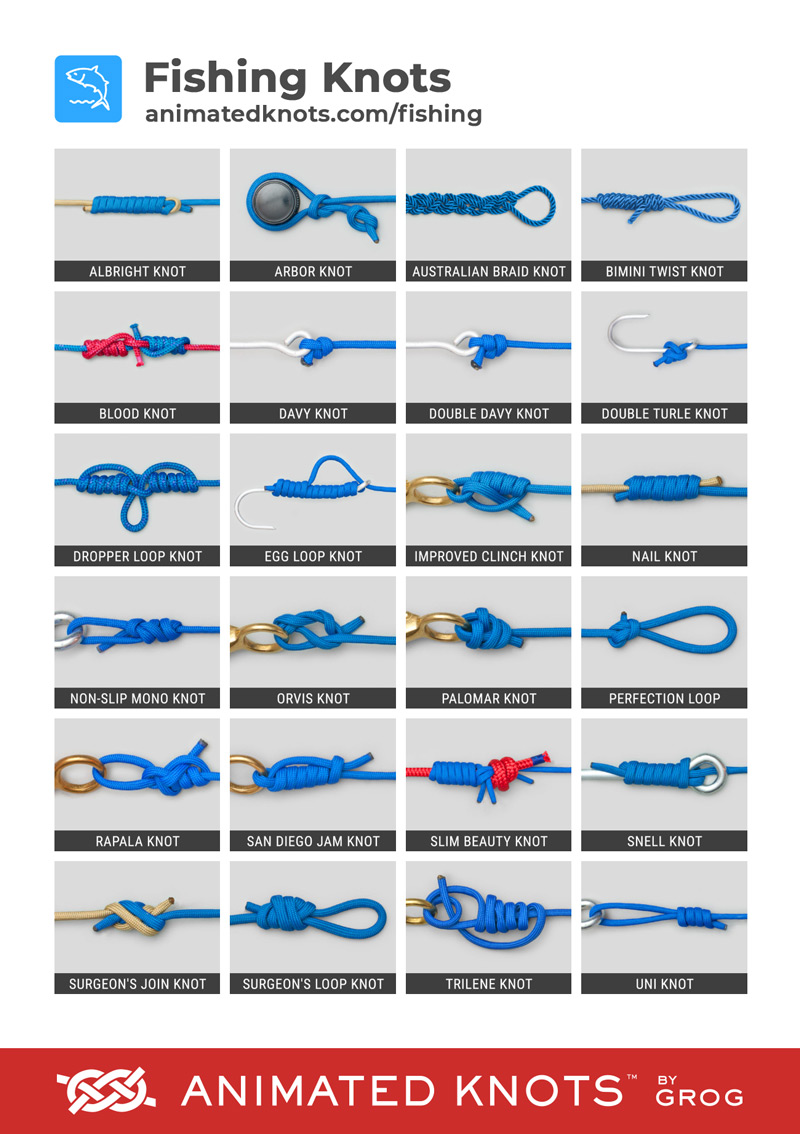
Many anglers learn knots from family or friends, but visual resources can help too. Animated tutorials and diagrams make a big difference. A great reference is the animated knots section from Animated Knots by Grog.
Frequently Asked Questions
What Is The Strongest Fishing Knot?
The Palomar knot is often considered the strongest for attaching hooks or lures, retaining up to 95% of line strength. It’s simple, reliable, and works well with most lines.
Which Knot Is Best For Braided Fishing Line?
The Palomar knot and double uni knot are top choices for braided line. They grip well and resist slipping, which can be a problem with braid.
How Do I Know If My Knot Is Tied Correctly?
After tying, moisten the knot and pull firmly on both the standing line and tag end. The knot should cinch down smoothly, without slipping or unraveling. If it slips, retie it immediately.
Should I Always Trim The Tag End Close?
Leave a small tag (about 1/8 inch) when trimming. Cutting too close risks the knot slipping, especially with slick lines like fluorocarbon or braid.
How Often Should I Retie My Fishing Knots?
Retie after catching a big fish, if the knot looks worn, or every few hours during a long session. Frequent retying prevents lost fish and broken lines.
Mastering fishing knots is one of the most valuable skills for any angler. With practice, you’ll tie them quickly and confidently, spending less time fixing mistakes and more time catching fish. Whether you’re a beginner or a seasoned pro, the right knot at the right time will always improve your fishing success.

