

Writing a great cover letter is not just a formality—it’s your first chance to show an employer who you are beyond your resume. Many job seekers struggle with cover letters, thinking they are unnecessary or just a repeat of their CV.
But a well-crafted cover letter can make you stand out, even if your English is not perfect. If you learn how to write one clearly and confidently, you can improve your chances of landing an interview. Let’s explore step by step how you can write a cover letter that grabs attention and gets results.

36% off Today’s Exclusive Deals
Limited-time Exclusive Deals. Check current discount on Amazon.
Check Price on Amazon As an Amazon Associate I earn from qualifying purchases.Why A Cover Letter Matters
A cover letter is a short document you send with your job application. It explains why you are a good fit for the job and gives extra information about your skills and experience. While your resume shows your history, the cover letter shows your personality and motivation.
Employers often read the cover letter first to see if you match their needs.
In a survey by Jobvite, about 26% of recruiters said a cover letter is important in their hiring process. Some jobs get hundreds of applications. A strong cover letter can help you rise above the crowd. It also shows you care enough to make an effort, which many employers value.
Understanding The Basics: What Goes In A Cover Letter
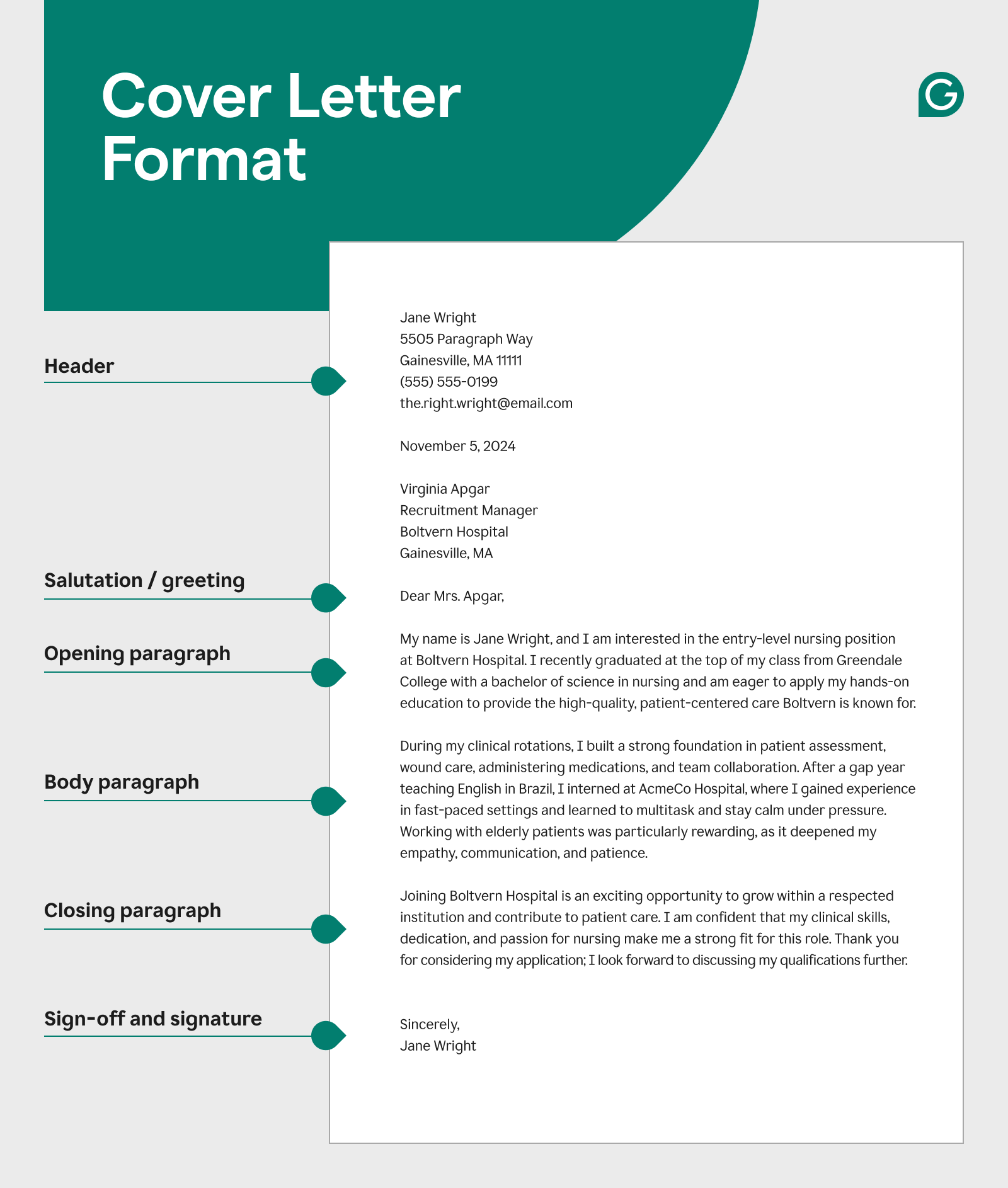
Before you start writing, it helps to know the standard parts of a cover letter. Most cover letters include:
- Header: Your contact information and the employer’s details.
- Greeting: Addressing the letter to a person, if possible.
- Opening paragraph: Briefly say who you are and why you’re writing.
- Body paragraphs: Explain your skills, experience, and why you fit the job.
- Closing paragraph: Finish with a call to action or next step.
- Signature: Your name, and sometimes a handwritten signature (for paper letters).
Let’s look closer at each part and how you can write them well.
Preparing To Write: Research And Planning
Before you type your cover letter, do some research. This step is often skipped, but it’s key to making your letter stand out.
- Read the job description carefully. Highlight the most important skills and requirements.
- Learn about the company. Check their website, news, or social media. What do they value? What is their culture?
- Find the hiring manager’s name. Addressing your letter to a real person feels more personal.
This research helps you tailor your letter. Employers notice when you mention something specific about their company. For example, if a company values teamwork, mention your team skills.
Writing Your Cover Letter: Step-by-step Guide
Now you’re ready to write. Here’s a simple process you can follow. Each step includes examples and practical tips.
Step 1: Header
Your cover letter should start with your contact information at the top. Include:
- Your full name
- Address (optional)
- Phone number
- Date
Below your info, add the employer’s details:
- Company name
- Hiring manager’s name (if you know it)
- Company address
Example:
John Smith
123 Main Street
New York, NY 10001
john.smith@email.com
(123) 456-7890
June 1, 2024
Ms. Jane Doe
ABC Corporation
456 Elm Avenue
New York, NY 10002
Step 2: Greeting
Start with a polite greeting. If you know the name, use it:
- Dear Ms. Doe,
- Dear Mr. Lee,
If you don’t know the name, use:
- Dear Hiring Manager,
Avoid generic greetings like “To Whom It May Concern. ” They sound cold.
Step 3: Opening Paragraph
Your first paragraph should answer three questions:
- Who are you?
- What job are you applying for?
- Why are you interested?
Example:
“I am applying for the Marketing Assistant position at ABC Corporation. With two years of experience in digital marketing, I am excited to bring my skills to your team. “
Tip: Keep it short and direct. Employers want to know right away why you’re writing.
Step 4: Body Paragraphs
This is the main part of your cover letter. Usually, 1–2 paragraphs are enough. Here, you connect your experience to the job.
- Match your skills to the job. Use examples to prove you have the skills.
- Show your achievements. Numbers or results make your story stronger.
- Explain why you fit the company. Mention something you learned from your research.
Example:
“In my previous role at XYZ Agency, I managed social media campaigns for five clients, increasing their online engagement by 30%. I am comfortable with tools like Google Analytics and Canva. ABC Corporation’s focus on creative marketing inspires me, and I believe my experience fits your needs.
“
Tip: Use simple words and active verbs. Avoid repeating your resume.
Step 5: Closing Paragraph
Finish your letter with a strong closing. Thank the employer and suggest a next step.
Example:
“Thank you for considering my application. I look forward to discussing how I can contribute to your team. “
Tip: Be polite and confident. Don’t demand an interview, but show you are eager.
Step 6: Signature
End with your name. If you’re sending a paper letter, leave space for a handwritten signature.
Example:
“Best regards,
John Smith”
Common Mistakes To Avoid
Even good candidates make mistakes with cover letters. Here are some to watch out for:
- Sending a generic letter: Employers can tell if you copy-paste. Tailor each letter.
- Repeating your resume: Use your cover letter to tell a story or add details.
- Using too much jargon: Simple language is clearer, especially for non-native readers.
- Not checking for errors: Grammar or spelling mistakes can hurt your chances.
- Writing too long: Keep your letter to one page (about 300–400 words).
Many beginners forget to customize their letter for each job. Even small changes can make your letter feel more personal.
How To Make Your Cover Letter Stand Out
Small details can make a big difference. Here are two insights that many beginners miss:
- Use numbers and results: Employers like facts. Instead of “I am good at sales,” write “I increased sales by 15% in six months.”
- Match the company’s tone: If the company is formal, keep your letter formal. If they are creative, you can be a bit more relaxed.
Another tip: Try to mention something unique about the company. For example, “Your recent award for innovation caught my attention.”
Cover Letter Vs. Resume: Key Differences
Some people think a cover letter and a resume are the same. They are not. Here’s a quick comparison:
| Cover Letter | Resume |
|---|---|
| Personalizes your application | Lists your work history |
| Explains why you fit the job | Shows your skills and education |
| Usually one page | Can be one or two pages |
| Written in paragraphs | Uses bullet points |
| Tailored for each job | May be used for many jobs |
Cover Letter Structure: Typical Layout
Most cover letters follow a similar structure. Here’s a simple layout you can use:
| Section | Purpose | Tips |
|---|---|---|
| Header | Contact details | Include your email and phone |
| Greeting | Polite opening | Use the hiring manager’s name |
| Opening | Introduce yourself | Mention the job title |
| Body | Show your skills | Use examples and numbers |
| Closing | Wrap up | Thank the employer |
| Signature | Your name | Optional: handwritten for paper letters |
Example Cover Letter (for Reference)
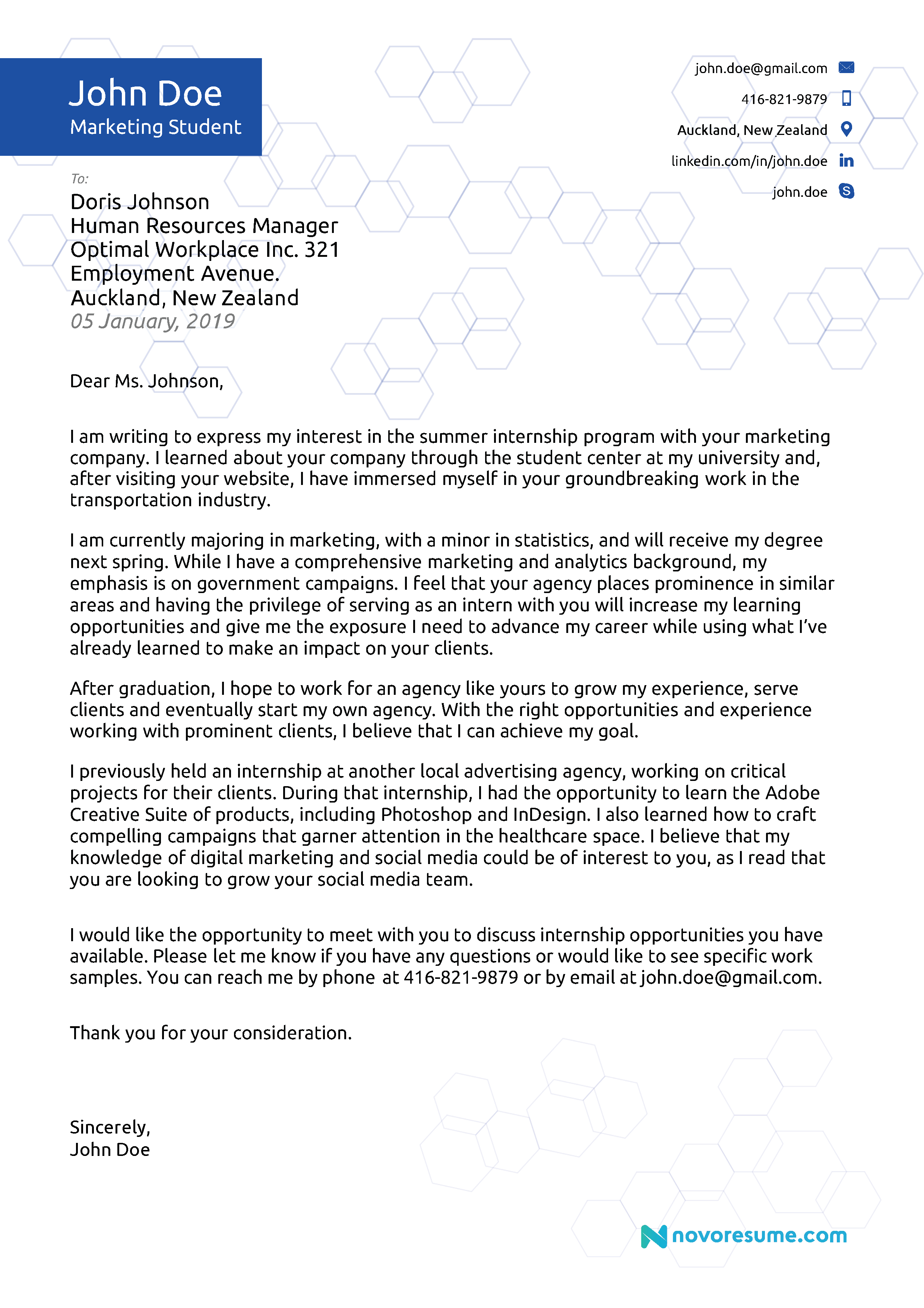
Here’s an example of a complete cover letter. You can use this as a guide and adapt it for your situation.
Maria Garcia
789 Oak Street
Los Angeles, CA 90001
maria.garcia@email.com
(555) 123-4567
July 15, 2024
Mr. Alan Brown
GreenTech Solutions
101 Maple Avenue
Los Angeles, CA 90002
Dear Mr. Brown,
I am excited to apply for the Administrative Assistant position at GreenTech Solutions. With three years of office experience and strong organizational skills, I believe I can help your team run smoothly.
At my previous job, I supported five managers, handled scheduling, and improved our filing system. By updating our records, I reduced paperwork time by 20%. I am skilled with Microsoft Office and QuickBooks, and I enjoy working in busy environments.
GreenTech’s commitment to eco-friendly solutions inspires me. I am eager to bring my experience and energy to your company.
Thank you for considering my application. I hope to discuss how I can contribute to GreenTech Solutions.
Best regards,
Maria Garcia
This letter is clear, direct, and tailored to the company. Notice how Maria mentions a real achievement (reducing paperwork time) and connects her skills to the company’s values.
Formatting Tips For Cover Letters
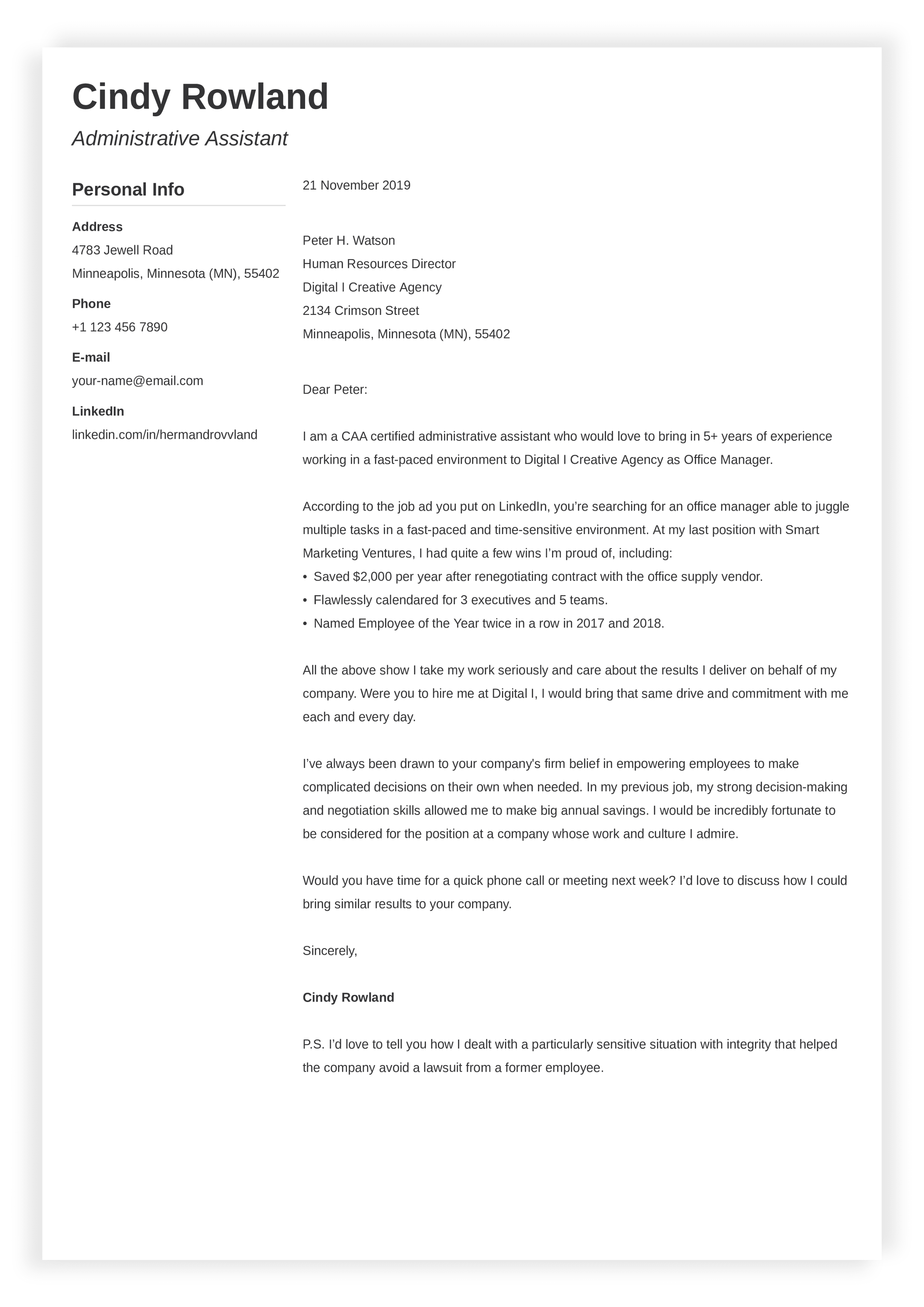
Formatting is often overlooked, but it affects how your letter is read. Here are some tips:
- Use a clear font like Arial, Calibri, or Times New Roman (size 11–12).
- Keep margins standard (about 1 inch on all sides).
- Align text to the left for easy reading.
- Use single spacing, with a blank line between paragraphs.
- Avoid colors or graphics unless the job is creative.
If you send your letter as a PDF, it will look the same on any device. For online applications, check the instructions—some companies ask for Word documents.
How To Tailor Your Cover Letter For Each Job
Sending the same cover letter to every employer is a mistake. Tailoring your letter increases your chances. Here’s how:
- Change the job title and company name in your opening.
- Match your skills to the job description—use similar words.
- Mention something specific about the company—a project, award, or value.
For example, if a company wants “attention to detail,” mention a time you caught an important mistake. If they value “customer service,” describe how you handled a difficult client.
Cover Letter Length: How Much Should You Write?
A cover letter should be short and focused. Most are about one page or 300–400 words. Employers read many applications, so they prefer letters that get to the point.
If you write too much, you risk losing the reader’s attention. If you write too little, you may not show enough value. Aim for:
- 1 opening paragraph (2–3 sentences)
- 1–2 body paragraphs (5–8 sentences)
- 1 closing paragraph (2–3 sentences)
Some companies use software to scan applications. Short, clear sentences are easier for both humans and software to understand.
How To Show Your Personality In A Cover Letter
Employers want to know who you are—not just your skills. You can show your personality by:
- Using positive language (“excited,” “eager,” “enjoy”)
- Mentioning your values or interests (“I care about helping others”)
- Sharing a small story or achievement
For example, “I enjoy solving problems and helping my team succeed. ” This tells the employer you work well with others.
Many beginners miss this chance to stand out. Your cover letter is not just a checklist—it’s your first impression.
Key Words And Phrases For Cover Letters
Using the right words can help your cover letter sound professional and confident. Here are some useful phrases:
- “I am excited to apply for…”
- “My experience includes…”
- “I believe my skills match your needs…”
- “I am eager to contribute to…”
- “Thank you for considering my application…”
Avoid weak phrases like “I think” or “I hope. ” Use “I am confident,” “I am skilled,” or “I am ready. ”
Cover Letter Checklist: Before You Send
Check these points before you send your cover letter:
- Did you use the correct job title and company name?
- Did you match your skills to the job description?
- Did you mention a real achievement?
- Is your letter free of spelling and grammar mistakes?
- Is your letter about one page?
As a final step, ask a friend or use a tool to check your English. Even small mistakes can make a difference.
Digital Cover Letters: Email Vs. Attachment
Many jobs now ask for cover letters by email. Here are two ways:
- Paste the cover letter in the email body: Start with a greeting, then paste your letter.
- Attach your cover letter as a PDF or Word file: Write a short message in the email.
Example email message:
“Dear Ms. Lee,
Please find attached my cover letter and resume for the Sales Representative position. Thank you for your consideration.
Best regards,
Tom Kim”
Always check the job instructions. Some companies have specific rules for attachments.
Statistics: Cover Letters And Job Success
Research shows cover letters can help. According to a survey by ResumeLab:
- 83% of hiring managers said a well-written cover letter can help get an interview.
- 49% said they pay attention to cover letters even if the resume is strong.
While not every job requires a cover letter, sending one can increase your chances. Many employers say they value effort and attention to detail.
How To Handle Gaps, Career Changes, Or Weak Experience
If you have gaps in your work history, are changing careers, or lack experience, your cover letter can help explain your situation.
- For gaps: Briefly explain, then focus on your skills. “After taking time for family, I am eager to return to work and bring my skills to your team.”
- For career changes: Show how your past skills apply. “My experience in customer service gives me strong communication skills for this new role.”
- For weak experience: Highlight your motivation and willingness to learn. “I am excited to grow and learn in your company.”
Employers want honesty. Don’t hide your story, but focus on your strengths.
Using Technology: Tools For Cover Letters
Many tools can help you check or improve your cover letter. Examples include Grammarly, Hemingway Editor, or the built-in checkers in Word or Google Docs.
These tools can help you:
- Find spelling or grammar mistakes
- Make sentences clearer
- Suggest better words
Remember, tools are useful, but always review your letter yourself. Automated checks can miss context.
For more cover letter tips and research, you can visit Indeed Career Advice.
Frequently Asked Questions
How Long Should A Cover Letter Be?
A cover letter should be one page or about 300–400 words. Employers prefer short, clear letters that get to the point.
Should I Include A Cover Letter If It’s Not Required?
Yes, unless the employer says not to. A cover letter shows your effort and can help you stand out, even if it’s optional.
Can I Use The Same Cover Letter For Every Job?
No. You should tailor your cover letter for each job. Change the job title, company name, and match your skills to their needs.
What If I Don’t Know The Hiring Manager’s Name?
Use a polite greeting like Dear Hiring Manager or Dear Recruitment Team. Try to find a name if possible, but it’s not always required.
How Can I Check My Cover Letter For Mistakes?
Use tools like Grammarly or ask a friend to review your letter. Always check for spelling, grammar, and clarity before you send it.
Writing a cover letter may feel difficult at first, but with practice and attention to detail, you can create a letter that helps you get noticed. Remember, your cover letter is your chance to show who you are and why you fit the job.
Take time to research, use clear language, and personalize your message. These simple steps can make a big difference in your job search.

