

The world of foldable smartphones is evolving fast, and two brands are at the center of attention: Motorola and Xiaomi. Their latest flip phones, the Motorola Razr+ (also known as the Razr 40 Ultra in some regions) and the Xiaomi Mix Flip, offer sleek designs and modern technology. But which one is right for you? This article breaks down every detail—design, displays, cameras, software, and more—so you can choose confidently.
Design And Build Quality
Foldable phones need to be both beautiful and durable. Both the Razr+ and Mix Flip aim for a balance, but their approaches are different.

36% off Today’s Exclusive Deals
Limited-time Exclusive Deals. Check current discount on Amazon.
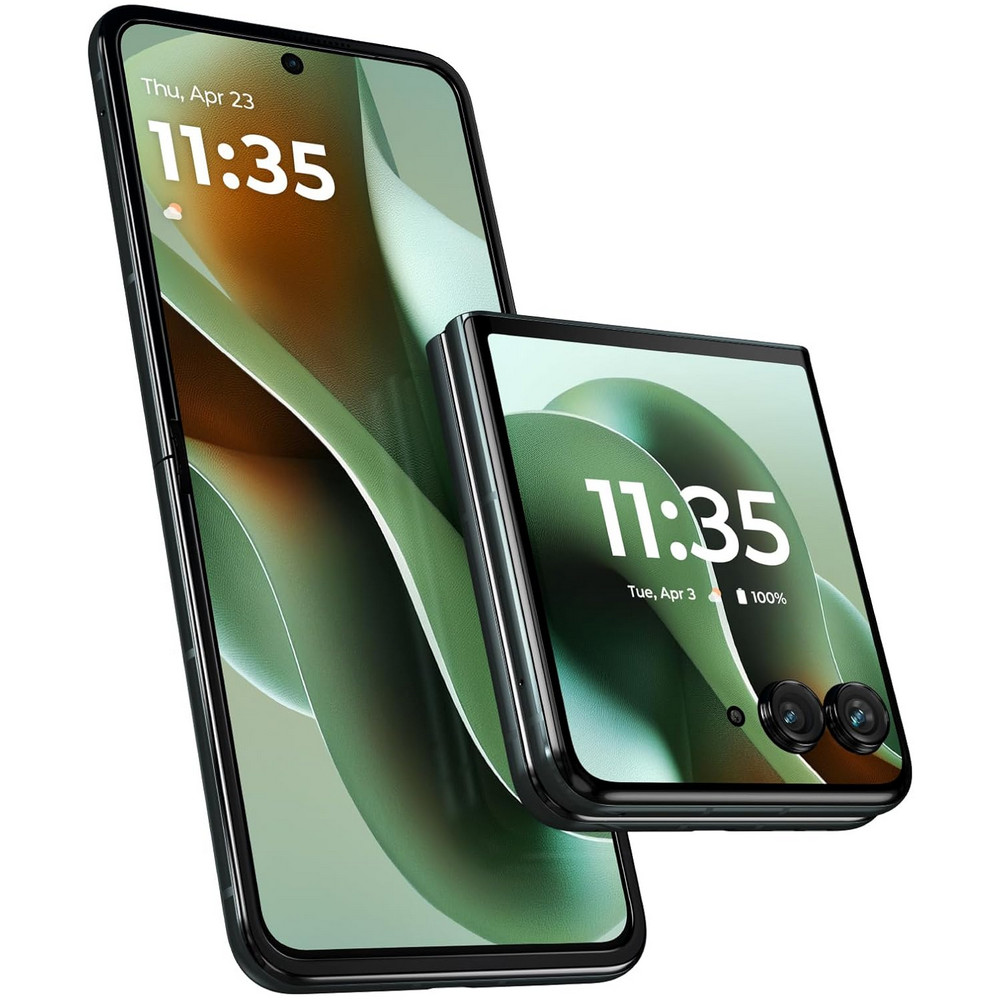
Check Price on Amazon As an Amazon Associate I earn from qualifying purchases.The Motorola Razr+ brings back memories of the classic Razr flip phone. It has a soft curve along the edges and a large outer display that covers almost half of the front. When closed, the phone feels compact—easy to slip into your pocket. Motorola uses a combination of aluminum and Gorilla Glass Victus for strength. The hinge mechanism is tight and smooth; you can flip it open with one hand, but it doesn’t feel loose.
The Xiaomi Mix Flip takes a more modern path. Its edges are straighter, and its frame looks sharper. Xiaomi uses aircraft-grade aluminum and a strong glass back. The hinge design is solid, though some users might find it a bit firmer than Motorola’s. One detail that stands out is the Mix Flip’s camera module: it’s a rounded rectangle, giving the phone a unique look.
Both phones are lightweight for a foldable. The Razr+ weighs about 188 grams, while the Mix Flip is a bit heavier at 197 grams. Despite this, both feel well-balanced in the hand.
Colors are another area where these brands differ. Motorola offers bold options like Viva Magenta, while Xiaomi sticks with classic shades—black, white, and gold. If you want your phone to stand out, Motorola gives you more choices.
Hinge Durability
A weak hinge can destroy the foldable experience. Motorola says the Razr+ can handle over 400,000 folds, which means you can open and close it more than 100 times a day for 10 years. Xiaomi claims similar durability, but their numbers aren’t as public.
One detail many users miss: hinge resistance matters. If the hinge is too loose, the phone feels cheap. If it’s too tight, flipping open becomes hard. Both Motorola and Xiaomi have found a good middle ground, but the Razr+ is a bit smoother for one-handed use.
Display Comparison
Displays are the heart of any flip phone. You get two screens: a large inner display and a cover display for quick tasks.
Main (inner) Display
The Motorola Razr+ features a 6.9-inch pOLED panel with a sharp 2640 x 1080 resolution. It supports a 165Hz refresh rate, making animations and scrolling look extra smooth. The colors are bright, blacks are deep, and the crease where the phone folds is barely visible during use. Motorola’s anti-reflective coating also helps with outdoor visibility.
The Xiaomi Mix Flip comes with a 6.8-inch AMOLED display, slightly smaller but still impressive. Its resolution is 2520 x 1080, and it supports a 120Hz refresh rate. The colors are rich, and Xiaomi uses its own touch optimization for fast response. The crease is present but not distracting.
Comparison Table: Main Display Specs
| Feature | Motorola Razr+ | Xiaomi Mix Flip |
|---|---|---|
| Size | 6.9 inches | 6.8 inches |
| Type | pOLED | AMOLED |
| Resolution | 2640 x 1080 | 2520 x 1080 |
| Refresh Rate | 165Hz | 120Hz |
| Brightness (max) | 1400 nits | 1600 nits |
While both displays are outstanding, the Razr+ wins in refresh rate, but Xiaomi’s screen is a bit brighter outdoors.
Cover Display
Motorola makes the cover display a big part of the experience. The Razr+ has a 3.6-inch pOLED external screen—one of the largest on any flip phone. You can check notifications, reply to texts, use widgets, and even run full apps without opening the phone.
Xiaomi keeps the cover display smaller at 2.7 inches, but it’s still useful. You can see calls, control music, and preview selfies. However, you can’t run as many apps as on Motorola’s cover screen.
A detail beginners miss: a larger cover screen is not only for fun. It saves battery because you don’t need to open the main display often.

Camera Systems
Flip phones used to be weak in camera quality. That’s changed. Both the Razr+ and Mix Flip bring strong camera setups, but they have their own strengths.
Rear Cameras
Motorola Razr+ has:
- Main camera: 12MP, f/1.5, with optical image stabilization (OIS)
- Ultra-wide: 13MP, f/2.2, also supports macro shots
Xiaomi Mix Flip includes:
- Main camera: 50MP, f/1.8, with OIS
- Ultra-wide: 12MP, f/2.2
Comparison Table: Rear Cameras
| Feature | Motorola Razr+ | Xiaomi Mix Flip |
|---|---|---|
| Main Camera | 12MP, f/1.5, OIS | 50MP, f/1.8, OIS |
| Ultra-wide | 13MP, f/2.2 | 12MP, f/2.2 |
| Video Recording | 4K @ 60fps | 4K @ 60fps |
The Razr+ focuses on fast autofocus and bright images, especially in low light, thanks to its wide f/1. 5 lens. Xiaomi’s Mix Flip, with a 50MP sensor, captures more detail. Photos on the Mix Flip look sharper, especially when zooming in or cropping.
Selfie Cameras
Both phones let you use the rear cameras for selfies by using the cover display. But if you want to use the inner camera:
- Razr+: 32MP front camera
- Mix Flip: 20MP front camera
The Razr+ has a clear advantage in selfie quality. For video calls, both are solid, but Razr+ images are sharper.
Camera Features
Motorola’s software gives you more creative modes, like dual capture (record both sides at once), gesture shot, and auto smile capture. Xiaomi focuses on AI scene detection and faster night mode processing.
One insight: Most people use their foldable’s cover screen for selfies. In this case, the Mix Flip’s larger main sensor gives better detail, but Motorola’s software makes snapping a shot easier.
Performance And Hardware
Fast, smooth performance matters, especially for multitasking.
Chipset And Speed
- Motorola Razr+: Snapdragon 8+ Gen 1
- Xiaomi Mix Flip: Snapdragon 8 Gen 2
The Mix Flip uses a newer and slightly faster processor. In benchmark tests, the Mix Flip scores about 15% higher in CPU and GPU tasks. This means games run a bit smoother, and heavy apps open a bit quicker. But in day-to-day use, both phones feel fast.
Ram And Storage
- Razr+: 8GB/12GB RAM, 256GB/512GB storage
- Mix Flip: 12GB RAM, 256GB/512GB/1TB storage
Mix Flip offers more RAM and a 1TB storage option. If you store lots of photos or videos, Xiaomi is the better pick.
Connectivity
Both phones support 5G, Wi-Fi 6E, Bluetooth 5.3, and NFC. Xiaomi adds infrared (IR) blaster, letting you control TVs or air conditioners—a small extra that can be useful.
Speakers And Audio
Razr+ has stereo speakers with Dolby Atmos support. Mix Flip also offers stereo sound, but its volume is slightly higher. Both lack a headphone jack, so you’ll need wireless earbuds or a USB-C adapter.
Biometrics
Both phones use side-mounted fingerprint sensors for quick unlocking. Face unlock is available, but not as secure.

Battery Life And Charging
Foldables often have smaller batteries, but both brands try to maximize endurance.
Battery Capacity
- Motorola Razr+: 3,800 mAh
- Xiaomi Mix Flip: 4,000 mAh
The Mix Flip has a slightly bigger battery. In real-world use, this means about one extra hour of screen-on time.
Charging Speed
- Razr+: 30W wired, 5W wireless charging
- Mix Flip: 67W wired charging, no wireless charging
Xiaomi’s charging is much faster. You can go from 0% to 100% in about 42 minutes. Motorola takes closer to 70 minutes for a full charge, but it does offer wireless charging, which Xiaomi lacks.
A common mistake: People focus only on battery size. But charging speed can matter more if you use your phone heavily.
Software Experience
Software can make or break a foldable. Both Motorola and Xiaomi use Android as a base, but their approaches differ.
Operating System And Updates
- Razr+: Ships with Android 13, Motorola’s My UX skin
- Mix Flip: Ships with Android 14, Xiaomi’s HyperOS
Motorola’s interface is close to “stock” Android. It’s clean, simple, and easy to use. Motorola promises three years of Android updates and four years of security patches.
Xiaomi’s HyperOS is more customized. It has extra features, themes, and a different look. Xiaomi promises three years of Android updates as well. Some users love the customization; others prefer Motorola’s clean approach.
Special Foldable Features
Motorola leads with its cover screen features. You can run full apps, use widgets, and even play games on the outer display. This makes the Razr+ feel like a tiny tablet when closed.
Xiaomi’s cover screen is more limited, but the company has promised more widgets and quick-reply options in future updates.
Both phones let you run two apps side by side (split screen) and use a “flex mode” for video calls—where you can half-fold the phone and place it on a table.
One insight many miss: Foldable software is still new. Updates can add big features after launch. Motorola is faster with updates in most markets.
User Experience And Everyday Use
Specs are important, but daily experience matters more.
Pocketability And Comfort
Both phones are easy to carry, but the Razr+ is slightly thinner when folded. This makes it less bulky in a pocket or purse. The Razr+’s curved edges feel softer in the hand, while the Mix Flip’s sharp edges might dig in a little.
Opening and closing the Razr+ is smoother, especially with one hand. The Mix Flip’s hinge is sturdy, but requires more force—something to consider if you like flipping your phone open quickly.
Cover Screen Use
Motorola’s cover screen is a game-changer. You can reply to messages, check your calendar, and use full apps like Google Maps—without opening the phone. Xiaomi’s smaller cover screen is useful, but mostly for notifications and selfies.
For people who want to use their phone one-handed, Motorola’s cover screen is a big advantage.
Flex Mode And Hands-free Use
Both phones support a “tent mode” or “laptop mode. ” You can fold them at an angle for hands-free video calls or watching movies. Motorola’s software makes this a bit smoother, pausing the video if you close the phone and resuming when you open it.
A detail beginners often miss: These phones are great for group photos. You can stand them up, trigger a timer, and get everyone in the shot—no tripod needed.
Price And Value
Price is often the deciding factor. Here’s how the two phones compare:
- Motorola Razr+: Launch price around $999 (USD)
- Xiaomi Mix Flip: Launch price around $899 (USD, China pricing; global prices may be higher)
Xiaomi is cheaper, but not by a huge margin. In some markets, the Mix Flip isn’t officially sold, so you may need to import (which can add cost and reduce warranty support).
Motorola’s Razr+ is widely available in the US and Europe, with strong carrier partnerships. This means easier support and more accessories.
A key insight: Many people forget to check after-sales service. Motorola’s Razr+ has better support in Western markets; Xiaomi’s service is stronger in Asia.
Pros And Cons
To help you decide, let’s sum up the strengths and weaknesses of each phone.
Motorola Razr+
Pros:
- Largest cover display, full app support
- Clean, smooth software
- Wireless charging
- Slim and light design
- Good selfie camera
Cons:
- Main camera has lower resolution than Xiaomi
- Slower charging
- Slightly smaller battery
Xiaomi Mix Flip
Pros:
- Bigger main camera sensor (50MP)
- Faster charging (67W)
- Larger battery
- Extra storage option (up to 1TB)
- Slightly brighter main display
Cons:
- Cover screen is smaller and less useful
- No wireless charging
- Heavier and thicker when folded
- Not as widely available outside Asia
Which Phone Is Right For You?
If you want a feature-rich cover display and easy one-handed use, the Motorola Razr+ stands out. It’s the best flip phone for people who want to do more with the phone closed.
If you care most about camera quality, battery life, and charging speed, the Xiaomi Mix Flip is the better pick—especially if you’re comfortable with Xiaomi’s software and can buy it locally.
People who want the latest processor and the most storage should also lean toward the Mix Flip.
But if you value support, updates, and a polished experience, Motorola has the edge in most global markets.
Non-obvious Insights
- Cover Display Use Cases: Many buyers don’t realize how much a large cover screen can change habits. With the Razr+, you’ll find yourself opening the phone less, which can save battery and reduce wear on the hinge.
- After-Sales and Updates: Foldables are still new, and repairs can be expensive. Motorola’s global support is better. If you’re outside Asia, Xiaomi’s after-sales network may be limited, and updates can take longer.
- Hinge Resistance: The “feel” of the hinge matters. Try to test both in a store if you can. A hinge that’s too tight or too loose can affect long-term satisfaction.
- App Compatibility: Not all apps work perfectly on foldables, especially on the cover screen. Motorola works with more US and European apps out of the box.
- Wireless Charging’s Real Value: If you use wireless charging pads at home or in the car, the Razr+ is the only choice, as the Mix Flip skips this feature.
Frequently Asked Questions
Is The Motorola Razr+ Or Xiaomi Mix Flip More Durable?
Both phones are made to last with strong glass and metal frames. The Razr+ is tested for over 400,000 folds. Xiaomi doesn’t share numbers, but uses similar materials. In real life, both are sturdy, but Motorola’s hinge is a bit smoother for frequent use.
Which Phone Has The Better Camera?
The Xiaomi Mix Flip has a higher resolution main camera (50MP vs 12MP), so it can capture more detail, especially when you zoom in. But the Razr+ is better in low light and has a stronger selfie camera. For most users, both are very good, but photographers may prefer Xiaomi.
Can I Get The Xiaomi Mix Flip Outside China?
As of now, the Mix Flip is mainly sold in China and a few Asian countries. You can import it, but you may not get local warranty or quick software updates. Motorola Razr+ is easier to buy in the US and Europe.
Which Phone Gets Better Software Updates?
Motorola and Xiaomi both promise three years of Android updates. Motorola usually delivers updates faster, especially outside Asia. If updates are important to you, the Razr+ is a safer bet.
Does Either Phone Have Water Resistance?
Neither the Razr+ nor the Mix Flip are fully waterproof. They have some splash resistance (IP52 or similar), but you should avoid using them in heavy rain or near water. Foldables are still less protected than standard phones.
As foldable phones continue to improve, both Motorola and Xiaomi are pushing the limits. Each has unique strengths, and your choice comes down to what matters most—camera, cover display, battery, or support. The Razr+ is made for those who want a playful, flexible phone with lots of features even when closed.
The Mix Flip is for users who want raw power, a strong camera, and fast charging. No matter which you choose, you’ll own one of the most exciting devices in today’s smartphone market.
For more detailed foldable comparisons and the latest news, you can visit GSMArena.

