

Rugby is played with two teams, an oval ball, passing backward, and scoring tries and kicks.
I have coached and played rugby for years, and I’ll walk you through what are the basic rules of rugby? This article breaks down the rules clearly, from the field layout to scoring, fouls, set pieces, player roles, and practical tips. Read on to gain confidence in the laws and feel ready to watch or play a match with a solid grasp of what are the basic rules of rugby?

36% off Today’s Exclusive Deals
Limited-time Exclusive Deals. Check current discount on Amazon.
Check Price on Amazon As an Amazon Associate I earn from qualifying purchases.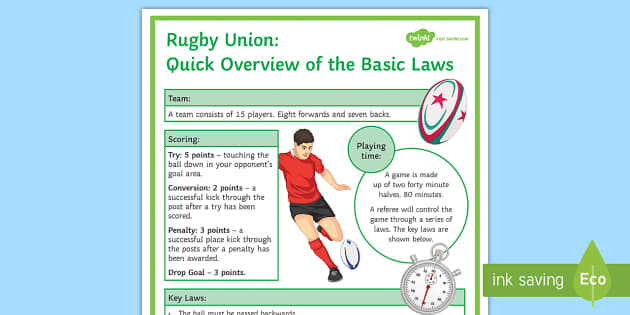
Understanding the basics of rugby
Rugby is a contact team sport played with an oval ball. The main aim is to score more points than the opponent by grounding the ball (a try) or kicking goals. Knowing what are the basic rules of rugby helps you follow play, avoid common fouls, and enjoy the strategy.
- Two main codes exist: Rugby Union and Rugby League. This guide focuses on Rugby Union basics.
- Teams have 15 players each in Union. Numbers and some rules differ in other formats.
- Play flows continuously, but restarts occur after stoppages and scores.

Field, players, and match length
The field is roughly 100 meters long with in-goal areas behind each try line. Each team has 15 players: forwards and backs. Matches last 80 minutes total, split into two 40-minute halves.
- Pitch markings include touchlines, halfway line, 22-meter lines, and try lines.
- Substitutions are limited; tactical and injury swaps are allowed.
- Time can be added for stoppages; the referee controls official time.
How scoring works
Points come from a few scoring methods. Knowing what are the basic rules of rugby includes how points add up and when teams choose kicks or tries.
- Try: 5 points for grounding the ball in the in-goal area.
- Conversion kick: 2 points after a try from a spot in line with where the try was scored.
- Penalty kick: 3 points for a successful kick after a penalty.
- Drop goal: 3 points if a player drops and kicks the ball through the posts during open play.

Basic gameplay rules
Rugby has unique passing, tackling, and possession rules. Understanding what are the basic rules of rugby makes the game less confusing and more enjoyable.
- Passing: The ball must be passed laterally or backward; forward passes are illegal and lead to a scrum.
- Tackling: Only the ball carrier may be tackled. Tackles must be below the shoulders and released quickly.
- Ruck and maul: After a tackle, players contest possession via rucks (ball on ground) or mauls (ball held up).
- Offside: Players ahead of the ball or last foot of a ruck are offside and cannot participate until put onside.
Can you pass forward in rugby?
No. Forward passes are not allowed and result in a scrum to restart play. Teams rely on runs, kicks, and backward passes.
What happens after a knock-on?
A knock-on (ball dropped forward) stops play and usually results in a scrum to the non-offending team. This enforces ball control and simple handling skills.

Set pieces: scrums and lineouts
Set pieces restart play and are strategic moments. Familiarity with what are the basic rules of rugby for scrums and lineouts helps you follow restarts.
- Scrum: Eight forwards bind and push to contest the ball after minor infractions. The team feeding the scrum has a chance to win possession.
- Lineout: When the ball goes into touch, teams form lines and throw the ball back in; lifting is allowed to catch the throw.
- Safety and form: Referees ensure correct binding and stable formations to reduce injury risk.

Fouls, penalties, and cards
Penalties control dangerous or unfair play. Knowing what are the basic rules of rugby reduces avoidable infractions.
- Common penalties: high tackles, collapsing scrums, offside, not releasing the ball, and deliberate knock-ons.
- Sanctions: Referee may award a penalty, free kick, yellow card (temporary 10-minute sin bin), or red card (sending off).
- Strategy: Teams often kick for goal, kick to touch for a lineout, or tap and run depending on position.

Player positions and roles
Each position has clear responsibilities. Understanding what are the basic rules of rugby includes knowing what each player does.
- Forwards (numbers 1–8): Focus on scrums, lineouts, rucks, and physical contests.
- Backs (numbers 9–15): Handle distribution, kicking, and finishing attacks.
- Key roles: Scrum-half links forwards and backs; fly-half directs play and often kicks; wings finish scoring chances.

Practical tips and personal experience
I’ve coached beginners and learned that simple habits improve play fast. Here are practical tips tied to what are the basic rules of rugby.
- Stay behind the ball when attacking or defending to avoid offside.
- Tackle low and release: safe technique prevents penalties and injuries.
- Communication matters: call plays, mark opponents, and back each other.
- Mistakes to avoid: trying to pass forward, holding onto a tackled player, or collapsing a scrum.
From my experience, a small focus on safe tackling and clear passing drills reduces penalties and boosts confidence. I once coached a team that cut penalties by half in a season after drilling release and ruck rules.
Frequently Asked Questions of What are the basic rules of rugby?
What are the basic rules of rugby for beginners?
Beginners should learn that passes must go backward, tackles must be below the shoulders, and tries score five points. Focus on safe tackling and staying onside.
How long is a rugby match and how is time kept?
A standard Rugby Union match is 80 minutes, split into two 40-minute halves, with stoppage time added by the referee. The referee controls the official time on the field.
Can you kick the ball forward and chase it?
Yes. Kicking forward is allowed, and the kicker can chase the ball, but teammates must stay onside. Tackling or regaining the ball follows usual onside rules.
What causes a scrum and who gets the ball?
Scrums restart play after minor infringements like forward passes or knock-ons. The team that did not cause the infringement usually gets to feed the ball into the scrum.
When is a yellow or red card given?
Yellow cards come from repeated or dangerous play and result in 10 minutes off. Red cards are for serious foul play and lead to permanent dismissal from the match.
Conclusion
Now you have a clear, practical guide to what are the basic rules of rugby? Remember: pass backward, tackle safely, stay onside, and aim to ground the ball for a try. Use these rules to watch matches with confidence or to start practicing with friends.
Try a local training session or watch a match while following these points. If you enjoyed this guide, leave a comment, subscribe for more sports breakdowns, or share your own rugby questions and experiences.

