

Hard, clay, grass, and synthetic courts are the main tennis court surfaces.
I have built and played on courts for years. I understand what matters when you ask, What are the different tennis court surfaces? This guide explains each surface. It covers play style, upkeep, costs, and how courts shape game tactics. Read on to learn facts, tips, and real-world advice that help players and facility owners choose the right surface.

36% off Today’s Exclusive Deals
Limited-time Exclusive Deals. Check current discount on Amazon.
Check Price on Amazon As an Amazon Associate I earn from qualifying purchases.
Overview: Main types of tennis court surfaces
When people ask, What are the different tennis court surfaces? they usually mean four main types.
The four are hard, clay, grass, and synthetic (including carpet and artificial turf).
Each surface affects ball speed, bounce height, player movement, and injury risk.
Below I break down each type so you can compare play and upkeep at a glance.
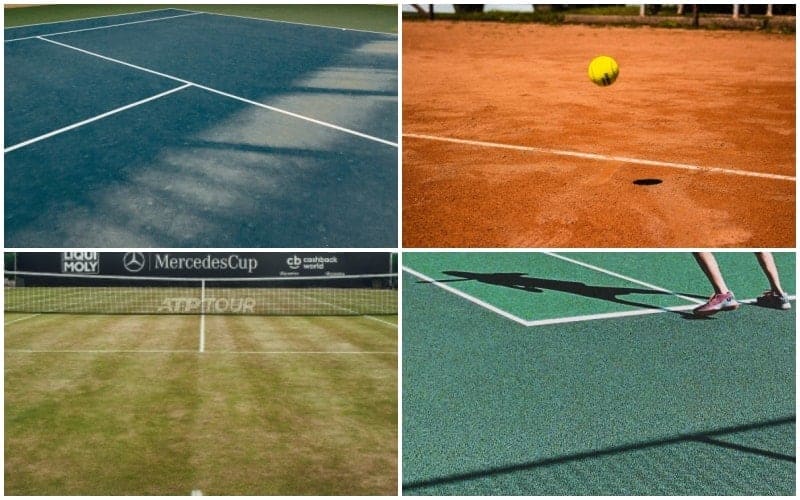
Hard courts
Hard courts answer the question, What are the different tennis court surfaces? for most public courts.
Construction and materials
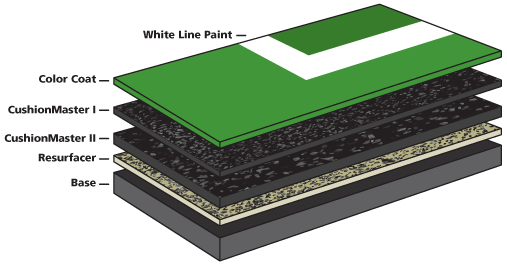
- Acrylic or polyurethane topcoat over asphalt or concrete.
- Optional cushioning layers to reduce impact.
Play characteristics
- Medium-to-fast ball speed with a predictable bounce.
- Favours baseliners and big servers.
Pros
- Low initial cost compared to grass.
- Durable and versatile for public play.
- Easy to mark and resurface.
Cons
- Can be hard on joints without cushioning.
- Surface can crack in extreme climates.
Maintenance and lifespan
- Routine cleaning and seam repairs yearly.
- Full resurfacing every 6–12 years depending on usage and climate.
Personal note: I once played on both cushioned and non-cushioned hard courts. The cushioned court saved my knees on long practice days. For clubs, adding a thin cushion layer is worth the cost.
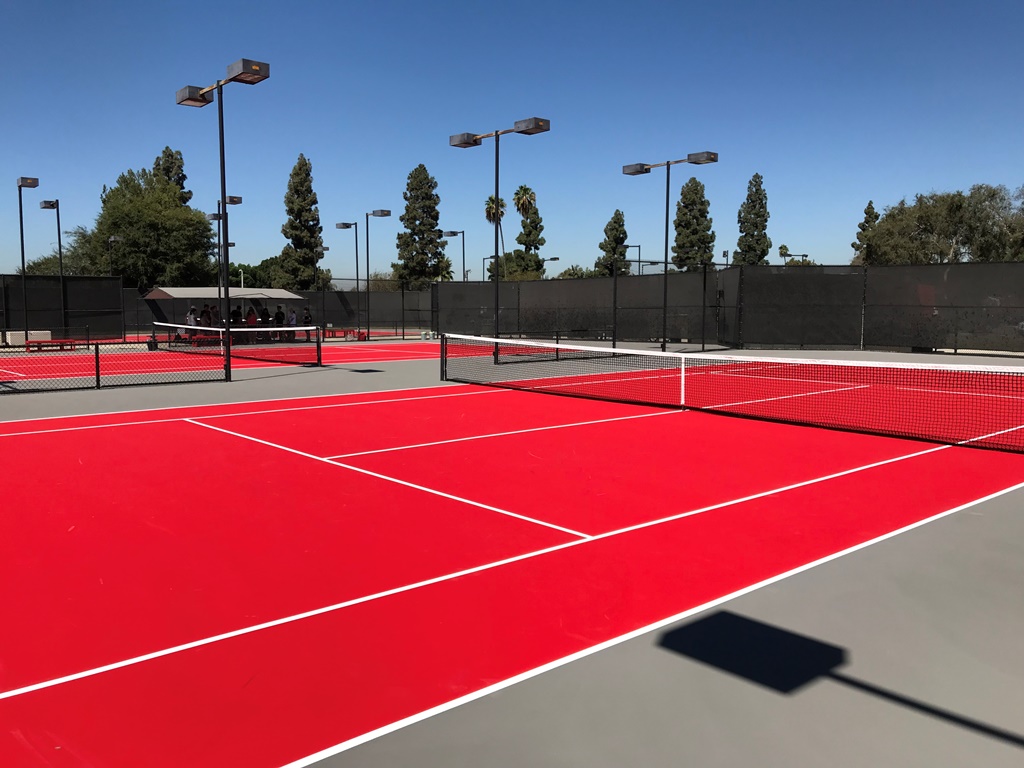
Clay courts
Clay courts are a classic answer to, What are the different tennis court surfaces? for players who value long rallies.
Types
- Red clay made from crushed brick.
- Green clay (Har-Tru) made from crushed basalt.
Play characteristics
- Slow ball speed and high, softer bounce.
- Favors heavy topspin and patient point construction.
Pros
- Gentle on joints; slides reduce impact.
- Encourages endurance and tactical play.
Cons
- High maintenance: daily brushing, watering, and rolling.
- Weather-sensitive; heavy rain can make courts unusable.
Maintenance and lifespan
- Daily grooming and seasonal re-levelling.
- Yearly addition of clay or sand may be required.
Personal note: I learned to slide properly on clay. That skill improved my court coverage on all surfaces. If you run a club, budget for staff time more than material cost.
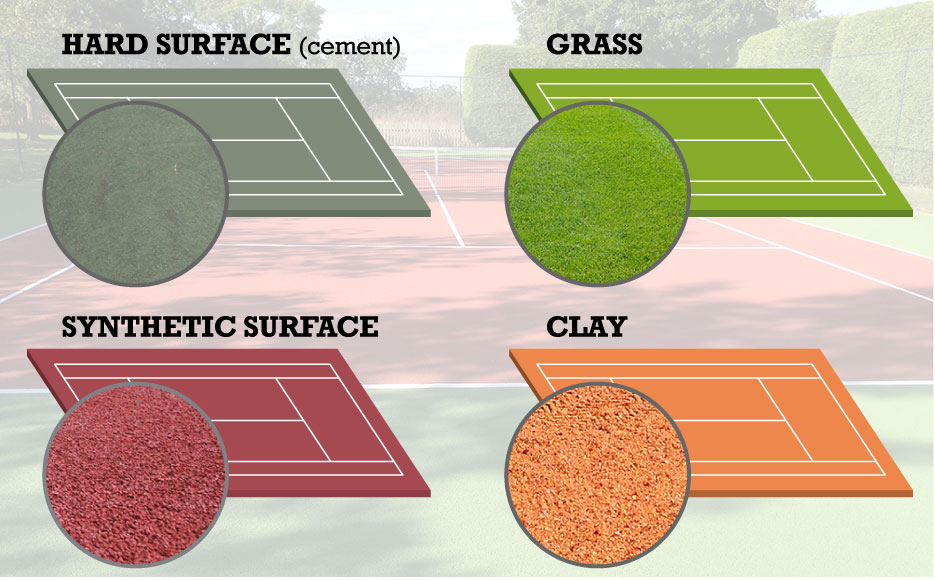
Grass courts
Grass courts complete the classic set when asking, What are the different tennis court surfaces? for traditional play.
Construction and materials
- Natural grass over compacted soil and drainage layers.
- Requires precise mowing and irrigation.
Play characteristics
- Fastest surface with low, sometimes uneven bounce.
- Rewards serve-and-volley and quick reflexes.
Pros
- Low-impact on joints when well kept.
- Beautiful and historic playing surface.
Cons
- Very high maintenance and limited season in many climates.
- Uneven bounces can frustrate baseline players.
Maintenance and lifespan
- Daily mowing, rolling, and patch repair in play season.
- Off-season renovations and reseeding often needed.
Personal note: I once helped prep a club grass court for a weekend event. The upkeep surprised me. It takes committed staff and time to keep grass playable.
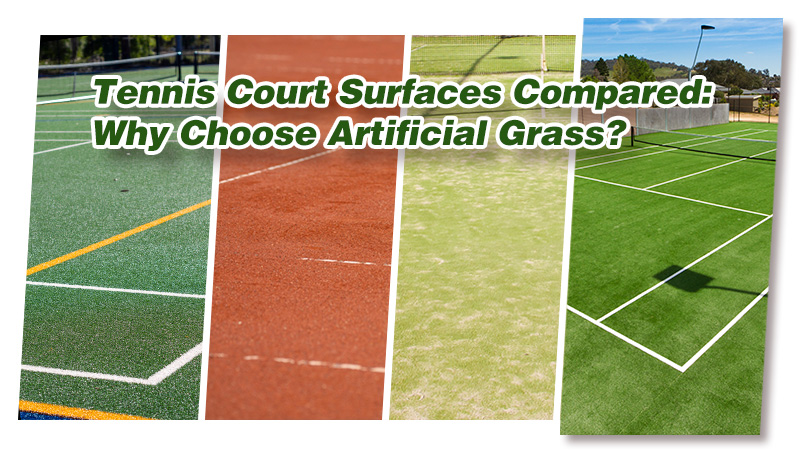
Synthetic and carpet surfaces
Synthetic surfaces answer, What are the different tennis court surfaces? for indoor and multi-use venues.
Types
- Carpet: short-pile textile rolled over base.
- Artificial turf: synthetic grass with infill.
- Acrylic over cushion: synthetic hardcourt variants.
Play characteristics
- Varies widely: carpet can be very fast; artificial turf tends to be medium-fast.
- Bounce can be lower and slightly less predictable.
Pros
- Ideal for indoor use.
- Fast installation and moderate upkeep.
- Good for multi-sport centers.
Cons
- Some carpet types are being phased out from pro play.
- Surface wear can create irregular bounce spots.
Maintenance and lifespan
- Regular brushing and infill top-ups for turf.
- Periodic replacement of carpet or top layers every 5–12 years.
Personal note: I installed a synthetic court in a community center. It allowed year-round play with lower water needs. For indoor leagues, synthetic courts are often the best fit.

How surfaces affect play, injuries, and training
If you wonder, What are the different tennis court surfaces? know they change tactics and body stress.
Ball speed and bounce
- Hard courts: medium-fast, consistent bounce.
- Clay: slow, high bounce.
- Grass: fast, low bounce.
- Synthetic: varies with material.
Injury patterns
- Hard courts: more joint stress and overuse injuries.
- Clay: fewer acute impacts, less joint strain.
- Grass: slips but less impact on joints.
Training advice
- Train on the surface you compete on.
- Add strength work for hard courts.
- Practice sliding drills for clay.
Quick PAA-style questions (brief answers embedded)
What surface speeds up your serve? Hard and grass courts tend to be fastest.
Which surface reduces joint impact? Clay and well-maintained grass reduce joint stress.
How to adapt your game for different surfaces? Adjust footwork and spin to match speed and bounce.
Cost, installation, and environmental factors
When deciding, What are the different tennis court surfaces? you also weigh cost and climate.
Installation costs
- Hard: moderate initial cost, lower long-term labor.
- Clay: moderate cost, higher long-term labor.
- Grass: high cost and labor.
- Synthetic: varies from low to high depending on quality.
Climate and water use
- Clay and grass need more water.
- Hard and quality synthetic courts use less water and stand up to harsh climates.
Lifespan estimates
- Hard: 10–20 years with resurfacing.
- Clay: variable; major maintenance each year.
- Grass: 5–10 years between major rebuilds.
- Synthetic: 8–15 years depending on use.
Environmental note: Choose surfaces that suit local water rules and budgets. I have seen courts fail when owners ignore climate needs. Plan for staff or contractor time in your budget.

Maintenance checklist by surface
Answering What are the different tennis court surfaces? is only half the job. You must know care steps too.
Hard court checklist
- Clean debris weekly.
- Inspect for cracks monthly.
- Resurface every 6–12 years.
Clay court checklist
- Water and roll daily in hot months.
- Brush before each play session.
- Add clay or sand as needed.
Grass court checklist
- Mow daily in season.
- Repair divots after play.
- Reseed and aerate off-season.
Synthetic court checklist
- Sweep and infill top-up weekly.
- Replace worn panels as needed.
- Keep drainage clear.
Practical tip: Create a seasonal calendar. It saved my club time and money. Allocate tasks and track repairs to avoid big costs later.
Frequently Asked Questions of What are the different tennis court surfaces?
What is the fastest tennis court surface?
Grass is generally the fastest, followed by some hard and carpet surfaces. Ball stays low and moves quickly on grass.
Which tennis court surface is easiest on the body?
Clay and well-kept grass are gentler on joints because they allow sliding and absorb impact better than hard courts.
How often do tennis courts need resurfacing?
Hard courts typically need resurfacing every 6–12 years. Synthetic and grass timelines vary based on use and climate.
Can I play the same game style on all surfaces?
You can play the same style, but it may be less effective. Adjust tactics, footwork, and spin for each surface.
Which surface is best for beginner players?
Hard courts are common for beginners due to availability and predictable bounce. Clay helps beginners develop patience and footwork.
Are synthetic courts good for year-round play?
Yes. Synthetic courts, especially indoor options, allow year-round play with less weather impact and lower water needs.
Conclusion
Understanding What are the different tennis court surfaces? helps you choose wisely. Each surface changes how the ball moves, how you train, and how much upkeep you need. Pick a surface that matches player goals, budget, and climate. Start small: test a surface if you can. Ask local clubs about their experience, then decide. If this guide helped, subscribe for more court tips or leave a comment about your favorite surface.

