

A Whirlpool front load washer is a trusted home appliance for many families. It cleans clothes efficiently, uses less water, and offers energy savings. But like any machine, problems can occur. A washer that suddenly stops working or gives error codes can cause stress and extra laundry.
Understanding how to troubleshoot these issues yourself saves time, money, and frustration. With a practical approach, you can fix many common problems without calling a technician.

36% off Today’s Exclusive Deals
Limited-time Exclusive Deals. Check current discount on Amazon.
Check Price on Amazon As an Amazon Associate I earn from qualifying purchases.This article guides you through troubleshooting your Whirlpool front load washer, from basic checks to advanced solutions. You’ll learn how to identify symptoms, perform quick fixes, and know when it’s time to call for help. Whether your washer won’t start, won’t drain, or is making strange noises, you’ll find clear steps and helpful tips to solve the issue.
Common Whirlpool Front Load Washer Problems
Most washer issues fall into a few main categories. Recognizing the signs and symptoms is the first step.
- Washer won’t start
- Washer won’t fill or won’t stop filling
- Washer won’t spin or agitate
- Washer won’t drain
- Washer is noisy or vibrates
- Washer leaks water
- Error codes appear
Each problem often has several possible causes. Let’s examine them in detail and how to troubleshoot each one.
Washer Won’t Start
When your Whirlpool front load washer does not start, it’s usually due to a basic issue or safety feature.
Power Supply Problems
Check if the washer is plugged in securely. Sometimes, cords get bumped or outlets become loose. Test the outlet with another device, like a lamp. If the outlet has no power, check your home’s circuit breaker. Whirlpool washers require a grounded, three-prong outlet and should not be run on an extension cord.
Door/lid Lock Issues
Front load washers have a safety mechanism that prevents operation if the door is not properly closed. Listen for a click when you close the door. If you don’t hear it or see an error code like “dL” or “LOC”, the door latch may be faulty or obstructed. Inspect the door seal for dirt or clothing and clean it. Do not slam the door, as it may damage the lock.
Control Lock Activated
Whirlpool washers have a Control Lock feature. If this is activated, buttons won’t work. Look for a lock symbol on the display. To deactivate, press and hold the Control Lock button (sometimes called “End of Cycle Signal”) for 3-5 seconds.
Cycle Not Selected Properly
If you select a cycle but nothing happens, check if you pressed Start/Pause. Some models require holding the button for 1-2 seconds. If the cycle knob seems loose or unresponsive, unplug the washer for one minute, then plug it back in.
Non-obvious insight: Power surges can cause the control board to freeze. Unplugging the washer (a “hard reset”) can clear minor electronic glitches.
Washer Won’t Fill Or Won’t Stop Filling
Filling issues often relate to water supply, valves, or sensors.
Water Supply Hoses
Check that both hot and cold water valves are fully open. Inspect hoses for kinks or blockages. If you see Error Code F8 E1 or “LF” (long fill), water is not entering fast enough.
Inlet Filters And Screens
Inside the hose connection, there are small screens that catch debris. Shut off water, disconnect hoses, and clean these screens gently.
Water Inlet Valve
If the washer hums but doesn’t fill, the inlet valve may be faulty. This part opens to let water in when powered. If the valve is stuck open, the washer may overfill and leak. Replacing the inlet valve is a common repair.
Pressure Switch Or Sensor
A faulty pressure switch can cause overfilling or underfilling. This sensor detects water level. If soap or lint clogs the hose to the sensor, the washer might not fill correctly.
Pro tip: Always check for cracked hoses or loose fittings to prevent leaks.
Washer Won’t Spin Or Agitate
If your clothes are wet after the cycle, the washer may not be spinning.
Load Imbalance
Front load washers have sensors to detect uneven loads. If the load is off balance, the washer may stop spinning to prevent damage. Open the door, redistribute the clothes, and restart the cycle.
Door Lock
A faulty door lock can stop the spin cycle. The washer will not spin if it thinks the door is open.
Drive Belt
A broken or loose drive belt can prevent spinning. Unplug the washer, remove the back panel, and inspect the belt for wear or damage. If the belt is off the pulleys or broken, it needs replacement.
Motor Control Board
If you hear clicks but no motor movement, the motor control board may be at fault. This is less common, but possible, especially if the washer is older or has been exposed to moisture.
Non-obvious insight: Overloading the washer can cause repeated spin failures and eventually damage internal parts.
Washer Won’t Drain
A Whirlpool front load washer that won’t drain can leave your clothes soaked.
Clogged Drain Pump Filter
Most Whirlpool front load washers have a drain pump filter behind a small panel near the bottom front. Open this panel (have towels ready), unscrew the filter, and clear any lint, coins, or debris.
Drain Hose Issues
Check the drain hose for kinks or blockages. Make sure it’s not inserted too far down the standpipe, which can cause siphoning.
Drain Pump Failure
If the filter and hose are clear but water remains, the drain pump could be faulty. Listen for a humming or buzzing sound. If the pump is silent, it may need replacement.
Error Codes
Codes like F9 E1, “Sd,” or “SUD” indicate draining or suds issues. Using too much detergent can create excess suds and slow draining.
Pro tip: Clean the drain pump filter every few months to prevent blockages.
Washer Is Noisy Or Vibrates Excessively
Noise and vibration issues are common, especially on unbalanced loads or if the washer isn’t level.
Leveling The Washer
Front load washers must be perfectly level to operate quietly. Use a bubble level on top of the washer. Adjust the feet until the washer sits flat. Tighten the lock nuts to secure the feet.
Shock Absorbers And Suspension Springs
If your washer shakes or “walks” across the floor, the shock absorbers or suspension springs may be worn. This is more common in older machines.
Foreign Objects
Coins, buttons, or small objects can get trapped in the drum or pump. These can cause rattling or banging noises. Run an empty cycle and listen for unusual sounds.
Bearing Or Drum Issues
A loud roaring noise during spin usually means drum bearings are worn. This repair is more complex and often requires professional help.
Insight: Placing a mat under the washer can reduce vibration, but it’s not a substitute for proper leveling.
Washer Leaks Water
Leaks can occur from several places in a front load washer.
Door Seal (gasket)
Inspect the door seal for tears, holes, or trapped debris. Small items like socks can get caught and cause leaks. Clean the seal regularly with a damp cloth.
Hoses And Connections
Check the inlet hoses, drain hose, and their connections for tightness and cracks. Replace any damaged hoses immediately.
Detergent Drawer
Overfilling the detergent drawer or using the wrong type of detergent can cause water to leak from the drawer.
Tub-to-pump Hose
A leak underneath the washer may come from the tub-to-pump hose. This can be inspected by removing the lower front panel.
Pro tip: Only use HE (High Efficiency) detergent to prevent excess suds and leaks.
Understanding And Clearing Error Codes
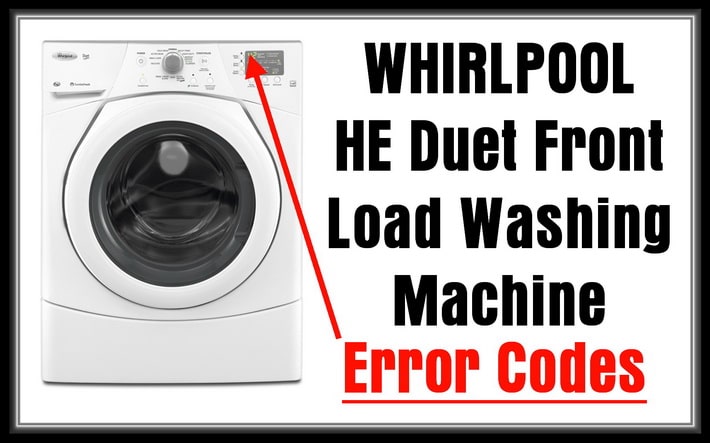
Whirlpool front load washers display error codes to help diagnose problems. Each code points to a specific issue.
Here’s a quick reference guide:
| Error Code | Meaning | Common Solution |
|---|---|---|
| F9 E1 | Long Drain | Clean drain filter, check hose |
| F8 E1 | No Water Detected | Check water supply, inlet valve |
| F0 E2 | Suds Detected | Use less detergent, run rinse cycle |
| LOC/dL | Door Lock Error | Check door, clean seal, reset lock |
| F3 E1 | Pressure Sensor Error | Inspect pressure hose, sensor |
Always consult your model’s user manual for a complete list of error codes. If an error persists after a basic reset, the part may need repair or replacement.

Routine Maintenance Tips To Prevent Problems
A little preventive care keeps your Whirlpool washer running smoothly.
- Clean the door seal weekly to prevent mold and leaks.
- Run a Clean Washer cycle (with washer cleaner) monthly to remove detergent buildup.
- Check and clean drain pump filter every 3-6 months.
- Wipe down the detergent drawer and let it dry after use.
- Leave the door open after washing to allow the drum to dry.
- Inspect hoses for cracks or bulges every 6 months.
Ignoring maintenance can lead to odors, leaks, and component failure.
When To Call A Professional
Some problems are best left to trained technicians. If you notice the following, seek help:
- Burning smell or smoke
- Water around electrical parts
- Repeated error codes after reset
- Drum won’t turn or makes loud grinding noises
- Washer leaks from the back or bottom
Attempting to repair complex parts (like control boards or bearings) without proper tools can make the problem worse. Whirlpool’s official website offers a service locator for certified repair providers. For more on how front load washers work, visit Wikipedia.
Comparing Front Load Vs. Top Load Washer Troubleshooting
Knowing the differences helps you approach problems more effectively.
| Feature | Front Load Washer | Top Load Washer |
|---|---|---|
| Door Lock | Essential for operation | May work with lid open (older models) |
| Drain Pump Filter | User-accessible, needs cleaning | Usually internal, less frequent cleaning |
| Vibration | More sensitive to leveling | Usually more stable |
| Detergent Type | HE detergent only | Standard or HE detergent |
| Door Seal Maintenance | Must be cleaned regularly | Not required |
This comparison shows why front load washers need more attention to door seals, leveling, and detergent usage.
Essential Tools For Whirlpool Washer Troubleshooting
Having the right tools makes DIY repairs easier.
- Phillips and flathead screwdrivers
- Pliers (for hose connections)
- Nut driver (usually 1/4” or 5/16”)
- Flashlight (to check behind/under washer)
- Bucket and towels (for draining water)
- Multimeter (for electrical checks)
Insight: An old toothbrush helps clean filters, seals, and detergent drawers.
Quick Reference: Troubleshooting Actions And Likely Fixes
Here’s a handy summary of symptoms and what to check first.
| Symptom | Check First | Likely Fix |
|---|---|---|
| Won’t start | Power, door lock, control lock | Reset, clean latch, unlock controls |
| Won’t fill | Water valves, hoses, inlet screens | Open valves, clean screens |
| Won’t drain | Drain filter, hose, pump | Clean filter, inspect hose/pump |
| Noisy spin | Level, shock absorbers, drum | Level washer, inspect shocks |
| Leaking | Door seal, hoses, detergent | Clean/replace seal, tighten hoses |
Advanced Troubleshooting For Persistent Problems
When basic steps don’t solve the issue, try these advanced checks.
Resetting The Control Board
Unplug the washer for 1 minute, then plug it back in. On some models, you can also reset by pressing a sequence of buttons (refer to your manual). This can clear electronic glitches.
Diagnostic Mode
Most Whirlpool front load washers have a diagnostic mode. To enter, turn the cycle knob to “Off,” then rotate it in a set pattern (e.g., left, right, right, right, left, right). The lights will flash, and error codes will display. This is useful for pinpointing the exact problem.
Checking For Blocked Drains
If water remains inside after draining, there may be a blockage deeper in the plumbing. Disconnect the drain hose and check for obstructions in the standpipe.
Inspecting Internal Parts
If comfortable, remove the washer’s back or lower front panel. Look for loose wires, broken belts, or burnt components. Always unplug the washer first.
Caution: Only attempt these steps if you are confident. Otherwise, seek professional service.
Whirlpool Washer Maintenance Mistakes To Avoid
Even careful owners sometimes make mistakes. Here are common errors to avoid:
- Using too much detergent: This causes excess suds and drainage problems.
- Ignoring small leaks: Even tiny leaks can lead to bigger issues.
- Overloading the drum: This stresses the motor and suspension.
- Skipping filter cleaning: Clogged filters can burn out the pump.
- Forgetting to level the washer: This can cause severe vibration and damage.
Tip: Read your washer’s manual carefully. Each model has unique features and requirements.
Frequently Asked Questions
How Do I Reset My Whirlpool Front Load Washer?
Unplug the washer from the wall for one minute. Plug it back in, then open and close the door six times within 12 seconds. This can reset the control board on many models. If this doesn’t work, consult your user manual for a model-specific reset sequence.
Why Does My Whirlpool Washer Smell Bad?
Odors are usually caused by mold or mildew in the door seal or drum. Clean the seal weekly, run a Clean Washer cycle monthly, and leave the door open after use to keep the interior dry.
What Does The “sud” Error Mean?
The SUD or Sd code means there are too many suds inside the washer. Use less HE detergent and run an extra rinse cycle. Avoid regular detergent, as it can create too much foam.
Why Is My Washer Stuck On The Spin Cycle?
This often means the washer can’t balance the load or drain the water. Pause the cycle, redistribute the clothes, and check the drain pump filter for blockages. If the problem persists, the control board or sensor may need service.
Can I Use Regular Detergent In My Whirlpool Front Load Washer?
No. Always use HE (High Efficiency) detergent. Regular detergent creates too many suds, leading to poor cleaning, draining issues, and possible damage to the washer.
A Whirlpool front load washer is a reliable home appliance with the right care and troubleshooting. By understanding common issues, their causes, and practical fixes, you can keep your washer running smoothly and extend its lifespan. Regular maintenance and prompt attention to problems save money and prevent bigger repairs down the line.
If you ever feel unsure, don’t hesitate to contact a professional. Taking these steps ensures your laundry stays clean and your washer stays dependable for years to come.

