

Muscle soreness and tightness are common problems, whether you’re an athlete, office worker, or just someone who enjoys staying active. With the rise of massage guns, many people are now able to relieve muscle tension at home, save money on spa visits, and recover faster after workouts. But a question often comes up: What muscles can you use a massage gun on? Understanding which muscles are safe and effective to treat can help you get the most from your device, avoid injury, and improve your overall muscle health.
If you’re new to massage guns, you might feel unsure about where to start or worried about using the device incorrectly. The good news is that most major muscle groups can benefit from percussion therapy, but there are important tips and limits to keep in mind.

36% off Today’s Exclusive Deals
Limited-time Exclusive Deals. Check current discount on Amazon.
Check Price on Amazon As an Amazon Associate I earn from qualifying purchases.This guide will walk you through the main muscles you can target, explain how to use a massage gun on each area, and highlight common mistakes people make. You’ll also learn about areas you should avoid and get answers to the most frequent questions about massage gun safety.
Understanding Massage Guns And Muscle Groups
Before diving into specific muscles, it’s helpful to know how massage guns work. These handheld devices use rapid, repetitive pulses (called percussion) to stimulate blood flow and relax tight tissues. They can reach deep into muscle fibers, break up knots, and speed up recovery. However, not every muscle is suitable for this type of therapy, and technique is key.
Your body is made up of more than 600 muscles, but not all are accessible or safe for percussive massage. Generally, large and medium-sized muscle groups with enough soft tissue can handle a massage gun. Smaller, delicate, or protected areas—such as near bones, joints, or nerves—should be avoided.
Let’s explore each major muscle group, how to use a massage gun on them, and what you need to watch for.
Upper Body Muscles You Can Use A Massage Gun On
Shoulders (deltoids)
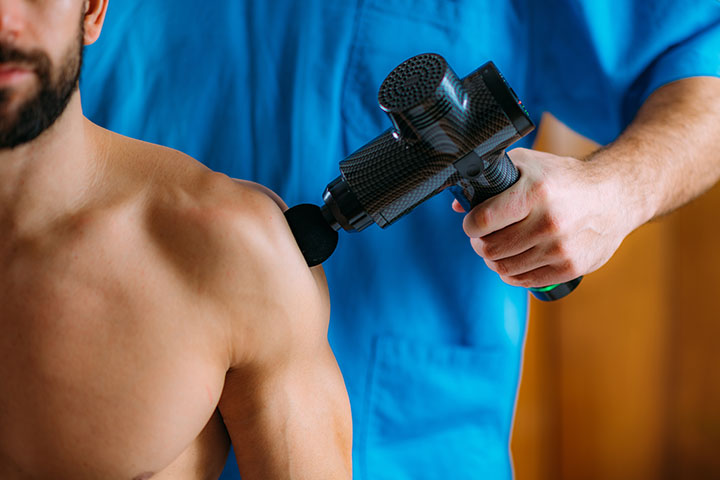
The deltoid muscles cover the top of your shoulders and help lift and rotate your arms. They often get sore from weightlifting, carrying heavy bags, or poor posture at a desk. You can use a massage gun on the deltoids by gently moving the device in slow circles around the muscle. Avoid pressing too hard, especially near the collarbone or shoulder joint.
Pro tip: Use a ball-shaped attachment for even pressure, and keep the speed on a lower setting if you’re new to massage guns.
Upper Back (trapezius)
The trapezius muscle stretches from your neck to your mid-back and across your shoulders. It often gets tight from stress or sitting at a computer. A massage gun can help release tension here, but be careful not to hit the bony parts of your spine. Stay on the fleshy areas between the neck and shoulders.
Non-obvious insight: Many people ignore the upper traps, but regular percussion therapy here can reduce tension headaches caused by muscle tightness.
Chest (pectorals)
Your pectoralis major and minor muscles are located in your chest. These muscles can get sore from push-ups, bench presses, or even slouching. Gently apply the massage gun to the chest, avoiding the sternum and ribs. Use slow, controlled movements, and never use high power.
Arms (biceps And Triceps)
Both the biceps (front of the upper arm) and triceps (back of the upper arm) are safe for massage gun use. These muscles are often sore after lifting weights or repetitive use, like carrying groceries. Move the device slowly along the muscle, not directly over the elbow joint.
Mistake to avoid: Don’t use the massage gun on your inner arm near the armpit, where nerves and blood vessels are close to the surface.
Forearms
The forearm muscles help you grip, type, and lift. They can become tight from office work or sports like tennis. You can use a massage gun on the thick, fleshy part of your forearm. Avoid the wrist and bony areas. A flat or bullet head attachment works well for these smaller muscles.
Back Muscles You Can Use A Massage Gun On
Lower Back (erector Spinae)
The erector spinae muscles run along your spine and help with posture and bending. Many people use a massage gun to ease lower back pain. It’s safe to use on the thick muscles beside your spine, but never directly on the bones. Keep away from the kidneys (just above your hips) and don’t use high pressure.
Important tip: If you feel tingling or numbness, stop immediately. This could mean you’re near a nerve.
Lats (latissimus Dorsi)
The latissimus dorsi are the large, wing-shaped muscles on your back, under your arms. They’re often used in pulling exercises like rows or pull-ups. A massage gun can help relax these big muscles. Move the device from your armpit down toward your lower back, staying on the muscle and avoiding the ribs.
Middle Back (rhomboids)
The rhomboids sit between your shoulder blades. They get tight from poor posture or carrying heavy bags. Gently glide the massage gun across the upper-middle back, focusing on the muscles—not the spine or shoulder blades.
Practical insight: Using a massage gun on the rhomboids after desk work can help prevent long-term back stiffness.
Core Muscles
Abdominals
The abdominal muscles are not a common area for massage gun use, but they can benefit from gentle percussion, especially if sore from workouts. Use the lowest setting and a soft attachment. Avoid the ribs, hip bones, and any area that feels uncomfortable. Never use a massage gun if you have a hernia or abdominal injury.
Obliques
Your obliques run along the sides of your abdomen. Light massage gun use can relieve soreness after core exercises. Stay on the muscle and away from the lower ribs and pelvis. Don’t use high speed or pressure here.
Lower Body Muscles You Can Use A Massage Gun On
Glutes (gluteal Muscles)
The gluteus maximus, medius, and minimus make up your buttocks. These are some of the largest muscles in the body and respond well to percussion therapy. Using a massage gun here can help with lower back pain, running recovery, and hip mobility. Move the device in slow circles over the muscles, avoiding the tailbone and hip bones.
Advanced tip: If you suffer from sciatica, massage the glutes—but avoid the direct path of the sciatic nerve.
Hamstrings
The hamstrings are on the back of your thighs. They’re often tight in runners and people who sit for long hours. Use a massage gun to gently move up and down the muscle, from just below the glutes to above the knee. Avoid the back of the knee, where nerves and blood vessels are close to the surface.
Quadriceps
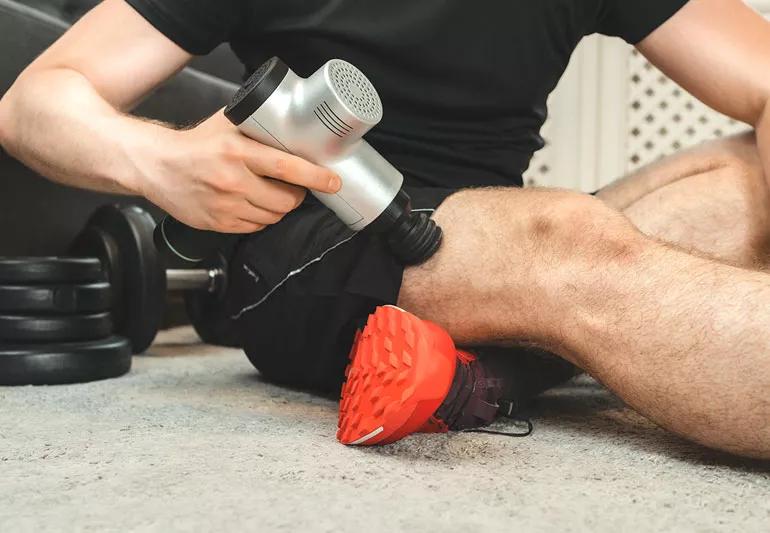
The quadriceps are the large muscles on the front of your thighs. They often get sore from squats, running, or cycling. A massage gun can help speed up recovery and reduce muscle tightness. Move the device along the length of the muscle, staying clear of the knee cap.
Adductors (inner Thigh)
The adductor muscles help pull your legs together. They can get tight from sports like soccer or horse riding. You can use a massage gun on the fleshy part of the inner thigh, but use low speed and avoid the groin area.
Calves (gastrocnemius And Soleus)
The calf muscles are often tight after standing, running, or hiking. A massage gun can reduce stiffness and help with recovery. Move the device in slow circles up and down the calf, but avoid the back of the knee.
Shins (tibialis Anterior)
The tibialis anterior runs along the front of your lower leg. Runners and walkers often get tightness here, sometimes called shin splints. Use a massage gun gently on the muscle, not the bone.
Feet And Ankles
Plantar Fascia (bottom Of The Foot)
The plantar fascia is the thick band of tissue on the bottom of your foot. People with plantar fasciitis or tired feet can use a massage gun here for relief. Use the softest attachment and low speed. Never use a massage gun on the bones of the foot or if you have fractures.
Achilles Tendon Area
You can use a massage gun on the lower calf muscle near the Achilles tendon, but avoid the tendon itself. Focus on the muscle for relief after running or long walks.
Muscles And Areas To Avoid
Some areas of the body should not be treated with a massage gun. Using percussion therapy on these spots can cause injury, nerve damage, or other problems.
- Joints and bones: Never use a massage gun directly on knees, elbows, or your spine.
- Neck (front and sides): The front and sides of the neck contain important blood vessels and nerves. Only the upper trapezius is safe.
- Head and face: These areas are too delicate for massage guns.
- Groin and armpits: Many nerves and blood vessels are close to the surface.
- Abdomen (if you have medical conditions): Avoid if you have hernias, recent surgeries, or abdominal injuries.
- Areas with varicose veins, bruises, or wounds: Never use a massage gun on damaged skin or veins.
Non-obvious insight: Even if a muscle feels tight, it’s not always safe to use a massage gun. If you’re unsure, consult a medical professional before use.
Comparing Muscle Groups: Massage Gun Suitability
Here’s a quick overview of how suitable different muscle groups are for massage gun use.
| Muscle Group | Massage Gun Suitability | Recommended Attachment |
|---|---|---|
| Shoulders (Deltoids) | High | Ball head |
| Upper Back (Trapezius) | High | Ball or flat head |
| Chest (Pectorals) | Medium | Flat head |
| Biceps/Triceps | High | Bullet or ball head |
| Forearms | Medium | Flat head |
| Lower Back | Medium | Ball head |
| Glutes | High | Ball head |
| Hamstrings/Quads | High | Ball or fork head |
| Calves | High | Ball or bullet head |
| Abdominals | Low | Soft head |

Best Practices For Using A Massage Gun On Muscles
To get the most benefit and avoid injury, follow these best practices:
- Start slow: Use the lowest speed setting, especially if you’re new.
- Stay on muscle tissue: Avoid joints, bones, and sensitive areas.
- Limit session time: Spend 1–2 minutes per muscle group.
- Use proper attachments: Ball heads for large muscles, flat or bullet heads for smaller areas.
- Listen to your body: If you feel pain, tingling, or numbness, stop immediately.
When To Use A Massage Gun
- After workouts to reduce soreness and speed up recovery.
- Before exercise to warm up muscles.
- For relief of chronic tightness from daily activities or stress.
When Not To Use A Massage Gun
- If you have a recent injury, swelling, or open wounds.
- If you have certain medical conditions (blood clotting disorders, deep vein thrombosis, or severe osteoporosis).
- On areas with numbness, tingling, or decreased sensation.
Statistical insight: In a 2020 study, percussion therapy reduced muscle soreness in athletes by 30% after intense exercise, compared to passive rest.
Example: How To Use A Massage Gun On The Quadriceps
Here’s a step-by-step example of using a massage gun on your quadriceps (front thigh):
- Sit comfortably with your legs extended.
- Choose a ball or flat head attachment.
- Turn the device to the lowest speed.
- Gently move the massage gun up and down the front of your thigh, staying away from the knee.
- Spend about 1–2 minutes, focusing on any tight spots.
- If you feel discomfort, lower the speed or move to another area.
Common mistake: Pressing too hard or staying in one spot for too long can cause bruising.
Massage Gun Attachments: Which To Use On Each Muscle
Massage guns often come with different attachments. Using the right one helps you target muscles safely.
| Attachment | Best For | Muscle Groups |
|---|---|---|
| Ball Head | General use, large muscles | Quads, glutes, hamstrings, calves |
| Flat Head | Firmer pressure, flat surfaces | Chest, forearms, back |
| Bullet Head | Deep tissue, trigger points | Biceps, triceps, calves |
| Fork Head | Around tendons, parallel muscles | Spine (along sides), calves |
| Soft Head | Sensitive areas | Abdominals, feet |
Two Key Insights Beginners Often Miss
- You don’t need to press hard. Most people think deeper pressure means better results, but with percussion therapy, light to moderate pressure is enough. Too much force can bruise or irritate the muscle.
- Muscle recovery is about timing. Using a massage gun right after a workout can reduce soreness, but using it when your muscles are still cold (before warming up) can sometimes cause more tightness. Aim for a quick warm-up, then use the massage gun, or wait until after exercise.
Scientific Support And Professional Advice
Massage guns are supported by recent research. According to a review in the *Journal of Clinical Medicine*, percussive therapy increased range of motion and reduced soreness in athletes. However, experts recommend using massage guns as part of a complete recovery plan that includes stretching, hydration, and rest.
If you have a health condition or are unsure about using a massage gun, speak with a physical therapist or doctor. For more details on muscle anatomy and safe massage practices, visit the Wikipedia: Muscle page.
Frequently Asked Questions
Can I Use A Massage Gun On My Neck?
No, you should not use a massage gun on the front or sides of your neck. These areas have important blood vessels and nerves. You can use a massage gun on the upper trapezius (the back of the neck and shoulder area), but do so gently and avoid the spine.
How Often Can I Use A Massage Gun On The Same Muscle?
Most people can safely use a massage gun on the same muscle group once or twice a day, for 1–2 minutes at a time. Overusing it can lead to bruising or irritation. Always listen to your body and take breaks if needed.
Are Massage Guns Safe For Everyone?
Massage guns are safe for most healthy adults, but not for everyone. If you have blood clotting issues, deep vein thrombosis, recent surgery, fractures, or certain heart conditions, you should avoid using a massage gun. Pregnant women and people with nerve disorders should also consult a doctor first.
Can I Use A Massage Gun On Sore Muscles?
Yes, a massage gun can help relieve muscle soreness and speed up recovery. However, avoid using it on areas with sharp pain, swelling, or recent injuries. If the soreness is severe or unusual, talk to a healthcare provider.
What Should I Do If I Feel Pain While Using A Massage Gun?
Stop immediately if you feel pain, numbness, or tingling. These could be signs you’re pressing too hard, staying in one spot too long, or hitting a sensitive area like a nerve. Adjust your technique, use a softer attachment, or consult a professional before continuing.
Massaging your muscles with a percussion device can be a game-changer for your health, comfort, and fitness recovery. By understanding which muscles to target and how to use your massage gun properly, you’ll enjoy greater benefits and avoid common mistakes.
Always prioritize safety, follow the guidance above, and make massage guns a part of your balanced wellness routine.

