

Many people want to take better care of their bodies, especially after long hours at work, intense workouts, or sitting for too long. Two popular tools for muscle recovery and pain relief are massage guns and foam rollers. You may see athletes, trainers, or even your friends using these devices. But what exactly is the difference between them? Which one is right for you? This article explains everything you need to know about massage guns and foam rollers. We will look at how each tool works, when to use them, their benefits and drawbacks, and real-life examples. By the end, you will know which tool fits your needs best, and how to use them safely.
What Are Massage Guns?
Massage guns are handheld devices that look like a small power drill or hair dryer. They use a motor to move a soft, round head back and forth quickly. This movement is called percussion therapy. When you press the massage gun against your skin, the head “punches” your muscles many times per second. Most massage guns let you change the speed and the attachment head for different muscle groups.

36% off Today’s Exclusive Deals
Limited-time Exclusive Deals. Check current discount on Amazon.
Check Price on Amazon As an Amazon Associate I earn from qualifying purchases.How Massage Guns Work
Massage guns work by sending rapid pulses deep into your muscle tissue. This can help break up knots, increase blood flow, and reduce tension. Many people use massage guns on sore muscles after working out, but they are also used for warming up before exercise, or for relaxing at the end of the day.
Key Features Of Massage Guns
- Speed settings: Most models offer 2–6 speeds, from soft to very strong.
- Different heads: You can swap the head for different shapes, like round, flat, or forked, to target different areas.
- Portability: They are usually wireless and easy to carry in a gym bag.
- Battery life: Good models run for 2–6 hours per charge.
Who Uses Massage Guns?
- Athletes (runners, football players, weightlifters)
- Physical therapists
- Office workers with muscle tightness
- People recovering from injury (with doctor’s guidance)
Example Use Case
Imagine you’ve just finished a long run and your calves feel tight. You pick up your massage gun, choose a soft round head, and spend 2–3 minutes moving the gun slowly up and down your calf muscle. You feel the pulses deep in your muscle, and after a few minutes, the soreness lessens.
What Are Foam Rollers?
Foam rollers are simple cylinders made of dense foam. You place the roller on the floor and use your body weight to press a muscle group onto the roller, then slowly roll back and forth. This technique is called self-myofascial release (SMR). It’s like giving yourself a deep tissue massage using your own body.
How Foam Rollers Work
When you roll a part of your body on the foam roller, it presses against tight muscles, fascia (the thin layer around muscles), and knots. This pressure helps relax muscles, increase blood flow, and improve flexibility. Foam rolling is very popular among athletes, yoga practitioners, and people who want to improve mobility.
Key Features Of Foam Rollers
- Material: Most are made from EVA or EPP foam. Some have hard plastic cores for extra firmness.
- Size and shape: Common lengths are 12, 18, or 36 inches. There are also short, half-round, and textured rollers.
- Texture: Some are smooth, while others have ridges or bumps for extra pressure.
- No batteries needed: Completely manual and silent.
Who Uses Foam Rollers?
- Runners and cyclists
- Dancers and gymnasts
- People with back pain or muscle stiffness
- Anyone looking for a low-cost recovery tool
Example Use Case
Suppose you notice your thighs (quadriceps) are tight after a tough gym session. You place the foam roller on the floor, lie face down, and slowly roll from your hip down to your knee for 1–2 minutes. You feel pressure on tight spots, and after rolling, your legs feel more relaxed.
Core Differences: Massage Guns Vs Foam Rollers
At first glance, both tools seem to do the same thing—help with muscle recovery and pain relief. However, there are important differences in how they work, how you use them, and what results you can expect.
| Feature | Massage Guns | Foam Rollers |
|---|---|---|
| How they work | Percussion (vibrating/punching motion) | Manual pressure through rolling |
| Target area | Very precise (small muscles or knots) | Broad areas (entire muscle groups) |
| Effort needed | Low (just hold and guide) | High (use body weight and movement) |
| Cost | Medium to high ($50–$500+) | Low ($10–$50) |
| Noise level | Some noise (motor) | Silent |
| Portability | Portable (fits in bag) | Bulky (some small options) |
| Learning curve | Easy to use | Needs some practice for best results |
| Suitability | Best for deep knots, quick relief | Best for overall mobility, stretching |
Pros And Cons Of Massage Guns
Massage guns are popular for a reason. But they are not perfect for everyone or every situation. Let’s look at both sides.
Benefits
- Fast results: Many users feel relief in 1–2 minutes.
- Deep tissue reach: The percussion can go deeper than a foam roller.
- Customizable: Change speeds and heads to match your needs.
- Easy to use: No special skills needed.
- Good for small areas: Can target knots in the neck, shoulders, or feet.
Drawbacks
- Cost: High-quality massage guns can be expensive.
- Noise: Some models are loud, which can be annoying.
- Battery life: Needs charging, especially with frequent use.
- Not for all injuries: Should not be used on fractures, open wounds, or areas with poor sensation.
- Can cause bruising: If used too hard or too long.
Non-obvious Insights
- Using a massage gun over bones or joints can cause pain or injury. Always stick to fleshy muscle areas.
- Massage guns can help with pre-workout warm-up by increasing blood flow, not just for recovery.
Pros And Cons Of Foam Rollers
Foam rollers are a favorite in gyms and yoga studios. But like any tool, they have strengths and weaknesses.
Benefits
- Affordable: Most cost less than a month of gym membership.
- Versatile: Can be used for stretching, balance, and even core workouts.
- No batteries: Always ready to use.
- Good for large muscle groups: Like back, legs, and glutes.
- Helps flexibility: Regular rolling can improve range of motion.
Drawbacks
- Physical effort needed: Rolling can be tiring, especially for beginners.
- Less precise: Hard to target very small or deep knots.
- Bulky: Full-size rollers are not easy to travel with.
- Discomfort: Rolling on tight muscles can be painful, especially at first.
- Learning curve: Proper technique matters for best results.
Non-obvious Insights
- Textured rollers are not always better. For very sore muscles, a smooth roller is less painful.
- Foam rolling before exercise (not just after) can improve muscle activation and help prevent injury.
When To Use Massage Guns
Massage guns are best in certain situations:
- Post-workout recovery: Use within 30 minutes after exercise to reduce soreness.
- Warm-up: A quick session on big muscle groups before activity wakes up your muscles.
- Trigger point release: For stubborn knots, the gun’s power can break up tension better than a foam roller.
- Limited mobility: If you have trouble getting on the floor, a massage gun lets you treat muscles while sitting or standing.
Example: Office Worker
If you sit at a desk all day and get tight shoulders, a massage gun is perfect for a quick 2-minute session during a break. No need to get on the floor or change clothes.
When To Use Foam Rollers
Foam rollers shine in different situations:
- Full-body recovery: Rolling large areas like the back, hamstrings, or IT band (side of thigh) is easy with a roller.
- Stretching and mobility: Foam rolling before yoga or stretching helps lengthen muscles.
- Core workouts: Some people use rollers for balance exercises or planks.
- Budget needs: If money is tight, a foam roller gives good value.
Example: Runner
After a long run, you can use a foam roller to roll your calves, quads, and glutes for 10–15 minutes. This helps break up tightness and keeps you flexible.
Scientific Research: Effectiveness Of Massage Guns Vs Foam Rollers
Are massage guns just a trend, or do they really work? What about foam rollers—do they have real science behind them? Let’s look at what studies show.
Massage Guns
Recent studies found that percussion therapy (the technique used by massage guns) can reduce muscle soreness (DOMS) and increase range of motion. For example, a 2020 study published in the *Journal of Clinical Medicine* showed that participants using a massage gun for 5 minutes had less muscle pain and better flexibility after exercise.
Another study found massage guns helped reduce pain in people with chronic lower back tightness. However, researchers warn not to use high speeds for too long, as this can irritate the skin or cause bruising.
Foam Rollers
Foam rolling has been studied for over a decade. Many studies agree that rolling for 5–10 minutes after exercise can reduce soreness by up to 40%. It also improves flexibility and helps muscles recover faster. For example, a study in the *International Journal of Sports Physical Therapy* showed that foam rolling after a hard workout lowered muscle soreness and improved performance in the next session.
Direct Comparison
There are few studies directly comparing both tools. One interesting finding: foam rollers seem slightly better for improving long-term flexibility, while massage guns offer faster pain relief for trigger points.
Common Mistakes When Using Massage Guns Or Foam Rollers
Both tools are simple, but many beginners make the same mistakes. Here’s what to avoid:
With Massage Guns
- Pressing too hard: Let the gun do the work. Too much pressure can bruise or damage tissue.
- Staying on one spot too long: Never hold the gun in one place for more than 10–20 seconds.
- Ignoring warnings: Don’t use on open wounds, swollen areas, or directly on bones.
- Skipping warm-up: Muscles respond better if you do a quick warm-up first.
With Foam Rollers
- Rolling too fast: Move slowly to give muscles time to relax.
- Bad posture: Slouching can cause strain on other parts of the body.
- Only rolling where it hurts: Sometimes the pain comes from tightness elsewhere. Roll above and below the sore area.
- Not breathing: Hold your breath and your muscles stay tight. Breathe deeply to relax.
Choosing Between Massage Guns And Foam Rollers
Deciding which tool to buy depends on your needs, budget, and preferences. Here’s a quick side-by-side guide:
| Situation | Best Tool | Why |
|---|---|---|
| Targeting small, deep knots | Massage gun | Can focus on a tiny area with strong pressure |
| Full-body muscle recovery | Foam roller | Covers large muscle groups efficiently |
| Quick relief at work/home | Massage gun | Use while sitting or standing, no floor needed |
| Improving flexibility | Foam roller | Better for stretching and myofascial release |
| Low budget | Foam roller | Much cheaper, lasts for years |
| Travel-friendly | Massage gun | Compact models fit in backpack or suitcase |
Other Factors To Consider
- Health conditions: If you have a serious injury, talk to a doctor before using either tool.
- Personal comfort: Some people find foam rolling too painful, while others dislike the vibration of a massage gun.
- Space: If you live in a small space, a massage gun takes less room than a large roller.
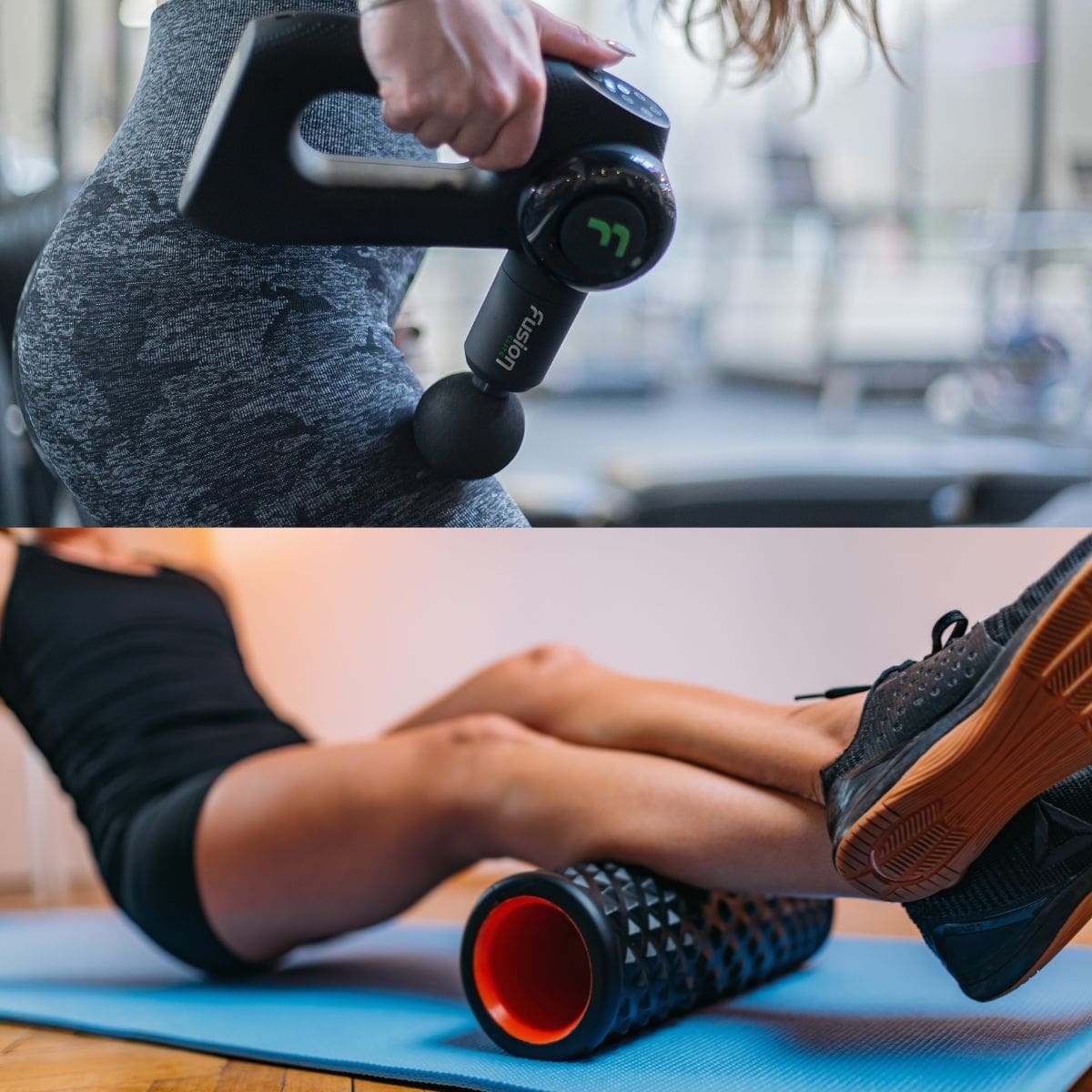
Real-life Examples: Who Should Use What?
Case 1: The Busy Professional
Sara is a graphic designer who spends 8 hours a day at her desk. She gets neck and shoulder pain. For her, a massage gun is ideal. She can use it during lunch breaks or while watching TV, and it only takes a few minutes.
Case 2: The Marathon Runner
David runs 5 days a week. His legs, hips, and back get tight after long runs. He uses a foam roller for 10 minutes every evening to recover, improve his flexibility, and avoid injury.
Case 3: The Yoga Enthusiast
Priya loves yoga and stretching. She uses a foam roller before class to help her muscles lengthen and after class to relax any sore spots.
Case 4: The Weightlifter
Mike lifts heavy weights and sometimes gets deep knots in his glutes and calves. He uses a massage gun to target these small, stubborn areas.
Case 5: The Traveler
Emily travels often for work. She packs a small massage gun in her bag to use in hotels, since foam rollers are too bulky to carry.
Safety And Best Practices
Both massage guns and foam rollers are generally safe for healthy adults. But some basic safety rules help avoid injury:
- Start gently: Use low settings on a massage gun or a softer foam roller if you’re new.
- Listen to your body: Sharp pain means stop. Some discomfort is normal, but never force it.
- Avoid sensitive areas: Don’t use on the spine, neck bones, joints, or broken skin.
- Limit time: 1–2 minutes per muscle group is enough. Longer is not always better.
- Consult a professional: If you have medical conditions (like diabetes, arthritis, or circulation problems), ask your doctor or physical therapist before using these tools.
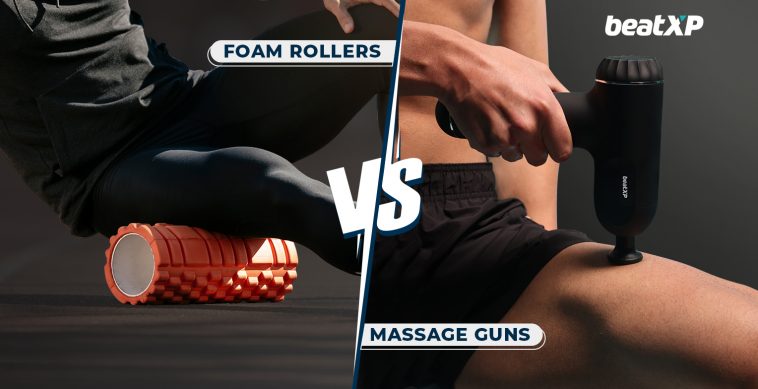
How To Combine Massage Guns And Foam Rollers
You don’t have to choose just one tool. Many athletes and therapists use both.
- Use a massage gun for quick relief on small knots or for warming up.
- Use a foam roller for longer recovery sessions or to target large muscle groups.
- For best results, do foam rolling first to “loosen up” the area, then finish with a massage gun on any remaining tight spots.
This combination can give you the benefits of both tools—better flexibility, less soreness, and faster recovery.
Environmental Impact And Durability
Foam rollers are made mostly from foam, which is not biodegradable. However, they can last for years with little care. Massage guns have batteries and electronic parts, so at the end of their life, they need special recycling. If you want to reduce waste, choose high-quality products that will not break after a few months.
Myths And Misunderstandings
Some people believe these tools can “melt fat” or cure serious injuries. This is not true. Massage guns and foam rollers are best for muscle recovery, flexibility, and mild pain relief. They do not replace medical treatment for injuries. Also, using either tool too hard can make soreness worse, not better.
Where To Learn More
If you want to read scientific research on recovery tools, you can visit the Wikipedia page on myofascial release for a deeper understanding.
Frequently Asked Questions
What Is Better For Back Pain, A Massage Gun Or A Foam Roller?
Both tools can help, but it depends on the cause of your back pain. Foam rollers are safer for the upper and lower back because you can control the pressure. Massage guns can work well for muscles on the sides of the spine, but never use them directly on bones.
If you have serious back problems, talk to a doctor first.
Can I Use Both A Massage Gun And A Foam Roller In The Same Session?
Yes, many people use both. Start with the foam roller to loosen large muscle groups, then use the massage gun for small knots or stubborn tight spots. Always listen to your body and do not overdo it.
How Often Should I Use These Tools?
You can use foam rollers or massage guns 3–5 times a week, or even daily if your muscles tolerate it. Limit each muscle group to 1–2 minutes to avoid irritation. Beginners should start slowly and increase time as they get used to it.
Are Massage Guns Safe For Everyone?
Massage guns are safe for most healthy adults, but not for people with certain conditions such as blood clots, severe osteoporosis, open wounds, or nerve problems. When in doubt, consult a healthcare professional before starting.
Why Does Foam Rolling Hurt?
Foam rolling can be uncomfortable, especially if your muscles are very tight or you’re new to it. The pain should be mild and get better with regular use. Never roll over joints or bones, and stop if you feel sharp pain.
By understanding the differences between massage guns and foam rollers, you can make the best choice for your muscle recovery and overall health. Both tools can help you feel better and perform better—just use them wisely and safely.

