

If you own a motorhome, you know how important hot water is for comfort on the road. A reliable hot water heater means warm showers, clean dishes, and a better travel experience. But when your heater stops working, it can quickly ruin your trip. Understanding how to troubleshoot common issues is a valuable skill for any motorhome owner. This guide breaks down the process, offering clear steps, expert tips, and practical examples to help you get your hot water heater running smoothly again.
Understanding Motorhome Hot Water Heaters
Motorhome hot water heaters come in several types. The most common are propane (LP gas), electric, and combination (propane/electric) models. Knowing which type you have is the first step to effective troubleshooting.

36% off Today’s Exclusive Deals
Limited-time Exclusive Deals. Check current discount on Amazon.
Check Price on Amazon As an Amazon Associate I earn from qualifying purchases.- Propane heaters use a flame to heat water and are often used when camping off-grid.
- Electric heaters use a heating element powered by shore power or a generator.
- Combination heaters allow you to use either source, giving flexibility based on your location and available power.
Most hot water heaters in motorhomes hold between 6 and 10 gallons. Modern units often have direct spark ignition (DSI) for easier starting, replacing the older manual pilot light systems. Recognizing your unit’s type and ignition system will help you diagnose problems more efficiently.
How Hot Water Heaters Work
A typical motorhome hot water heater fills with cold water from your fresh water tank. When activated, the heating element or burner heats the water. A thermostat keeps the temperature in check, while safety features like pressure relief valves prevent dangerous build-up.
Understanding these basic components will make the troubleshooting steps below easier to follow.
Common Problems With Motorhome Hot Water Heaters
Before diving into troubleshooting, it helps to recognize the most frequent issues owners face:
- No hot water at all.
- Water not heating enough (lukewarm water).
- Heater won’t ignite (no flame or element activity).
- Water leaks around the heater.
- Strange noises during operation.
- Smelly or discolored water.
Each problem points to different causes. The sections below guide you through solving each one.
Safety First: Preparation And Tools
Before working on your motorhome hot water heater, take safety seriously:
- Turn off all power sources (propane, electric, 12V, and 110V as needed).
- Allow the heater to cool before touching any parts.
- Relieve water pressure by opening a hot tap inside your motorhome.
- Keep a fire extinguisher handy, especially when working with propane.
Essential tools for troubleshooting include:
- Screwdrivers (Phillips and flathead)
- Adjustable wrench
- Multimeter (for checking voltage and continuity)
- Non-contact voltage tester
- Socket set
- Flashlight
- Cleaning brush
Having these tools ready will speed up the process and reduce mistakes.
Step-by-step Troubleshooting Guide
1. No Hot Water At All
If your taps run cold, start with these checks:
A) Power And Fuel Supply
- For electric heaters, verify shore power or generator is working.
- For propane heaters, ensure the propane tank is full and the main valve is open.
- Inspect the main circuit breaker and heater fuse.
B) Heater Switches
Motorhomes often have separate switches for electric and gas modes, sometimes located in hard-to-see places (bathroom, kitchen, or outside compartment).
- Confirm both the main water heater switch and the mode selector (gas/electric) are ON.
- Check for a reset button on the heater panel or inside the access door.
C) Thermostat And Eco (emergency Cut-off)
Most heaters have a thermostat and an ECO switch for overheat protection.
- If the ECO trips, the heater won’t operate until reset.
- Look for a small red button (often under a rubber cover) and press to reset.
D) Pilot Light Or Ignition
- On older models, ensure the pilot light is lit.
- For DSI models, listen for the clicking sound of the igniter. No sound usually means no power or a control board issue.
E) Faulty Heating Element
Use a multimeter to test the electric element for continuity. If it’s open, the element needs replacing.
F) Control Board
If all switches and power sources are working but the heater doesn’t start, the circuit board may be faulty. These fail more often on older units or after exposure to moisture.
2. Water Not Hot Enough
When your water feels only slightly warm:
- Check the thermostat setting—it may be set too low or malfunctioning.
- For electric models, a failing heating element may only partially heat water.
- On propane models, a dirty burner or weak flame can reduce heat output. Inspect for debris, rust, or spider webs blocking the burner tube.
3. Heater Won’t Ignite
If your propane heater won’t light:
- Listen for the clicking igniter. No sound means an electrical issue.
- If you hear clicking but no flame, check for propane flow and burner cleanliness.
- Inspect the spark electrode—if corroded or dirty, clean or replace it.
- For DSI systems, check for error codes (some units have LED indicators).
Example: Atwood Dsi Error Blinks
- 1 blink: Ignition failure.
- 3 blinks: Thermostat failure.
- 5 blinks: ECO tripped.
Consult your heater’s manual for exact code meanings.
4. Water Leaks
Leaks can cause serious damage, so act quickly:
- Check all visible fittings and connections.
- Inspect the pressure relief valve—sometimes these drip if debris prevents a proper seal.
- Tighten fittings gently; over-tightening can crack plastic parts.
- If the tank itself leaks, replacement is usually the only option.
5. Strange Noises
If you hear rumbling, popping, or hissing:
- Scale and sediment build-up is common, especially with hard water. This traps heat and causes noise.
- Flush the tank to remove deposits (see maintenance section below).
- Hissing may indicate a small leak or a failing heating element.
6. Smelly Or Discolored Water
- Rotten egg smell is usually from bacteria reacting with magnesium or aluminum anode rods.
- Drain the tank and flush with a diluted vinegar solution.
- Replace the anode rod if heavily corroded.
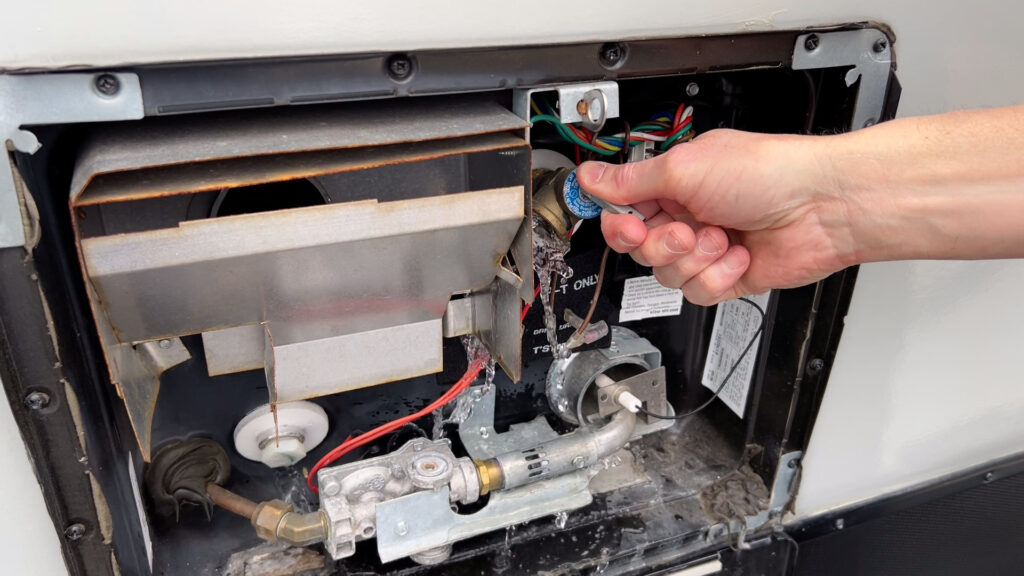
Comparison Of Common Motorhome Hot Water Heaters
To help identify your model and its troubleshooting quirks, compare these popular types:
| Heater Type | Fuel Source | Ignition Method | Common Issue |
|---|---|---|---|
| Suburban SW6DE | Propane/Electric | DSI (Electronic) | Control board failure |
| Atwood GC6AA-10E | Propane/Electric | DSI (Electronic) | Thermostat trip |
| Girard GSWH-2 (Tankless) | Propane | Electronic | Flow sensor issue |
| Furrion FWH09A-1-A | Propane/Electric | DSI (Electronic) | Soot buildup |
Maintenance: Preventing Future Hot Water Heater Problems
Simple maintenance can save you time, money, and frustration. Here’s what to do regularly:
Flushing The Tank
Sediment and minerals build up over time, especially if you use hard water. Flushing the tank prevents noise, odor, and heating problems.
- Turn off the heater and let it cool.
- Shut off water supply and relieve pressure.
- Open the drain plug (anode rod) and let water flow out.
- Insert a tank flushing wand or hose and rinse thoroughly.
- Replace the drain plug and refill the tank before powering on.
Replacing The Anode Rod
Anode rods protect the tank from rust. Inspect every 6-12 months and replace if more than half is corroded.
Checking For Leaks
Every few weeks, inspect around the heater for signs of moisture. Early detection can prevent costly repairs.
Cleaning The Burner
For propane heaters, keep the burner tube clean. Use a brush or compressed air to remove dust, spider webs, and rust.
Inspecting Electrical Connections
Loose or corroded wires cause many failures. Tighten and clean connections during each inspection.
Troubleshooting Flowchart
Visual guides can make troubleshooting less confusing. Here’s a simple flowchart for no hot water:
| Step | If Yes | If No |
|---|---|---|
| Is power/fuel available? | Go to next step | Restore power/fuel |
| Are switches ON? | Go to next step | Turn ON switches |
| Is thermostat set correctly? | Go to next step | Adjust thermostat |
| Does the heater start? | Done | Check ignition or element |
This approach helps you isolate problems quickly, especially in urgent situations.
Advanced Troubleshooting: Tips From Experienced Rv Owners
Sometimes, problems are not obvious. Here are two insights many beginners miss:
- Low voltage can prevent proper ignition. If your battery is weak or shore power is unstable, the heater may fail to start, especially with DSI systems. Always check voltage at the heater terminals with a multimeter. A reading below 11.5 volts often causes ignition failure, even if lights inside the RV work.
- Bypass valves may be in the wrong position after winterizing. If your heater is not filling or producing hot water after de-winterizing, double-check that all bypass valves are set to “normal use”. It’s a common mistake, especially for new RVers.
Another tip: If you see soot around the exterior vent, it often means incomplete combustion. This can be caused by debris, a blocked exhaust, or poor air/gas mix. Clean the burner and check for obstructions.
When To Call A Professional
Not every problem should be fixed by the owner. Contact a certified RV technician if:
- You smell propane near the heater compartment (could signal a leak).
- The tank itself leaks (replacement required).
- You experience repeated circuit board failures (may indicate deeper electrical issues).
- There’s visible burn or scorch marks on wiring or components.
Trying to fix these issues yourself can cause more damage or even injury.
Upgrading Your Motorhome Hot Water Heater
If you find yourself repairing your heater often, upgrading may be the best solution. Modern tankless hot water heaters offer endless hot water and better energy efficiency. However, installation can be complex and may require modifications to your plumbing or electrical system.
When upgrading, compare:
- Tank size (for traditional heaters)
- Recovery rate (how fast water reheats)
- Power options (propane, electric, or both)
- Compatibility with your motorhome’s space and hookups
Here’s a quick comparison of traditional vs tankless models:
| Feature | Traditional Heater | Tankless Heater |
|---|---|---|
| Hot Water Supply | Limited (6-10 gallons) | Unlimited (on demand) |
| Energy Efficiency | Moderate | High |
| Installation Cost | Lower | Higher |
| Maintenance | Regular flushing | Descaling (if hard water) |
Upgrading is also a good opportunity to add features like digital controls, better insulation, or remote monitoring.

Environmental And Water Quality Factors
The quality of water you use can have a big impact on your heater’s lifespan and performance. Hard water leads to faster mineral build-up and more frequent maintenance. Consider using a water softener or filter if you travel in areas with very hard water.
Some campgrounds supply water with high mineral content, which means you’ll need to flush and check your heater more often. Regular maintenance helps prevent problems like scale, odor, and poor heating.
Practical Example: Diagnosing A Cold Shower
Let’s walk through a real-world scenario:
You wake up on a cold morning, turn on the shower, and only cold water comes out. What do you do?
- Check if any hot water comes from any tap. If not, it’s likely a heater issue.
- Go to the heater compartment and listen for the igniter clicking (if propane). No sound? Check the 12V fuse and switches.
- Smell for propane. If you don’t smell any, check the main valve and tank level.
- If electric, test for power at the element with a multimeter.
- If everything appears correct, reset the thermostat and ECO.
- If still no luck, check for error lights or codes.
- If you find soot or debris, clean the burner.
By following these steps, you can often diagnose and fix the problem without calling for help.
Reliable Resources For Motorhome Owners
For more detailed guides and manuals, visit the manufacturer’s website or trusted RV forums. For general information on how hot water heaters work, check Wikipedia.
Frequently Asked Questions
What Should I Do If My Motorhome Hot Water Heater Keeps Tripping The Reset Button?
If the reset button (ECO) keeps tripping, it usually means the heater is overheating. Common causes are a faulty thermostat, scale build-up on the heating element, or poor water flow. Clean the tank, check the thermostat, and make sure water is circulating properly.
Can I Run My Motorhome Hot Water Heater On Both Propane And Electric At The Same Time?
Most combination heaters allow dual operation. Running both at the same time can heat water faster, but always check your manual for specific instructions. Make sure your motorhome’s electrical system can handle the extra load.
How Often Should I Flush My Hot Water Heater Tank?
Flushing should be done every 6-12 months, depending on water quality. If you notice noise, odor, or slower heating, flush more frequently. Regular flushing helps prevent damage and extends the heater’s lifespan.
Why Does My Hot Water Smell Like Rotten Eggs?
The rotten egg smell comes from bacteria reacting with the anode rod inside the tank. Drain and flush the tank with vinegar, and replace the anode rod if needed. Using filtered or treated water can help prevent this problem.
Is It Worth Upgrading To A Tankless Hot Water Heater In My Motorhome?
Tankless heaters give endless hot water and use less energy, but installation is more complex and expensive. If you need lots of hot water or want better efficiency, upgrading can be a good choice. Consider your budget, space, and usage before making the switch.
A well-maintained motorhome hot water heater adds comfort and value to your travels. With the right troubleshooting skills and regular care, you’ll enjoy hot showers wherever the road takes you.


