

The Rheem Marathon water heater is known for its durability, high energy efficiency, and non-metallic tank. Homeowners often choose it to avoid rust, corrosion, and frequent replacements. However, like any advanced appliance, even the best water heaters can develop issues. When your Rheem Marathon stops delivering hot water—or shows other problems—troubleshooting quickly and correctly makes all the difference.
This guide gives you clear, practical steps to diagnose and fix common problems with your Rheem Marathon water heater. Whether you own a Marathon 50-gallon or a larger 105-gallon model, you’ll learn how to recognize issues, what tools you need, and when to call a professional.

36% off Today’s Exclusive Deals
Limited-time Exclusive Deals. Check current discount on Amazon.
Check Price on Amazon As an Amazon Associate I earn from qualifying purchases.You’ll also discover why some problems keep coming back, and what new users often miss when maintaining their heater.
Understanding Your Rheem Marathon Water Heater
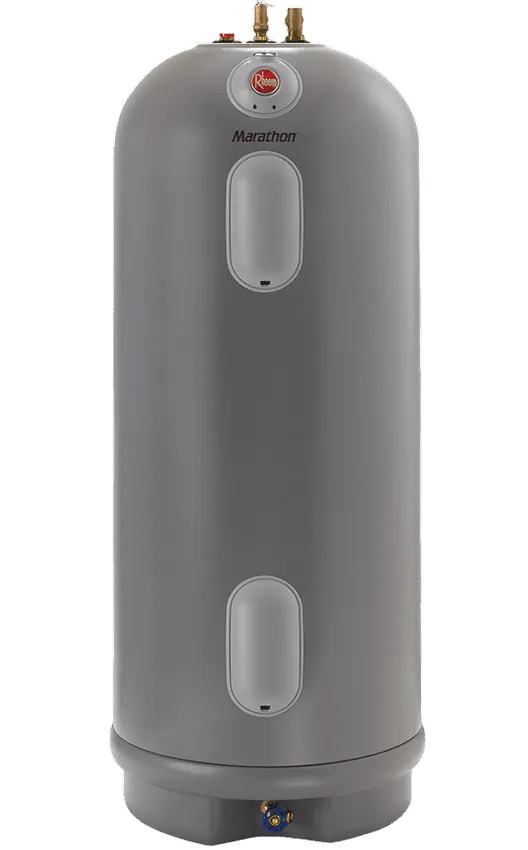
Before troubleshooting, it’s helpful to know what makes the Marathon series unique. These water heaters use a seamless, blow-molded polybutylene tank that resists rust and scale. They also feature:
- High-efficiency insulation to reduce standby heat loss
- Dual heating elements (upper and lower) for faster recovery
- Self-cleaning action to minimize sediment buildup
The non-metallic tank means you’ll rarely worry about leaks from corrosion. But, because Marathon heaters use electronic thermostats and multiple sensors, troubleshooting often involves both mechanical and electrical checks.
Common Problems And Quick Diagnosis
Problems with Rheem Marathon water heaters often fall into a few categories. Here’s how to quickly identify the most common issues:
- No hot water—Usually caused by a tripped breaker, faulty thermostat, or burned-out heating element.
- Not enough hot water—A sign of failed heating element, sediment buildup, or incorrect thermostat setting.
- Water too hot—Most often due to a stuck thermostat or faulty wiring.
- Water leak—Rare, but usually from fittings or valves, not the tank itself.
- Strange noises—Popping or rumbling can mean sediment is collecting in the tank.
- Error codes—Recent Marathon models display codes through indicator lights or panels.
Knowing these basics helps you focus your troubleshooting and avoid guesswork.
Safety First: What To Do Before You Start
Water heaters mix electricity and water, which can be dangerous. Always start with these steps:
- Turn off power at the circuit breaker before opening any panels.
- Check water supply—Shut off the cold-water valve if you need to drain the tank.
- Read the manual for your specific model (Rheem often puts a copy behind the access panel).
- Use insulated tools and a voltage tester to confirm power is off.
Never try to repair a water heater if you’re unsure about electrical safety. It’s better to call a licensed electrician for anything beyond simple checks.
Tools And Parts You’ll Need
For most Rheem Marathon troubleshooting, keep these items handy:
- Phillips and flathead screwdrivers
- Digital multimeter (for voltage and resistance tests)
- Voltage tester
- Garden hose (for draining the tank)
- 1.5″ socket (for heating element removal)
- Replacement heating elements and thermostats (matched to your model)
- Teflon tape (for fittings)
- Bucket and towels
Having the right tools prevents damage and helps you work faster.
Troubleshooting Steps For Key Problems
Let’s go through the most common Marathon water heater problems and how to solve them.
No Hot Water
If your Marathon is not heating at all:
- Check circuit breaker—Make sure the breaker hasn’t tripped. Reset if needed.
- Test for power at the unit—Remove the top access panel and use a voltage tester. You should see 240 volts across the terminals.
- Inspect high-limit reset—Press the red button on the upper thermostat. If it clicks, the thermostat may have tripped due to overheating.
- Test upper heating element—Use the multimeter on resistance mode (Ω). Disconnect wires and check the element—expect 10-16 ohms. If “OL” or zero, the element is bad.
- Replace faulty element or thermostat—Swap with the correct Rheem part. Always use Teflon tape and tighten firmly.
If the high-limit keeps tripping, suspect a stuck relay, miswired connection, or a faulty thermostat.
Not Enough Hot Water
If you get some hot water but not enough:
- Lower element failure—Test the lower element’s resistance as above. If it’s open, replace it.
- Sediment buildup—Older units may have scale covering the lower element. Drain the tank and flush until water runs clear.
- Thermostat settings—Verify both upper and lower thermostats are set correctly (120–130°F for most homes).
- Check for crossed plumbing—Sometimes hot and cold lines are reversed or mixed, especially after renovations.
A common beginner mistake is only testing the upper element. In Marathon heaters, the lower element does most of the heating after the first gallon.
Water Too Hot
If water is dangerously hot:
- Thermostat stuck “on”—Turn off power, check the thermostat’s continuity. Replace if it’s always closed.
- Incorrect wiring—Double-check the wiring diagram. Swapped wires can cause constant heating.
- High thermostat setting—Set both thermostats to recommended levels.
Never ignore overheating—scalds can happen in seconds. Consider an anti-scald valve for extra safety.
Water Leak
Leaks are rare but can happen at connections:
- Check fittings—Inspect the inlet and outlet, T&P valve, and drain valve. Tighten or reseal as needed.
- Test T&P valve—Lift the lever briefly. If water flows freely, it’s working. If it drips constantly, replace it.
- Inspect for cracks—Polybutylene tanks almost never crack, but if water is coming from the tank itself, call Rheem support. The tank has a lifetime warranty for leaks.
Some users overlook the anode rod (used in other heaters). Marathon tanks don’t require them, so don’t worry about missing an anode.
Strange Noises
If you hear popping or rumbling:
- Sediment on elements—Mineral buildup can cause noise. Drain and flush the tank.
- Element scaling—If elements are heavily coated, replace them. Use a Marathon-specific low-watt density element for hard water.
- Loose pipes—Check for vibration against walls or floor joists.
Ignoring noise can lead to less efficient heating and higher electric bills.
Error Codes And Indicator Lights
Newer Marathon models may show codes or flash patterns:
- No light—No power or failed LED.
- Steady light—Normal operation.
- Flashing light—Often means a fault (see manual for code meanings).
If you see an error code, look it up in your manual or Rheem’s online support. Address the listed issue before resetting the unit.
Rheem Marathon Water Heater Troubleshooting Table
To make diagnosis faster, here’s a quick reference table for common problems, causes, and fixes.
| Problem | Possible Cause | What To Check / Do |
|---|---|---|
| No hot water | Tripped breaker, bad element, high-limit switch | Reset breaker, test elements, press reset button |
| Not enough hot water | Lower element failure, sediment, thermostat setting | Test lower element, flush tank, adjust thermostat |
| Water too hot | Stuck thermostat, wiring error | Replace thermostat, check wiring |
| Leaking water | Loose fittings, bad valve | Tighten/reseal, replace valve |
| Strange noises | Sediment, scaled elements | Flush tank, replace elements |
How To Test And Replace Heating Elements
Heating element failure is the most frequent issue in electric water heaters. Here’s how to check and replace them:
- Shut off power and confirm with a voltage tester.
- Drain a few gallons from the tank using the drain valve and hose.
- Remove access panel and insulation to expose the element.
- Disconnect wires from the element screws.
- Test resistance—Set your multimeter to ohms (Ω), touch probes to element terminals. A reading of 10-16 ohms is good; “OL” (open) or zero means it’s bad.
- Remove old element using a 1.5″ socket or water heater wrench.
- Install new element with Teflon tape, tighten firmly.
- Reconnect wires and replace insulation and panel.
- Refill tank fully before restoring power.
Never power the unit with a dry tank—this will instantly burn out the new element.
Troubleshooting Marathon Electronic Controls
Some newer Marathon models use electronic thermostats and control boards. If your unit has a digital display or smart controls, follow these steps:
- Check display for errors—Codes usually point to a specific sensor or relay.
- Reset the unit—Turn off power for 5 minutes, then restore.
- Test sensors—Use the manual to locate and test temperature sensors for correct resistance.
- Inspect wiring harnesses—Loose or corroded connectors can cause intermittent faults.
If the board itself has failed, replacement usually requires a Rheem-certified technician.
Comparing Rheem Marathon Vs. Standard Electric Heaters
Understanding the differences helps you make smarter troubleshooting choices. Here’s a comparison of Marathon and typical glass-lined electric water heaters:
| Feature | Rheem Marathon | Standard Electric |
|---|---|---|
| Tank material | Polybutylene (non-metallic) | Glass-lined steel |
| Corrosion risk | Very low | Moderate to high |
| Weight | Lighter | Heavier |
| Energy efficiency | High, thick insulation | Varies |
| Warranty | Lifetime tank | 6–12 years |
| Common failures | Elements, thermostats | Elements, anode rod, tank leak |
The non-metallic design means Marathon tanks rarely fail, but the heating elements and thermostats are the same as other electric heaters.
Preventive Maintenance For Marathon Heaters
While the tank rarely needs attention, some maintenance keeps your Marathon running efficiently:
- Flush the tank once or twice a year to prevent sediment and scale.
- Test heating elements yearly, especially in hard-water areas.
- Check thermostat settings regularly to ensure safe temperatures.
- Inspect fittings for leaks during routine home checks.
Don’t forget: Marathon tanks do not require anode rods, so you can skip this step found in other heaters.
Two Insights Most People Miss
- Marathon’s insulation can hide slow leaks. Because of the thick foam around the tank, small leaks at fittings or valves may not show up as puddles on the floor. Always check the foam for dampness if you suspect a leak—don’t just look under the heater.
- Mixing element types can cause nuisance trips. If you replace a Marathon element with a high-wattage or incorrect type, you may get repeated breaker trips or overheating. Always match Rheem’s specifications, and consider using a low-watt-density element if your home has hard water.
When To Call A Professional
While many Marathon issues are simple to fix, call a licensed plumber or electrician if:
- You smell burning or see scorch marks inside panels
- The breaker trips repeatedly after you replace parts
- There’s water coming directly from the tank wall
- You’re not comfortable working with 240V wiring
Professional help ensures your warranty stays valid and your home stays safe.
How To Extend The Life Of Your Marathon Heater
A few smart habits can push your Marathon’s lifespan beyond 20 years:
- Keep thermostats set to 120–130°F to reduce element stress and save energy.
- Install a whole-house sediment filter if you have hard or dirty water.
- Insulate hot water pipes to reduce heat loss.
- Keep the area around the heater clear for airflow and easy inspection.
Rheem Marathon Troubleshooting: At-a-glance Guide
For fast checks, use this quick-glance table:
| Symptom | First Steps | Likely Fix |
|---|---|---|
| Unit cold, no lights | Check breaker, test for voltage | Restore power, replace breaker if bad |
| Hot water runs out fast | Test lower element | Replace lower element |
| Dripping from valve | Test T&P valve | Replace valve if leaking |
| Unit buzzing/humming | Check for loose wires | Tighten connections, replace relay |
| Flashing error code | Read code, check manual | Fix as directed, call support if unsure |
Where To Find More Help
Rheem’s official website offers manuals, wiring diagrams, and a support line. You can also find community forums where other Marathon owners share their tips and solutions. For the most accurate, up-to-date information, check the Rheem troubleshooting resources.
Frequently Asked Questions
How Long Does A Rheem Marathon Water Heater Last?
The Rheem Marathon tank often lasts 20–30 years, thanks to its non-metallic design. Most failures come from elements or thermostats, which are easy to replace.
What Does The Red Reset Button Do?
The red reset button (high-limit switch) stops the heater if it gets too hot. If it trips often, check for stuck thermostats or wiring errors.
Is It Normal For My Marathon To Make Noise?
Mild noise can happen as water heats. Loud popping or rumbling means sediment buildup or scaling—flush the tank and consider replacing elements if noise continues.
Can I Replace Marathon Heating Elements With Any Brand?
Always use elements that match Rheem’s specifications. Wrong elements can cause overheating, nuisance trips, or void your warranty.
What If My Marathon Tank Is Leaking?
Leaks from fittings or valves can be fixed. If water leaks from the polybutylene tank itself, call Rheem—your tank should be covered by a lifetime warranty.
The Rheem Marathon water heater is a strong, efficient choice for most homes. While its unique design avoids many problems of standard heaters, knowing how to troubleshoot common issues can save you time, money, and stress. With regular checks, quick repairs, and the tips above, your Marathon can deliver reliable hot water for decades.


