

Hot Dawg Heater Troubleshooting
If you use a Hot Dawg heater in your garage, workshop, or commercial space, you know the comfort and convenience it brings during cold months. But when your heater stops working or acts strangely, it can be frustrating. Many users feel lost, especially if they are not heating experts. The good news is, most problems with Hot Dawg heaters can be fixed without calling a technician. This guide will help you understand common issues, spot warning signs, and solve problems step by step. You’ll also learn some insights that many beginners miss and see clear comparisons between different troubleshooting paths.
Understanding Your Hot Dawg Heater
Before you start fixing problems, it helps to know how your Hot Dawg heater works. These heaters are made by Modine and are popular for their reliability and efficiency. They run on either natural gas or propane. Hot Dawg heaters use a fan to blow warm air into your room, making them great for fast heating.

36% off Today’s Exclusive Deals
Limited-time Exclusive Deals. Check current discount on Amazon.
Check Price on Amazon As an Amazon Associate I earn from qualifying purchases.Key parts include:
- Gas valve
- Ignition system
- Blower motor
- Flame sensor
- Thermostat
- Control board
When you turn on the heater, the thermostat signals the control board. The gas valve opens, the igniter starts, and the blower pushes warm air. If any of these parts fails, your heater may stop working.
Gas Vs Propane Models
Hot Dawg heaters come in both natural gas and propane versions. Knowing which you have is important for troubleshooting. Propane models need a conversion kit if you switch fuels. Gas leaks and pressure issues can cause unique problems in each model.
| Feature | Natural Gas Model | Propane Model |
|---|---|---|
| Fuel Source | City gas line | Tank (LP gas) |
| Pressure | Lower (3.5″ WC) | Higher (10″ WC) |
| Conversion | Possible with kit | Possible with kit |
| Common Problems | Clogged or dirty burners | Regulator or tank issues |
Common Hot Dawg Heater Problems
Most heater issues fall into a few categories. Recognizing these early can save you time and money.
- Heater won’t start: Nothing happens when you turn it on.
- No heat output: Fan runs, but air is cold.
- Short cycling: Heater turns on and off quickly.
- Strange noises: Rattling, humming, or buzzing sounds.
- Gas smell: Possible leak or combustion issue.
- Blower won’t run: Heater gets hot, but air doesn’t move.
- Ignition failure: Heater tries but doesn’t light.
Each problem can have several causes. Let’s go deeper into each one.
Heater Won’t Start
If your Hot Dawg heater doesn’t start, check these areas first:
- Power supply: Is the unit plugged in? Is the circuit breaker on?
- Thermostat: Set the temperature higher than room level.
- Control board: Look for blinking error lights.
- Gas supply: Make sure the gas valve is open.
Non-obvious insight: Many users forget that power surges or brief outages can reset the control board. Sometimes, simply turning the heater off and on fixes the issue.
No Heat Output
If the fan runs but the air is cold:
- Gas valve: Is it open?
- Burner: Is it dirty or clogged?
- Ignition system: Is the igniter working?
- Flame sensor: Is it dirty?
Example: If the flame sensor is dirty, the heater may shut down for safety, even if everything else works.
Short Cycling
Short cycling means the heater turns on for a few seconds then shuts off. This can damage your unit and increase your gas bill.
- Thermostat placement: Too close to heater causes false readings.
- Dirty air filter: Restricts airflow, causing overheating.
- Faulty flame sensor: Causes shutdown.
- Blocked vent: Triggers safety shutdown.
Data point: Short cycling can reduce heater life by up to 30% if not fixed quickly.
Strange Noises
Noises often mean something is loose or worn out.
- Blower motor bearings: May need lubrication.
- Fan blade: Could be hitting something.
- Gas flow: Hissing or popping may mean a leak.
Practical tip: A humming noise can mean the motor is struggling. Turn the heater off to avoid further damage.
Gas Smell
If you smell gas:
- Turn off the heater immediately.
- Open windows for ventilation.
- Check connections for leaks using soapy water.
- Never try to restart until leaks are fixed.
Non-obvious insight: Sometimes, a faint gas smell is normal when starting the heater for the first time in months. If the smell persists, it’s a sign of trouble.
Blower Won’t Run
If the heater gets hot but air doesn’t move:
- Blower motor: Check for burnt-out motor.
- Capacitor: May need replacement.
- Control board: May not be sending signal.
Example: A faulty capacitor can make the blower motor run slowly or not at all.
Ignition Failure
If the heater tries to ignite but fails:
- Igniter: May be cracked or worn out.
- Gas supply: Low pressure or blockage.
- Flame sensor: Dirty or misaligned.
Data point: Most ignition failures are caused by a dirty flame sensor or weak igniter. Replacing these parts usually solves the problem.
Step-by-step Troubleshooting Guide
Let’s walk through practical steps for fixing Hot Dawg heater issues. Always follow safety precautions: turn off power and gas before opening the unit.
1. Check Power And Thermostat
- Make sure the heater is plugged in.
- Check the circuit breaker.
- Set the thermostat above room temperature.
- Look for blinking lights on the control board.
Tip: If your heater has a reset button, try pressing it.
2. Inspect Gas Supply
- Verify the gas valve is open.
- Check for kinks in gas lines.
- Look for leaks with soapy water (bubbles mean a leak).
- Make sure you have enough gas in your tank (for propane models).
Comparison of gas supply checks:
| Method | Accuracy | Safety |
|---|---|---|
| Soapy water test | High | Safe |
| Smell | Medium | Risky |
| Pressure gauge | Very high | Safe |
3. Examine Ignition System
- Remove the cover and locate the igniter.
- Check for cracks or discoloration.
- Clean the flame sensor gently with fine sandpaper.
- Watch the ignition process (look for sparking or glowing igniter).
Tip: If the igniter doesn’t glow or spark, replace it.
4. Clean Or Replace Filters
- Many Hot Dawg heaters have air filters. Remove and inspect them.
- Wash or replace dirty filters.
- Make sure nothing blocks the air intake.
Example: A blocked filter can cause the heater to overheat and shut down.
5. Inspect Burner And Flame Sensor
- Remove burner covers.
- Clean burner holes with a wire brush.
- Check the flame sensor for dirt or corrosion.
- Reinstall parts carefully.
Tip: Flame sensors are often overlooked. Cleaning them solves many problems.
6. Check Blower Motor And Capacitor
- Listen for noise when the blower starts.
- If the motor doesn’t run, test the capacitor.
- Replace the motor or capacitor if needed.
Data point: Capacitors usually cost $10–$20 and are easy to replace.
7. Verify Venting And Exhaust
- Make sure exhaust vents are clear.
- Look for blockages like birds’ nests or leaves.
- Check vent pipes for leaks.
Non-obvious insight: Blocked vents can cause dangerous carbon monoxide buildup.
8. Reset The Control Board
- Turn off power for 30 seconds, then turn it back on.
- Some control boards have a reset button—press if present.
- Watch for error codes or blinking lights.
Tip: Error codes are listed in the heater manual. They can tell you what’s wrong.
Advanced Troubleshooting Tips
Sometimes, basic steps aren’t enough. Here are advanced tips for stubborn problems.
Using Multimeter For Electrical Checks
A multimeter can help you test continuity and voltage.
- Test power at the control board.
- Check voltage at the igniter.
- Verify thermostat wiring.
Example: If you see no voltage at the igniter, the control board may be faulty.
Diagnosing Control Board Problems
The control board is the brain of your heater. If it’s faulty, many things can go wrong.
- Look for burnt or broken parts.
- Check for error codes.
- Replace the board if needed (follow manufacturer instructions).
Gas Pressure Testing
Low gas pressure can cause ignition failure or weak heat.
- Use a pressure gauge to check gas line pressure.
- Compare readings to manufacturer specs.
- Adjust regulator if needed.
Data point: Natural gas should be 3.5″ WC, propane 10″ WC. Wrong pressure means poor performance.
When To Call A Professional
Some problems are too risky or complex for DIY:
- Strong gas smell
- Broken control board
- Major electrical issues
- Carbon monoxide alarms
Always put safety first. If you feel unsure, call a licensed technician.
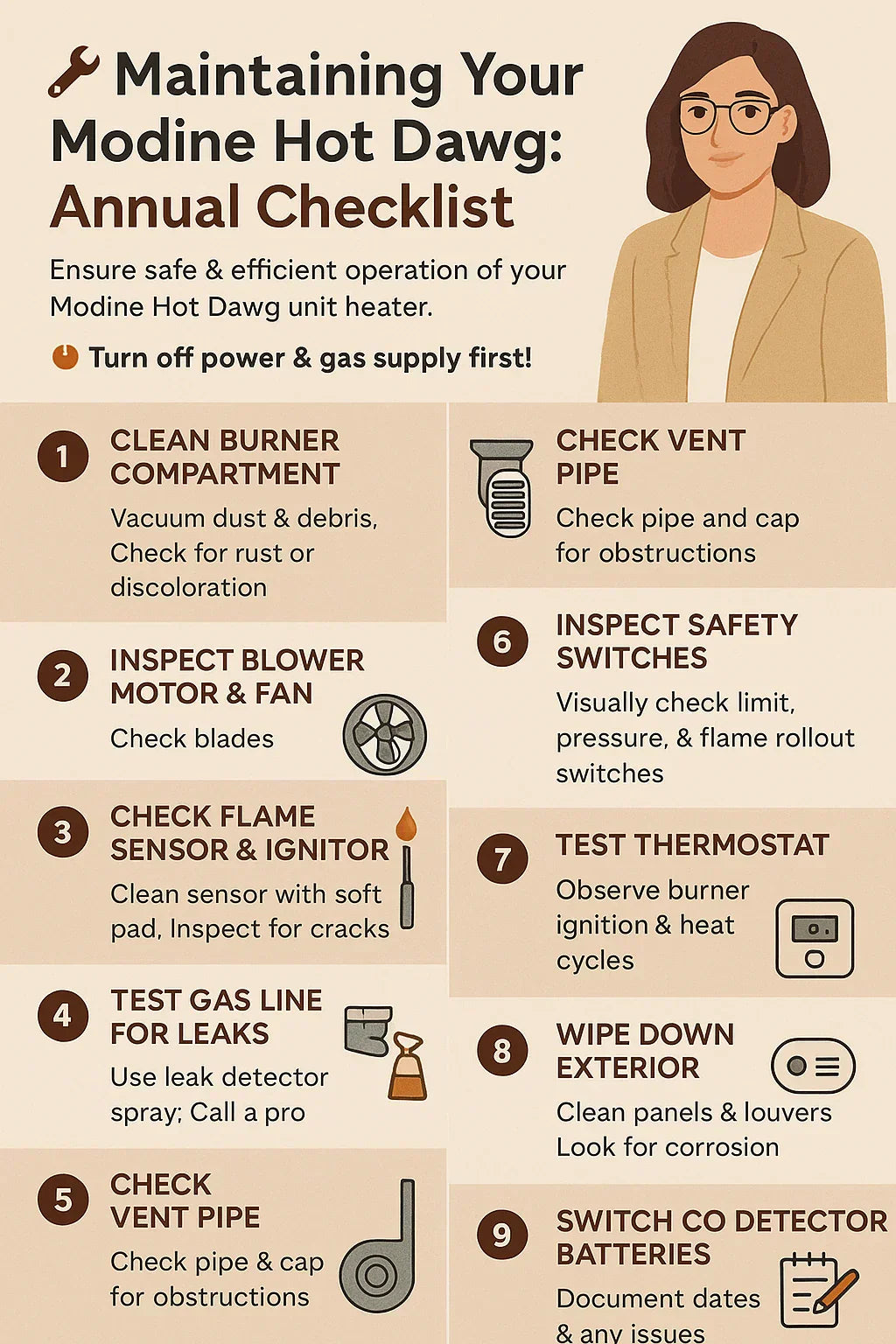
Preventive Maintenance For Hot Dawg Heaters
Keeping your heater in good shape prevents most problems. Here’s how:
- Clean air filters every 2–3 months.
- Inspect burner and flame sensor before winter.
- Check gas lines for leaks once a year.
- Lubricate blower motor if needed.
- Test thermostat for proper function.
- Clear exhaust vents regularly.
Practical advisor tip: Write maintenance dates on the heater or a calendar. Consistent upkeep saves money and extends heater life.
| Task | Frequency | Estimated Time |
|---|---|---|
| Filter cleaning | 2–3 months | 10 minutes |
| Flame sensor cleaning | Yearly | 15 minutes |
| Gas line check | Yearly | 20 minutes |
| Blower motor lubrication | Yearly | 10 minutes |
| Exhaust vent clearing | Yearly | 30 minutes |
Common Mistakes In Hot Dawg Heater Troubleshooting
Many beginners make mistakes that slow down fixes or cause new problems. Avoid these:
- Ignoring error codes: These codes are valuable clues.
- Skipping safety steps: Always turn off power and gas before opening the unit.
- Using wrong parts: Only use manufacturer-approved parts.
- Over-tightening screws: Can damage delicate components.
- Cleaning flame sensor with rough tools: Use only fine sandpaper.
Non-obvious insight: Some users forget to check thermostat batteries if they use a wireless thermostat. Dead batteries can make the heater seem broken.

Real-life Example: Fixing A Cold Hot Dawg Heater
Let’s walk through a real example. Imagine your Hot Dawg heater runs, but blows cold air.
- Check thermostat: Set higher; still cold.
- Inspect gas valve: Open and gas flowing.
- Look at igniter: Not glowing.
- Check flame sensor: Dirty.
- Clean flame sensor: Heater now ignites and blows warm air.
Lesson: Simple cleaning fixed the problem, saving a $100+ service call.
Hot Dawg Heater Error Codes Explained
Most modern Hot Dawg heaters show error codes with blinking lights or display panels. Understanding these helps you fix problems faster.
Common Codes And What They Mean
- 1 blink: Ignition failure
- 2 blinks: Pressure switch problem
- 3 blinks: Flame sensor error
- 4 blinks: Limit switch open (overheating)
- 5 blinks: Control board failure
How to use this info: Check your heater’s manual for details. If you see 3 blinks, clean the flame sensor. If you see 4 blinks, check air filters and vents.
Upgrading Or Replacing Hot Dawg Heater Parts
Sometimes, parts need replacement to restore full function.
Choosing The Right Parts
- Use the heater’s model number to order parts.
- Only buy from trusted sources.
- Avoid cheap knock-offs, which may not fit or work well.
Common Replacement Parts
- Igniter ($20–$40)
- Flame sensor ($10–$25)
- Blower motor ($70–$150)
- Control board ($60–$120)
- Capacitor ($10–$20)
- Air filter ($10–$30)
Tip: Keep a spare igniter and flame sensor for quick fixes.
Safety Tips For Hot Dawg Heater Owners
Heaters are safe if used correctly, but mistakes can be dangerous. Always:
- Turn off power and gas before repairs.
- Open windows if you smell gas.
- Keep flammable materials away from the heater.
- Use a carbon monoxide detector.
- Check vents yearly for blockages.
Experience-based guide tip: Most accidents happen when users skip safety steps. Take your time and check everything twice.

Frequently Asked Questions
How Do I Reset My Hot Dawg Heater?
To reset, turn off the power at the breaker or unplug the unit. Wait 30 seconds, then turn it back on. Some models have a reset button on the control board—press it if present. This clears most simple faults. If problems continue, check error codes and follow the troubleshooting steps above.
What Does It Mean If My Hot Dawg Heater Blinks Three Times?
Three blinks usually signal a flame sensor error. The sensor may be dirty, misaligned, or faulty. Turn off power and gas, remove the flame sensor, clean gently with fine sandpaper, and reinstall. If the blinking continues, replace the sensor.
Can I Use My Hot Dawg Heater With Propane If It Was Built For Natural Gas?
You can convert a natural gas Hot Dawg heater to propane using a manufacturer-approved conversion kit. The gas pressure and orifices are different, so never use propane without converting. Check your model number and follow instructions carefully.
Why Does My Heater Smell Like Gas When Starting?
A faint gas smell during first startup after months of disuse is normal. However, if the smell is strong or lasts more than a few minutes, turn off the heater and check for leaks. Never ignore persistent gas smells—safety comes first.
Where Can I Find Replacement Parts For My Hot Dawg Heater?
The best place is the manufacturer’s website or trusted heating supply stores. For official information, visit Modine HVAC. Always use your heater’s model number to choose the correct parts.
Taking care of your Hot Dawg heater is simple once you know the basics. With this troubleshooting guide, you can fix most problems, save money, and stay warm all winter. Remember, safety is always the priority. When in doubt, call a professional.

