

A warm, inviting pool is a joy for any homeowner. But when your Pentair pool heater isn’t working right, that comfort can disappear fast. Whether you notice cool water, error codes, or odd noises, troubleshooting quickly is key. Many pool owners feel overwhelmed when their heater fails, but with the right guidance, you can often resolve the issue yourself—or at least identify the root cause for a professional.
This guide will walk you through Pentair pool heater troubleshooting, covering common problems, practical checks, and expert tips to keep your pool comfortable and safe.

36% off Today’s Exclusive Deals
Limited-time Exclusive Deals. Check current discount on Amazon.
Check Price on Amazon As an Amazon Associate I earn from qualifying purchases.Understanding Your Pentair Pool Heater
Pentair is a respected name in pool equipment, known for efficient and durable heaters. These units use either gas or electricity to heat water, with controls for temperature, safety, and diagnostics. Most newer Pentair models feature digital displays and error codes, which make pinpointing issues easier.
However, even with advanced features, problems can arise. Understanding the basics of your system helps you approach troubleshooting with confidence.
Key Components
- Heat exchanger: Transfers heat from gas or electric elements to the pool water.
- Ignition system: Starts the burner or heating element.
- Control board: Manages settings, sensors, and error codes.
- Sensors and switches: Monitor temperature, flow, and safety conditions.
Knowing what each part does helps you identify where things might go wrong.
Safety First: Precautions Before Troubleshooting
Before you begin, always prioritize safety. Pool heaters deal with gas, electricity, and hot water—serious risks if handled carelessly.
- Turn off power at the breaker and shut off gas supply before opening panels or touching wiring.
- Wait for parts to cool before handling.
- Never bypass safety switches or sensors.
- Wear gloves and eye protection when inspecting internal components.
- If you smell gas, leave the area immediately and call a professional.
If you’re ever unsure, it’s best to contact a qualified pool technician rather than risk injury or damage.
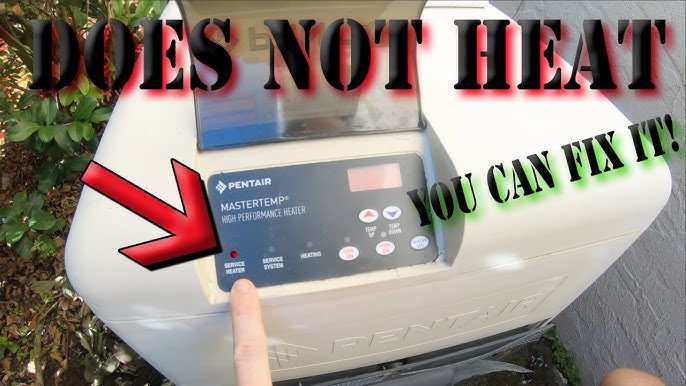
Common Pentair Pool Heater Problems And How To Fix Them
Many heater issues come down to a handful of common causes. Here’s how to troubleshoot the most frequent problems pool owners face.
1. Heater Won’t Turn On
If your Pentair pool heater doesn’t start at all, check these areas:
- Power supply: Confirm the circuit breaker is ON and fuses are intact.
- Thermostat setting: The water temperature must be below the set point for the heater to activate.
- Water flow: Low flow from a dirty filter or closed valve can prevent the heater from starting.
- Pressure switch: This sensor stops the heater if it senses poor flow.
Often, clearing debris from skimmers and filters restores proper flow. If the display remains blank, test the power outlet with another device.
2. Heater Won’t Stay Lit Or Shuts Off Quickly
A heater that starts but turns off quickly can frustrate any pool owner.
- Dirty filter or pump basket: Reduced water flow can cause the heater to shut down.
- Clogged heat exchanger: Scale or debris inside the exchanger causes overheating.
- Faulty pressure switch: If it doesn’t sense enough flow, it shuts the system off.
- Improper gas pressure: Low gas pressure prevents continuous operation.
Try cleaning the filter and baskets. If the problem remains, call a professional to check gas lines and internal components.
3. Heater Not Heating Water Enough
If your water stays cool, but the heater seems to run, consider:
- Thermostat set too low: Raise the set temperature.
- Bypass valve open: This lets water skip the heater—close it fully.
- Heat loss: Wind, cold air, or poor insulation can outpace your heater.
- Undersized heater: If your pool is large, a small unit can struggle to keep up.
Covering your pool and running the heater during the warmest part of the day helps retain heat.
4. Unusual Noises
Strange sounds signal problems you shouldn’t ignore.
- Screeching or hissing: May mean scale buildup in the heat exchanger.
- Rattling: Loose panels or debris in the blower.
- Banging: Delayed ignition or sudden gas buildup.
Turn off the heater and inspect for debris or loose parts. Persistent noises require a technician’s visit.
5. Error Codes And What They Mean
Pentair heaters display error codes to help with diagnosis. Some common ones include:
- E05/E06: Water pressure or flow issue.
- E01: Ignition failure.
- E03: High limit switch tripped (overheating).
- E02: Temperature sensor error.
Always check your model’s manual for code meanings. Most codes suggest a starting point for troubleshooting.
Step-by-step Pentair Pool Heater Troubleshooting
Approach troubleshooting methodically to avoid missing simple fixes. Here’s a practical sequence for most issues.
Check Power And Controls
- Verify power at the heater. Use a non-contact voltage tester or plug in a lamp.
- Inspect fuses and breakers. Replace or reset as needed.
- Check the display panel. If blank, the control board may be bad.
Inspect Water Flow
- Clean filters and baskets. Blockages reduce flow and cause shutdowns.
- Confirm valves are open. All necessary valves should be fully open.
- Listen for pump noise. Unusual sounds may signal a priming or flow issue.
Review Temperature And Thermostat
- Raise the thermostat above current water temperature.
- Check for error messages related to sensors.
Examine Gas Or Electrical Supply
- Gas heaters: Ensure gas valves are open, and your tank is full.
- Electric heaters: Confirm supply voltage matches the heater’s rating.
Look For Leaks Or Damage
- Inspect for wet spots around the heater—water leaks can damage electronics.
- Check for rust or corrosion, especially on older units.
Reset Or Power Cycle
Sometimes, simply turning the heater off and on resets error codes.
- Power off for 1–2 minutes, then restart.
If the problem persists, further inspection or professional help may be needed.

Diagnosing Specific Error Codes
Error codes make troubleshooting much easier. Below is a quick reference for Pentair’s most seen codes.
| Error Code | Likely Cause | Action |
|---|---|---|
| E01 | Ignition failure | Check gas supply, inspect igniter |
| E02 | Temperature sensor fault | Test/replace sensor |
| E03 | High limit switch tripped | Clean filter, check water flow |
| E05/E06 | Low water pressure | Inspect pump, clean filters |
| E11 | Flame sense error | Check flame sensor, clean burner |
Always refer to your heater’s manual for a full list, as codes may vary by model.
When To Call A Professional
Some issues are best left to qualified technicians. Call a pro if you experience:
- Gas smell: This could indicate a leak.
- Repeated ignition failures: May signal a serious gas or ignition problem.
- Water leaks inside the heater: Can quickly damage sensitive parts.
- Frequent tripping of breakers or fuses: May mean wiring or electrical faults.
- Persistent error codes that do not clear with basic troubleshooting.
Attempting complex repairs without proper training can be dangerous and may void your warranty.
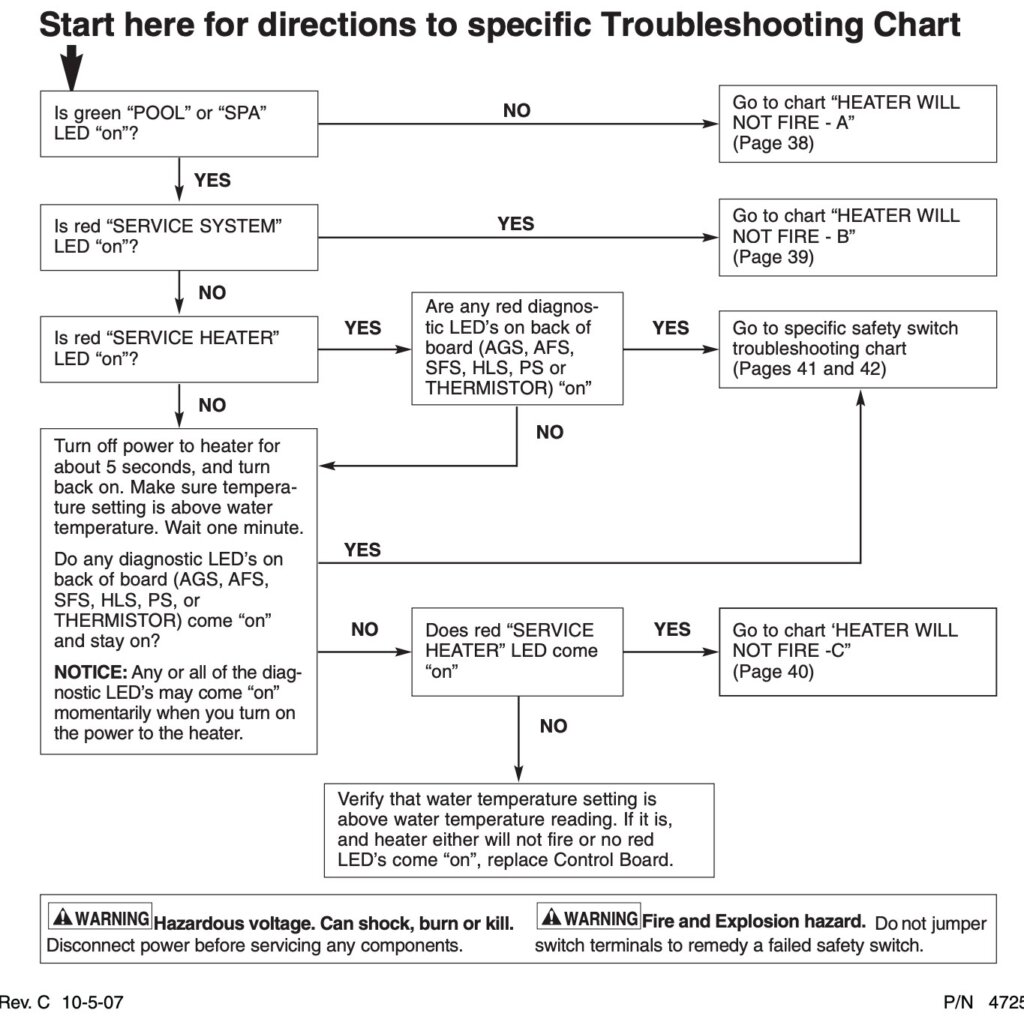
Preventative Maintenance Tips
A little prevention saves time and money down the line. Use these strategies to keep your heater running smoothly.
- Clean filters and baskets weekly during pool season.
- Inspect heater vents and keep them clear of leaves and debris.
- Schedule professional servicing every year, especially before heavy use.
- Check for rodents or insects that might nest near the heater.
- Use a pool cover to reduce heat loss and lower heater workload.
Regular attention prevents many breakdowns and extends your heater’s life.
Pentair Pool Heater Troubleshooting Examples
Let’s look at two real-world scenarios to see troubleshooting in action.
Scenario 1: Heater Shuts Down With E05 Code
Maria noticed her heater would start, then shut off with an E05 error. She checked the user manual—E05 meant low water pressure. She cleaned her filter, which was full of debris after a windy week. After resetting the heater, it ran without error and her pool warmed up as normal.
Scenario 2: Cold Water Despite Heater Running
James found his heater was running, but the pool stayed cool. He checked the bypass valve and saw it was half-open. Closing it fully directed water through the heater, and within hours, the pool reached his desired temperature.
These examples highlight the value of simple checks before calling for service.
Pentair Pool Heater Types Compared
Pentair offers several heater models, each with its own strengths. Understanding the differences can help you when troubleshooting or considering an upgrade.
| Model | Fuel Type | Best For | Key Features |
|---|---|---|---|
| MasterTemp | Gas | Fast heating, large pools | Digital controls, compact design |
| UltraTemp | Electric (heat pump) | Energy efficiency, mild climates | Quiet operation, low emissions |
| Max-E-Therm | Gas | Space-saving, spa applications | Lightweight, corrosion-resistant |
Each model has unique troubleshooting needs, so check your manual for specifics.
Common Mistakes Homeowners Make
Even experienced pool owners can make simple errors that lead to heater trouble.
- Ignoring regular cleaning: Dirty filters and baskets are the #1 cause of heater shutdowns.
- Setting the thermostat too low: The heater won’t run if the set point is below water temperature.
- Forgetting to open valves: If water can’t flow, the heater won’t start.
- Not using a pool cover: Uncovered pools lose heat quickly, making heaters seem weak.
- Skipping annual service: Small issues become big ones without yearly checks.
Being aware of these pitfalls keeps your heater performing its best.
How Pentair Heaters Compare To Other Brands
Pool owners often wonder how Pentair stacks up against the competition. Here’s a brief comparison with other leading brands.
| Brand | Warranty | Energy Efficiency | Ease of Troubleshooting |
|---|---|---|---|
| Pentair | 2-3 years | High (up to 84%) | Digital display, error codes |
| Hayward | 1-3 years | Moderate (up to 83%) | Digital/analog, some codes |
| Raypak | 2 years | High (up to 83%) | Analog mostly, fewer codes |
Pentair’s digital controls and code system make troubleshooting easier compared to analog-only competitors.
How To Find Replacement Parts
If you determine a part needs replacement, use these steps:
- Identify your model and serial number, usually found on a label inside the heater’s panel.
- Buy only genuine Pentair parts for best performance and warranty coverage.
- Order from authorized dealers or directly through Pentair’s website.
- Match part numbers exactly to avoid compatibility issues.
If in doubt, ask a pool technician to source and install the part.
Two Non-obvious Insights For Troubleshooting Success
Many guides miss these two key points:
- Heater location matters: If your Pentair heater sits in a windy or shaded spot, it may struggle to maintain temperature or keep the pilot lit. Adding a wind barrier or relocating the unit can solve recurring issues.
- Electrical surges affect controls: Power fluctuations or lightning can damage the digital board or sensors, causing random errors. Installing a surge protector greatly reduces these failures.
These small details can make a big difference in heater reliability.
Getting The Most From Your Pentair Pool Heater
A well-maintained Pentair heater will give you years of warm swimming. Keep these tips in mind:
- Read your manual: Each model has special features and requirements.
- Keep records: Note any repairs, errors, or maintenance performed.
- Use your pool cover: This can reduce heat loss by up to 50%.
- Schedule spring checkups: Before pool season, ensure everything works.
These habits help you get the most from your investment.
Where To Find More Help
If you need more support, consider these resources:
- Pentair’s official support site: Includes manuals, troubleshooting guides, and warranty help.
- Pool service professionals: Many offer emergency service and yearly maintenance plans.
- Online forums and communities: Fellow pool owners share real-world experiences and solutions.
For more technical information, the Pentair official support page is a valuable resource.
Frequently Asked Questions
What Does The E05 Error Mean On My Pentair Pool Heater?
The E05 error signals a water flow or pressure problem. Check and clean your pool filter and pump basket, and ensure all valves are fully open. Poor flow is the most common cause.
Why Does My Pentair Heater Keep Shutting Off After A Few Minutes?
This usually points to overheating or low flow. Clean your filter, check for closed valves, and confirm your pump is working well. If the issue continues, a sensor or switch may need replacement.
How Often Should I Service My Pentair Pool Heater?
At a minimum, once a year. Schedule a full inspection before pool season, and clean filters or baskets weekly during heavy use. Regular maintenance prevents most breakdowns.
Can I Reset My Pentair Pool Heater Myself?
Yes, you can reset most models by turning off the power for 1–2 minutes, then restarting. This often clears minor error codes. If the error returns, further troubleshooting is needed.
Is A Cold Pool Always A Heater Problem?
Not always. Heat loss from wind, rain, or a missing pool cover can make the pool cold even if the heater works. Check for open bypass valves and use a cover to help keep your pool warm.
A reliable Pentair pool heater is the heart of a comfortable pool experience. By understanding basic troubleshooting steps, performing regular maintenance, and knowing when to call for help, you can keep your system running smoothly for years. With the tips and insights in this guide, pool comfort is always within reach.

