

If you travel in an RV, having hot water is essential for comfort. A tankless water heater, like the Apus RV Tankless Water Heater, promises endless hot water on demand—no matter where you park. But what happens when you take your RV up to higher elevations, such as the Rocky Mountains or the Sierra Nevadas? Many RVers wonder: *Does the Apus RV tankless water heater work at high altitude?*
High altitude brings unique challenges for gas appliances, including water heaters. The air is thinner, which means less oxygen for combustion. This can affect performance, safety, and even the lifespan of your heater. If you love camping in the mountains, it’s important to know if your Apus tankless water heater can handle these conditions. This guide will dig deep into how altitude impacts tankless water heaters, what makes Apus different, and what you need to know for safe, reliable hot water at any elevation.

36% off Today’s Exclusive Deals
Limited-time Exclusive Deals. Check current discount on Amazon.
Check Price on Amazon As an Amazon Associate I earn from qualifying purchases.How Altitude Affects Tankless Water Heaters
When you climb higher, the air has less oxygen. Gas appliances, such as tankless water heaters, mix air and fuel to create a flame. At high altitudes, this mixture changes, and the heater may burn fuel less efficiently.
Why Is Oxygen Important For Combustion?
Combustion is a chemical process. Oxygen combines with fuel (like propane or natural gas) to make heat. At sea level, there’s plenty of oxygen in the air. As you go higher, oxygen drops:
- At 5,000 feet, air pressure is about 17% lower than at sea level.
- At 10,000 feet, air contains about 30% less oxygen.
This means your heater gets less air for the same amount of fuel, which can cause:
- Incomplete combustion (leading to soot and carbon monoxide)
- Lower heat output (less hot water)
- Pilot light problems (won’t stay lit)
- Increased risk of malfunction or safety shutoff
Do All Tankless Water Heaters Have Problems At Altitude?
Most tankless water heaters are designed for normal altitudes (up to 2,000 feet). Some have *altitude kits* or built-in sensors to adjust for thinner air. However, many RV water heaters lose efficiency above 5,000 feet unless specially adjusted or built for altitude.
The Apus Rv Tankless Water Heater: Key Features
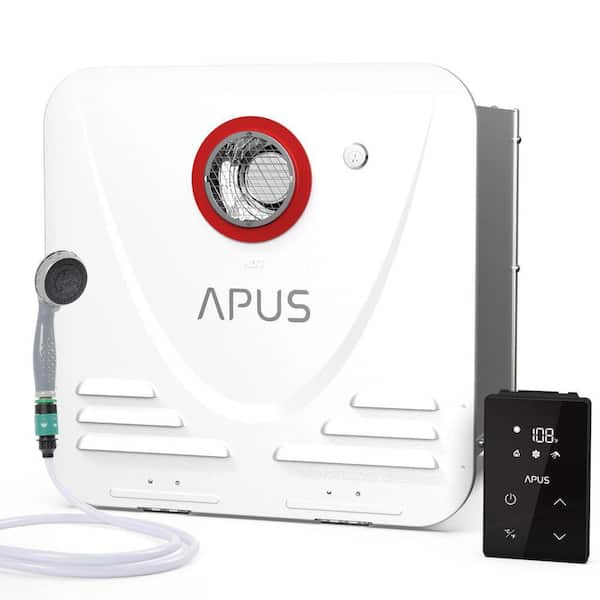
The Apus RV Tankless Water Heater is popular among travelers for its compact design, energy efficiency, and smart controls. But what makes it different from other models, and does it have built-in solutions for high altitude?
Main Specifications
- Fuel type: Propane gas
- BTU Rating: 42,000–55,000 BTU
- Flow rate: 2.6–3.6 gallons per minute (GPM)
- Ignition: Automatic electric ignition
- Safety features: Overheat protection, anti-freeze, flameout protection
- Digital controls: Precise temperature adjustment
- Altitude adjustment: Some models include altitude sensors
Apus Vs. Standard Rv Water Heaters
Let’s compare the Apus with a typical RV tankless heater.
| Feature | Apus RV Tankless | Standard RV Tankless |
|---|---|---|
| Altitude Sensor | Some models (auto-adjust) | Rarely included |
| BTU Range | 42,000–55,000 | 35,000–50,000 |
| Flow Rate (GPM) | 2.6–3.6 | 2.0–3.0 |
| Safety Features | Advanced (overheat, flameout, anti-freeze) | Basic (overheat, flameout) |
| Digital Controls | Yes | Varies |
Insight: Not all Apus models have altitude sensors, so check your product specs before relying on this feature.
High Altitude Performance: What To Expect
You want to know if your Apus RV tankless water heater will actually work when you’re parked at 6,000, 8,000, or even 10,000 feet. Here’s how it typically performs:
Performance At Different Elevations
| Elevation | Expected Performance | Adjustment Needed? |
|---|---|---|
| Sea Level–2,000 ft | Full efficiency | No |
| 2,000–5,000 ft | Near full efficiency | No, unless sensitive to small changes |
| 5,000–7,000 ft | Minor drop in output | Automatic (if equipped) or manual |
| 7,000–10,000 ft | Noticeable drop, may require adjustment | Yes, best with altitude sensor |
| 10,000+ ft | Significant loss, possible malfunction | May not work reliably |
Real-world example: In Colorado’s San Juan Mountains (around 9,000 ft), some RVers found their Apus heaters produced *warm*, not *hot*, water, unless they adjusted the fuel-air mixture.
Built-in Altitude Adjustment
Newer Apus models offer altitude sensors that automatically modify the fuel-to-air ratio. This helps maintain proper combustion, but only up to a point (usually 7,500–8,500 feet). Above this range, even advanced models may struggle, and hot water output can drop by 20–30%.
Older Apus models may require a manual adjustment or installation of an altitude kit. This often means changing orifices (parts that control gas flow) or adjusting air intake.
What The Manufacturer Says
Apus includes altitude information in their technical manuals, but details can be hard to find online. Here’s what’s generally stated:
- Apus tankless water heaters are certified for use up to 5,500 feet with no adjustments.
- For 5,500–7,500 feet, performance may decrease by about 10–15%.
- Above 7,500 feet, the heater may not function as intended without manual adjustments or may shut off for safety.
Important: Warranty coverage may not include problems caused by high-altitude use without recommended adjustments.
User Experiences: Real Stories From High Altitude
RVers who use the Apus tankless water heater at altitude share a mix of experiences. Most agree the heater works well up to about 7,000 feet, especially newer models. But at higher elevations, several patterns emerge:
- Slightly cooler water: At 8,000+ feet, showers may not get as hot, even at max setting.
- Longer heat-up time: Water takes longer to reach set temperature.
- Ignition issues: Some users report the heater struggles to ignite or maintain flame above 9,000 feet.
- Manual adjustments needed: Those with older units often install altitude kits.
Hidden insight: Some RVers found better results by reducing water flow (using “low” shower settings), which allows the heater to raise the temperature more effectively at high altitudes.
Practical Tips For Using Your Apus At High Elevation
If you plan to camp above 5,000 feet, a few smart steps can make a big difference.
1. Check Your Model
- Look for altitude sensor features. Not all Apus heaters have them.
- Review your manual for altitude limits and adjustment instructions.
2. Reduce Water Flow
- Lower flow = hotter water at altitude.
- Use low-flow shower heads or turn down the faucet to give the heater more time to heat the water.
3. Manual Adjustments
- For older models, you may need to install an altitude kit. This usually involves changing orifices and sometimes adjusting the air shutter.
- If unsure, ask a certified technician or call Apus support.
4. Monitor For Carbon Monoxide
- Incomplete combustion can produce carbon monoxide—a dangerous, odorless gas.
- Always use a CO detector in your RV, especially at high altitudes.
5. Regular Maintenance
- Soot buildup is more common at altitude.
- Clean burner and vent regularly to keep your heater running safely.
Extra tip: Carry a backup plan (like a portable electric water heater or extra jugs of water) if you plan to camp above 9,000 feet, just in case your main heater struggles.
Comparing Apus To Other Brands
How does the Apus stack up against other popular RV tankless water heaters when it comes to altitude?
| Brand | Altitude Rating | Automatic Adjustment | Manual Kits Available |
|---|---|---|---|
| Apus | Up to 7,500 ft (some models) | Yes (select models) | Yes |
| Girard | Up to 5,000 ft | No | Yes |
| Suburban | Up to 6,000 ft | Some models | Yes |
| Truma | Up to 7,500 ft | Yes | No |
Non-obvious insight: Even if two brands offer similar altitude ratings, their actual *performance* can vary due to burner design, control systems, and air intake engineering.
Safety Considerations At High Altitude
Whenever you use a propane appliance at high altitude, safety should be your top priority.
Carbon Monoxide Risk
- Incomplete combustion increases CO risk.
- Always ventilate your RV and use a reliable CO detector.
Flame Stability
- Weak flames can go out, leading to gas leaks.
- Make sure your heater’s flame sensor and shut-off features are working.
Proper Installation
- If you add an altitude kit, follow instructions carefully.
- Use only genuine Apus parts for adjustments.
Quick tip: Never try to defeat safety sensors or bypass high-altitude shutoff functions. They are there to protect you.

Cost And Value: Is Apus Worth It For High Elevation Rvers?
The Apus tankless water heater tends to cost a bit more than basic models. But for travelers who like mountain camping, the extra features may be worth the investment.
Pros
- Automatic altitude adjustment (on some models) saves hassle
- Higher BTU rating means better performance in tough conditions
- Energy-efficient compared to tank models
Cons
- Extra cost for altitude kits or higher-end models
- Manual adjustments may be needed for older units
- Possible warranty limits above certain elevations
Expert advice: If you frequently camp above 7,500 feet, consider whether the Apus model you’re looking at is truly certified for your needs.
Alternatives For Extreme Altitudes
If you plan to spend long periods above 8,500 feet, you may need to consider alternatives:
- Electric tankless heaters: Not affected by altitude, but need strong shore power or generator.
- Portable propane heaters: Some have manual air adjustment for altitude.
- Hybrid systems: Combine electric and propane for flexibility.
Hidden insight: Electric heaters are less common in RVs due to power draw, but can be a good backup if you have reliable hookups.
How To Choose The Right Apus Model For High Altitude
Buying the right model is the best way to avoid frustration at altitude.
Key Factors
- Altitude sensor: Look for models with automatic adjustment up to your planned elevation.
- BTU rating: Higher BTU models handle altitude better.
- Warranty and support: Check if high-altitude use is covered.
- Manual adjustment: If you’re handy, a model that allows manual air/fuel changes can be more flexible.
Common Mistakes To Avoid
- Assuming all Apus models work the same at altitude.
- Ignoring maintenance (soot buildup can quickly cause problems).
- Not reading the fine print on warranty and altitude limits.
Environmental Impact At High Altitude
Burning propane at high elevation can be less efficient, releasing more pollutants if the heater isn’t adjusted correctly. While this isn’t a major concern for short trips, regular mountain camping can increase your carbon footprint if your heater isn’t running cleanly.
Keeping your Apus in good shape and using the right settings helps minimize this impact.
For more on propane appliance emissions and altitude, check out the EPA’s guidance.
Wrapping Up: Is The Apus Rv Tankless Water Heater Right For High Altitude?
The Apus RV Tankless Water Heater is well-designed for most RVers, and many models perform well up to 7,500 feet—sometimes higher if adjusted. If you plan to camp above this level, it’s important to:
- Choose a model with altitude adjustment
- Be ready to make manual changes if needed
- Monitor your heater’s performance and safety closely
No tankless water heater is perfect for every elevation, but the Apus is among the better options for mountain RVers, especially if you do your homework before buying and keep up with maintenance. For best results, match your heater to your travel style and always put safety first.
Frequently Asked Questions
Will The Apus Rv Tankless Water Heater Work At 10,000 Feet?
Most Apus models will struggle at 10,000 feet and may not provide reliable hot water without manual adjustment. Automatic altitude sensors usually work up to 7,500–8,500 feet. Above that, expect reduced performance or possible shutdown.
Do I Need To Buy An Altitude Kit For My Apus Water Heater?
If your Apus model does not have a built-in altitude sensor and you plan to camp above 5,000 feet, an altitude kit is recommended. Check your user manual or contact Apus support for specific requirements.
Can I Use My Apus Heater With Both Propane And Natural Gas At High Altitude?
Most Apus RV water heaters are designed for propane only. Even if a conversion kit is available, performance at altitude will depend on proper adjustment for the fuel type and elevation.
How Can I Tell If My Heater Isn’t Running Properly At High Altitude?
Watch for signs like cooler water, longer heat-up times, frequent shutoffs, or a yellow/orange flame instead of blue. These all suggest incomplete combustion or air/fuel mixture problems.
Is It Safe To Use A Tankless Water Heater At High Altitude?
Yes, if you follow manufacturer guidelines, make necessary adjustments, and use a carbon monoxide detector. Never bypass safety features, and maintain your heater regularly for safe operation.


