

Electric motor troubleshooting locates faults fast to restore reliable operation and safe use.
I have over a decade fixing motors in factories and workshops. This guide on Electric Motor Troubleshooting shows clear steps, real tests, and practical tips. Read on to learn how to find causes, run safe checks, and fix common failures with tools you likely already have.

36% off Today’s Exclusive Deals
Limited-time Exclusive Deals. Check current discount on Amazon.
Check Price on Amazon As an Amazon Associate I earn from qualifying purchases.
Why Electric Motor Troubleshooting Matters
Electric motor troubleshooting saves time, money, and downtime. Motors drive fans, pumps, conveyors, and more. A small fault can stop a whole process.
Good troubleshooting finds the root cause. It avoids repeated fixes. It also improves safety and extends motor life.
Proper Electric Motor Troubleshooting reduces energy waste. It helps you meet maintenance goals and reduces emergency calls.
Safety First: Before You Start Electric Motor Troubleshooting
Safety is the top priority. Always lock out and tag out power before you touch wiring. Wear insulated gloves and eye protection.
Work in pairs when possible. Assume capacitors hold charge and discharge them safely. Follow manufacturer instructions and local rules.
Check for hot surfaces and sharp edges. Use a voltage tester to confirm zero volts before proceeding.
Step-by-Step Electric Motor Troubleshooting Guide
This section gives a clear path to follow. Keep notes as you test. Work from simple to complex.
-
Visual inspection first
- Look for loose wires, burnt marks, oil leaks, and debris.
- Check nameplate data and compare to supply voltage.
- Tighten terminal box screws and check grounding.
-
Power and supply checks
- Verify incoming voltage with a meter on each phase.
- Check fuses and circuit breakers for proper rating.
- Confirm correct phase rotation for three-phase motors.
-
Electrical tests
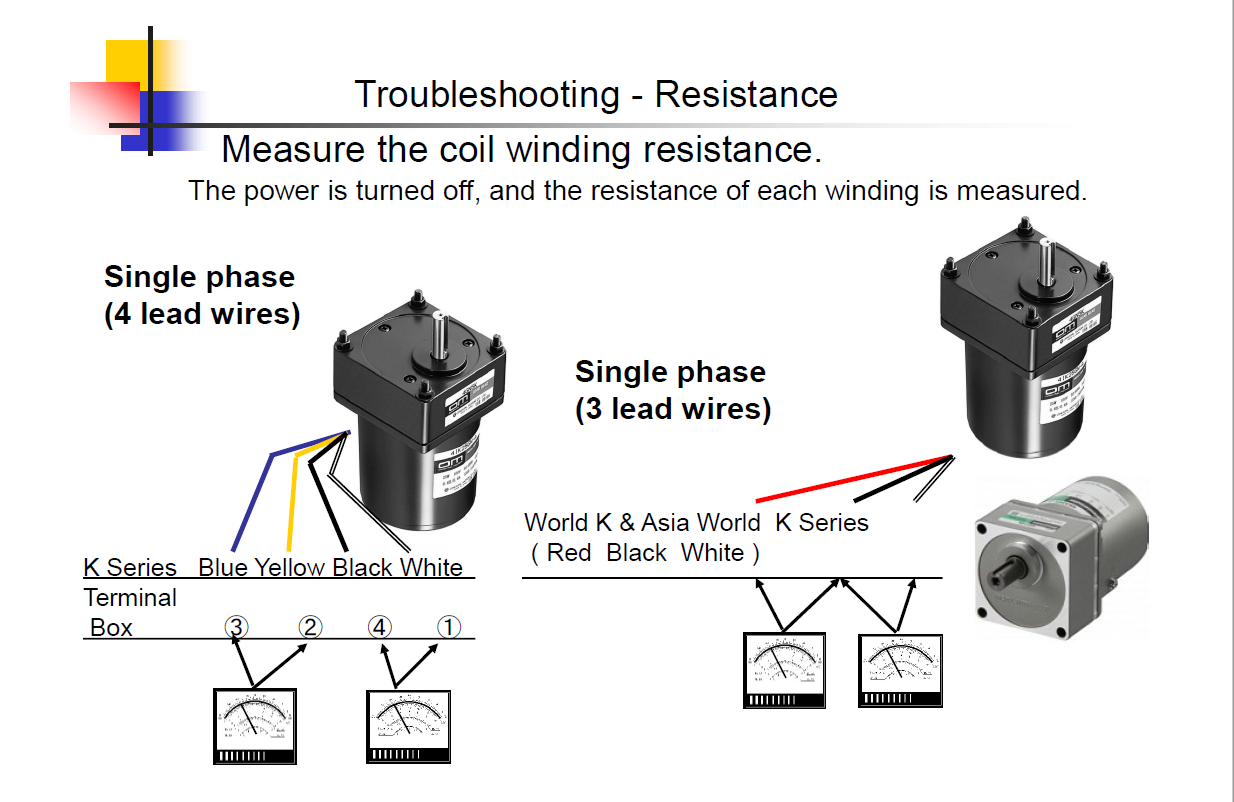
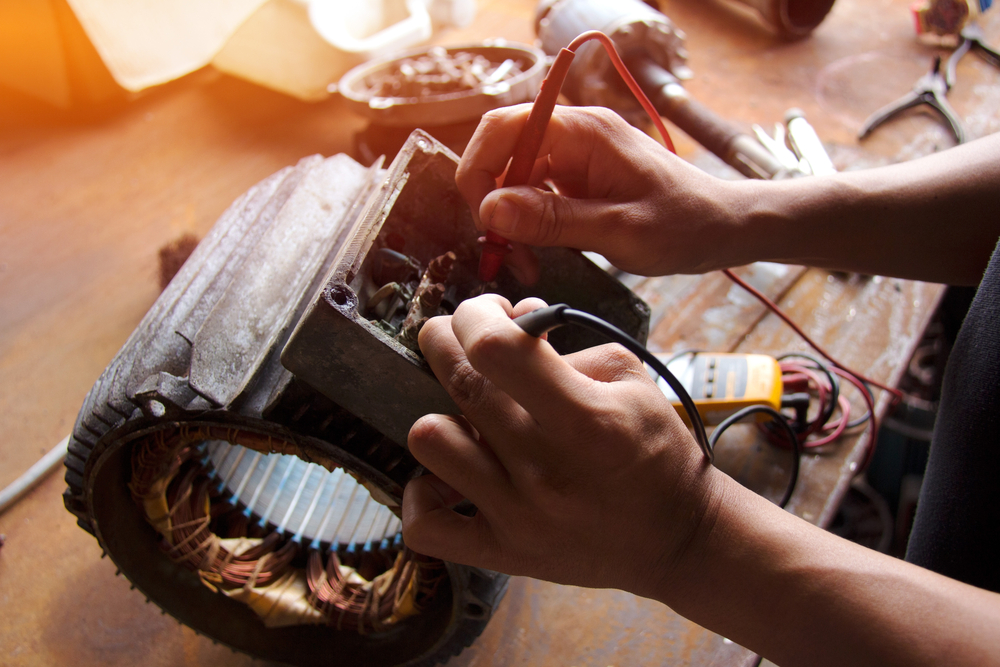
- Use a multimeter for continuity and winding resistance.
- Run an insulation resistance test (megger) between windings and ground.
- Check for phase imbalance and voltage drops under load.
-
Mechanical checks
- Spin the rotor by hand if safe. Feel for rough bearings or rubbing.
- Inspect coupling alignment and shaft runout.
- Check load-side equipment (pumps, gearboxes) for binding.
-
Thermal and vibration checks
- Use an infrared camera to spot hot spots on bearings or windings.
- Measure vibration; high vibration often points to imbalance or looseness.
- Record temperatures and compare to motor ratings.
-
Control and drive checks
- For motors on VFDs, check drive fault logs and parameters.
- Verify control signals, relays, and overload settings.
- Test soft starters and starters wiring.
-
Final functional check
- Run the motor under normal load and watch amps, sound, and temperature.
- Compare run data to nameplate values and baseline history.
PAA-style quick questions
Why does a motor hum but not start?
A motor that hums often has a bad start capacitor, starter, or weak single-phase supply. Test the capacitor and check starter contacts.
What causes a motor to overheat quickly?
Overheating usually comes from overload, blocked ventilation, or bearing failure. Check load and cooling first.
Common Faults and Causes in Electric Motor Troubleshooting
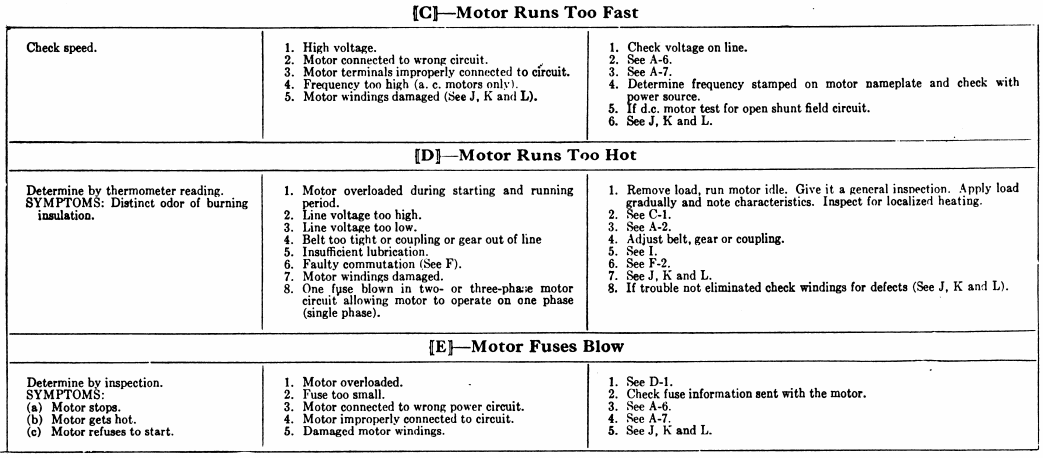
Knowing common faults speeds diagnosis. Here are typical issues and likely causes.
-
Motor will not start
- Faulty starter, blown fuse, or open winding.
- Bad capacitor on single-phase motors.
-
Motor runs but lacks power
- Low supply voltage, phase loss, or rotor issues.
- Mechanical binding on driven equipment.
-
Motor overheats
- Overload, blocked vents, high ambient temp, or overvoltage.
- Old insulation or excessive duty cycle.
-
Excessive vibration or noise
- Unbalanced rotor, bad bearings, or misalignment.
- Broken fan blades or loose mounting.
-
Tripping overloads frequently
- Repeated electrical overload, stalled conditions, or wrong overload setting.
- Stuck rotor or external mechanical jam.
Each fault needs measured data. Record voltages, currents, and temperatures. Compare with motor specs.

Diagnostic Tools and Tests for Electric Motor Troubleshooting
Right tools make the job faster. Here are common tools and why to use them.
-
Multimeter
- Measures voltage, current, and continuity for quick checks.
-
Clamp meter
- Reads running current without disconnecting wiring.
-
Insulation tester (megger)
- Tests winding insulation resistance to ground and between phases.
-
Vibration meter or analyzer
- Detects imbalance, misalignment, and bearing faults.
-
Infrared camera
- Finds hot spots on motors and connections.
-
Tachometer
- Measures motor speed to spot slip or mechanical issues.
-
Oscilloscope
- Useful for complex drive signals and transient faults.
Use these tests in sequence: visual, basic electrical, insulation, mechanical, advanced diagnostics. That order reduces risk and narrows down causes fast.
Preventive Maintenance and Best Practices for Electric Motor Troubleshooting
Good maintenance lowers the need for troubleshooting. Set a simple plan and stick to it.
-
Regular visual checks
- Inspect mounts, wiring, and cooling paths monthly.
-
Lubrication schedule
- Follow manufacturer grease intervals and amounts.
-
Alignment and balance checks
- Check each year and after repairs.
-
Thermal and vibration trend logging
- Record readings and watch for steady changes.
-
Clean environment
- Keep motor vents and cooling fins free of dust and debris.
-
Proper storage and handling
- Store motors dry and protect terminals from corrosion.
Preventive actions cut downtime and costs. A small routine saves big headaches.
Personal Experience and Real-World Tips
I have repaired hundreds of motors on tight timelines. Simple checks often solved complex-seeming problems. Once, a factory had repeated motor failures. The cause was a loose supply lug. Tightening fixed it. That saved days of downtime.
Lessons I learned
- Always retest after a repair.
- Document each step and result.
- Avoid replacing parts without tests.
Common mistakes to avoid
- Replacing a motor without checking the load.
- Skipping insulation tests on old motors.
- Ignoring minor noises—they often get worse.
Practical tip: carry a small kit with a clamp meter, megger, spare fuses, capacitor tester, and a spare set of terminal lugs. That kit speeds Electric Motor Troubleshooting in the field.
Frequently Asked Questions of Electric Motor Troubleshooting
What is the first thing to check when a motor won't start?
Check power supply and fuses first, then the starter and control circuits. Confirm phase voltage and correct connections.
How do I test a motor winding for shorts?
Use a megger to test insulation resistance and a multimeter for continuity and resistance. Compare values to known good readings.
Can a VFD cause motor problems?
Yes. Incorrect VFD settings, overvoltage spikes, or poor grounding can damage windings and bearings. Check drive logs and grounding.
How often should I perform preventive tests?
Monthly visual checks and annual insulation tests are common. Critical motors may need more frequent vibration and thermal checks.
When should I call a motor rewind shop?
Call a rewind shop if insulation resistance is low, winding resistance is abnormal, or after internal physical damage. Compare repair cost to replacement first.
Conclusion
Electric Motor Troubleshooting is a practical skill you can learn and improve. Use a step-by-step approach: stay safe, inspect, measure, and test. Keep records and do regular maintenance to prevent future issues.
Start today by making a simple checklist and a small tool kit. Track one motor's readings for a month. You will spot trends and avoid surprises. Share your experiences or questions below and subscribe for more hands-on motor tips.

