

A Frigidaire refrigerator is a reliable kitchen appliance, but when the ice maker stops working, it can be a real headache. Whether you host gatherings, enjoy cold drinks, or rely on ice for everyday use, a malfunctioning ice maker can disrupt your routine. Fortunately, many common problems can be solved with a little know-how. Understanding how to troubleshoot your Frigidaire refrigerator’s ice maker can save you time, money, and the frustration of waiting for a service call.
This article guides you step by step through the most frequent ice maker issues. You’ll learn how to check water supply lines, adjust temperature settings, and recognize signs of common mechanical failures. We’ll also cover error codes, cleaning routines, and when it’s time to call for professional help.

36% off Today’s Exclusive Deals
Limited-time Exclusive Deals. Check current discount on Amazon.
Check Price on Amazon As an Amazon Associate I earn from qualifying purchases.Even if you have limited experience with appliances, these clear instructions and tips will help you restore your ice maker’s performance. Let’s get started and bring your ice maker back to life.
How The Frigidaire Ice Maker Works
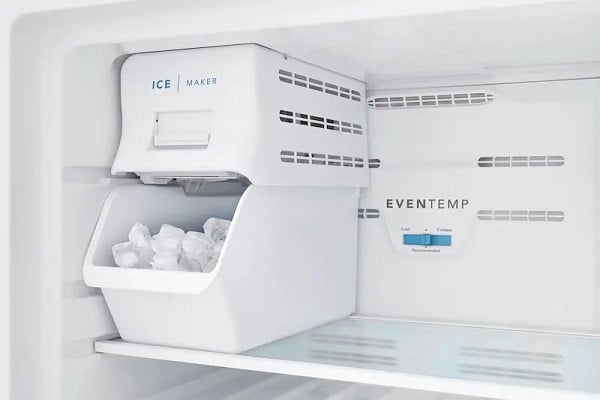
Before you start troubleshooting, it’s useful to know how your Frigidaire ice maker operates. Most models follow a similar cycle:
- Water fills the ice mold through a small tube from the refrigerator’s water line.
- The mold freezes the water into ice.
- A thermostat senses when the ice is frozen solid.
- The ice is ejected into the storage bin by a rotating arm or heated plate.
- The cycle repeats until the bin is full.
If any part of this process fails, the ice maker won’t work properly. Understanding these steps helps you find where things might be going wrong.
Common Symptoms Of Ice Maker Problems
Several issues can cause your Frigidaire ice maker to stop working or produce poor results. Recognizing the symptoms is the first step to fixing the problem.
- No ice production: The bin stays empty.
- Small or misshapen ice cubes: Ice is not the usual size or shape.
- Slow ice production: The machine makes ice, but not enough.
- Ice tastes or smells bad: Unpleasant flavors or odors.
- Ice jammed in the bin: Cubes are stuck together or won’t dispense.
- Water leaks: Puddles inside or under the fridge.
- Error codes: Digital display shows a code.
Each symptom points to a different potential cause. The sections below explain how to diagnose and solve these problems.
Quick Checks Before Troubleshooting
Many ice maker issues are simple to fix. Before diving into more complex steps, check these basics:
- Power Supply: Make sure the refrigerator is plugged in and the outlet is working.
- Ice Maker Switch: Some models have an on/off switch or arm. Ensure it’s in the on position.
- Water Supply Valve: Confirm the water line is connected and the valve is open.
- Freezer Temperature: Set the freezer between 0°F and 5°F (-18°C to -15°C). Too warm or too cold can stop ice production.
- Ice Bin Position: The bin must be seated properly, or the ice maker may not work.
These quick checks solve many problems and should always be your starting point.
Diagnosing Water Supply Issues
A common reason for no ice is a problem with the water supply. If the ice maker doesn’t get water, it can’t make ice.
Checking The Water Line
- Pull the refrigerator forward and inspect the water line at the back.
- Look for kinks, bends, or leaks.
- Ensure the line is firmly connected to both the fridge and the water supply valve.
- Open the valve fully.
If you find any damage or leaks, replace the water line. Even a small kink can stop water flow.
Testing Water Pressure
Frigidaire ice makers need 20–120 psi of water pressure. Low pressure means no ice or small cubes. Here’s a simple way to test:
- Dispense water from the fridge door. If the flow is weak, the pressure may be too low.
- You can also disconnect the line and briefly turn on the valve to see if water flows strongly.
If the water pressure is low, check your home’s water system or call a plumber. Sometimes, a clogged filter also reduces pressure.
Replacing The Water Filter
A dirty or old filter can block water. Replace the filter every six months, or when the indicator light tells you.
- Remove the old filter (usually inside the fridge).
- Insert the new filter and lock it in place.
- Run water through the dispenser for a few minutes to clear air and debris.
Always use the correct filter model for your refrigerator.
Temperature And Freezer Problems
Freezer temperature plays a big role in ice production. If it’s not cold enough, ice won’t form; if it’s too cold, moving parts may freeze.
Adjusting The Freezer
- Use a thermometer to check the freezer temperature.
- Set it to 0°F for best results.
- Allow 24 hours for the ice maker to adjust after changes.
If the freezer is overpacked, air can’t circulate, and ice making slows down. Keep space around the vents clear.
Defrost Problems
Frost buildup can block moving parts. If you see thick ice near the ice maker, defrost the freezer:
- Unplug the fridge.
- Remove food and ice bin.
- Let the freezer door stay open for several hours.
- Clean out melted water and restart the fridge.
In rare cases, a faulty defrost heater or thermostat may be to blame. If frost keeps returning, these parts need inspection.
Mechanical And Electrical Component Checks
If your water supply and temperature are fine, look at mechanical and electrical components next.
The Ice Maker Module
The ice maker module controls the motor and ejection process. Signs of a faulty module include:
- No ice ejection, even when cubes are in the mold.
- Ice maker makes noise but doesn’t produce ice.
Modules can be tested with a multimeter for continuity. If broken, replacement is usually easier than repair.
The Water Inlet Valve
This valve opens and closes to let water into the ice maker. Common problems:
- No water entering the mold.
- Valve hums but does not open.
To test:
- Unplug the fridge.
- Remove the valve (usually behind a back panel).
- Use a multimeter to check for continuity.
If the valve is defective, replace it with a compatible model.
The Ice Maker Motor
A stuck or burned-out motor stops ice ejection. Symptoms include silence or clicking sounds. If the motor doesn’t run when it should, it needs replacement.
The Door Switch
Some Frigidaire fridges have a door switch that stops ice making when the door is open. If the switch is faulty, the ice maker may not work even with the door closed. Test the switch for continuity and replace if needed.
Clearing Ice Jams And Blockages
Ice jams can stop your ice maker from working, even if everything else is fine.
Clearing The Ice Bin
- Remove the ice bin and empty it.
- Check for cubes stuck together or blocking the chute.
- Wash the bin with warm water and dry thoroughly.
Removing Stuck Ice
Sometimes, ice gets lodged in the mold or ejector arm.
- Turn off the ice maker or unplug the fridge.
- Use a plastic utensil (never metal) to gently break up the ice.
- Wipe away any frost or debris.
Preventing Future Jams
- Avoid overfilling the ice bin.
- Don’t leave ice unused for long periods; old ice can clump together.
- Clean the ice bin regularly.
Cleaning And Maintenance For Better Performance
A clean ice maker works better and lasts longer. Regular maintenance can prevent many issues.
Routine Cleaning
- Remove the ice bin every few weeks.
- Wash with warm, soapy water. Rinse and dry completely.
- Wipe the ice maker parts you can reach with a damp cloth.
Deep Cleaning
For mineral deposits or strong odors:
- Unplug the fridge.
- Remove ice bin, ice maker, and any removable trays.
- Soak parts in a mixture of water and vinegar.
- Scrub stubborn spots with a soft brush.
- Reassemble and run two batches of ice, then discard, to clear any vinegar taste.
Changing The Water Filter
A fresh filter improves taste and helps the ice maker run smoothly. Mark your calendar to change it every six months.
Cleaning Schedule Example
Here’s a sample cleaning frequency for best results:
| Task | Recommended Frequency |
|---|---|
| Wipe ice bin | Every 2 weeks |
| Deep clean ice maker | Every 6 months |
| Change water filter | Every 6 months |
Understanding And Resetting Error Codes
Modern Frigidaire refrigerators use error codes to show what’s wrong. Codes like “SY EF” or “E2” may appear on the display.
- Check your user manual for a list of codes and their meanings.
- Most codes relate to temperature, water supply, or sensor problems.
How To Reset The Ice Maker
Sometimes, a simple reset solves the problem:
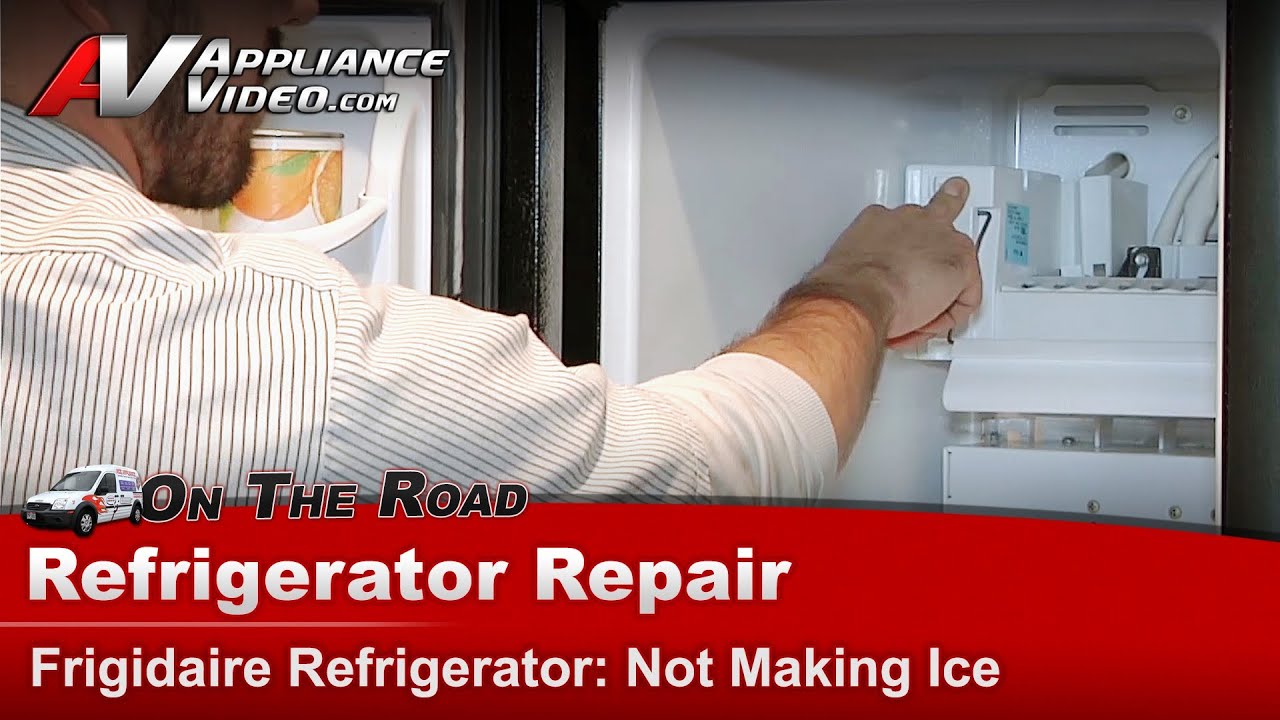
- Locate the ice maker’s reset button (usually on the side or bottom of the unit).
- Press and hold the button for 10 seconds.
- Wait 3–4 hours for the ice maker to cycle.
If your model has no button, unplug the refrigerator for 5 minutes and plug it back in.
When To Call For Help
If you see error codes that won’t clear, or the ice maker does not respond after a reset, it may need professional repair.
Comparing Common Ice Maker Issues
Here’s a quick comparison of symptoms, likely causes, and DIY solutions:
| Symptom | Likely Cause | DIY Solution |
|---|---|---|
| No ice production | Water supply off, faulty switch | Check water line, turn ice maker on |
| Small ice cubes | Low water pressure, dirty filter | Test pressure, replace filter |
| Ice tastes bad | Old filter, dirty bin | Replace filter, clean bin |
| Ice jammed | Overfilled bin, stuck cubes | Empty bin, clear blockages |
| Leaking water | Loose line, frozen fill tube | Tighten connections, defrost tube |
Use this chart to quickly match your symptoms to potential fixes.
Advanced Troubleshooting Steps
If you’ve tried all basic fixes but your Frigidaire ice maker still isn’t working, it’s time for advanced checks.
Checking The Ice Maker Thermostat
The thermostat signals when the ice is cold enough to eject. If it fails, the cycle stops.
- Use a multimeter to check for continuity when cold.
- If the thermostat is open (no continuity) when cold, replace it.
Inspecting The Ejector Gear
The ejector gear moves the ice out of the mold. If stripped or stuck, the ice stays in place.
- Remove the cover and check the gear for damage.
- Replace if worn or broken.
Control Board Issues
Some newer Frigidaire fridges use a control board for ice production. If all mechanical parts work but the ice maker does not respond, the board may be faulty. This repair is complex and usually requires a technician.
Software Updates
Smart refrigerators may need firmware updates to fix bugs or improve ice maker performance. Check the manufacturer’s website for updates and instructions.
When To Call A Professional
While many ice maker problems can be fixed at home, some situations need expert help:
- Repeated water leaks or electrical issues.
- Unusual noises (grinding, buzzing) that don’t stop.
- Ice maker works after reset but fails again quickly.
- Error codes that won’t clear after basic troubleshooting.
A technician has the tools and expertise to diagnose and repair complex faults. Attempting repairs beyond your skill level can cause more damage or void your warranty.

Tips For Preventing Future Ice Maker Problems
Regular care and small habits can help your Frigidaire ice maker work reliably for years.
- Replace the water filter on schedule for better taste and flow.
- Keep the freezer at 0°F for best ice quality.
- Clean the ice bin and maker regularly to prevent jams and odors.
- Use the ice regularly so it stays fresh and doesn’t clump.
- Inspect the water line yearly for leaks or damage.
Energy Efficiency And Ice Production
Did you know that opening the freezer door often slows ice making? Every time you open the door, warm air enters. This makes the freezer work harder and delays ice production. Try to open the door only when needed, and close it quickly.
Real-world Example: Diagnosing A Slow Ice Maker
Let’s look at a real scenario. Sarah noticed her Frigidaire refrigerator was making ice slowly—about one batch every 8 hours instead of the usual 2–3 hours. She checked the freezer temperature (set at 10°F), replaced the old water filter, and found a small kink in the water line behind the fridge.
After she fixed the kink, production returned to normal.
This example shows how a simple blockage or small temperature change can greatly affect ice maker performance. Always check the basics before calling for help.
Comparing Frigidaire Ice Maker Models
Frigidaire offers several types of ice makers. Here’s a quick comparison of their key features:
| Model Type | Ice Production Rate | Common Problems | DIY Friendliness |
|---|---|---|---|
| Basic Tray Ice Maker | Up to 3 lbs/day | Manual jams, slow production | High |
| Automatic Dispenser | Up to 5 lbs/day | Dispenser jams, motor issues | Medium |
| Smart Ice Maker | Up to 7 lbs/day | Error codes, control board failures | Low |
Knowing your model helps you find the right parts and solutions.
Two Non-obvious Insights Most People Miss
- Filter Bypass Plug Issues: If you remove the water filter and don’t install a bypass plug (for models that require one), the ice maker may stop working. Always check if your model needs a bypass plug when running without a filter.
- Frozen Fill Tube: Sometimes, the fill tube that brings water to the ice maker freezes, especially after a power outage. Use a hair dryer on a low setting to gently thaw it (with the fridge unplugged). This often restores water flow without needing parts replacement.
Recommended Tools For Diy Ice Maker Repair
If you plan to do your own troubleshooting, keep these tools handy:
- Phillips and flathead screwdrivers
- Adjustable wrench
- Small plastic spatula (for breaking ice jams)
- Multimeter (for electrical testing)
- Towel and bowl (for catching water spills)
- User manual (for reference)
Having the right tools makes repairs safer and easier.
Frequently Asked Questions
Why Isn’t My Frigidaire Ice Maker Making Ice After Changing The Filter?
After installing a new filter, there may be air in the lines. Run water from the dispenser for several minutes to clear it. Also, check that the filter is seated correctly. Some models need a few hours to reset and start making ice again.
How Long Does It Take For The Ice Maker To Make Ice After Reset?
Usually, it takes 2–4 hours for the ice maker to start producing ice after a reset. Full ice production may take 24 hours. If there’s still no ice after this time, review the troubleshooting steps above.
What Should I Do If My Ice Tastes Bad Or Smells Strange?
Bad-tasting ice is often caused by a dirty filter, old ice, or a dirty ice bin. Change the filter, empty the bin, and wash it with warm, soapy water. If the problem continues, check your water supply for odors.
Can I Use My Frigidaire Refrigerator Without The Ice Maker?
Yes, you can turn off the ice maker and remove the ice bin. This gives you more freezer space. If you remove the water filter, install a bypass plug if your model requires one. Check your manual for details.
Where Can I Find Genuine Frigidaire Replacement Parts?
Always buy parts from reputable dealers or the official Frigidaire website. This ensures the right fit and quality. For more details, visit the official Frigidaire parts page.
Maintaining your Frigidaire refrigerator ice maker isn’t just about fixing problems—it’s about preventing them. With regular care and quick action when issues arise, your ice maker can stay reliable for years to come. If you ever feel unsure, don’t hesitate to consult a professional or explore more guides from trusted sources like Consumer Reports.
By following these steps, you’ll keep the cool drinks—and the good times—flowing in your home.

