

Taking notes is a simple idea, but doing it well can change how you learn, work, and remember information. Good note-taking is not just for students—it helps professionals, creatives, and anyone who wants to capture ideas or tasks. Yet, many people write notes that are hard to review, miss important details, or waste time copying everything without understanding.
Learning how to take notes effectively means you save time, boost memory, and create a resource you can use again and again.

36% off Today’s Exclusive Deals
Limited-time Exclusive Deals. Check current discount on Amazon.
Check Price on Amazon As an Amazon Associate I earn from qualifying purchases.In this article, you’ll discover proven methods, practical tips, and smart tools for taking notes that really help you. Whether you’re a student trying to pass exams, a professional in meetings, or someone who just wants to remember what you read, you’ll find strategies here that make your notes clear, useful, and easy to review.
Along the way, you’ll learn insights that many beginners miss, such as how to filter what matters, make your notes visual, and avoid the trap of just copying words. Let’s explore how to take notes that truly work for you.
Why Note-taking Matters
Taking good notes is more than writing down what you hear or read. Notes are your personal tool for remembering, understanding, and using information later. Research shows that writing notes by hand helps the brain process and remember better than typing everything word for word. In fact, a study from Princeton University found that students who wrote notes by hand remembered concepts better than those who typed them.
Good notes help you:
- Remember key ideas after a meeting, lecture, or book.
- Understand new topics by summarizing in your own words.
- Review faster before a test or presentation.
- Organize thoughts for projects, essays, or reports.
- Track tasks, deadlines, and follow-ups.
If you don’t take notes, or your notes are messy and unclear, you may forget details, miss deadlines, or struggle when you need to review. That’s why learning how to take effective notes is a skill that pays off in many parts of life.
Choosing The Right Note-taking Method
There is no single “best” way to take notes. The right method depends on what you’re learning, the situation, and your style. Here are some of the most useful note-taking methods, with examples of when to use them.
The Outline Method
The outline method is simple but powerful. You use headings and subheadings to organize main ideas and details. It works well for classes, lectures, or reading chapters in a book.
Example:
- Main Idea
- Key Detail 1
- Key Detail 2
- Sub-point
Why it works: It shows the structure of information clearly, so it’s easy to review.
The Cornell Method
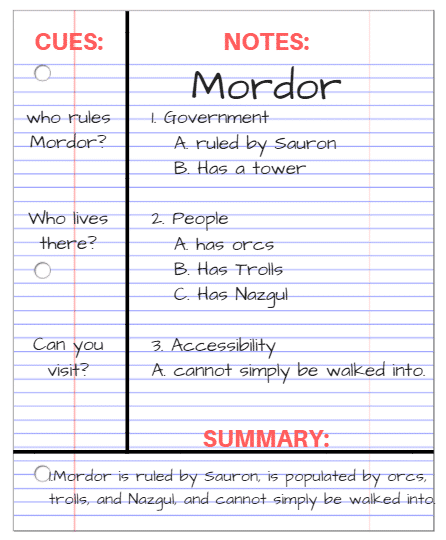
The Cornell Method divides your page into three sections: a wide right column for notes, a narrow left column for key points or questions, and a summary at the bottom.
How to use it:
- Take notes in the main area during a meeting or lecture.
- Afterward, write keywords or questions in the left column.
- Write a short summary at the bottom.
Why it works: Reviewing is fast—you can cover the notes and quiz yourself using the keywords.
The Mapping Method
The mapping method (sometimes called mind mapping) is visual. You start with a main idea in the center, then connect branches for related ideas.
Best for: Brainstorming, creative projects, or understanding big topics with many connections.
Why it works: It helps you see relationships and patterns, not just a list.
The Charting Method
The charting method uses tables to organize facts, especially when comparing several items.
Best for: Science facts, history events, or business data.
Here’s a quick example:
| Topic | Feature 1 | Feature 2 |
|---|---|---|
| Product A | Fast | Low Cost |
| Product B | Slow | High Cost |
Why it works: You can spot similarities and differences quickly.
The Sentence Method
The sentence method means writing each new fact or idea on a new line as a sentence. It’s fast and simple, good for lectures with lots of information.
Why it works: It lets you capture information quickly without worrying about structure. But you may need to organize your notes later.
Digital Vs. Paper Notes
Should you write notes by hand or type them? Both have benefits:
| Method | Pros | Cons |
|---|---|---|
| Handwritten | Better memory; flexible layouts | Slower; harder to search |
| Digital | Fast; searchable; easy to share | Easy to copy without thinking; less memory boost |
Tip: Try both and see what works for you. Some people use a mix—handwriting for learning, digital for organizing.
How To Take Notes In Different Situations
Not all note-taking situations are the same. The best approach depends on where and why you’re taking notes.
In A Lecture Or Class
- Prepare early: Read materials or review last lesson’s notes before class.
- Listen for structure: Focus on main ideas, not every word.
- Use abbreviations: Save time with short forms (ex: “w/” for with).
- Leave space: Add extra space for more details later.
Insight: Many beginners write everything. Instead, listen for key points and supporting facts. You can always add details after class.
While Reading
- Highlight main ideas: Don’t highlight everything—just the core concepts.
- Summarize in your own words: Paraphrasing helps you understand.
- Use the margin: Write quick notes or questions.
- Make a glossary: Note new words or terms with meanings.
Insight: Reviewing your reading notes within 24 hours helps you remember much more.
In Meetings
- Set a goal: Know what you want from the meeting.
- Capture decisions and actions: Write what is decided and who will do what.
- Use bullets: Short phrases are faster than sentences.
- Review quickly: Summarize and share notes soon after.
Tip: Mark any unclear points with a star so you can ask later.
For Projects Or Research
- Organize by topic: Use headings, colors, or folders.
- Link sources: Note where information comes from for easy reference.
- Track questions: Write what you still need to find out.
- Summarize findings: Write short reviews of what you’ve learned.
Mistake to avoid: Mixing your own ideas with copied information. Always mark which is which.
Essential Tips For Effective Note-taking
No matter which method or situation, these tips will help your notes be more useful.
- Stay focused: Remove distractions while taking notes.
- Use your own words: This helps you understand, not just copy.
- Use symbols and abbreviations: Create your own system for speed.
- Review soon: Go over your notes within a day to fill gaps.
- Highlight or underline: Mark key terms or important facts.
- Summarize: Write a short summary at the end of your notes.
- Ask questions: Write things you don’t understand to research later.
- Keep your notes organized: Use dates, clear titles, and folders.
- Make them visual: Draw diagrams or use color for important points.
- Don’t overdo it: Too many notes can be as bad as too few. Focus on what matters.
How To Review And Use Your Notes
Taking notes is only half the process. The real value comes from reviewing and using them.
Best Practices For Reviewing Notes
- Review within 24 hours: This helps your brain remember more.
- Test yourself: Cover your notes and try to recall key points.
- Summarize: Write a short summary of the lesson or meeting.
- Teach others: Explaining to someone else shows what you really know.
Turning Notes Into Action
For students, notes are for studying. For professionals, notes become to-do lists, reports, or plans.
- Create checklists for tasks and deadlines.
- Group related notes to spot patterns or ideas.
- Use notes to prepare for presentations or exams.
Advanced tip: Review notes in short bursts over several days instead of one long session. This “spaced repetition” helps you remember much more.
Common Note-taking Mistakes (and How To Avoid Them)
Even experienced note-takers can fall into traps. Here’s what to avoid:
- Writing everything: You’ll end up with a wall of text that’s hard to use.
- Not reviewing: Notes you never read again are almost useless.
- Messy notes: Disorganized notes waste time when you need them.
- No summaries: Without a summary, it’s hard to recall the main point.
- Mixing ideas: Don’t mix your thoughts with facts from others—mark them clearly.
- No questions: If you never write questions, you miss what you don’t know.
- Not dating your notes: You won’t know which notes are current or outdated.
- Not backing up digital notes: A lost laptop can mean lost months of work.
Tools And Apps For Smarter Note-taking
Digital tools can make taking and organizing notes much easier. Here are some popular options, each with unique features:
| App/Tool | Main Features | Best For |
|---|---|---|
| Evernote | Notes, web clippings, sync | Project organization |
| OneNote | Free-form notes, drawing | Students, creative work |
| Notion | Databases, pages, templates | Project management |
| Google Keep | Simple notes, reminders | Quick lists and ideas |
| Apple Notes | iCloud sync, sketches | Apple device users |
Tip: Try a few apps and see which fits your workflow. Some people combine tools—like using Google Keep for quick notes and Notion for deep projects.
How To Make Your Notes More Visual
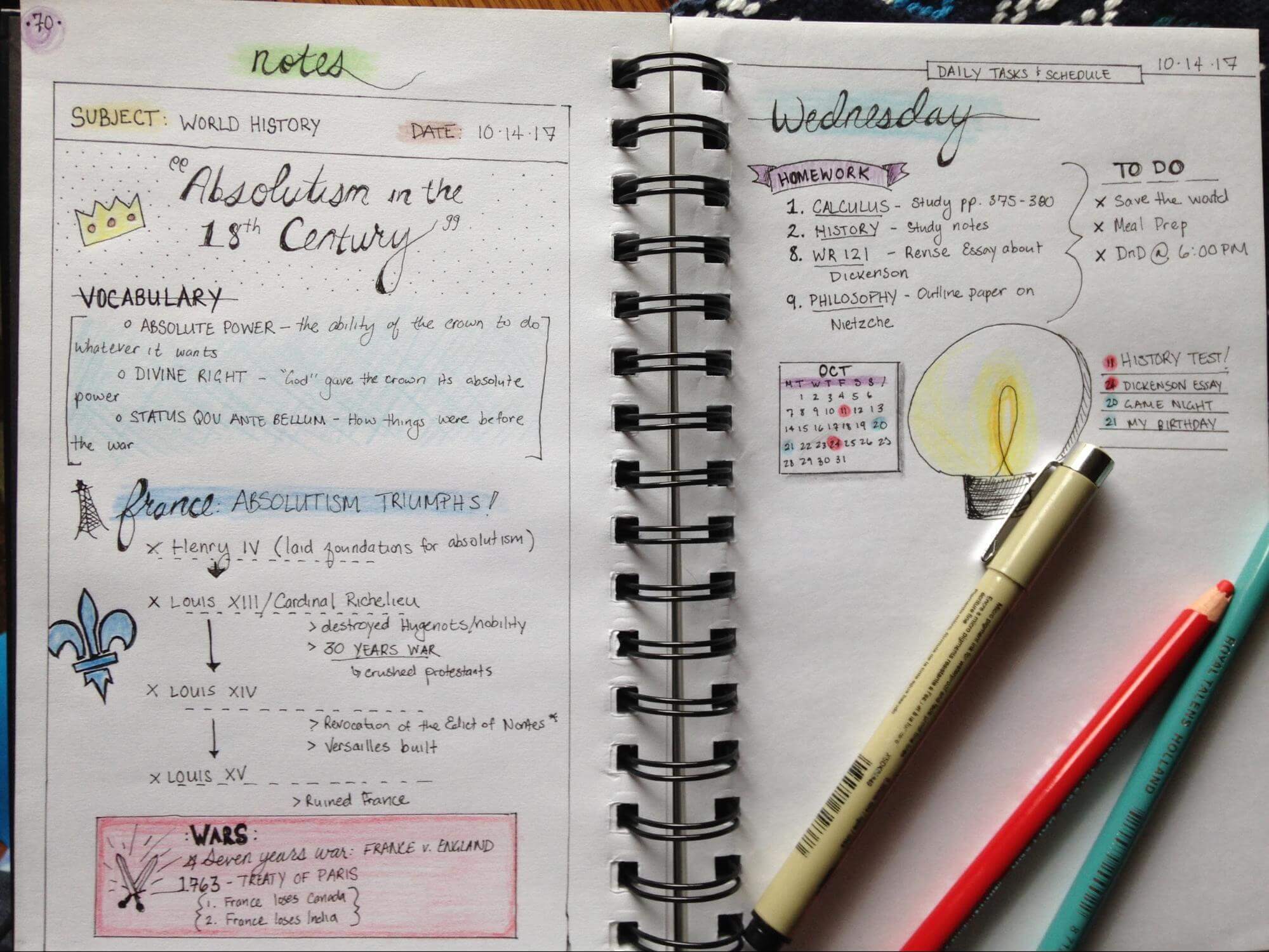
Making notes visual helps you remember better. Visual notes aren’t just pretty—they show relationships and patterns that plain text can’t.
Diagrams And Mind Maps
Drawing a quick diagram or mind map can organize complex ideas. For example, if you’re learning about the water cycle, a simple diagram shows how water moves from clouds to earth and back.
Color Coding
Use highlighters or colored pens to mark:
- Main ideas (yellow)
- Examples (green)
- Important dates or facts (pink)
This makes review faster and helps your brain sort information.
Boxes, Arrows, And Icons
Add boxes around key terms, arrows to show cause and effect, or simple icons (stars for important, question marks for unclear) to guide your review.
Insight: You don’t need to be an artist. Even simple shapes and lines help your memory.
Note-taking For Online Learning
With so many courses, webinars, and tutorials online, you need a strategy for digital learning.
- Pause and rewind: Online videos let you go back—use this to fill gaps.
- Take notes in a separate window: Don’t just type in the chat or comments.
- Use timestamps: Note the time in the video for key points.
- Summarize each section: Online lessons are often divided into parts—write a short summary for each.
Mistake to avoid: Don’t just copy slides. Listen for explanations and examples that aren’t written down.
How To Take Notes From Podcasts And Audio
Audio learning is growing. Here’s how to take good notes from podcasts or lectures:
- Listen once for the big picture: Don’t pause too much the first time.
- Replay and pause: Go back for important details.
- Write episode title and time: This helps you find it later.
- Note key quotes: Jot down powerful phrases or ideas.
Tip: Some apps let you change playback speed or add bookmarks—use these features to save time.
Advanced Note-taking: Connecting Ideas
Great notes don’t just capture facts—they connect ideas. Here’s how to go deeper:
- Link related notes: If two topics connect, write a note to “see also” your other notes.
- Make a summary page: Every few weeks, write a page summarizing what you’ve learned. This shows big patterns.
- Ask “why” and “how”: For each main idea, write why it matters and how it connects to your goals.
Insight: Most people never look for patterns in their notes. Doing this sets you apart and turns notes into real learning.
How To Store And Organize Your Notes
Taking notes is just the start. Organizing them means you can find what you need, when you need it.
For Paper Notes
- Use one notebook per subject: Don’t mix everything together.
- Number your pages: Add a quick index on the first page.
- Use sticky notes: Flag important pages for fast access.
For Digital Notes
- Create folders by topic or date.
- Tag notes with keywords for searching.
- Back up your notes regularly (cloud or external drive).
Combining Systems
Some people use paper for quick notes and digital for long-term storage. Take a photo of important handwritten pages and upload them to your digital system.
External resource: For more on organizing digital notes, see Zapier’s guide to note-taking apps.
Developing Your Own Note-taking Style
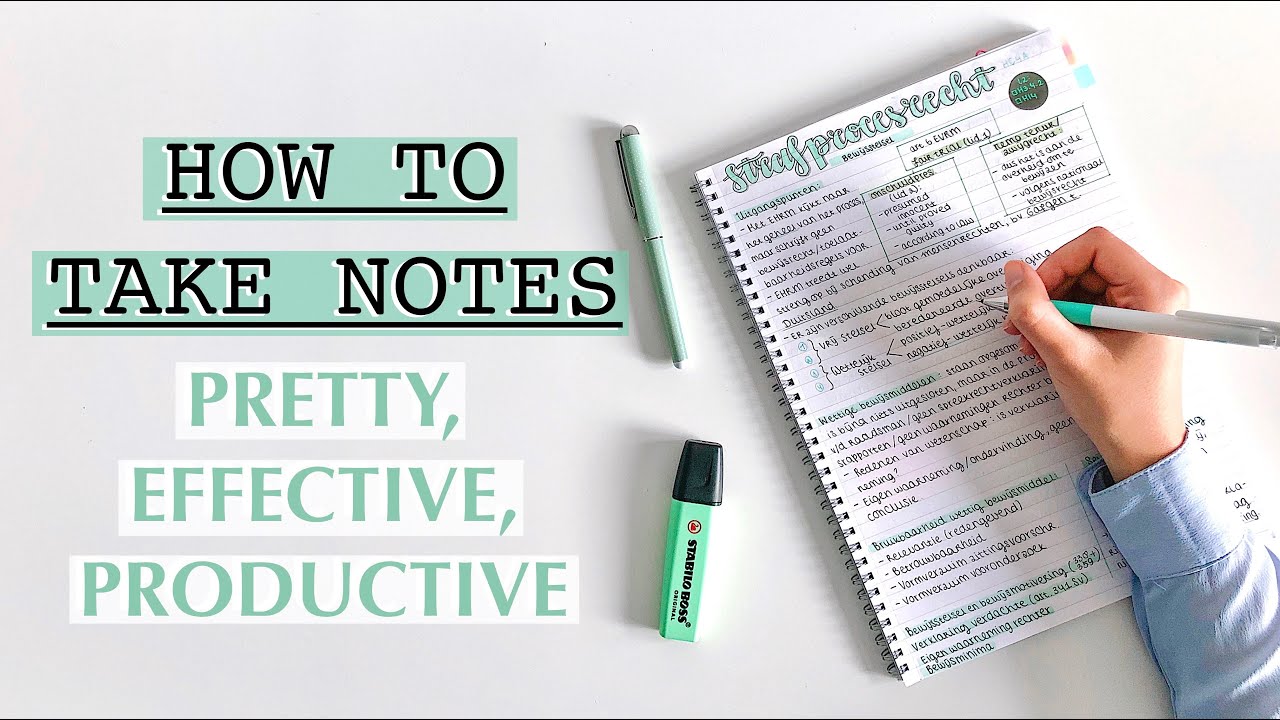
The best note-taking style is the one you’ll use and review. Everyone’s brain works a little differently, so try several methods and mix what works.
- Test different methods: Spend a week with each style.
- Adjust for your needs: Some people need more visuals, others prefer outlines.
- Review and refine: Every month, ask—are my notes helping me?
- Don’t be afraid to change: As your work or studies change, update your system.
Over time, you’ll develop a personal note-taking style that fits your memory, learning, and goals.
Frequently Asked Questions
How Do I Know Which Note-taking Method Is Best For Me?
Try several methods—outline, Cornell, mapping, charting—and see which feels comfortable and helps you remember. If you review your notes and understand the material, you’ve found a good fit. Don’t be afraid to mix methods or change as your needs change.
Is It Better To Type Notes Or Write By Hand?
Writing by hand often helps you remember more, especially for learning concepts. Typing is faster and better for organizing large projects. Many people use both: handwriting for learning, digital for storage and sharing.
How Can I Take Notes Faster?
Use abbreviations, symbols, and short phrases. Focus on main ideas, not every detail. Prepare before lectures or meetings by reading ahead. With practice, you’ll get quicker at capturing key points.
How Do I Review My Notes Effectively?
Review your notes within 24 hours. Summarize the main ideas. Test yourself—cover your notes and try to recall details. Review again in short sessions over several days (spaced repetition) for long-term memory.
What Should I Do If My Notes Are Messy Or Hard To Understand?
Rewrite or organize your notes soon after taking them. Use headings, bullets, and highlights. Add summaries and questions. With practice, your notes will get clearer and more useful.
Taking notes is a skill you can improve with practice. Try new methods, review your notes regularly, and adjust your system as you learn. Over time, your notes will become a powerful tool for learning, working, and remembering what matters most.

