

Yes — kayak fishing is excellent for beginners: affordable, accessible, and simple to learn.
I’ve spent years guiding new anglers from shore to small craft, and kayak fishing is one of the most welcoming ways to start. This article breaks down why kayak fishing works well for beginners, what to expect, safety tips, affordable gear, common mistakes, and how to progress from your first calm-water trip to confident outings. Read on for clear steps, practical examples from real experience, and expert-backed advice to get you on the water fast and safely.

36% off Today’s Exclusive Deals
Limited-time Exclusive Deals. Check current discount on Amazon.
Check Price on Amazon As an Amazon Associate I earn from qualifying purchases.
Why kayak fishing is a great option for beginners
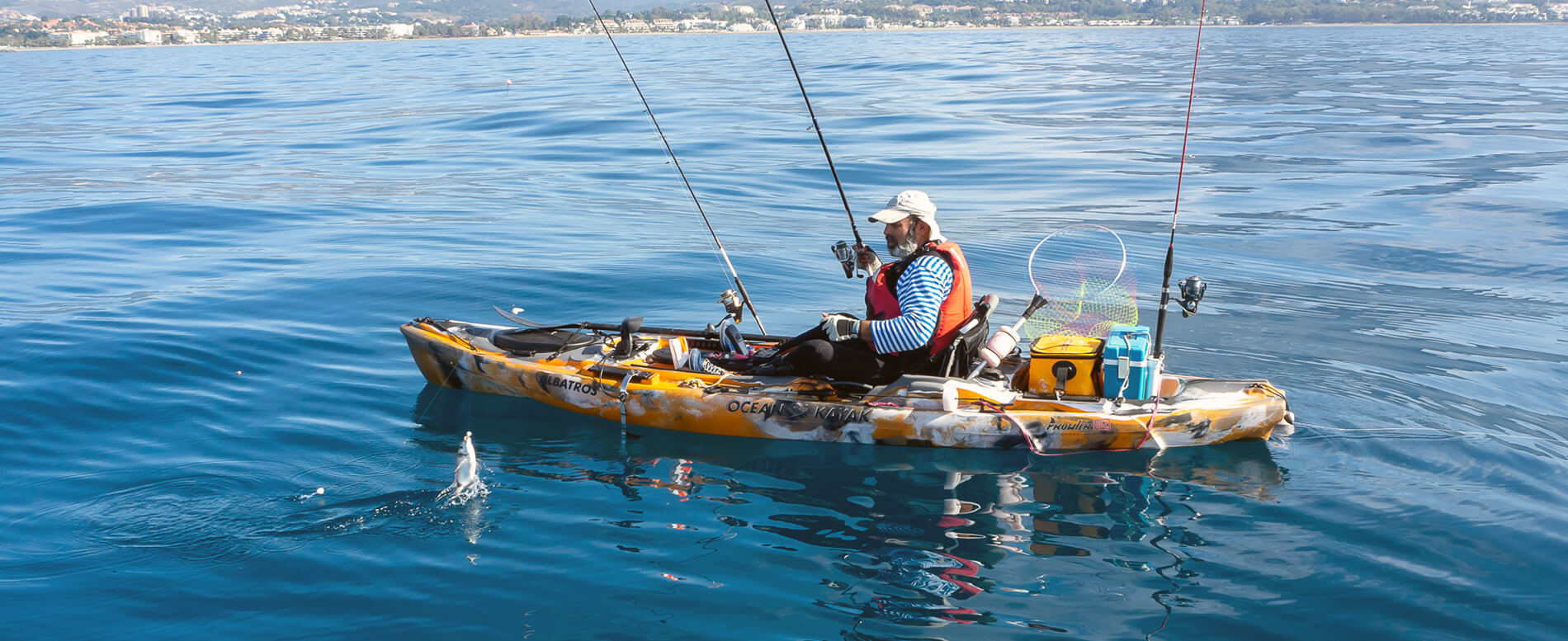
Kayak fishing makes angling easy to access. You don’t need a trailer, dock space, or a big budget to start. A stable sit-on-top kayak, a basic paddle, and a rod are often enough to catch local species.
The learning curve is gentle. You can practice paddling and balance near shore, then add fishing basics like casting and landing fish. Many lakes, calm rivers, and protected bays provide forgiving places for first trips.
Social and physical benefits boost the experience. Kayak fishing offers quiet, low-impact exercise and closer contact with fish habitat. It’s also easy to fish with a friend or join local kayak-fishing groups to learn quickly.
Personal note: On my first outing I learned to brace and reposition my tackle before I ever hooked a fish. That trial taught me how simple adjustments in seating and rod placement improve catch rates. Kayak fishing encourages small, iterative learning steps that build confidence fast.

Benefits beginners can expect from kayak fishing
- Low startup cost and maintenance. Many starter kayaks are budget-friendly and require minimal upkeep.
- Easy learning curve for basic skills such as paddling, balance, and casting.
- Close-to-water experience helps with stealthy approaches and better fishing spots.
- Portability lets you try different waters without a boat ramp or trailer.
- Great for solo anglers and social outings alike; you can fish quietly or join buddy trips.
Example: A friend who had never cast a rod before learned to catch bass from a kayak in three calm morning trips. The kayak gave him stealth and a stable platform to practice casting in short, repeatable sessions.
Common challenges beginners face with kayak fishing
Balance, gear setup, and confidence are the biggest early hurdles. Learning to move, cast, and land a fish without tipping requires practice. Wind and currents can also turn an easy outing into a tiring one until you learn basic boat control.
Space is limited compared to a boat. You must choose gear deliberately and secure tackle to avoid losing items overboard. Understanding local regulations and respecting wildlife is also important and sometimes overlooked.
Do I need paddling experience to start kayak fishing?
No. Basic paddling skills are easy to learn in a few sessions on calm water. Many beginners combine short paddling lessons with fishing practice until both skills feel natural.
Is kayak fishing safe for solo anglers?
Yes, when you follow safety basics: wear a PFD, carry a communication device, check weather, and pick calm conditions. New anglers should practice re-entering a capsized kayak in controlled settings.
What type of kayak is best for beginners?
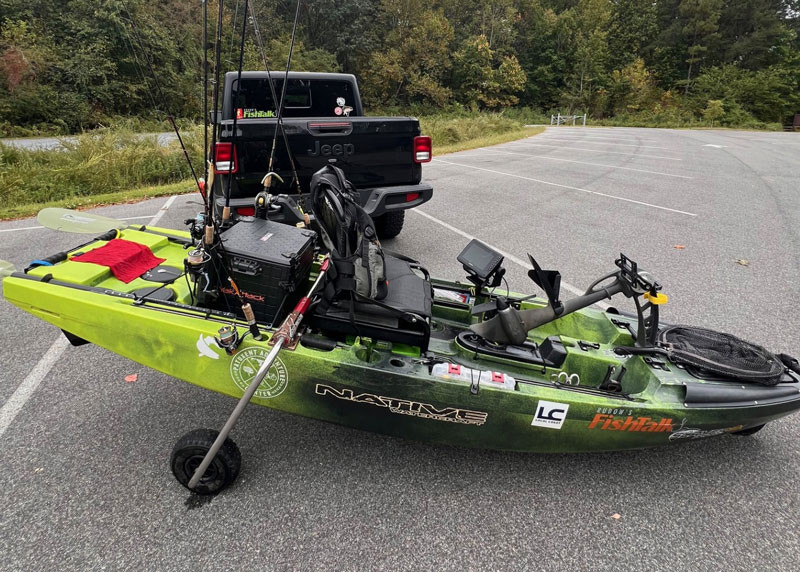
Stable sit-on-top kayaks built for fishing are ideal. Look for wide hulls, comfortable seats, and room for simple gear. Inflatable or recreational kayaks can also work for sheltered water.

Getting started: step-by-step beginner guide to kayak fishing
- Choose the right kayak
- Pick a stable sit-on-top kayak with a wide beam and a comfortable seat.
- Test one in calm water before buying or renting.
- Learn basic paddling and safety
- Practice forward stroke, turning, and bracing near shore.
- Learn how to re-enter your kayak from the water in case of a capsize.
- Start with minimal gear
- Carry one or two rods, a small tackle box, pliers, a PFD, and a dry bag for phone and keys.
- Use rod leashes and secure tackle to prevent loss overboard.
- Practice casting from the kayak
- Begin with short, controlled casts while facing shore.
- Move slowly and avoid sudden weight shifts that affect balance.
- Plan simple outings
- Pick calm mornings on a lake or sheltered bay.
- Tell someone your plan and expected return time.
Personal tip: I always rig my rods and have my PFD on before pushing off. That small habit reduced fumbling and allowed me to focus on fishing on my first trips. Kayak fishing rewards simple routines.
Essential gear and affordable options for beginners
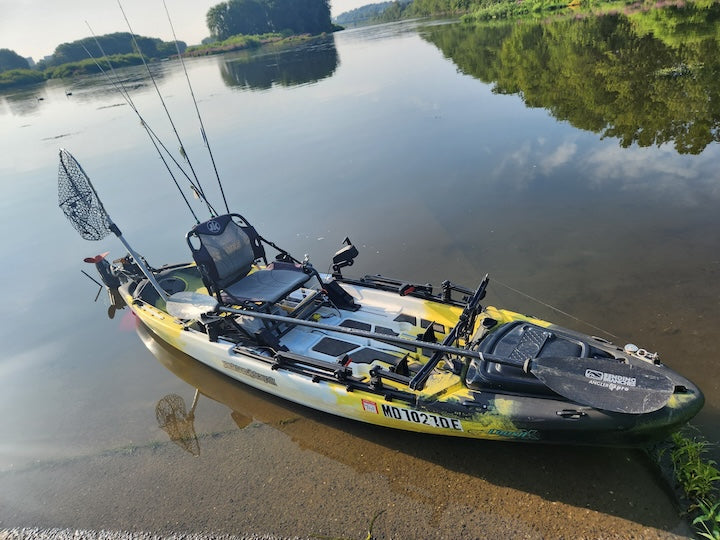
- PFD (Personal Flotation Device)
- Choose one comfortable for sitting and casting. Always wear it on the water.
- Paddle and paddle leash
- A lightweight paddle and leash prevent loss if you drop it.
- Rods and reels
- One medium-action spinning rod with a small baitcasting option later covers most species.
- Tackle and storage
- Small tackle box with assorted hooks, soft plastics, jigs, and small spinners.
- Anchor or stake-out pole
- Useful for holding position when fishing structure or current.
- Dry bag and phone-safe case
- Keep essentials dry and secure.
- Optional: fishfinder, rod holders, kayak cart
- These add convenience but are not essential for beginners.
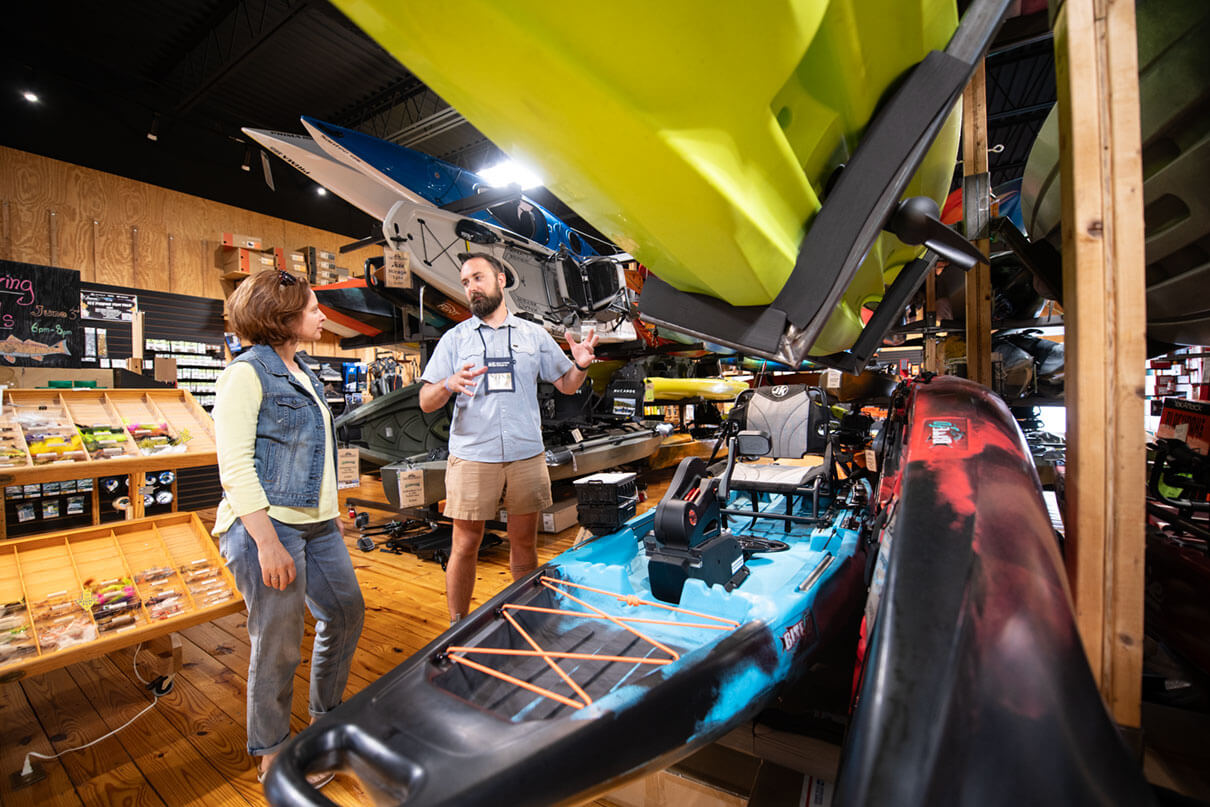
Budget tips: Rent a kayak and basic gear for a day or weekend before buying. Many shops offer trial days and demo units that help you find the right fit without a big upfront cost. Kayak fishing is flexible for low-cost experimentation.

Safety, etiquette, and environmental responsibilities
Safety basics:
- Wear your PFD every time you launch.
- Check weather and wind forecasts before you go.
- Carry a whistle, light, and a fully charged phone or VHF.
Etiquette and environment:
- Follow local fishing regulations and licensing rules.
- Practice catch-and-release when appropriate, using barbless hooks and wet hands.
- Avoid disturbing nesting areas and sensitive shorelines.
- Pack out all trash and lost gear.
Trustworthy practice: I learned to check tide tables and wind forecasts before each trip. That habit prevented several uncomfortable outings and made kayak fishing more enjoyable and safe. Stick to calm water when you’re starting and learn to read the conditions gradually.
How to progress and enjoy kayak fishing long-term
- Build skills stepwise: master paddling, then casting, then fish-specific techniques.
- Join local groups or take a guided trip for hands-on learning and safety skills.
- Upgrade gear slowly: add rod holders, a fishfinder, or a more comfortable seat as you grow.
- Target different species and waters: ponds, lakes, rivers, and coastal flats all offer varied challenges.
- Keep a simple log to track what works: bait, time of day, water temp, and successful spots.
My progression: I started on calm lakes, moved to rocky shorelines, then tried tidal flats with a guide. Each step added a skill—reading structure, timing tides, and using a drift anchor—that kept kayak fishing fresh and rewarding.
Frequently Asked Questions of Is kayak fishing good for beginners?
Is kayak fishing hard to learn?
Kayak fishing is approachable. Basic paddling and casting are easy to learn on calm water with short practice sessions.
What safety gear do new kayak anglers need?
At minimum wear a PFD, carry a whistle and a communication device, and bring a dry bag for essentials. Check weather before launching.
Can I fish alone from a kayak?
Yes, many anglers fish solo. Practice self-rescue, stay in calm waters at first, and tell someone your plan.
How much does beginner kayak fishing cost?
You can start for under a few hundred dollars by renting or buying entry-level gear. Costs rise with upgrades and electronics.
Where should beginners practice kayak fishing?
Start on small lakes, calm rivers, or protected bays with minimal boat traffic and gentle currents.
Conclusion
Kayak fishing is a highly beginner-friendly way to get into angling. It combines low cost, quick learning, and strong returns in experience and catch potential. Start with basic gear, practice safety, and build skills step by step to enjoy many rewarding outings.
Takeaway: rent or demo a kayak, plan a calm-water practice session, and make simple safety habits your default. Your first successful trip is often just a few small steps away. Share your experience or ask a question below — and consider subscribing to learn gear tips and local techniques for kayak fishing.

