

Polaris Pool Cleaner Troubleshooting fixes clogs, hose problems, and drive issues fast.
I have spent years repairing and tuning automatic pool cleaners. This guide on Polaris Pool Cleaner Troubleshooting draws on hands‑on experience, factory tips, and common service practice. Read on for clear steps, real fixes, and easy checks you can do today to get your Polaris running well again.

36% off Today’s Exclusive Deals
Limited-time Exclusive Deals. Check current discount on Amazon.
Check Price on Amazon As an Amazon Associate I earn from qualifying purchases.
How Polaris Pool Cleaners Work
Polaris cleaners use water flow and pressure to move, scrub, and filter your pool. The cleaner connects to the booster pump or the pool skimmer. Internal gears, a diaphragm, and a sweep hose work together to steer and pull debris into the filter bag.
Knowing how your model moves makes Polaris Pool Cleaner Troubleshooting simpler. If you know which part turns or seals, you can find the fault fast. I’ll explain each part and what common signals it gives when failing.

Common Issues and Quick Fixes
Below are the faults you will see most often when doing Polaris Pool Cleaner Troubleshooting. Each item includes a quick cause and a fix you can try.
- Cleaner won’t move
- Cause: Air in hose, blocked jet, or worn drive mechanism.
- Fix: Check hose for air leaks, clear the jet, inspect the tire and gear.
- Poor suction or not picking up debris
- Cause: Clogged filter bag, blocked throat, or low pump flow.
- Fix: Clean the bag, inspect the throat and skimmer, boost pump flow.
- Hose collapses or boat tails
- Cause: Weak hose sections or improper assembly.
- Fix: Replace bad hose segments and ensure correct length and assembly.
- Cleaner gets stuck on walls
- Cause: Incorrect valve settings, worn tires, or a bent flap.
- Fix: Check return valve, replace tires, align flap vanes.
- Loud or grinding noise
- Cause: Gearcase wear or debris in drivetrain.
- Fix: Open the gearcase, remove debris, and inspect gears and bearings.
Practical tip: Start each troubleshooting session with a clean bag and clear skimmer. This cuts false leads and saves time when you do Polaris Pool Cleaner Troubleshooting.

Step-by-Step Polaris Pool Cleaner Troubleshooting Guide
Follow this ordered checklist to find and fix most problems. Use short steps and test after each step.
- Visual check
- Look for cuts or holes in the hose.
- Inspect tires, flaps, and the sweep hose for wear.
- Check pump and flow
- Ensure the pump and booster (if used) are on.
- Clean the pump and skimmer baskets. Low flow ruins cleaning.
- Inspect the hose assembly
- Lay the hose flat in the sun. Replace soft or cracked sections.
- Replace swivel or cuff if air leaks occur.
- Empty and clean filter bag
- Turn off system and remove bag.
- Rinse and air dry. Replace if torn.
- Test drive and steering
- Run the cleaner for one cycle. Note behavior.
- If it spins in circles, check the nose cone and gearcase.
- Open the gearcase (if comfortable)
- Remove screws, inspect diaphragm and gears.
- Replace worn gears and the diaphragm. Lubricate seals sparingly.
- Final flow check
- Confirm return jets are aimed correctly.
- Adjust the flow valve or booster pump to match manufacturer specs.
If you follow these steps, many Polaris Pool Cleaner Troubleshooting tasks finish in under an hour. I once fixed a non‑moving Polaris by simply replacing a cracked hose cuff in ten minutes.
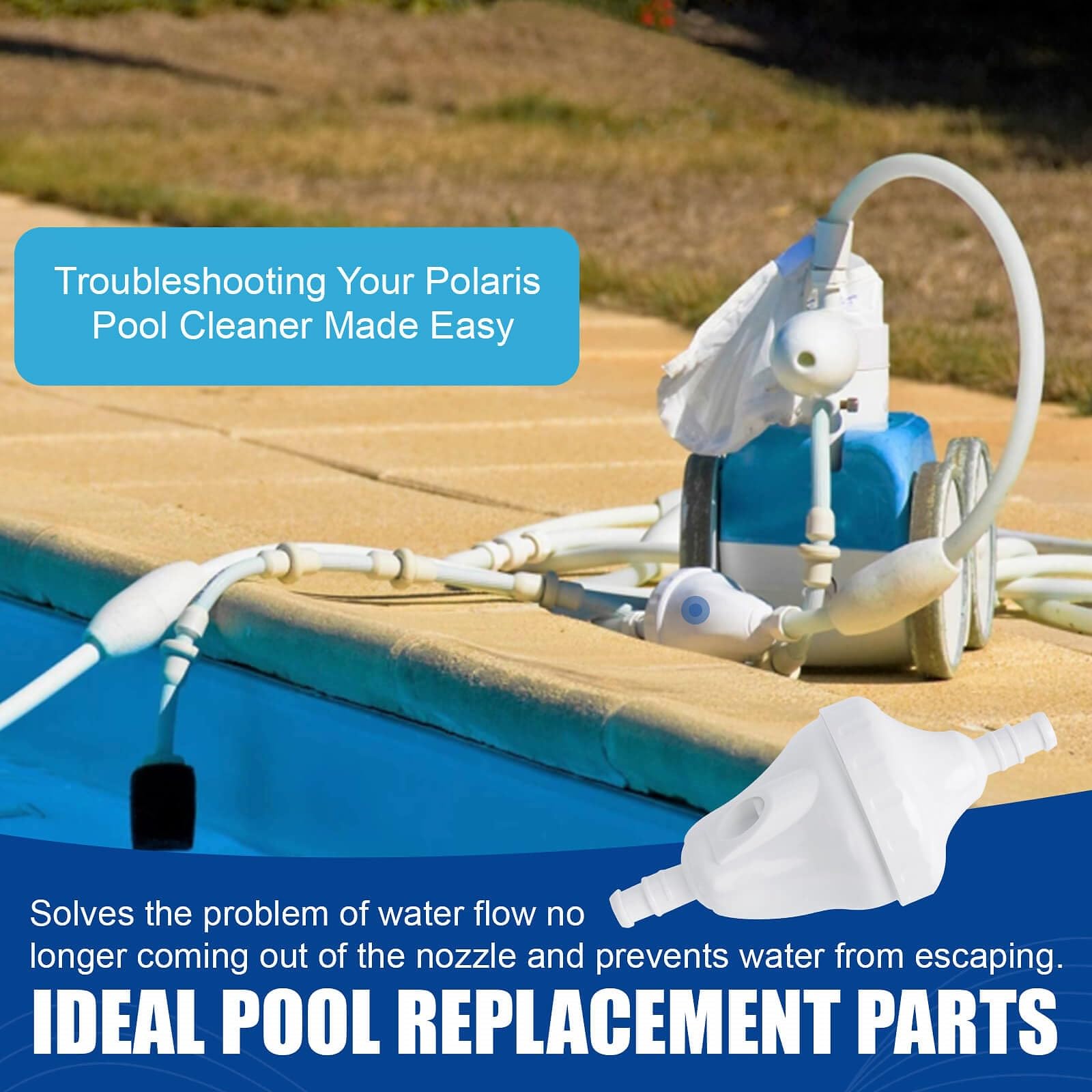
Preventive Maintenance and Seasonal Care
Routine care reduces breakdowns and lowers repair costs. Here are simple routines to keep in place.
- Weekly quick checks
- Empty the bag and check skimmers.
- Scan the hose for fresh wear.
- Monthly deep checks
- Inspect wheels, flaps, and the sweep hose.
- Check the gearcase for leaks and loose screws.
- Seasonal service
- Store the cleaner out of direct sun in winter.
- Replace rubber parts annually in hot climates.
Good maintenance shortens Polaris Pool Cleaner Troubleshooting time. A small part replaced early avoids a full breakdown later.

Parts, Tools, and When to Call a Pro
You can fix many issues at home. But some tasks need a service tech or replacement parts. Here’s how to decide.
- Common parts to keep on hand
- Hose sections, cuffs, filter bags, flaps, diaphragm, and tires.
- Tools you will use
- Screwdriver set, pliers, a small socket set, hose cutter, and silicone lubricant.
- When to call a pro
- Persistent gearcase noise after inspection.
- Cracked housing, motorized accessories, or welded parts inside the unit.
- Electrical issues with booster pumps or control systems.
I recommend contacting a dealer for warranty work or when gearcase repairs feel beyond your skill. Trustworthy service saves time and avoids costly mistakes.

Troubleshooting PAA-style Questions
Why is my Polaris not moving?
Most often the hose has air leaks, or the drive gear and diaphragm need attention. Start with hose and jet checks.
How often should I clean the filter bag?
Clean it after every run or at least weekly during heavy use. A clogged bag cuts suction and causes poor cleaning.
Can I run my Polaris without a booster pump?
Some models can run on the main pump. Check your model’s specs. Running on low flow reduces efficiency.
Why does my cleaner circle in one spot?
A worn tire, damaged flap, or stuck wheel often causes circling. Inspect and replace the worn part.
Is it safe to open the gearcase myself?
Yes if you have basic tools and patience. Keep parts organized and take photos. Otherwise hire a pro.
Personal Experience and Lessons Learned
I once spent a weekend diagnosing a Polaris that barely moved. I swapped hoses, cleaned the bag, and still saw no change. Opening the gearcase revealed a shredded diaphragm held together by plastic bits. Replacing the diaphragm fixed the issue. Lesson: start with simple parts, but don’t skip the gearcase when problems persist.
A common mistake I see is replacing the wrong part. For example, owners replace the bag when low flow is actually from a blocked skimmer. Test one change at a time. This saves money and teaches you the machine.
Frequently Asked Questions of Polaris Pool Cleaner Troubleshooting
Why does my Polaris lose suction?
Loss of suction often stems from a clogged bag, blocked throat, or low pump flow. Clean baskets and clear the throat to restore suction.
How long should a Polaris cleaner last?
With routine care, many Polaris units last 5 to 10 years. Rubber parts wear faster in hot, sunny climates and may need yearly replacement.
What causes my Polaris to pull only on one side?
One-sided pull usually means a damaged tire or flap, or debris caught in the steering mechanism. Inspect and replace the damaged piece.
Can I use my Polaris in a saltwater pool?
Yes, many Polaris models work in saltwater. Rinse parts with fresh water after use and watch for accelerated corrosion.
How do I find the model number for parts?
The model number is on the cleaner housing or the original manual. Dealers can help identify parts if you provide photos and measurements.
Conclusion
Polaris Pool Cleaner Troubleshooting is a stepwise mix of inspection, simple fixes, and timely parts replacement. Start with flow and hose checks, clean the bag, and progress to gearcase inspection if needed. Small, regular maintenance saves time and money and keeps your pool clean and safe. Try these tips, keep a small parts kit, and share your results or questions below to get more tailored help.

