

Rv Hot Water Heater Troubleshooting: A Complete Guide
A relaxing RV trip can quickly turn stressful if your hot water heater stops working. Hot water is essential for showers, washing dishes, and comfort—so when the heater fails, life in your RV feels less like a home. Many RV owners feel lost when problems arise, but most issues are easy to diagnose and fix with some guidance. Whether your heater runs on propane, electricity, or both, knowing how to troubleshoot common problems can save time, money, and headaches.
This guide covers practical steps, tips, and real examples to help you solve the most frequent RV hot water heater problems. You’ll learn how to identify symptoms, check parts, and make repairs confidently—even if you’re new to RV maintenance. We’ll also explain important safety steps and provide comparison tables to help you understand different heater types. By the end, you’ll know how to get your hot water back fast and avoid common mistakes.

36% off Today’s Exclusive Deals
Limited-time Exclusive Deals. Check current discount on Amazon.
Check Price on Amazon As an Amazon Associate I earn from qualifying purchases.Understanding Your Rv Hot Water Heater
RV hot water heaters come in several types, but most fall into two main categories: tank heaters and tankless heaters. Each has its own strengths, weaknesses, and troubleshooting methods.
How Rv Hot Water Heaters Work
Most RV heaters use either propane, electricity, or both (dual-mode). The heater warms water inside a tank, then delivers it to your faucets or shower. Some newer RVs use tankless systems, which heat water instantly as you need it.
Common Types Compared
Here’s a quick overview of the main types:
| Type | Energy Source | Capacity (Gallons) | Heating Time | Typical Use |
|---|---|---|---|---|
| Tank (Propane) | Propane | 6-10 | 20-30 mins | Boondocking, off-grid |
| Tank (Electric) | Electric | 6-10 | 30-40 mins | RV parks, hookups |
| Tankless | Propane/Electric | Unlimited | Instant | Large families, full-time RV |
Key Heater Parts
Knowing the main parts helps you troubleshoot faster:
- Burner assembly: Heats water using propane.
- Heating element: Heats water using electricity.
- Thermostat: Controls water temperature.
- Pressure relief valve: Prevents dangerous buildup.
- Pilot light/ignition: Starts the heating process.
- Anode rod: Protects the tank from corrosion.
RV heaters are simple machines, but one small issue can stop hot water completely.
Diagnosing Common Rv Hot Water Heater Problems
Identifying the problem is the first step. Symptoms often point to specific causes. Here are the most frequent signs and what they mean.
No Hot Water
If your heater runs but you only get cold water, check these areas:
- Power supply: Is the heater getting electricity or propane?
- Pilot light: For propane models, is the pilot light on?
- Heating element: For electric models, is it working?
- Thermostat: Is it set properly?
- Water flow: Is water reaching the heater?
Water Not Hot Enough
Lukewarm water usually means:
- Thermostat issue: Set too low or faulty.
- Sediment buildup: Reduces heat transfer.
- Low propane/electricity: Insufficient energy.
Water Too Hot
If water is scalding:
- Thermostat malfunction: Not regulating temperature.
- Wiring issues: Faulty controls.
Heater Leaking
Leaks can be serious. Common causes:
- Pressure relief valve: Stuck or faulty.
- Loose fittings: Connections not tight.
- Tank corrosion: Tank may need replacement.
Strange Noises
Popping, hissing, or rumbling noises suggest:
- Sediment in tank: Needs flushing.
- Air in lines: Bleed the system.
Burner Won’t Ignite
Propane models may fail to ignite because of:
- Empty propane tank
- Blocked burner
- Faulty igniter
- Bad gas valve
Electric Element Not Working
For electric heaters:
- Tripped breaker
- Burned out heating element
- Bad thermostat

Step-by-step Troubleshooting For Rv Hot Water Heaters
Solving heater problems requires a methodical approach. Follow these steps for safe, effective troubleshooting.
1. Safety First
Always turn off power and propane before working on your heater. Let the tank cool down, and wear gloves to protect your hands.
2. Check Power And Fuel
- Electric heaters: Make sure you’re plugged into shore power. Check the breaker panel for tripped switches.
- Propane heaters: Confirm the propane tank is full and the valve is open.
3. Inspect The Pilot Light Or Ignition
For propane models:
- Open the access panel and look for the pilot light.
- If it’s out, follow your RV’s instructions to relight. Many models require pressing a button and holding it for a few seconds.
- If it won’t stay lit, check for drafts, blocked vents, or a faulty thermocouple.
4. Test The Heating Element
For electric heaters:
- Use a multimeter to test for continuity in the heating element.
- If there’s no reading, the element is burned out and needs replacement.
5. Adjust Or Replace The Thermostat
- Locate the thermostat on the side of your tank.
- Set it to 120°F for comfort and safety.
- If water is still too cold or too hot, replace the thermostat.
6. Flush The Tank
Sediment buildup is common, especially if you use hard water. To flush:
- Turn off power and let the water cool.
- Open the pressure relief valve.
- Remove the drain plug and let water flow out.
- Use a wand or hose to wash out sediment.
- Replace plug and refill.
7. Check For Leaks
Inspect all connections and fittings. Tighten loose parts. If the tank is leaking, look for corrosion or cracks. Replace the tank if needed.
8. Inspect The Anode Rod
The anode rod prevents rust. Remove and check it once a year. If it’s less than half its original thickness, replace it.
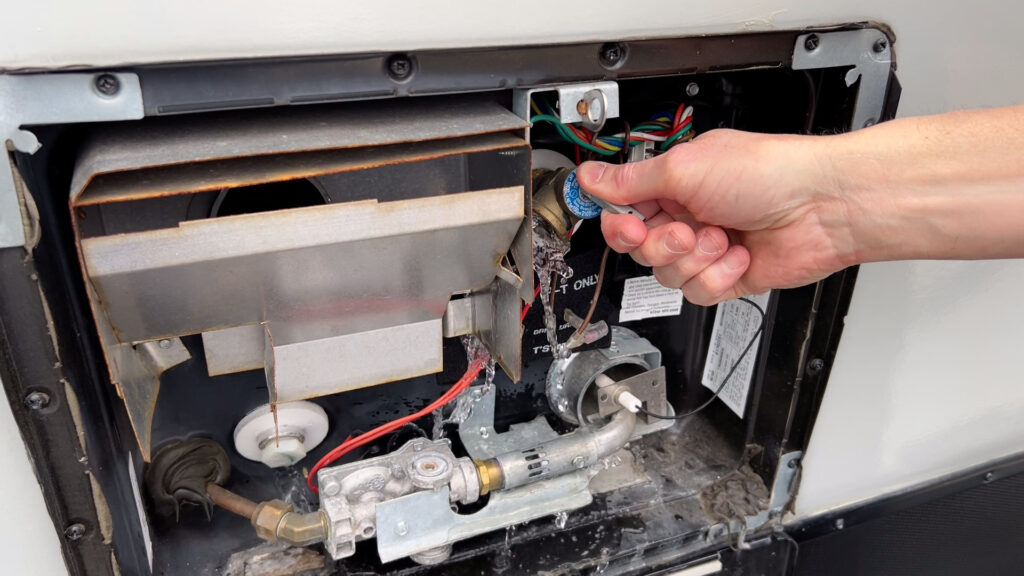
9. Test The Pressure Relief Valve
Lift the valve lever. Water should flow freely. If not, replace the valve to avoid safety risks.
10. Bleed Air From The Lines
If you hear sputtering or get inconsistent hot water:
- Open the hot water faucet and let it run.
- Air should escape and water flow steady.
Troubleshooting Rv Hot Water Heater By Model
Different brands and models have unique quirks. Here’s how to troubleshoot some popular types.
Atwood Rv Hot Water Heaters
Atwood units are known for reliability, but common issues include:
- No ignition: Check the ECO (energy cut-off) and thermostat. Atwood uses dual controls.
- Leaking: Atwood tanks are aluminum, so check for cracks, not rust.
Suburban Rv Hot Water Heaters
Suburban models use steel tanks with anode rods.
- Anode rod maintenance is crucial. Replace annually.
- Ignition problems: Suburban uses a direct spark ignition. Clean the electrodes if it won’t light.
Tankless Rv Hot Water Heaters
Tankless heaters are sensitive to water flow.
- Low flow: Heater won’t activate. Clean aerators and check pump pressure.
- Temperature swings: Adjust incoming water pressure.
Rv Hot Water Heater Troubleshooting Table
Here’s a quick reference for common problems and solutions:
| Symptom | Possible Cause | Solution |
|---|---|---|
| No hot water | Power off, pilot out, heating element bad | Check power, relight pilot, replace element |
| Lukewarm water | Thermostat set low, sediment buildup | Adjust thermostat, flush tank |
| Leaking tank | Corrosion, loose fittings | Replace tank, tighten fittings |
| Noisy operation | Sediment, air in lines | Flush tank, bleed lines |
| Won’t ignite | Empty propane, blocked burner | Refill propane, clean burner |
Preventive Maintenance Tips
Avoiding problems is easier than fixing them. Regular maintenance improves reliability and extends heater life.
Flush The Tank Regularly
Minerals and sediment build up over time, especially if you use hard water. Flush the tank every 6 months to prevent clogs and noise.
Inspect The Anode Rod
Check the rod annually, especially on Suburban models. It protects your tank from rust. Replace it when worn.
Clean Burner And Vents
For propane heaters, clean the burner and air vents at least once a year. Blocked vents cause ignition problems.
Test Pressure Relief Valve
Lift the valve lever to check function. Replace if it sticks or leaks.
Monitor Thermostat Settings
Set the thermostat to 120°F. Higher settings waste energy and risk scalding.
Check For Leaks
Look for signs of moisture or corrosion. Fix leaks early to avoid tank replacement.

Common Mistakes Rv Owners Make
Understanding mistakes helps you avoid costly repairs.
Ignoring Regular Maintenance
Many owners skip yearly maintenance, leading to sediment buildup and corrosion. This shortens heater life.
Overlooking Thermostat Settings
Setting the thermostat too high can cause scalding and stress the heater. Too low means cold showers.
Forgetting To Flush The Tank
Neglecting to flush leads to noisy operation and reduced heating efficiency.
Using Wrong Replacement Parts
Always use parts that match your heater’s brand and model. Wrong parts can cause malfunctions.
Not Checking Power Sources
Before calling for help, always check your power supply and propane tank. Many problems are simple fixes.
When To Call A Professional
Some issues require expert help:
- Major leaks: If water is pouring out, stop using the heater and call a plumber.
- Electrical problems: If you suspect wiring issues, avoid DIY unless you’re qualified.
- Gas leaks: If you smell propane, shut off the tank and call emergency services.
Rv Hot Water Heater Comparison Table
Choosing the right heater can help avoid future problems. Here’s a comparison of popular models:
| Brand | Type | Capacity | Energy Source | Average Price (USD) | Maintenance Needs |
|---|---|---|---|---|---|
| Atwood | Tank | 6-10 gal | Propane/Electric | $350-$600 | Low |
| Suburban | Tank | 6-12 gal | Propane/Electric | $400-$700 | Moderate |
| Girard | Tankless | Unlimited | Propane/Electric | $800-$1,200 | Low |
Non-obvious Insights That Beginners Miss
Many new RV owners overlook these points:
- Water quality matters: Hard water causes faster sediment buildup. Use a water softener or filter if possible.
- Winterizing your heater: If you store your RV in cold climates, drain the heater completely and bypass it when adding antifreeze.
- Dual-mode heaters: Many heaters can use both propane and electric. Switching modes can solve problems in RV parks or off-grid.
- Regular valve checks: Pressure relief valves are safety devices. If you ignore them, you risk tank explosion.
Frequently Asked Questions
Why Is My Rv Hot Water Heater Not Heating Water?
Most often, the issue is power supply, a failed heating element, or a pilot light that’s out. Check these first. If all are working, the thermostat may need adjustment or replacement.
How Often Should I Flush My Rv Hot Water Heater?
Flush the tank every 6 months, or after every long trip. Sediment buildup is faster if you use hard water. Regular flushing keeps the heater efficient and quiet.
Can I Use Both Propane And Electric Modes At The Same Time?
Yes, many RV heaters are dual-mode. Using both can heat water faster. Make sure both power sources are working and the heater is designed for dual operation.
What Should I Do If My Heater Is Leaking?
First, turn off the heater and water supply. Check for loose fittings or a faulty pressure relief valve. If the tank is corroded or cracked, replace it. Serious leaks need professional help.
How Do I Know If The Heating Element Needs Replacement?
If you get cold water and the breaker is not tripped, use a multimeter to test the element for continuity. No reading means it’s burned out. Replace with the correct part for your heater model.
RV hot water heaters may seem complicated at first, but with the right knowledge, most problems are simple to fix. Investing time in regular maintenance and understanding the basics can keep your RV comfortable and worry-free. For more detailed repair instructions and safety tips, visit the RV Repair Club.
With these troubleshooting tips and insights, you can handle hot water heater issues confidently and enjoy your RV adventures to the fullest.

