

Many RV owners rely on their Dometic water heater for hot showers, washing dishes, and cleaning. But when problems appear, life on the road can get uncomfortable fast. Whether you’re a new RV owner or an experienced traveler, knowing how to troubleshoot your Dometic water heater can save you time, money, and frustration. This guide offers practical steps, real examples, and helpful advice to solve common issues—and explains why some problems happen in the first place.
How A Dometic Water Heater Works
Before jumping into troubleshooting, it’s important to understand how Dometic water heaters operate. Most models use either propane gas, electricity, or both. A typical water heater has a tank (usually 6–10 gallons), a heating element (electric), a burner assembly (propane), a thermostat, and safety controls.

36% off Today’s Exclusive Deals
Limited-time Exclusive Deals. Check current discount on Amazon.
Check Price on Amazon As an Amazon Associate I earn from qualifying purchases.- Propane mode: The burner heats water using gas.
- Electric mode: An electric element heats water.
- Control board: Manages ignition, safety, and switching between modes.
Knowing which mode you use helps you find the cause of problems faster. Some models also have “direct spark ignition” (DSI), which means they light automatically with a switch.
Common Symptoms And What They Mean
Understanding the most frequent symptoms makes troubleshooting easier. Here are signs you may notice:
- No hot water: Water is cold, even after waiting.
- Water not hot enough: Lukewarm water instead of hot.
- Water heater won’t ignite: Burner doesn’t start.
- Pilot won’t stay lit: Pilot goes out or won’t light.
- Electric mode not working: No hot water on electricity.
- Strange noises: Pops, bangs, or rumbling sounds.
- Leaks: Water appears under the heater or inside the RV.
- Smell of gas: Propane odor near the heater.
Each symptom points to certain causes. For example, no hot water can mean a failed heating element, low gas pressure, or a blown fuse.
Safety First: What To Check Before Troubleshooting
Water heaters mix gas, electricity, and water. Always keep safety in mind:
- Turn off power: Switch off the breaker or unplug the unit.
- Shut off gas supply: Close the propane valve before working.
- Let the tank cool: Hot water can cause burns.
- Ventilate area: Open windows and doors if you smell gas.
Never ignore gas odors. If you smell propane, leave the area and contact a professional.
Step-by-step Troubleshooting For Dometic Water Heaters
Let’s break down the main problems and how to fix them. Each step includes practical tips and common mistakes.
1. No Hot Water
If your Dometic water heater isn’t producing hot water, start here:
Electric Mode
- Check power supply: Is the RV plugged in? Is the breaker on?
- Inspect heating element: Remove access panel, look for burned wires.
- Test thermostat: Use a multimeter to check for continuity.
- Look for tripped reset: Some models have a red reset button.
Propane Mode
- Check gas supply: Is the propane tank full? Is the valve open?
- Inspect burner and igniter: Look for debris, spider webs, or corrosion.
- Listen for ignition click: If you hear clicking but no flame, igniter may be faulty.
- Check fuse: Many heaters have a fuse (often 12V) for ignition.
Non-obvious insight: Sometimes, the eco thermostat (a safety sensor) will shut off heating if water gets too hot. If this happens often, the thermostat may be defective.
2. Water Not Hot Enough
If water is warm but not hot:
- Thermostat setting: Make sure the thermostat isn’t set too low.
- Sediment build-up: Mineral deposits reduce heating efficiency. Flush the tank.
- Partially burned element: Electric elements can fail slowly, producing less heat.
- Low gas pressure: Weak flame means less heat.
Most RV water heaters heat water to 110–140°F. If you get less than this, measure water temperature with a thermometer.
Practical tip: Hard water causes faster build-up. If you camp in areas with hard water, flush your tank every few months.
3. Water Heater Won’t Ignite
If the burner won’t start:
- Check control board: Dometic boards can fail. Look for LED error codes.
- Inspect igniter gap: The spark gap should be about 1/8 inch.
- Check for voltage: Use a multimeter on the igniter wires.
Common mistake: Many people forget to check the door switch. Some models have a safety switch that stops ignition if the access door is open.
4. Pilot Won’t Stay Lit
For older models with a pilot light:
- Thermocouple: This sensor tells the system if the pilot is lit. If it’s loose or dirty, the pilot goes out.
- Weak gas flow: Low propane pressure can cause problems.
- Drafts or wind: Airflow can blow out the pilot.
Non-obvious insight: If you use your water heater in windy conditions, shield the burner area. Even small drafts cause frequent pilot failures.
5. Electric Mode Not Working
If propane works but electric doesn’t:
- Check power at element: Use a multimeter to test voltage.
- Inspect heating element: Remove and visually check for burn marks.
- Test thermostat: Thermostats can fail in electric mode only.
Example: In a 2018 Dometic model, a failed heating element caused no hot water in electric mode. Replacing the element restored normal function.
6. Strange Noises
Odd sounds from your water heater signal trouble:
- Popping or banging: Often caused by sediment or scale in the tank.
- Rumbling: Air trapped in the system or loose parts.
- Hissing: Usually means a leak—check around fittings.
To fix, flush the tank and check for loose screws.
7. Leaks
Water leaks are serious. Check these areas:
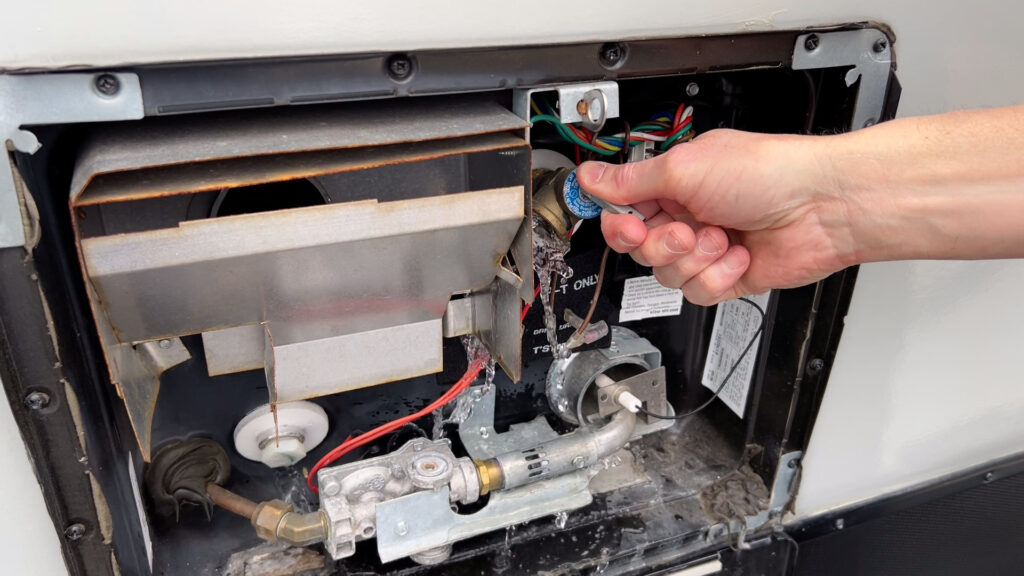
- Pressure relief valve: Sometimes leaks after heating cycle.
- Tank seam: Look for rust or water on the outside.
- Fittings and connections: Tighten or replace as needed.
If the tank itself leaks, replacement is usually necessary.
8. Gas Smell
If you detect propane near your heater:
- Check fittings: Use soapy water to look for bubbles.
- Inspect burner assembly: Make sure connections are tight.
- Replace damaged hoses: Old hoses crack and leak.
Never use the water heater if you smell gas. Call a technician.
Comparing Dometic Water Heater Models
Dometic offers several water heater types. Here’s a comparison of their key features:
| Model | Capacity (Gallons) | Heating Modes | Ignition Type | Average Price (USD) |
|---|---|---|---|---|
| WH-6GA | 6 | Gas Only | Pilot Light | $320 |
| WH-6GEA | 6 | Gas & Electric | Direct Spark | $420 |
| WH-10GEA | 10 | Gas & Electric | Direct Spark | $530 |
Insight: Larger tanks hold more hot water but take longer to heat. If you need quick showers, a smaller model may fit better.
Diagnosing Problems: Tools You Need
You don’t need expensive tools to troubleshoot most issues. Here’s what helps:
- Multimeter: Essential for testing voltage and continuity.
- Screwdrivers: Phillips and flathead.
- Soapy water spray: Detects gas leaks.
- Thermometer: Measures water temperature.
- Flashlight: For dark or tight spaces.
Advanced tip: Invest in a combination voltage tester. It quickly checks both AC and DC power, common in RVs.

Routine Maintenance For Fewer Problems
Preventing issues is easier than fixing them. Follow these tips:
- Flush the tank: Remove sediment every 3–6 months.
- Check anode rod: Replace if corroded (protects the tank from rust).
- Inspect burner: Clean out spiders, bugs, and dirt.
- Test safety valves: Open briefly to ensure no blockages.
- Check wiring: Look for loose or burned wires.
Data point: RV experts say regular maintenance reduces heater failures by up to 60%.
Error Codes And What They Mean
Newer Dometic water heaters use error codes to identify issues. Here are some common codes and their meanings:
| Error Code | Meaning | Possible Solution |
|---|---|---|
| E1 | No ignition | Check gas supply and igniter |
| E2 | Flame not detected | Inspect sensor and burner |
| E3 | Thermostat fault | Replace thermostat |
| E4 | High limit switch | Reset or replace switch |
Pro tip: Always check your owner’s manual for model-specific codes. Some codes are unique to certain heaters.
When To Call A Professional
Some problems are too risky for DIY fixes. Call a technician if:
- You smell gas and can’t find the leak
- The tank leaks from a seam
- You see burn marks or melted parts
- Electric wiring is damaged
- Error codes won’t reset
Professional repairs may cost $100–$300 depending on the issue, but protect your safety.
How To Flush Your Dometic Water Heater
Sediment and scale build up over time, reducing efficiency. Here’s how to flush the tank:
- Turn off power/gas: Safety first.
- Let tank cool: Prevent burns.
- Open pressure relief valve: Releases trapped water.
- Remove drain plug/anode rod: Water flows out.
- Flush with clean water: Use a hose to wash out debris.
- Replace plug/rod: Tighten securely.
- Close relief valve: Ready to refill.
Tip: If the water runs brown or gritty, flush until clear.
Comparing Dometic Water Heater To Competitors
How does Dometic stack up against other brands? Here’s a quick comparison:
| Brand | Reliability | Ease of Maintenance | Warranty |
|---|---|---|---|
| Dometic | High | Easy | 2 years |
| Suburban | High | Moderate | 3 years |
| Atwood | Moderate | Easy | 2 years |
Insight: Dometic water heaters are popular for their direct spark ignition and easy access to parts. Suburban models have longer warranties, but Dometic’s controls are simpler.
Tips For Long-term Reliability
Make your Dometic water heater last longer with these tips:
- Use filtered water: Reduces mineral build-up.
- Turn off when not needed: Saves energy and prevents overheating.
- Inspect yearly: Check for rust, corrosion, and leaks.
- Store dry: If you winterize your RV, drain the tank completely.
Data: RV owners who follow annual maintenance report 80% fewer breakdowns.
Troubleshooting Real-life Scenarios
Here are two examples of common real-world issues:
Scenario 1: RV owner notices lukewarm water and loud popping sounds. After inspection, finds heavy sediment in tank. Flushing tank restores hot water and quiet operation.
Scenario 2: Water heater ignites but shuts off after a few seconds. Owner checks error code E2—flame not detected. Cleaning flame sensor solves the problem.
Many Dometic heater problems have simple fixes—don’t overlook cleaning or basic checks.
Frequently Asked Questions
Why Does My Dometic Water Heater Make Loud Noises?
Loud noises like popping or banging usually mean sediment build-up inside the tank. Minerals from hard water settle and cause the heating element to overheat, making noise. Flushing the tank removes sediment and solves the problem.
How Often Should I Flush My Dometic Water Heater?
For most RV owners, flushing every 3–6 months is enough. If you use your heater often or camp in areas with hard water, flush more frequently. Regular flushing keeps the heater working efficiently and prevents damage.
What Should I Do If My Water Heater Leaks?
First, turn off power and gas. Inspect the pressure relief valve and all fittings for leaks. If the tank itself leaks, replacement is usually required. Never ignore leaks—water damage can be expensive and dangerous.
Can I Use Both Electric And Gas Modes At The Same Time?
Yes, many Dometic models allow dual-mode operation. This heats water faster, especially if you need hot water quickly. Check your owner’s manual to see if your model supports this feature.
Where Can I Find Reliable Parts And Manuals?
Always use parts from trusted sources. Manuals are available online at the Dometic website and RV forums. For official information, visit Dometic Official Site.
Reliable hot water is essential for comfort in your RV. With the right steps and regular care, your Dometic water heater can provide years of trouble-free service. If you ever feel uncertain, don’t hesitate to ask a professional. Troubleshooting saves time and money—and keeps your travels enjoyable.


