

If your home feels chilly even with the heater running, you’re not alone. Many homeowners rely on Cadet wall heaters to bring warmth quickly and safely. But like any appliance, these heaters can face problems. When your Cadet wall heater isn’t working as it should, it can be frustrating—especially on cold days. The good news? Most issues have clear solutions, and you don’t always need to call a professional right away. Understanding how to troubleshoot can save you time, money, and help you stay comfortable all year.
This guide will walk you through Cadet wall heater troubleshooting—from basic checks to more advanced fixes. You’ll learn how to spot common issues, use safety tips, and know when it’s time to call an expert. Whether your heater won’t turn on, makes strange noises, or blows cold air, this article will help you get your heater working again.

36% off Today’s Exclusive Deals
Limited-time Exclusive Deals. Check current discount on Amazon.
Check Price on Amazon As an Amazon Associate I earn from qualifying purchases.How Cadet Wall Heaters Work
Before you troubleshoot, it helps to know how these heaters operate. Cadet wall heaters use electric coils to produce heat. Air is pulled in by a fan, warmed by coils, and pushed out to heat your room. They are popular because they’re easy to install, heat fast, and don’t require ducts.
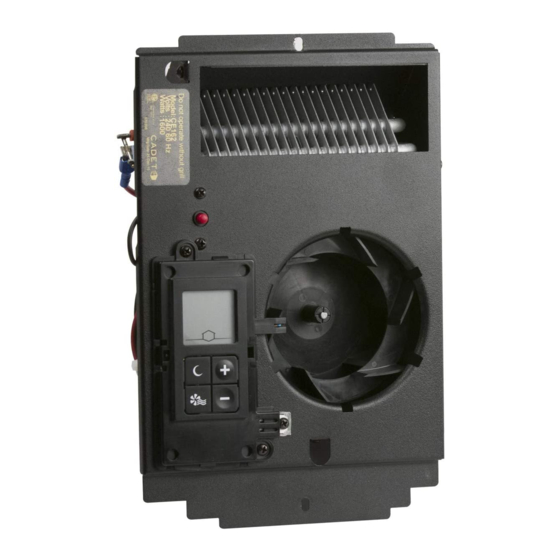
Most models include a thermostat (either built-in or wall-mounted), a fan, a temperature limiter (to prevent overheating), and several safety features. If any part fails, the heater’s performance drops, or it stops working.
Safety Precautions Before Troubleshooting
Working with electric heaters can be risky if you’re not careful. Always follow these safety steps before starting:
- Turn off power at the electrical panel—never trust the wall switch alone.
- Let the heater cool for at least 30 minutes to avoid burns.
- Use insulated tools and wear gloves.
- If you’re unsure about wiring, call a qualified electrician.
Ignoring these steps can lead to electric shock or fire hazards. Safety first, always.
Common Cadet Wall Heater Problems
You might notice different signs when your heater isn’t working right. Here are the main problems and what they mean:
1. Heater Won’t Turn On
If your heater is silent and cold, start with these checks:
- Power supply: Make sure the circuit breaker hasn’t tripped.
- Wall switch: The switch could be faulty or loose.
- Thermostat: If set too low, the heater won’t start.
- Wiring connections: Loose wires inside the heater can stop it from working.
Pro Tip: Sometimes, a breaker trips because of an overloaded circuit, not just a heater fault. If your heater shares a circuit with other high-power devices, move them to another outlet.
2. Heater Blows Cold Air
If the fan runs but the air is cold:
- Heating element may be damaged or disconnected.
- Thermostat could be stuck or broken.
- High-temperature limit switch might be tripped.
Non-obvious Insight: When the high-temperature limiter trips, it often means dust buildup inside the heater—cleaning may solve the issue.
3. Heater Runs Constantly
A heater that never shuts off can overheat your room and raise bills:
- Thermostat malfunction: If the thermostat can’t sense the right temperature, it won’t turn the heater off.
- Stuck relay inside the heater.
- Poor insulation in your room, making the heater work harder.
4. Strange Noises
Squeaking, rattling, or buzzing can mean:
- Fan bearings need lubrication or replacement.
- Loose parts inside the heater.
- Debris caught in the fan.
5. Burning Smell Or Smoke
Stop and turn off your heater immediately if you notice this.
- Dust burning off coils is common after the heater sits unused.
- Wiring issues or overheating can cause stronger smells or visible smoke.
If the smell continues after a few minutes, unplug and call a technician.
6. Heater Turns Off Quickly
If your heater stops soon after starting:
- Overheating protection may be tripping too soon.
- Blocked airflow from furniture or dust.
Practical Example: Placing a chair in front of the heater can cause overheating, making the safety switch turn the unit off.
Basic Troubleshooting Steps
Most Cadet wall heater issues can be solved with a few easy checks. Here’s how to start:
- Check power: Go to your home’s breaker panel. Reset any tripped breakers.
- Test the wall switch: Toggle it a few times; if loose or unresponsive, replace it.
- Adjust the thermostat: Set it higher than room temperature to trigger the heater.
- Inspect for obstructions: Make sure nothing blocks the heater’s front or vents.
- Clean the unit: Dust and dirt can block airflow and cause overheating.
If these steps don’t fix the problem, move on to more specific checks.
Advanced Troubleshooting
Some issues require taking the heater apart or using tools. Only do these if you feel comfortable and the power is off.
Checking The Thermostat
A faulty thermostat is a common reason for heater problems. Here’s how to check:
- Remove the thermostat cover.
- Use a multimeter to test for continuity. If there’s none when you adjust the dial, the thermostat may need replacement.
- For wall-mounted thermostats, check wiring at both the heater and thermostat ends.
Testing The Heating Element
If the fan works but the heater doesn’t warm, test the heating element:
- Turn off power.
- Remove the heater cover and locate the element.
- Use a multimeter to check for continuity. No continuity means the element is broken.
- Replace with a manufacturer-approved part.
Inspecting The High-temperature Limit Switch
This safety part stops the heater from overheating. If your heater turns off too soon or won’t start:
- Find the reset button—usually inside the heater near the coils.
- Press the reset button with a non-metal tool.
- If the heater works again, also check for dust or blocked airflow.
Examining The Fan
Strange noises or poor airflow often mean fan trouble.
- With power off, spin the fan blades by hand. They should move freely.
- Clean away dust and debris.
- If the fan wobbles or grinds, it may need new bearings or replacement.
Non-obvious Insight: Fans can get bent from impact or trapped debris, causing vibration and noise. Gently bend blades back into shape if safe.
Table: Quick Reference For Common Problems And Solutions
Here’s a quick overview to match symptoms with likely causes and fixes.
| Problem | Possible Cause | Suggested Fix |
|---|---|---|
| Heater won’t turn on | No power, faulty switch, loose wiring | Check breaker, replace switch, tighten connections |
| Blows cold air | Broken element, thermostat, limit switch | Test and replace faulty parts |
| Runs constantly | Thermostat or relay stuck | Replace thermostat or relay |
| Strange noises | Fan issue, debris, loose parts | Clean, tighten, lubricate or replace fan |
| Burning smell | Dust, overheating, wiring fault | Clean heater, check wiring, call technician if needed |
How To Clean Your Cadet Wall Heater
Dust is the enemy of electric heaters. Regular cleaning can prevent many problems:
- Turn off power and let the unit cool.
- Remove the front grill—usually a few screws.
- Use a soft brush or vacuum to remove dust from coils and fan.
- Wipe the grill with a damp cloth.
- Reassemble and restore power.
Aim to clean your heater at least once a year, or more if you have pets or live in a dusty area.
When To Replace Parts
Sometimes cleaning and resets aren’t enough. Here’s when you should consider replacing parts:
- Thermostat: If it doesn’t respond, feels loose, or readings are inaccurate.
- Heating element: No heat when the fan runs and element fails continuity test.
- Fan motor: If it’s noisy, doesn’t spin smoothly, or doesn’t move at all.
- Limit switch: If it trips too often or won’t reset.
Always use OEM (original equipment manufacturer) parts to ensure safety and performance.
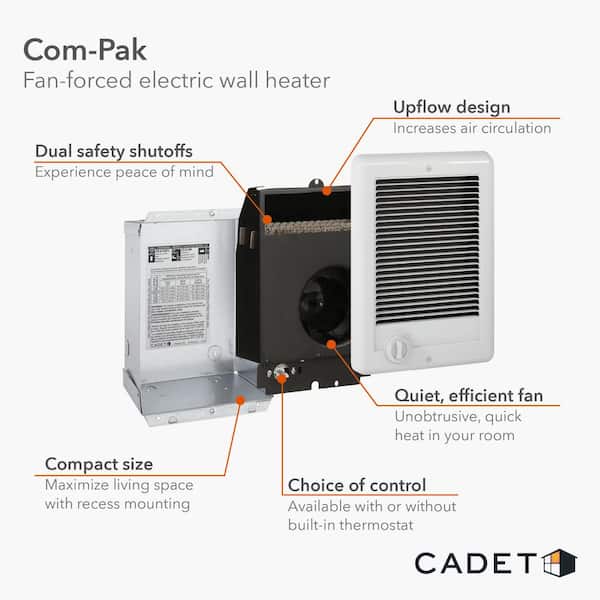
Table: Cost Comparison Of Common Replacement Parts
Knowing what parts cost helps you decide between repair and replacement.
| Part | Average Price (USD) | DIY Difficulty |
|---|---|---|
| Thermostat | $20–$40 | Medium |
| Heating Element | $30–$60 | Medium |
| Fan Motor | $40–$80 | High |
| Limit Switch | $10–$25 | Medium |
Practical Tip: If the repair costs more than half the price of a new unit, consider replacing the whole heater for better efficiency and reliability.
Preventative Maintenance Tips
Regular care reduces breakdowns and saves money:
- Dust and vacuum the heater and its grill often.
- Test the heater at the start of each cold season.
- Never block airflow with furniture, curtains, or rugs.
- Listen for new sounds and investigate quickly.
- Check wiring connections yearly if you’re comfortable doing so.
These steps can add years to your heater’s life and keep it running safely.

Troubleshooting By Model
Not all Cadet wall heaters are the same. Features and fixes can vary:
Cadet Com-pak Series
- Popular in bedrooms and living rooms.
- Often has a reset button for quick fixes.
- If it won’t turn on, check the limit switch and clean the fan.
Cadet Energy Plus
- Includes advanced thermostat and digital controls.
- Problems may be software-based: Try resetting to factory settings.
- If the display is blank, check for tripped GFCI breakers.
Cadet Register Plus
- Larger, for big rooms.
- Needs more airflow: Keep the area very clear.
- If overheating, inspect for blockages and confirm the fan runs at full speed.
Manufacturer Resources: For model-specific manuals and diagrams, visit the official Cadet Heating website.
Table: Model Features And Troubleshooting Ease
If you’re comparing heaters or planning an upgrade, here’s how the main models differ:
| Model | Control Type | Typical Issues | DIY Friendly? |
|---|---|---|---|
| Com-Pak | Manual or Wall Thermostat | Fan noise, limit switch trips | Yes |
| Energy Plus | Digital Thermostat | Display, software glitches | Medium |
| Register Plus | Wall Thermostat | Overheating, airflow blockage | Yes |
When To Call A Professional
DIY troubleshooting helps with many issues, but some problems need expert help:
- Burning smell persists after cleaning.
- Visible sparks or melted wires.
- Frequent breaker trips even after checks.
- No power after resetting everything.
- Repairs that involve the main electrical panel.
A licensed electrician has the right tools, training, and safety knowledge. Don’t risk your safety if you’re uncertain.
Upgrading Your Cadet Wall Heater
If your heater is over 10 years old, consider upgrading. Newer models offer:
- Better energy efficiency (saving up to 20% on power bills)
- Quieter fans and improved airflow
- Smart controls for easier use
Look for heaters with a UL listing for safety and an Energy Star rating for savings. For more details on heater types and standards, check the U.S. Department of Energy.
Frequently Asked Questions
Why Does My Cadet Wall Heater Keep Shutting Off?
Heaters often shut off early because of blocked airflow or a tripped limit switch. Clean the unit and make sure nothing is blocking the vents. If the problem continues, the limit switch or thermostat may need replacement.
Can I Replace Cadet Wall Heater Parts Myself?
Yes, many parts like thermostats, limit switches, and fan motors can be replaced by handy homeowners. Always turn off power first and follow the manufacturer’s instructions. If you’re unsure, hire a pro.
Is It Normal For My Heater To Smell When I First Turn It On?
A slight burning smell is common when dust burns off after long periods of no use. This should last only a few minutes. If the smell is strong, smoky, or doesn’t stop, turn off the heater and check for problems.
What Size Cadet Wall Heater Do I Need For My Room?
The right size depends on your room’s area and insulation. As a general rule, you need 10 watts per square foot. For example, a 150 sq ft room needs a 1,500-watt heater. Always check the manufacturer’s sizing guide.
How Long Do Cadet Wall Heaters Last?
With regular cleaning and maintenance, Cadet wall heaters can last 10–15 years. Older units may be less efficient and should be replaced for better performance and safety.
—
A well-maintained Cadet wall heater can keep your home warm and comfortable for years. Troubleshooting problems is often simple if you follow the right steps and safety precautions. Remember, most heater issues have clear signs and fixes. Routine cleaning and yearly checks are your best defense against breakdowns.
If you ever feel out of your depth, don’t hesitate to call a professional. Stay warm, stay safe, and enjoy the comfort your Cadet heater provides.

