If your garage, warehouse, or workshop gets cold in the winter, a Reznor heater can make all the difference. But like any machine, these heaters sometimes stop working as they should. When that happens, you need solutions fast—especially if freezing temperatures are on the way.
This guide explains how to troubleshoot Reznor heaters step by step, using clear language and practical advice. Whether you have a gas-fired unit heater, a ceiling-mount model, or a compact Reznor, you’ll find help here.

36% off Today’s Exclusive Deals
Limited-time Exclusive Deals. Check current discount on Amazon.
Check Price on Amazon As an Amazon Associate I earn from qualifying purchases.Heater issues can range from minor annoyances to critical failures. Many problems have simple fixes you can do yourself, while others need a technician. Learning how to spot the difference can save time, money, and stress. Let’s look at the most common Reznor heater problems and how you can solve them—even if you’re not a heating expert.
Understanding Your Reznor Heater
Before you start fixing anything, it helps to know what type of Reznor heater you have. Reznor makes several models:
- Gas-fired unit heaters: Popular in garages and shops
- Electric unit heaters: Used where gas isn’t available
- Infrared heaters: Radiant heat for large spaces
Most issues happen with gas-fired models, but the basic troubleshooting steps are similar. You’ll find a model number and serial number on the data plate, usually on the outside or inside of the unit. Write these numbers down—they’ll help if you need to call for support or order parts.
Understanding basic heater parts can also make troubleshooting easier. Key components include:
- Thermostat: Controls temperature
- Ignition system: Starts the heater (can be pilot, spark, or hot surface)
- Gas valve: Controls gas flow
- Fan/blower: Moves heated air
- Limit switches and sensors: Keep the heater safe
Familiarize yourself with your heater’s user manual. If you can’t find it, many are available on the manufacturer’s website.
Safety First: What To Do Before You Start
Working with heaters involves gas, electricity, and heat. Always put safety first:
- Turn off the power at the breaker before opening the unit.
- If your model uses gas, shut off the gas supply.
- Wait for hot parts to cool down.
- Never work alone in case of emergency.
- If you smell gas, leave the area and call your gas provider immediately.
Don’t attempt repairs beyond your skill level. Some jobs, like gas valve replacement, require a licensed technician.
Common Reznor Heater Problems And Solutions
Many heater issues follow a pattern. Here are the most frequent problems, their causes, and what you can do.
1. Heater Won’t Turn On
When you set the thermostat, but nothing happens, check these:
- Power supply: Is the heater plugged in? Is the circuit breaker tripped?
- Thermostat settings: Is it set above room temperature?
- Fuse or wiring: Look for blown fuses or loose wires.
- Gas supply: For gas models, is the valve open?
Example: If your Reznor is dead silent, check the main power switch and breaker first—sometimes the solution is as simple as flipping a switch.
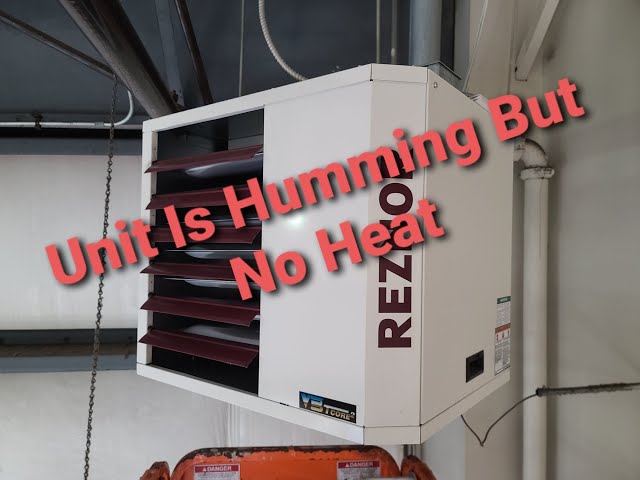
2. Heater Turns On But Doesn’t Heat
If the fan runs but no warm air comes out:
- Ignition failure: The spark or hot surface igniter may be bad.
- Gas valve issue: The valve may be stuck or faulty.
- Dirty burners: Soot or dust can block gas flow.
- Gas pressure: Low supply can prevent ignition.
Start by listening: If you hear clicking but no flame, the igniter is likely trying to start. Inspect the igniter for cracks or wear. If it looks damaged, it may need replacement.
3. Heater Starts, Then Shuts Off
Heaters that cycle on and off quickly often have safety system problems:
- High limit switch: This sensor shuts off the heater if it gets too hot. Dirty filters or blocked vents can trigger this.
- Flame sensor issue: If the sensor can’t “see” the flame, it will shut down the gas.
- Blocked exhaust: Birds’ nests or debris in the vent can stop airflow.
Clean or replace the air filter, and check for obstructions around the unit and vent pipe. If the flame sensor is dirty, gently clean it with fine steel wool.
4. Fan Runs, But No Heat
If you feel cool air instead of warm:
- Thermostat problem: The heater may be set to “fan only” mode.
- Limit switch stuck: A failed switch might keep the burners off.
- Control board issue: Some units have electronic controls that can fail.
Check the thermostat mode and reset the unit. If that doesn’t help, a technician may need to test the control board.
5. Heater Makes Strange Noises
Unusual sounds can warn you about bigger issues:
- Banging or popping: Usually from expanding metal or dirty burners.
- Squealing: Worn fan belt or motor bearings.
- Clicking: Ignition system trying (and failing) to light.
Clean and inspect the burner area. If the noise comes from the fan, lubricate the motor (if your model allows it), or call for service.
Step-by-step Troubleshooting Guide
Let’s break down troubleshooting into simple steps.
Step 1: Check Power And Thermostat
- Confirm the heater is plugged in and the breaker is on.
- Set the thermostat at least 5°F higher than room temperature.
- Listen for any sound—clicking, blowing, or nothing.
If nothing happens, test the outlet with another device (like a lamp) to rule out electrical problems.
Step 2: Inspect The Gas Supply
For gas heaters:
- Make sure the main gas valve is open.
- If you recently installed or moved the heater, bleed air from the line (follow manual instructions).
- Check other gas appliances—if they work, supply is likely fine.
Step 3: Look For Error Codes
Many modern Reznor heaters have a diagnostic LED or display. It flashes codes to show what’s wrong.
- Count the flashes and check the code chart in your manual.
- Common codes include:
- Single flash: Ignition failure
- Two flashes: Pressure switch fault
- Three flashes: Limit switch open
Non-obvious tip: Some units reset automatically after a few minutes, so let the unit rest before trying again.
Step 4: Examine Filters And Vents
- Remove and inspect the air filter. Clean or replace if dirty.
- Look at intake and exhaust vents—clear any blockages.
- Make sure nothing is blocking airflow around the heater.
Restricted airflow is a common cause of cycling and overheating.
Step 5: Test The Ignition System
- For pilot models: Is the pilot light on? If not, relight following your manual.
- For electronic ignition: Watch for the igniter to glow or spark.
- If the igniter doesn’t work, check for voltage at its connector (requires a multimeter).
Never touch the igniter with bare hands—oil from your skin can cause it to fail.
Step 6: Clean The Flame Sensor
If the heater starts but shuts down within seconds, the flame sensor may be dirty.
- Turn off all power.
- Remove the sensor (usually a small metal rod near the burner).
- Clean gently with fine steel wool.
- Reinstall and restart the heater.
Step 7: Inspect The Control Board
If all else fails, the control board could be faulty.
- Look for visible signs of damage—burn marks, cracked components.
- Some boards have a “test” button—press it to reset.
- If the LED stays off or flashes a “board failure” code, replacement may be needed.
Expert tip: Control boards are sensitive. If you’re not sure, have a technician diagnose the board.
Diagnostic Comparison: Error Codes Vs. Common Problems
Understanding error codes can speed up repairs. Here’s a quick comparison.
| Error Code | Likely Problem | What to Check |
|---|---|---|
| 1 Flash | Ignition failure | Igniter, gas valve, flame sensor |
| 2 Flashes | Pressure switch fault | Blocked vent, pressure switch tube |
| 3 Flashes | Limit switch open | Air filter, vent, overheating |
| 4 Flashes | Rollout switch open | Burner area, vent blockage |
Always match the code to your specific Reznor model, as codes can differ.
When To Call A Professional
Some heater problems are best left to experts. Call a licensed technician if:
- You smell gas or suspect a leak
- You see burned wires or scorched components
- The control board is damaged
- You can’t relight the pilot after several tries
- The heater still won’t work after basic troubleshooting
Annual professional service is also a good idea, especially before winter.
Preventive Maintenance For Reznor Heaters
Regular maintenance reduces breakdowns and extends your heater’s life. Here’s what you should do:
- Clean or replace air filters every 1–3 months.
- Inspect burners and flame sensor every season.
- Check the vent pipe for blockages, nests, or corrosion.
- Wipe down the exterior to remove dust and debris.
- Lubricate the fan motor (if required, see your manual).
- Test the thermostat for accuracy.
A little time spent on maintenance can prevent costly repairs later.
Comparing Reznor Models: Troubleshooting Differences
Some troubleshooting steps depend on your Reznor model. Here’s a quick comparison.
| Model Type | Common Issues | Special Notes |
|---|---|---|
| Gas-fired unit | Pilot outages, ignition failures, vent blockages | Check gas supply and ignition sequence first |
| Electric unit | No heat, tripped breaker, fan issues | Inspect fuses, wiring, and thermostat |
| Infrared heater | Uneven heat, reflector dirt | Clean reflectors and sensors regularly |
Non-obvious insight: Electric and infrared models don’t have gas valves or pilot lights. Their main problems are usually electrical.
Key Tools For Troubleshooting
Having the right tools makes the job safer and easier:
- Screwdriver set (Phillips and flathead)
- Adjustable wrench
- Multimeter (for electrical testing)
- Fine steel wool (for cleaning sensors)
- Flashlight or headlamp
- Vacuum cleaner (for dust and debris)
Pro tip: Always keep your heater manual and a list of error codes nearby. Snap a picture of the wiring before disconnecting anything.
Heater Reset Procedures
Many modern Reznor heaters can be reset after a fault:
- Turn off the power at the breaker.
- Wait 30 seconds.
- Turn the power back on.
- Set the thermostat to “heat.”
If the heater doesn’t restart, check for error codes. Don’t reset more than twice in a row—persistent faults need a deeper look.
Troubleshooting Short Cycling
Short cycling means the heater starts and stops quickly, sometimes every few minutes. This wastes energy and causes wear.
Common causes:
- Dirty air filter: Most frequent cause.
- Blocked vent: Restricts airflow.
- Oversized heater: Heats space too fast, then shuts off.
Replace the filter, clear the vent, and make sure the thermostat is away from heat sources. If you suspect the heater is too large for the space, consult a technician.
Troubleshooting Gas Odors
Smelling gas is always serious. Steps to take:
- Evacuate the area immediately.
- Don’t use light switches, phones, or anything that could spark.
- Shut off the main gas valve if safe.
- Call your gas provider or fire department.
Never try to fix a gas leak yourself.

Real-world Examples
Case 1: A shop owner noticed their Reznor heater was blowing cool air. They checked the thermostat, which was fine, then found the air filter was completely clogged. After replacing it, heat returned within minutes.
Case 2: In a warehouse, the heater kept shutting off after ten seconds. The owner cleaned the flame sensor, and the unit began operating normally again.
Case 3: A garage Reznor made loud banging noises. The cause? A bird’s nest in the vent pipe. Removing the debris solved the problem and improved heater efficiency.
Sourcing Parts And Manuals
If you need replacement parts or your manual, visit the official Reznor site or authorized distributors. Always use genuine parts—off-brand components can cause more problems.
A good resource for parts and technical documents is the Nortek Reznor official site.
Energy Efficiency And Cost Tips
Want to save money and keep your Reznor heater running better?
- Set the thermostat as low as comfort allows—each degree can save 2–3% on energy bills.
- Seal doors and windows to reduce heat loss.
- Service your heater yearly to keep efficiency high.
- Consider upgrading to a newer, more efficient Reznor model if yours is over 15 years old.
Frequently Asked Questions
What Should I Do If My Reznor Heater Shows A Blinking Error Code?
Look up the blinking pattern in your manual or the code chart on the unit. Most codes tell you exactly what’s wrong, such as ignition failure or blocked vent. Fix the basic issue if you can, or call a technician for complex problems.
How Often Should I Clean The Flame Sensor On My Reznor Heater?
Clean the flame sensor at least once each heating season, or any time the heater starts and stops quickly. Use fine steel wool and avoid touching it with your fingers.
My Reznor Heater Is Making A Loud Popping Noise. Is This Dangerous?
Popping sounds are usually caused by expanding metal or dirty burners. While not usually dangerous, they indicate the need for cleaning. Ignoring the noise can lead to more serious issues over time.
Why Does My Reznor Heater Keep Shutting Off After A Few Seconds?
This is often a sign of a dirty or faulty flame sensor, or a blocked vent. Clean the sensor and check the vent for obstructions. If the issue continues, call a professional.
Where Can I Find Genuine Replacement Parts For My Reznor Heater?
The best sources are the official Reznor website and authorized distributors. Avoid generic parts from unknown sellers—they may not fit or work properly.
Reliable heat is essential for comfort and productivity. By following these troubleshooting steps, you can solve many Reznor heater problems yourself and know when to call for expert help. With regular care, your heater will keep your space warm for years to come.