

Power Gear Leveling System Troubleshooting restores your RV’s level with clear diagnostics and simple fixes.
I have spent years working on RV systems and teaching owners how to diagnose and fix leveling problems. This guide breaks down Power Gear Leveling System Troubleshooting into clear steps, common causes, and real-world tips. You will learn how the system works, how to find the real fault, and how to fix or prevent it. Read on for a practical, experience-based plan you can use today.

36% off Today’s Exclusive Deals
Limited-time Exclusive Deals. Check current discount on Amazon.
Check Price on Amazon As an Amazon Associate I earn from qualifying purchases.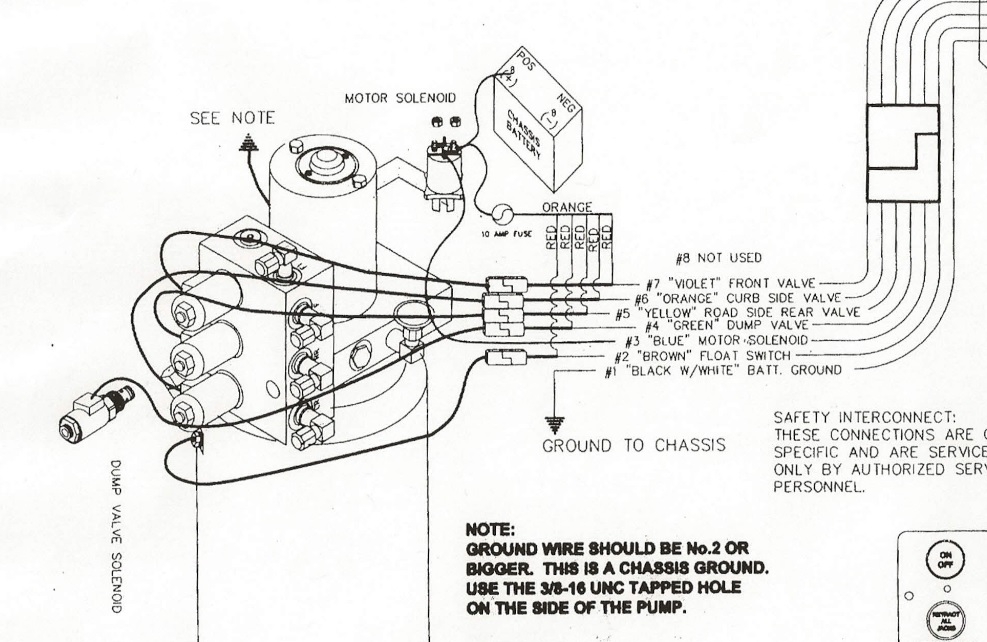
How Power Gear leveling systems work
Power Gear leveling systems use electric motors, pumps, valves, jacks, switches, and a controller to level an RV. The system senses position and moves jacks up or down until sensors report a level state. Most modern units use a central control board and hydraulic or electric actuators. Understanding this simple flow makes Power Gear Leveling System Troubleshooting easier and faster.
Common problems and causes
Below are frequent faults you will see when doing Power Gear Leveling System Troubleshooting.
- System will not power on
- Blown fuse, bad battery, or loose battery cable.
- Jacks move slowly or unevenly
- Low battery, weak motor, or fluid issues in hydraulic systems.
- One or more jacks do not extend or retract
- Faulty motor, seized jack, bad solenoid, or wiring break.
- System cycles or beeps and won’t finish
- Faulty sensors, bad control board, or calibration error.
- Level reads incorrect or “not level”
- Bad level sensor, loose mounting, or software glitch.
- Leaks in hydraulic systems
- Worn seals, cracked lines, or loose fittings.
Power Gear Leveling System Troubleshooting starts with these checks. Knowing these causes helps you focus your inspection.

Troubleshooting checklist — quick steps to find the fault
Follow this checklist from safe to more invasive checks for effective Power Gear Leveling System Troubleshooting.
- Visual and safety check
- Park on firm level ground and chock wheels. Turn off power and remove keys.
- Battery and power
- Check battery voltage and connections. Replace or charge battery if below 12.4V.
- Fuses and relays
- Inspect system fuses and relays. Replace any blown fuse with the same rating.
- Control panel and error codes
- Read any error codes or messages. Note them for reference.
- Listen and observe
- Run the system and listen for motor noise, clicking relays, or whining pumps.
- Inspect wiring and grounds
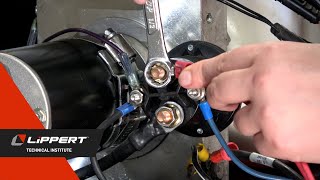
- Look for loose connectors, corroded terminals, or broken wires.
- Test individual jacks
- Manually operate one jack at a time if possible to isolate a bad motor or jack.
- Hydraulic checks (if applicable)
- Look for leaks, low fluid, or damaged lines.
- Sensor and switch test
- Test limit switches and position sensors for continuity and proper function.
- Control board and modules
- If everything else checks out, suspect the control board or software fault.
People also ask
- What is the first thing to check when troubleshooting?
- Start with battery voltage and fuses. Many issues trace to power problems.
- How do I read Power Gear error codes?
- Note the code on the control panel and refer to the manual or code table in your RV guide.
- Can I operate the leveling system manually?
- Yes, many systems have manual override or manual pump procedures in the owner’s manual.
Power Gear Leveling System Troubleshooting becomes much faster if you follow this checklist in order.

Step-by-step diagnostic guide for common failures
Use these step-by-step diagnostics for the top three issues: no power, uneven leveling, and stuck jacks.
No power to the system
- Confirm battery voltage at the battery. Less than 12 volts needs charging.
- Check the main fuse and any inline fuses at the controller. Replace as needed.
- Verify key switch or ignition power feed to the control module.
- Measure voltage at the control board input when you press the panel button.
Uneven or slow leveling
- Test battery health and charge level first.
- Run the leveling cycle and listen for weak motors or motors that don’t run.
- Swap motor outputs if possible to see if the problem follows the motor or stays with the jack.
- Check hydraulic fluid level and look for air or leaks in the lines.
One or more jacks won’t move
- Inspect external damage to the jack and clean the area.
- Manually extend or retract if the system allows, to free a stuck jack.
- Check the motor for continuity and proper ground.
- Replace the jack motor or solenoid if tests fail.
Safety tips during Power Gear Leveling System Troubleshooting
- Always chock wheels and secure the vehicle before working near jacks.
- Use insulated tools when testing electrical parts.
- Do not crawl under the RV while jacks are not locked or secured.
Tools, parts, and testing gear you should have
Keep these tools and parts on hand to make Power Gear Leveling System Troubleshooting smoother.
- Basic tools
- Screwdrivers, socket set, pliers, wire cutters, and insulated wrenches.
- Electrical testers
- Multimeter, test light, and a set of jumper leads.
- Replacement parts
- Fuses, relays, jack motors, solenoids, and terminals.
- Hydraulic supplies
- Hydraulic fluid, seals, line clamps, and thread sealant.
- Safety gear
- Gloves, eye protection, and chocks.
Buying tips
- Use OEM parts for control boards and motors when possible.
- Keep spare fuses and connectors in your RV for quick fixes.

Preventive maintenance and best practices
Simple maintenance reduces the need for Power Gear Leveling System Troubleshooting.
- Inspect and clean electrical connections every 6 months.
- Test battery and charge cycle before long trips.
- Grease pivot points and threads on jacks annually.
- Check hydraulic fluid levels and inspect hoses for wear.
- Run a full leveling cycle periodically to keep parts active.
- Store in a way that prevents moisture from corroding connectors.
These steps extend the life of the system and prevent roadside breakdowns.
Personal experience, mistakes to avoid, and tips that work
I once diagnosed a seemingly bad motor that only failed under load. I found a poor ground and a corroded terminal. Cleaning and tightening fixed it. From that job I learned to never skip the ground check. Here are a few lessons I share with RV owners.
- Always check battery health first. Many trips start with a weak battery.
- Don’t replace a control board until you test motors and wiring. Boards are expensive.
- Keep a small troubleshooting kit in the RV with fuses, a multimeter, and basic tools.
- When stuck on the road, call for a tow rather than forcing a repair that could cause injury.
These practical tips saved me time and money, and they will help you too when doing Power Gear Leveling System Troubleshooting.
Frequently Asked Questions of Power Gear Leveling System Troubleshooting
Why won't my Power Gear leveling system turn on?
Check the battery voltage, main fuse, and key power feed. The most common cause is low battery or a blown fuse.
What causes one jack to lag behind the others?
A lagging jack often has a weak motor, bad solenoid, or mechanical bind. Inspect wiring and test the motor separately.
How can I tell if the control board is bad?
Rule out power, fuses, motors, and wiring first. If all other parts test good and error codes persist, the control board may be faulty.
Is it safe to manually operate the jacks?
Many systems allow manual operation, but follow the manual and use wheel chocks. Manual work still requires care to avoid injury.
How often should I service the leveling system?
Perform basic checks every six months and a full service annually. Regular maintenance reduces failures and major repairs.
Conclusion
Power Gear Leveling System Troubleshooting is mostly a process of careful checks, simple tests, and smart swaps. Start with power and battery checks, move through fuses and wiring, and test motors and sensors in logical order. Use the preventive steps and tools listed here to avoid common failures. Try these steps on your RV, keep a basic parts kit, and share your results or questions below to get more help.

