

Most electric golf cart problems come from batteries, connections, or controller issues.
I write about Electric Golf Cart Troubleshooting from years of hands-on work with clubs and fleets. I help owners find faults fast and fix them safely. This guide covers symptoms, step-by-step checks, battery care, electrical tests, mechanical fixes, tools to carry, and real examples. Read on to learn how to spot issues, save money, and keep your cart reliable.

36% off Today’s Exclusive Deals
Limited-time Exclusive Deals. Check current discount on Amazon.
Check Price on Amazon As an Amazon Associate I earn from qualifying purchases.
Common Symptoms and What They Mean
Electric golf cart troubleshooting starts with symptoms. Note what the cart does and when. This lets you narrow the cause fast.
Common symptoms and likely causes:
- Cart won’t move: Battery charge low, loose cable, or faulty controller.
- Weak range or slow speed: Bad battery cells or poor battery maintenance.
- No lights or accessories: Blown fuse, bad key switch, or poor ground.
- Intermittent power loss: Loose connector, corroded terminal, or overheating controller.
- Strange sounds or burning smell: Worn motor, stuck brake, or electrical short.
How to observe symptoms:
- Check performance while the cart is cold and after a drive.
- Listen for clicks, hums, or grinding.
- Smell for burning plastics or hot metal.
- Note when the problem started and any recent work.
Electric golf cart troubleshooting often hinges on careful observation. Small clues point to major fixes.

Step-by-Step Troubleshooting Checklist
A clear checklist speeds up Electric Golf Cart Troubleshooting. Follow steps in order. Stop if you find the fault.
Basic checklist:
- Safety first: Turn key off, set parking brake, and remove power when needed.
- Visual inspection: Look for loose wires, corrosion, and damaged parts.
- Battery check: Verify voltage and specific gravity if you can.
- Connections check: Tighten terminals and clean corrosion.
- Fuses and switches: Test fuses, key switch, and solenoid.
- Drive test: Run the cart slowly and watch for symptoms.
- Component isolation: Disconnect accessories to find the bad circuit.
Use a multimeter for simple tests:
- Measure battery bank voltage with key off.
- Measure voltage at controller with key on.
- Check for voltage drop during a load test.
- Test continuity on switches and fuses.
This checklist keeps Electric Golf Cart Troubleshooting tidy and repeatable. Follow it each time you diagnose a problem.
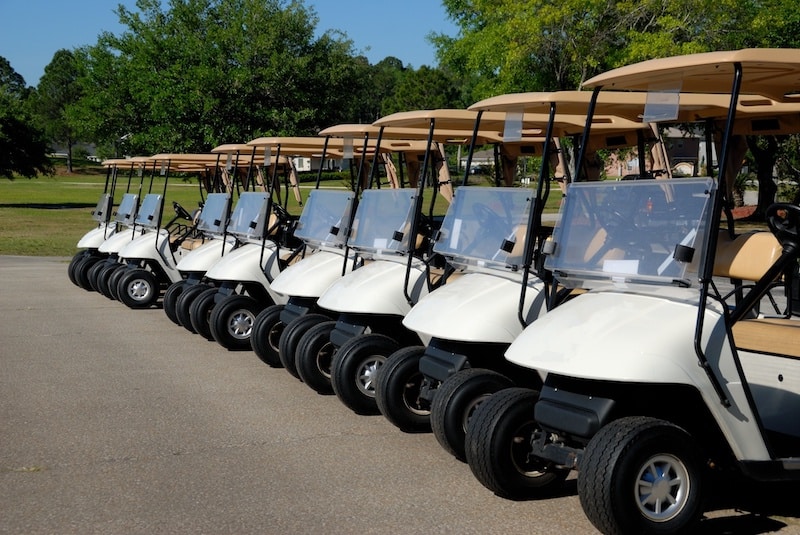
Battery Problems and Solutions
Most Electric Golf Cart Troubleshooting revolves around batteries. Batteries give the cart energy. They fail slowly and then suddenly.
Common battery issues:
- Low state of charge: Batteries not charged fully or charger fault.
- Sulfation: Lead plates covered in crystals from being left discharged.
- Bad cell: One weak battery lowers the whole pack performance.
- Corrosion: Reduced contact and higher resistance at terminals.
Battery troubleshooting steps:
- Inspect cases for cracks and leaks.
- Measure open-circuit voltage across the entire bank.
- Load test each battery under a known load for a brief time.
- Check specific gravity on flooded lead-acid cells.
- Clean terminals with baking soda solution and a brush.
Battery solutions:
- Replace any battery that fails a load test or has very low specific gravity.
- Equalize charge flooded batteries periodically per manufacturer specs.
- Use a smart charger and follow a charging schedule.
- Store the cart on a full charge and top up monthly in winter.
I once drove a fleet where a single bad battery halved range. Replacing that one cell restored normal range. Simple battery checks save big on repair bills.

Motor, Controller, and Electrical System Issues
After batteries, the motor and controller are next in Electric Golf Cart Troubleshooting. These parts control speed and torque.
Signs of motor or controller trouble:
- No movement but batteries are good: Bad controller or solenoid.
- Jerky movement: Controller calibration, brushes, or motor windings.
- Overheating controller: Restricted airflow or heavy load.
- No accessories when key on: Faulty main contactor or key switch.
How to test motor and controller:
- Verify battery bank voltage reaches the controller.
- Check the controller LED codes or error lights.
- Listen for relay clicks when turning the key.
- Inspect controller cooling fins and clean dust.
- Test motor brushes and commutator if the motor is serviceable.
Common fixes:
- Tighten and clean power connections.
- Replace worn motor brushes or rebuild the motor.
- Replace or reprogram the controller if it shows fault codes.
- Replace the solenoid or contactor when it fails to switch current.
When I replaced a worn solenoid for a neighbor, the cart regained full power. The parts were cheap and the fix was simple.

Brakes, Steering, and Mechanical Troubleshooting
Mechanical issues can mimic electrical faults. A cart that sounds like it has no power may have a dragging brake or seized bearing.
Key checks:
- Brake drag: Lift the wheels and spin them. Wheels should spin freely.
- Wheel bearings: Listen for rumble and check side play.
- Steering play: Inspect tie rods and steering box for looseness.
- Tire condition and pressure: Low pressure reduces range and performance.
Maintenance tips:
- Adjust parking brake and lubricate linkages.
- Replace worn brake pads or shoes promptly.
- Grease fittings and pivot points per schedule.
- Keep tires inflated to the recommended psi.
A stuck parking brake once made a cart slow and hot. Fixing the brake freed the wheels and saved the motor from stress. These steps are core to Electric Golf Cart Troubleshooting.

Preventive Maintenance and Best Practices
Preventive care reduces the need for Electric Golf Cart Troubleshooting. A little regular work avoids big problems.
Routine maintenance schedule:
- Weekly: Check battery water levels and clean terminals.
- Monthly: Charge fully and inspect for loose bolts.
- Quarterly: Load test batteries and inspect the controller.
- Yearly: Service motor, replace worn mechanical parts, and inspect wiring harness.
Practical tips:
- Use a smart charger and avoid trickle chargers that overcharge.
- Park on a flat surface and store indoors when possible.
- Keep a maintenance log for dates, voltage readings, and parts replaced.
- Train users on safe charging and operation habits.
These small habits will keep your cart healthy and lower repair bills. Preventive care is the best form of Electric Golf Cart Troubleshooting.

Tools and Diagnostic Gear to Keep on Hand
Good tools speed up Electric Golf Cart Troubleshooting. Pack a small kit for common jobs.
Essential tools:
- Multimeter for voltage and continuity checks.
- Hydrometer for flooded batteries or a battery analyzer.
- Socket set and wrenches for terminal and bolt work.
- Wire brush and terminal cleaner for corrosion.
- Insulated gloves and safety glasses for protection.
Nice-to-have items:
- Infrared thermometer to find hot spots.
- Battery load tester for quick load checks.
- Replacement fuses, connectors, and basic wiring spares.
- Small charger to top off a weak battery for testing.
I carry a small kit in my truck. It saved a club day once when a loose cable ended play. Quick fixes get your cart back on the path fast.
Real-Life Stories and Lessons Learned
I’ve fixed many carts over the past decade. These stories teach clear lessons.
A common scenario:
- A customer said the cart lost range suddenly.
- I measured the pack voltage and found one battery far lower.
- Replacing that battery restored normal operation.
Lesson: One bad battery ruins the whole pack.
Another case:
- A cart died only when accessories were on.
- Loose ground connections were the culprit.
- Tightening grounds fixed the issue.
Lesson: Always check grounds early in Electric Golf Cart Troubleshooting.
Personal rule:
- Do the simple checks first. They often solve the problem.
- Keep records. Trends help find slow failures before they stop you.
These experiences shaped my troubleshooting approach. They make repairs faster and more confident.
Frequently Asked Questions of Electric Golf Cart Troubleshooting
How do I know if my batteries are bad?
Check voltage and perform a load test. If one battery is much weaker than the others, it likely needs replacement.
Why does my cart die under heavy load?
Heavy load reveals weak batteries or overheating controllers. Test battery pack voltage while under load to find the weak link.
Can I jump-start an electric golf cart?
You can temporarily boost a low battery for a short test, but jump-starting is not recommended as a long-term fix. Use a proper charger instead.
How often should I charge my golf cart batteries?
Charge after every use when possible. At minimum, charge fully once a week if the cart sits unused.
What causes the controller to fail?
Controllers fail from water damage, heat, or short circuits. Regular cleaning and cooling prevent many controller failures.
Is it OK to mix old and new batteries?
Mixing old and new batteries reduces overall performance and shortens life. Replace all batteries in the pack when possible.
Conclusion
Electric Golf Cart Troubleshooting becomes simple with a clear plan. Start with safety, check batteries, inspect connections, and follow a step-by-step checklist. Regular maintenance and the right tools prevent most failures. Take action today: run a battery check, tighten terminals, and keep a basic tool kit on hand. Share your results or ask questions below to get tailored advice.

