

Most 36 volt golf cart charger issues are fixable with basic checks and a multimeter.
I repair and test dozens of golf cart chargers each year. In this guide I walk you through clear, safe, and proven steps for 36 Volt Golf Cart Charger Troubleshooting. You will learn how these chargers work, how to spot common problems, how to test both charger and battery, and when to repair or replace parts. My tips come from hands-on experience and industry best practices so you can fix problems faster and ride with confidence.

36% off Today’s Exclusive Deals
Limited-time Exclusive Deals. Check current discount on Amazon.
Check Price on Amazon As an Amazon Associate I earn from qualifying purchases.
How a 36 Volt Golf Cart Charger Works
A 36 Volt golf cart charger converts AC house power to DC and charges the 36V battery pack. It controls charge voltage and current. It often uses stages: bulk, absorption, and float to protect battery life. Smart chargers monitor battery voltage, temperature, and time. Fault lights or error codes warn you when something goes wrong. Knowing this flow helps you spot whether the charger, wiring, or batteries are at fault.

Common Issues with 36 Volt Golf Cart Chargers
Here are the problems I see most often with 36 Volt Golf Cart Charger Troubleshooting.
- No power at the charger. The charger shows no lights or response when plugged in.
- Charger powers on but will not charge. LEDs may show an error or the charger stops early.
- Slow charging or partial charge. The pack never reaches full voltage.
- Charger trips breakers or blows fuses. There may be a short or high current draw.
- Overheating or burning smell. This can signal internal failure or blocked vents.
- Fault LEDs or error codes. These point to specific issues like temperature or battery mismatch.
Each symptom has a set of likely causes. In later sections I give step-by-step checks and tests to isolate the root cause.

Step-by-Step 36 Volt Golf Cart Charger Troubleshooting Guide
Follow these steps in order. Keep everything simple and safe.
-
Safety first
- Wear safety glasses and gloves.
- Turn the charger off and disconnect from AC before touching wiring.
- Work in a dry, ventilated area.
-
Visual inspection
- Check the charger case for damage, cracks, or heavy rust.
- Inspect cable ends, connectors, and grommets for wear or corrosion.
- Look for blown fuses or tripped breakers.
-
Check AC power
- Plug another device into the same outlet to confirm power.
- Test the outlet with a simple voltage tester or multimeter.
-
Examine charger indicators
- Note LED color and flash pattern when plugged in.
- Consult the charger label for basic code meanings if available.
-
Measure charger output
- With the charger on, set a multimeter to DC volts.
- Carefully measure voltage at the charger output leads. A healthy 36V charger will show charging voltage near 40–42V for lead-acid packs.
-
Test batteries
- Measure each battery or each series group. Healthy resting voltage for a 36V lead-acid pack is typically 40.5–42V after a full charge; individual six-volt batteries will read about 6.7–6.8V fully charged.
- Look for one weak battery dragging the whole pack down.
-
Load test if needed
- Use a battery load tester or perform a short drive test. If voltage collapses under load, that battery needs repair or replacement.
-
Check connections and polarity
- Tighten loose terminal bolts and clean corrosion.
- Confirm correct polarity on connectors. Reverse polarity can damage smart chargers.
-
Reset or replace charger fuse or thermistor
- Some chargers have replaceable fuses or temperature sensors. Replace per manufacturer specs.
-
When to call a pro
- Internal charger smell, burnt components, or failed power supplies should be handled by a qualified technician.
I find that half the time a loose connector or a single weak battery causes charging errors. Start simple and work methodically.

People also ask
Q: Why does my 36 Volt golf cart charger not turn on?
A: Often the outlet, a tripped breaker, or a blown internal fuse is at fault. Check outlet power first, then the charger fuse.
Q: Can a single bad battery stop the charger?
A: Yes. A weak battery in a series pack can prevent the pack from reaching proper voltage and confuse the charger.
Q: Is it safe to use a car charger on a 36V golf cart?
A: No. Car chargers provide different voltages and safety limits and can damage the battery pack.

Tools and Tests for 36 Volt Golf Cart Charger Troubleshooting
The right tools make troubleshooting quick and safe.
- Multimeter
- Measure AC input and DC output. Check battery voltages.
- Clamp meter
- Measure charging current without disconnecting cables.
- Battery hydrometer (for flooded cells)
- Check specific gravity to assess cell health.
- Battery load tester
- Simulate normal load and check voltage collapse.
- Infrared thermometer
- Spot hot spots on charger or batteries.
How to check charger output safely
- Plug charger in and turn it on.
- Set multimeter to DC volts.
- Place black probe on negative output and red on positive output.
- Read voltage. Expect around 40–42V for lead-acid 36V chargers while charging.
How to check battery string quickly
- Turn off charger and let batteries rest for 30 minutes.
- Measure total pack voltage. Resting full pack for lead-acid should be 40.5–42V.
- Measure individual batteries in the string. Any significantly lower battery is suspect.

Common Error Codes and LED Meanings
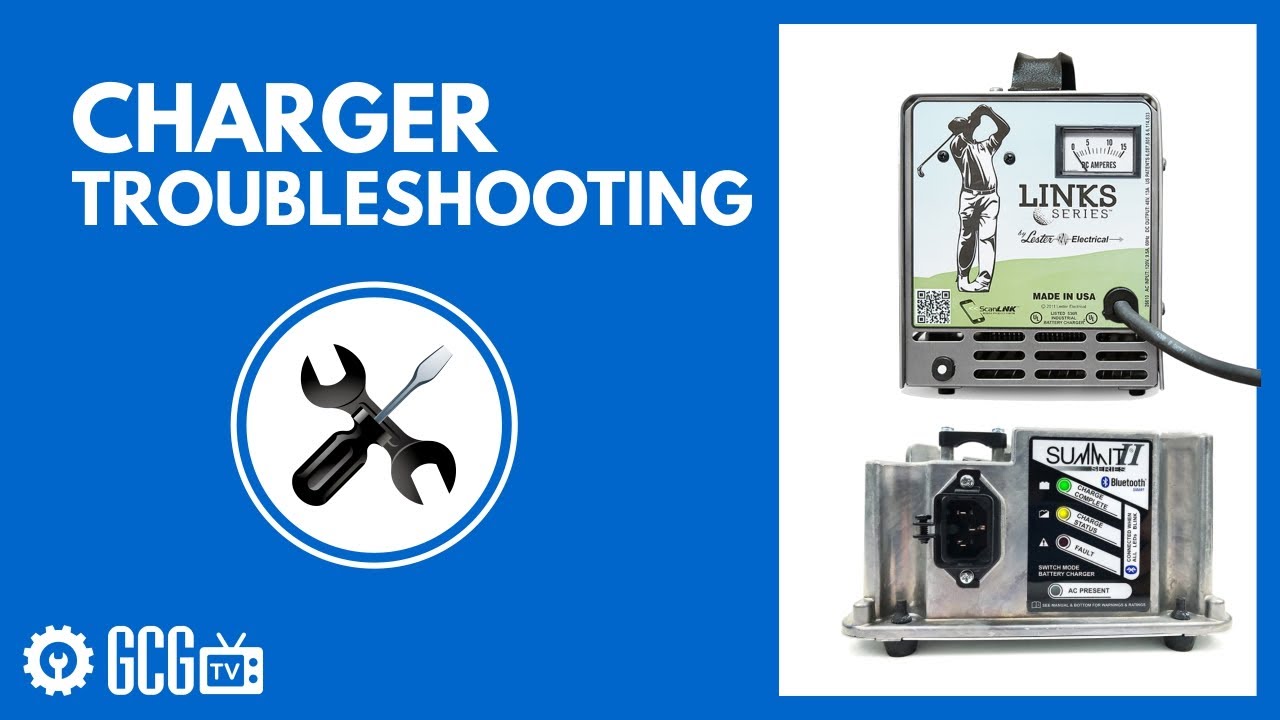
Charger lights vary by model but patterns are similar. Here are common meanings used across many 36 Volt Golf Cart Charger Troubleshooting scenarios.
- Solid green or blue
- Charger idle or float mode; battery is charged.
- Solid red
- Charging in bulk or absorption stage.
- Flashing red or amber
- Fault detected: battery temperature, low voltage, or short.
- Alternating colors or fast flashes
- Protective shutdown. Check wiring and battery pack integrity.
- No light
- No AC input or internal failure.
Always consult your charger manual for exact codes. If the manual is lost, take a photo of the label and search model info online or contact the manufacturer.

When to Repair vs Replace & Safety Tips
Deciding to repair or replace means weighing cost, safety, and reliability.
When to repair
- Replaceable fuses, worn cables, bad connectors, or broken plugs.
- Thermistor or diode pack replacement by a qualified tech.
- Firmware or minor board-level fixes when parts are available.
When to replace
- Burnt or melted case, internal smoke, or fried power supply.
- Charger older than 10 years with multiple failures.
- Cost of repair near or above replacement price.
Safety tips
- Always disconnect AC and main battery before opening the charger.
- Avoid sparks near battery vents. Keep open flames away.
- Use insulated tools and wear eye protection.
- Never bypass safety circuits or use makeshift repairs.

Maintenance and Best Practices to Avoid Charger Problems
Small habits prevent many trips to the shop.
- Keep charger vents clear
- Avoid stacking gear on top of the charger.
- Store charger indoors in dry conditions
- Moisture accelerates corrosion and shorts.
- Clean battery terminals monthly
- Use a baking soda solution and a wire brush for corrosion.
- Cycle and equalize when needed
- Follow battery maker guidelines for periodic equalization.
- Check cables and connectors each season
- Tighten loose lugs and replace frayed wires quickly.
I once found a charger that failed because a vent was blocked by leaves. A quick clean restored normal charging in minutes.
36 Volt Golf Cart Charger Troubleshooting — Personal Notes and Common Mistakes
From years of work, here are real lessons I want to share.
- Mistake: Replacing the charger before testing the battery pack. Fix the pack first.
- Mistake: Assuming LED behavior always means charger failure. Often it’s a battery issue.
- Tip: Keep a simple log of charger behavior and voltages. It helps find intermittent faults.
- Tip: Label each battery and terminal after you test them. You will save time next season.
These small steps cut repeat visits and reduce cost.
Frequently Asked Questions of 36 Volt Golf Cart Charger Troubleshooting
Why does my 36 Volt charger show full but cart runs out of range quickly?
This usually means one or more batteries are weak even though the pack reached voltage. Load testing the pack or checking individual batteries will reveal the weak link.
How long should a full charge take on a 36 Volt golf cart?
Typical charging times are 6 to 12 hours depending on battery state and charger current. Smart chargers may use longer absorption stages to extend battery life.
Can a 36 Volt charger damage lithium batteries?
Yes. Lithium batteries need specific charging profiles and BMS compatibility. Use only chargers and settings designed for your battery chemistry.
What voltage should a fully charged 36V lead-acid pack read?
A fully charged 36V lead-acid pack usually rests around 40.5–42V after charging. Voltage varies with temperature and battery type.
My charger overheats. Is it dangerous to keep using it?
Overheating is a sign of stress and potential failure. Stop use and inspect vents, fans, and load. Continued use risks fire and permanent damage.
Conclusion
You can fix many 36 Volt Golf Cart Charger Troubleshooting issues with simple checks, a multimeter, and a methodical plan. Start with safety, test power and wiring, then isolate charger versus battery faults. Keep regular maintenance habits to avoid most problems. If you find burnt parts or complex board failures, choose a qualified repair or a new unit. Try the steps here, keep notes on each test, and ask for help when needed.
If this guide helped, subscribe for more troubleshooting tips, share your experience in the comments, or reach out with your charger model and symptoms for tailored advice.

