

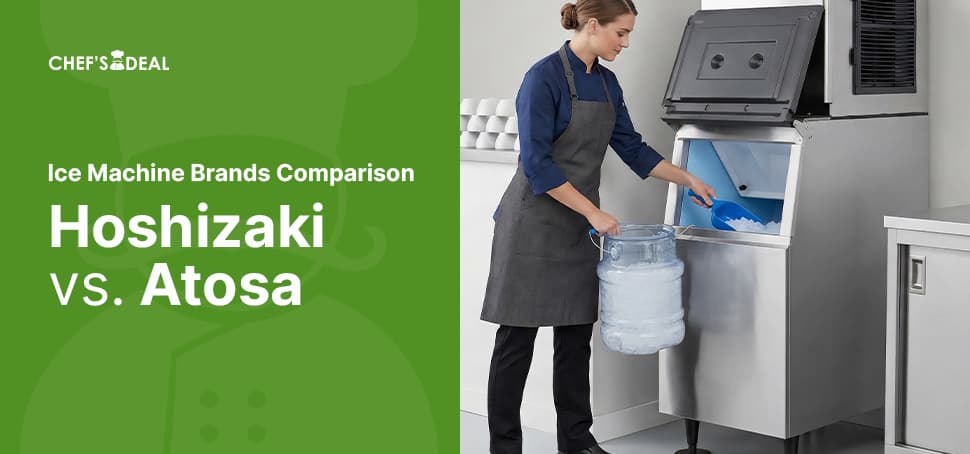
When you need a reliable ice maker for your restaurant, bar, or hotel, the choice often comes down to Atosa and Hoshizaki. These two brands are trusted worldwide, but they are very different in design, performance, and price. Picking the right one can save you money, time, and headaches. If you’re a business owner or manager, this guide will help you understand which brand suits your needs best. You’ll learn about real-world performance, costs, features, and hidden details that most buyers miss.
Atosa And Hoshizaki: Brand Backgrounds
Atosa is known for making affordable, commercial kitchen equipment. The company focuses on simple, practical designs. Their ice makers are popular in small restaurants, cafes, and food trucks. The main appeal of Atosa is its price. Many businesses buy Atosa products because they cost less upfront.

36% off Today’s Exclusive Deals
Limited-time Exclusive Deals. Check current discount on Amazon.
Check Price on Amazon As an Amazon Associate I earn from qualifying purchases.Hoshizaki, on the other hand, is a Japanese brand with a strong reputation for reliability and quality. Their ice machines are used in hotels, hospitals, and high-end restaurants. Hoshizaki is famous for its advanced technology and durable build. Their products often last 10 years or more with proper care.
Knowing these backgrounds helps you see why the brands differ in price, features, and build quality.
Ice Production Capacity: How Much Ice Do You Need?
One of the first questions you should ask: How much ice do you need each day? Both Atosa and Hoshizaki offer machines in several sizes, but their real-world output can be quite different.
| Brand | Model Example | Ice Type | Max Production (lbs/24hr) | Storage Capacity (lbs) |
|---|---|---|---|---|
| Atosa | CY-300 | Cubed | 300 | 180 |
| Hoshizaki | KM-350MAJ | Crescent | 350 | 200 |
| Atosa | YB-450 | Flake | 450 | 210 |
| Hoshizaki | F-450MAJ | Flake | 450 | 220 |
Hoshizaki machines often produce more ice per day than similar-sized Atosa units. For example, the KM-350MAJ makes up to 350 lbs of ice, while the Atosa CY-300 makes 300 lbs. This difference matters if your business has rush hours or special events.
Non-obvious tip: Ice makers rarely deliver their maximum rated output in real conditions. Temperature, water quality, and ventilation affect performance. Hoshizaki’s machines typically come closer to their rated output because of their advanced cooling systems.
Types Of Ice: Cube, Flake, Nugget, Crescent
The type of ice is more important than many buyers realize. Different ice shapes serve different purposes—some are best for drinks, others for food displays or healthcare.
| Ice Type | Atosa Models | Hoshizaki Models | Best Uses |
|---|---|---|---|
| Cubed | CY-300, CY-500 | IM-500S, IM-600S | Soft drinks, cocktails |
| Flake | YB-450 | F-450MAJ | Food displays, seafood |
| Crescent | — | KM-350MAJ, KM-500MAJ | Mixed drinks, restaurants |
| Nugget | — | Hoshizaki DCM Series | Healthcare, smoothies |
Atosa mostly offers cubed and flaked ice machines. Hoshizaki covers more types, including crescent and nugget. Crescent ice melts slower and packs well in glasses. Nugget ice is soft, chewable, and ideal for hospitals.
Hidden insight: If your menu includes blended drinks or smoothies, Hoshizaki’s nugget ice models are a better fit. Atosa does not currently offer nugget ice machines.
Build Quality And Durability
Build quality is where these brands are most different. Atosa machines use stainless steel for the main body but often have plastic parts inside. Hoshizaki uses higher-grade stainless steel and fewer plastic components. The difference shows after a few years.
Hoshizaki machines are known for lasting 8–12 years with regular maintenance. Their parts are designed for heavy use, and the evaporators (the part that makes ice) are usually stainless steel. Atosa machines have a shorter average lifespan—about 5–7 years—and their evaporators are sometimes copper or nickel-coated.
Key detail: Hoshizaki ice makers are less likely to have leaks or corrosion issues. Atosa machines may need repairs sooner, especially in humid kitchens.
Price And Total Cost Of Ownership
Atosa ice makers cost less upfront. For example, a typical Atosa 300 lb cubed ice maker sells for around $1,800–$2,200. A similar Hoshizaki model can cost $3,000–$4,000. This price gap is huge, but it’s not the whole story.
Total cost of ownership includes repairs, parts, energy use, and downtime. Hoshizaki machines have fewer breakdowns and use less energy, so they cost less to run over time.
Example: An Atosa ice maker may require a $400 repair after 3 years. Hoshizaki machines often run 5–6 years before any major service. Hoshizaki’s warranty also covers parts for longer (sometimes up to 5 years).
Non-obvious tip: If you plan to keep your machine for more than 6 years, Hoshizaki’s higher price can pay for itself through lower maintenance and energy bills.
Ease Of Use And Maintenance
Both brands aim for simple operation, but the experience is not equal. Atosa machines usually have basic controls—on/off switches, simple indicator lights, and manual cleaning cycles. Hoshizaki models come with smarter controls, error codes, and automatic cleaning reminders.
Atosa: Simple, manual cleaning required every few weeks. Some models lack detailed error codes, so troubleshooting can be harder.
Hoshizaki: Automatic cleaning reminders, detailed error codes on a display, and easier access to internal parts. Cleaning the evaporator is easier because it’s stainless steel.
Practical advice: If your staff is not highly trained, Hoshizaki’s error codes and reminders save time and prevent mistakes. Atosa requires more manual checks.
Energy Efficiency And Water Usage
Energy costs can add up, especially in busy kitchens. Hoshizaki machines are famous for their energy efficiency. Many are Energy Star certified. Atosa machines are improving, but most models use more power and water per pound of ice.
Energy Use Comparison
| Brand | Model | Energy Use (kWh/100 lbs) | Water Use (gal/100 lbs) |
|---|---|---|---|
| Atosa | CY-300 | 7.5 | 25 |
| Hoshizaki | KM-350MAJ | 6.0 | 18 |
Hoshizaki’s KM-350MAJ uses 20% less energy and nearly 30% less water than Atosa’s CY-300. Over a year, this can save hundreds of dollars.
Non-obvious insight: In cities where water is expensive, Hoshizaki’s lower water use makes a big difference in your monthly bill.
Installation And Space Requirements
Both brands offer undercounter and freestanding models. Atosa machines are usually smaller and lighter, making them easier to fit in tight spaces. Hoshizaki machines are a bit larger, but the extra size allows for better insulation and cooling.
Atosa: Easier to move and install in small kitchens or food trucks. Weight ranges from 120–180 lbs.
Hoshizaki: Heavier (150–250 lbs), but designed for permanent installation. Many models need extra space for ventilation.
Tip: Measure your available space before buying. Hoshizaki units need more clearance around them for airflow.
Reliability And Service Support
Reliability is a big reason people pay more for Hoshizaki. Their machines are tested for thousands of hours and rarely break down. Atosa machines are good, but not as consistent. Service support also differs.
Atosa: Basic warranty (usually 2 years). Service centers are found in most large cities, but parts may be slower to arrive.
Hoshizaki: Longer warranty (3–5 years). Service centers are widespread, and parts are easy to find. Some models include free maintenance checks in the first year.
Hidden insight: Hoshizaki’s service network is better organized. If your business relies on ice every day, fast repairs can prevent loss of income.
Noise Levels And Working Environment
Ice makers make noise, but not all machines are equal. Atosa machines run louder, often reaching 55–60 decibels. Hoshizaki machines are quieter, averaging 48–52 decibels.
Example: In a quiet bar, Atosa machines can be distracting. Hoshizaki machines are designed for front-of-house use—noise is reduced with insulated panels and better motors.
Tip: If you need an ice maker for customer-facing areas, Hoshizaki is the safer choice.
Common Buyer Mistakes
Many first-time buyers make mistakes when choosing between Atosa and Hoshizaki. Here are the most common:
- Choosing based only on price. Atosa is cheaper, but Hoshizaki saves money long-term.
- Ignoring ice type. Not all machines make the same shape—this affects drink quality and storage.
- Not considering energy and water costs. These can be higher than expected.
- Underestimating maintenance needs. Atosa machines need more manual cleaning.
- Buying the wrong size. Too small means running out; too large wastes money and space.
Real-world Examples
Let’s look at two businesses:
Case 1: Small Café
The owner buys an Atosa CY-300 to save money. It works well for the first year, but after three years, repairs cost $600. Water bills are higher than expected. After five years, they replace the unit.
Case 2: Busy Hotel
The manager chooses a Hoshizaki KM-350MAJ. The machine runs for eight years with only one minor repair. Energy and water costs are low. Guests never complain about running out of ice.
These stories show how the right choice depends on your business needs, usage, and budget.
Which Brand Is Best For You?
Choosing between Atosa and Hoshizaki is not just about price. Consider these questions:
- How much ice do you need daily?
- What type of ice fits your menu?
- How important is reliability to your business?
- Do you want to save on energy and water bills?
- Can you handle more frequent maintenance?
If you run a small café or need a backup machine, Atosa offers good value. If you need a main ice maker for a busy business, Hoshizaki is worth the investment. The upfront cost is higher, but you get better performance, reliability, and lower running costs.
For detailed technical specifications and reviews, you can check the official Hoshizaki website: Hoshizaki America.
Frequently Asked Questions
What Is The Main Difference Between Atosa And Hoshizaki Ice Makers?
The main difference is build quality and reliability. Hoshizaki uses higher-grade materials and advanced cooling systems. Their machines last longer and need less maintenance. Atosa offers simpler models at a lower price, but they may require more repairs.
Which Brand Is Better For Small Businesses?
Atosa is usually better for small businesses with limited budgets. Their machines are affordable and easy to install. However, if ice is critical to your business, consider Hoshizaki for long-term savings.
Do Both Brands Offer Warranty And Support?
Yes, both brands offer warranties. Hoshizaki’s warranty is longer and their service network is wider. Atosa has a shorter warranty and fewer service centers, but still provides basic support.
How Do I Choose The Right Ice Maker Size?
First, estimate your daily ice needs. Add extra for peak hours or events. Choose a machine with a daily output 10–20% higher than your estimate. Make sure it fits your available space and power supply.
Are Hoshizaki Ice Makers More Energy Efficient Than Atosa?
Yes, Hoshizaki ice makers use less energy and water for the same amount of ice. Many models are Energy Star certified. This saves money on utility bills, especially in large or high-traffic businesses.
Picking the right ice maker is a smart investment for your business. By understanding the differences between Atosa and Hoshizaki, you can avoid mistakes and choose a machine that serves you well for years. If you focus on your real needs—not just the upfront price—you’ll make a choice that pays off every day.


