

A tripped septic alarm usually means high tank level or a pump fault that needs quick inspection.
I have spent years diagnosing and fixing septic alarms for homeowners and small businesses. I know how a simple beep can cause stress. This guide on Septic System Alarm Troubleshooting gives step-by-step fixes, clear causes, and practical tips. Read on to learn how to find the issue, test components, and avoid costly repairs.

36% off Today’s Exclusive Deals
Limited-time Exclusive Deals. Check current discount on Amazon.
Check Price on Amazon As an Amazon Associate I earn from qualifying purchases.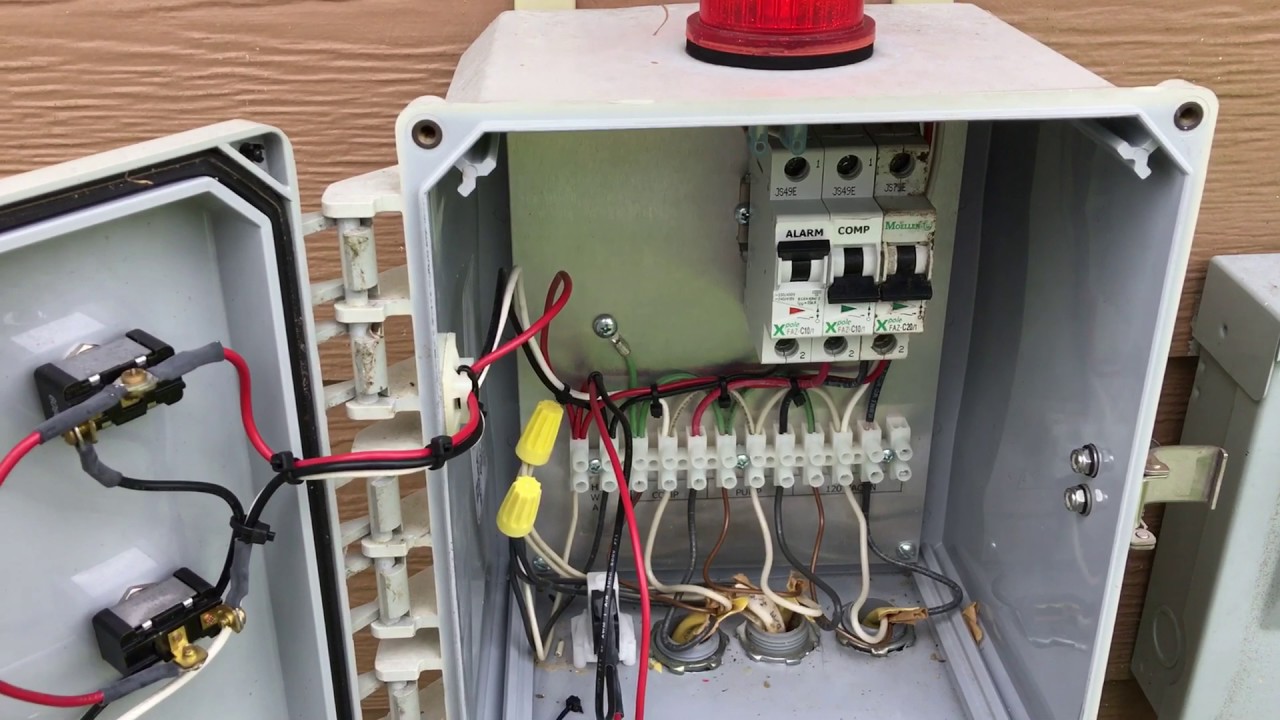
What a septic alarm is and why it matters
A septic alarm warns you when tank levels or pump systems are out of safe range. The alarm stops sewage backup and costly damage. Knowing how the alarm works helps you act fast and avoid health hazards.
- Key functions of the alarm:
- Alerts for high effluent level.
- Signals pump failure or loss of power.
- Warns of float or sensor faults.
- Helps you plan repairs before a backup.
How a septic system alarm works
Most alarms tie to floats, probes, or level sensors inside the tank or pump chamber. When liquid reaches a set height, the sensor closes a circuit and the alarm sounds. Some alarms are simple audible units. Others add visual lights and remote notifications.
- Typical components:
- Alarm panel with light and horn.
- Float switches or electronic probes.
- Control box and relays.
- Backup batteries or remote telemetry on advanced systems.

Common causes of septic system alarm activation
Understanding common causes makes troubleshooting faster. Many alarms are triggered by simple, fixable problems.
- High tank level from a full septic or clogged drainfield.
- Pump failure due to motor burn out or a jammed impeller.
- Float switch stuck on debris or tethered wrong.
- Tripped circuit breaker or blown fuse to the pump.
- Sensor or control box wiring failure.
- Recent heavy use, like guests or laundry, that overloads the system.

Step-by-step septic system alarm troubleshooting
Follow a calm, safe process. Start with easy checks and move to more technical steps.
-
Ensure safety and power
- Turn off power to the pump at the circuit breaker before opening lids.
- Use gloves and eye protection when handling tank covers.
- Never enter a septic tank.
-
Silence and observe the alarm
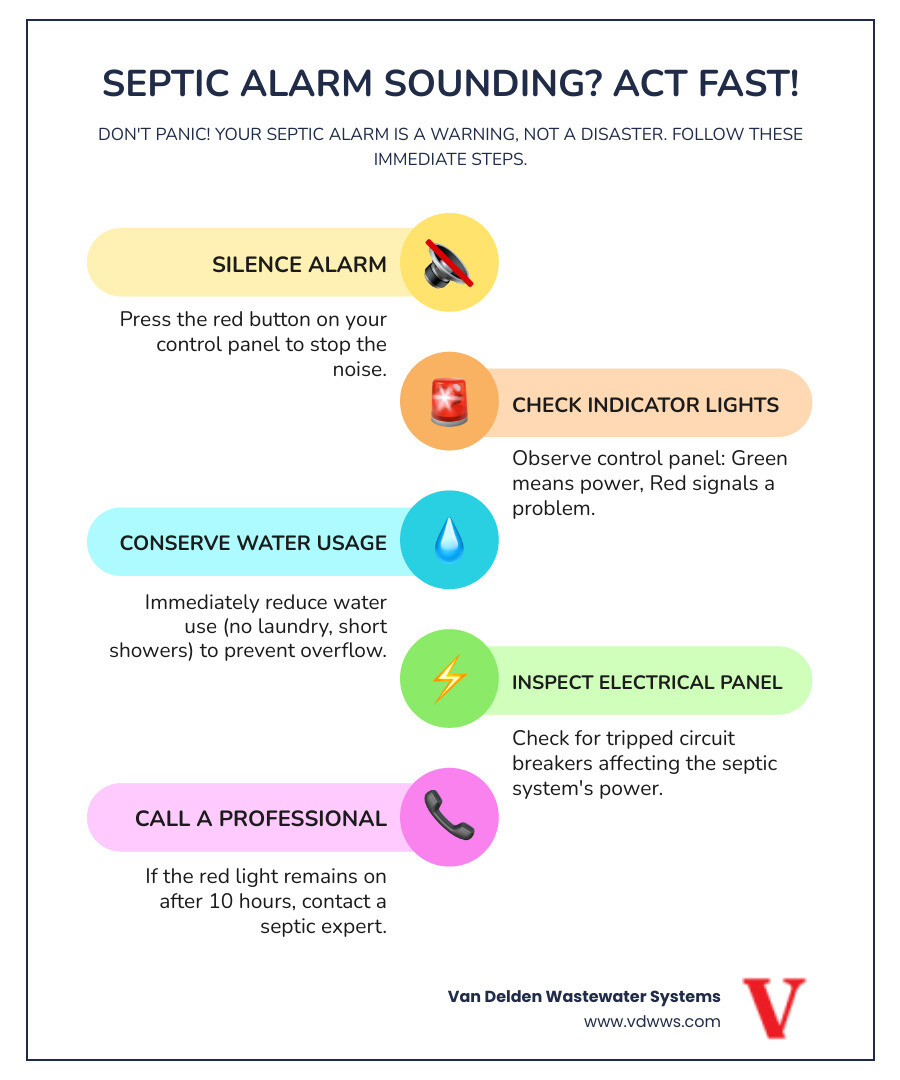
- Press the alarm silence or test button to stop the beep.
- Note whether the alarm resets or stays off. This tells you if it’s persistent.
-
Check for obvious overload
- Ask occupants about recent heavy water use.
- Stop all water use and wait 30–60 minutes. If alarm clears, it was a temporary overload.
-
Inspect the electrical supply
- Check the circuit breaker and fuses for the pump circuit.
- Confirm the alarm panel has power and batteries if present.
-
Open the pump chamber safely
- Remove the access lid and look for floating solids or debris.
- Check floats to see if they are tangled or stuck to the side.
- If floats move freely and pump runs, level should drop.
-
Test the pump
- With power on, carefully jumper the pump circuit only if you are comfortable and safe.
- Listen for the motor and watch for spinning or vibration.
- If the pump does not run but has power, the motor may be bad.
-
Check wiring and control box
- Look for loose, corroded, or chewed wires.
- Inspect the control box for burnt relays or water intrusion.
- Tighten connections and replace damaged parts as needed.
-
Verify float and probe function
- Swap floats to test if the alarm triggers correctly.
- Use a multimeter to test continuity of switches or probes.
-
Evaluate the drainfield and tank level
- If pump and floats work but level stays high, the drainfield may be failing.
- A full tank may need pumping by a service.
-
When in doubt, call a pro
- If you find a burnt motor, strange noises, or unclear wiring faults, hire a licensed septic tech.

When to call a professional for septic system alarm troubleshooting
Some problems need trained hands. Call a pro if:
- The pump motor is dead but receives power.
- Wiring appears damaged or you find burnt components.
- The tank needs pumping due to high solids.
- The drainfield is saturated or showing signs of failure.
- You are not comfortable working near wastewater or electricity.
A professional can test pump amps, replace motors, and diagnose drainfield failures safely.
Preventive maintenance to reduce alarms
Routine care keeps alarms rare. Do these tasks on a schedule.
- Pump your tank every 3–5 years or as needed.
- Inspect floats and control boxes yearly.
- Keep records of pump run times and repairs.
- Limit water use and spread loads—avoid running many appliances at once.
- Avoid flushing grease, wipes, or heavy solids.

Typical parts, replacement costs, and what to expect
Knowing parts and price ranges helps you plan. Costs vary by region and system.
- Float switch: inexpensive to replace; usually low labor cost.
- Pump motor: moderate to high cost depending on size; labor adds to price.
- Control panel or relay: mid-range cost; sometimes easily swapped.
- Full pump replacement: higher cost and may include new piping.
- Tank pumping: affordable and often needed before other repairs.
Expect higher costs for complex or deep installations. Get at least two quotes for big jobs.

My experience and practical tips
I once responded to an alarm that sounded after a family reunion. They ran four loads of laundry at once. The alarm was a simple overload. I silenced the alarm and advised staggered laundry and a tank pump out. The next call involved a burnt pump motor hidden in a flooded control box. That job required a pro and a rebuilt control panel.
Lessons learned:
- Check water use before assuming a failure.
- Keep lids accessible and power clearly labeled.
- Replace worn floats before they fail.
- Keep a trusted service number handy.

Troubleshooting checklist you can print and use
Use this quick checklist when the alarm sounds.
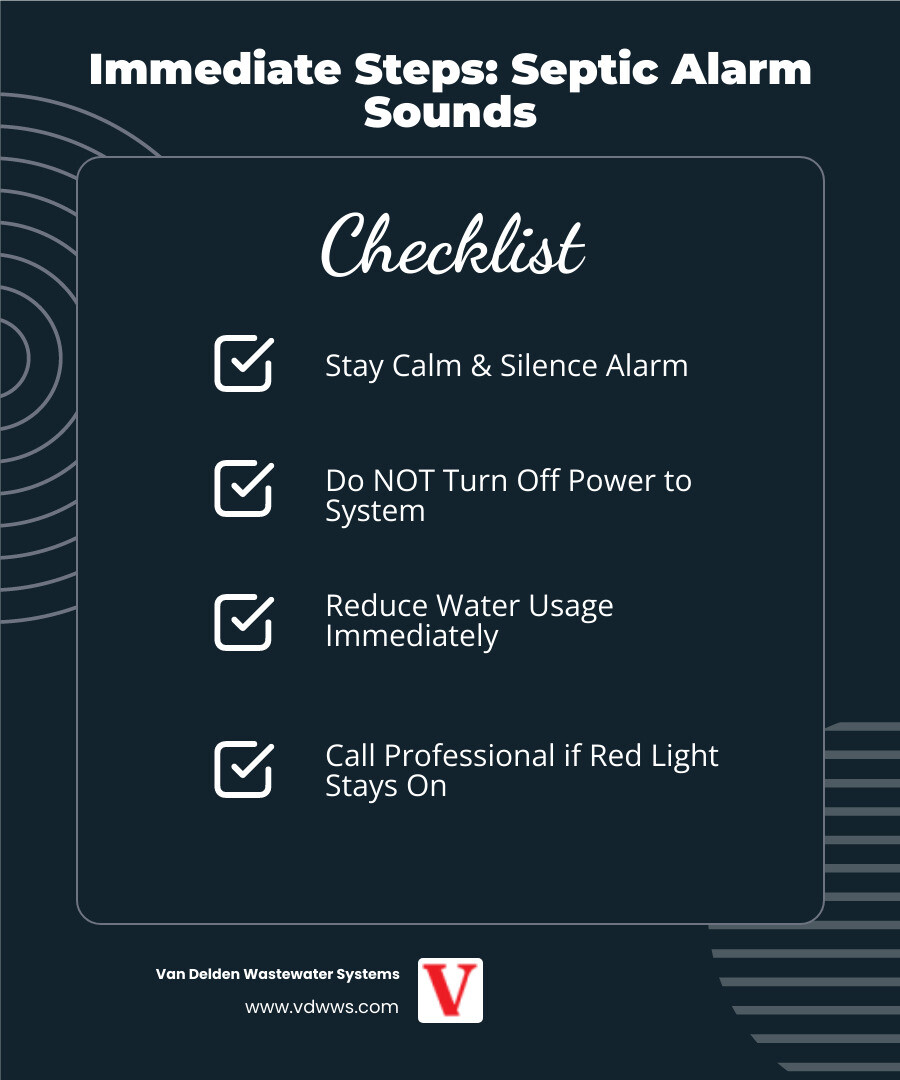
- Silence alarm and note if it resets.
- Stop all household water use.
- Check breaker and alarm panel power.
- Inspect floats for tangles or sticks.
- Observe pump operation from the access port.
- Call a pro if pump receives power but won’t run.
Frequently Asked Questions of Septic System Alarm Troubleshooting
What causes a septic alarm to go off most often?
Most alarms are triggered by high tank levels or a stuck float. Heavy water use and drainfield issues are common causes.
Can I reset my septic alarm myself?
Yes, you can silence the alarm and check breakers. If the problem returns, follow steps in the troubleshooting section or call a pro.
How long can I safely ignore a septic alarm?
You should not ignore it. Address it within hours to avoid backups. Temporary silence is OK only while you investigate.
Will pumping the tank fix the alarm?
Pumping often fixes high-level alarms due to solids or scum. If the pump or wiring is faulty, pumping alone won’t solve the issue.
How often should floats and alarms be inspected?
Inspect alarm systems and floats at least once a year. Faster checks after heavy use are smart.
Is a buzzing alarm different from a steady beep?
A buzzing sound may signal electrical faults. A steady beep usually means high level. Check the alarm manual for specifics.
Can I test the pump without a technician?
You can test basic operation if you know electrical safety. Otherwise, call a pro for pump tests and amp checks.
Conclusion
Septic System Alarm Troubleshooting can be simple if you follow logical steps. Start with safety, check power, verify floats, and test the pump. Keep a routine maintenance plan to reduce alarms. Act quickly to prevent backups and costly damage. Try the checklist, schedule regular inspections, and call a licensed technician when needed. Share your experience in the comments or subscribe for more septic care tips.

