

A faulty contactor often causes intermittent or no cooling in residential AC systems.
I have two decades of hands-on HVAC experience diagnosing relays and contactors. This guide on Ac Unit Contactor Troubleshooting walks you through clear steps, tests, and fixes. You will learn how the contactor works, how to test it safely, and when to replace it. Read on for practical tips I use daily on service calls.

36% off Today’s Exclusive Deals
Limited-time Exclusive Deals. Check current discount on Amazon.
Check Price on Amazon As an Amazon Associate I earn from qualifying purchases.
How an AC contactor works and why it matters
An AC contactor is an electrical relay that links power to the outdoor unit. When the thermostat calls for cooling, the contactor pulls in and powers the compressor and fan. A stuck or pitted contactor can stop cooling or make the system cycle rapidly. Understanding basic operation is the first step in Ac Unit Contactor Troubleshooting.

Common symptoms that point to a bad contactor
Most signs are electrical or behavioral. The unit fails to start but the thermostat shows cooling. The outdoor fan runs but the compressor does not. You hear a humming noise, repeated clicking, or see visible arcing on the contactor. Spotting these symptoms speeds up Ac Unit Contactor Troubleshooting.

Tools, safety, and prep for Ac Unit Contactor Troubleshooting
Safety first. Always shut power at the disconnect and at the breaker. Use a multimeter, insulated screwdrivers, needle-nose pliers, and a non-contact voltage tester. Wear safety glasses and gloves. Having the right tools makes Ac Unit Contactor Troubleshooting fast and safer.
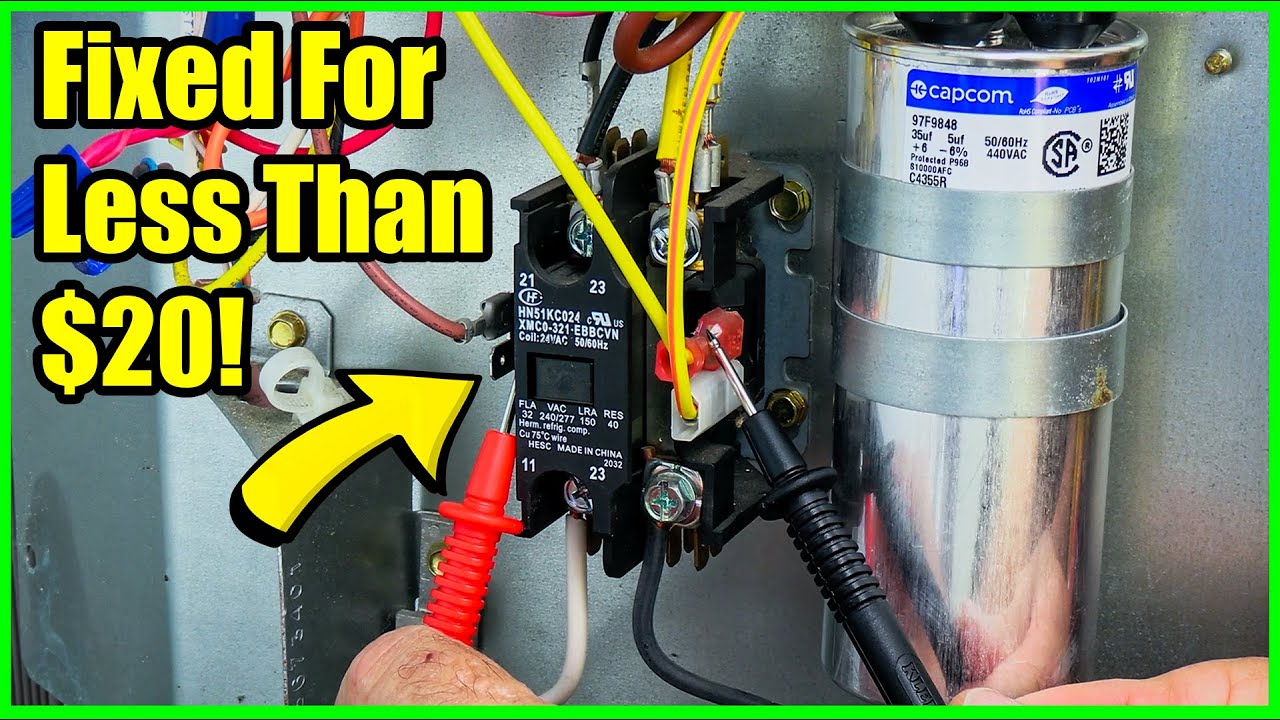
Step-by-step Ac Unit Contactor Troubleshooting checklist
Follow these steps in order. Each step is short and clear.
-
Visual inspection
Check the contactor for burn marks, pitting, or broken parts. Look for melted plastic and discoloration. -
Listen and observe operation
Turn the system on and watch the contactor. Does it pull in firmly? Do you hear a click? Weak clicks mean a weak coil or low voltage. -
Test coil voltage
Measure voltage across the coil terminals with the unit on. It should match the control voltage (usually 24V). Low or no voltage means a control circuit or transformer issue. -
Check continuity of contacts
With power off, measure continuity across the main contacts. Open contacts should read high resistance. Closed contacts should read near zero when the contactor is mechanically pulled in. -
Bypass test (only if safe and temporary)
Jump the power to the compressor briefly to see if it runs. Use extreme caution. This isolates contactor failure from compressor failure. -
Inspect auxiliary parts
Check the start capacitor, run capacitor, and overload devices. A bad capacitor can mimic a contactor fault.
These steps form a practical path for Ac Unit Contactor Troubleshooting. Follow safety rules and only perform live tests if you are comfortable.

How to test a contactor with a multimeter
Testing is simple when you know what to look for.
- Measure coil voltage while the thermostat calls for cooling. Expect about 24 volts on most residential systems.
- With power off, measure resistance across the coil. Typical coils show a few hundred ohms. A very high or open reading means a bad coil.
- Check continuity across the main power contacts when the contactor is engaged. Near zero ohms is good.
- Inspect for intermittent continuity while moving the contactor plunger by hand; sticking indicates wear or dirt.
These tests help confirm if the contactor is the root cause during Ac Unit Contactor Troubleshooting.

Common causes and fixes for contactor issues
Faults fall into a few groups.
-
Mechanical wear
Contacts wear down from repeated cycles. Replace the contactor if pitting or welding appears. -
Coil failure
Coil insulation can fail. Replace the contactor assembly when the coil reads open or shorted. -
Low control voltage
Bad transformer, loose wire, or thermostat problem can drop coil voltage. Fix wiring or replace the transformer. -
Overheating and corrosion
Poor airflow or moisture causes corrosion. Improve airflow and replace corroded parts. -
Poor installation or wrong contactor size
Using the wrong rated contactor leads to early failure. Match the contactor to the compressor amps.
Target the cause, then repair or replace. Proper diagnosis is the heart of Ac Unit Contactor Troubleshooting.
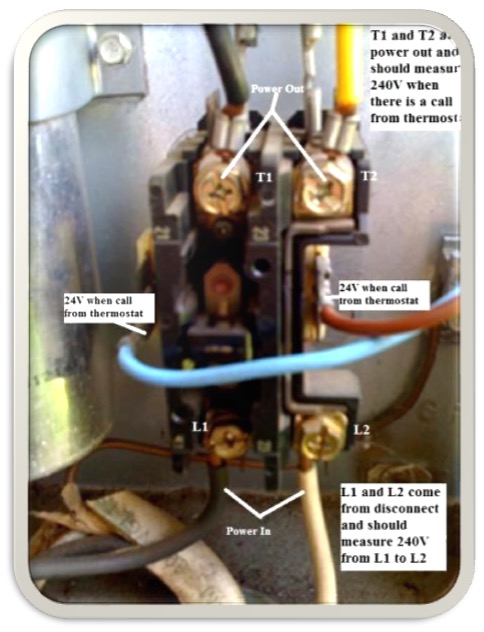
Replacing a contactor: a quick guide
If the contactor is bad, replace it. Here’s a clear, safe sequence.
- Power off at the main breaker and the outdoor disconnect.
- Label wires before removal to avoid miswiring.
- Remove the old contactor and compare ratings. Match coil voltage and amp capacity.
- Install the new contactor and tighten terminals to spec.
- Restore power and test a full cooling call.
- Observe for correct pull-in, no excessive noise, and stable operation.
Replacing the contactor correctly finishes most Ac Unit Contactor Troubleshooting jobs.

Preventive maintenance to avoid contactor failure
Simple steps extend life and prevent breakdowns.
- Clean the outdoor unit and remove debris regularly.
- Inspect contactor during each annual service.
- Replace contactors that show any pitting or wear even if they still work.
- Ensure proper voltage and secure terminals.
- Use a protective surge device in areas prone to spikes.
Regular care reduces emergency calls and lowers long-term cost from Ac Unit Contactor Troubleshooting.

Personal experience, common mistakes, and tips
I’ve replaced hundreds of contactors over 20 years. Early in my career I once replaced a contactor and left a loose terminal. The unit failed again in two days. Now I always torque terminals and double-check wiring. My best tip: test the coil voltage before condemning the contactor. Often the real issue is a control transformer or thermostat. Small checks save big service calls.
People also ask — quick PAA-style answers
-
Why does my AC click but not cool?
A clicking contactor often shows a weak coil or low control voltage. Test coil voltage and check the transformer. -
Can a bad contactor damage the compressor?
Yes. A contactor that sticks can cause hard starts and stress the compressor. Replace worn contactors promptly. -
How long do contactors last?
Typical life is 5 to 10 years depending on cycles and environment. Harsh conditions shorten life.
Frequently Asked Questions of Ac Unit Contactor Troubleshooting
How do I know if the contactor is bad?
A bad contactor shows pitted contacts, no pull-in, humming sounds, or intermittent operation. Test coil voltage and continuity to confirm.
Can I test a contactor without tools?
You can do a visual check and listen for clicks, but a multimeter is needed for a reliable test. Avoid live tests without proper tools and safety gear.
Is it safe to replace a contactor myself?
If you understand electrical safety and turn off power, you can replace it. If you are unsure, hire a licensed technician to avoid risk.
How much does replacing a contactor cost?
Parts typically range from modest to mid-price, depending on rating and brand. Labor varies by region, so get a local estimate for accuracy.
What causes a contactor to weld shut?
High current surges, poor contact alignment, or worn contacts can cause welding. Use the correct size contactor and protect against electrical surges.
Should I replace the contactor during an AC tune-up?
Yes. Inspect and replace contactors that show wear. Proactive replacement prevents mid-summer failures.
Conclusion
Ac Unit Contactor Troubleshooting is a mix of observation, simple tests, and safe electrical checks. Start with a visual inspection, measure coil voltage, and test continuity before you replace parts. Routine maintenance and matching the correct part will save time and money. Take action today: check your outdoor unit, note any odd noises, and schedule a service if you see signs of wear. Share your experience or ask a question below to keep the conversation going.

