

Most lawn mower engine issues come from fuel, spark, or air flow problems.
I have over a decade fixing small engines for lawns and gardens. This guide covers Lawn Mower Engine Troubleshooting in clear, step-by-step detail. You will learn how to diagnose common faults, fix them safely, and maintain your mower to avoid repeat problems. Read on for practical tips, real-world examples, and easy checks you can do today.

36% off Today’s Exclusive Deals
Limited-time Exclusive Deals. Check current discount on Amazon.
Check Price on Amazon As an Amazon Associate I earn from qualifying purchases.
Understanding common lawn mower engine problems
Lawn Mower Engine Troubleshooting starts with knowing the usual faults. Engines often fail to start, stall, run rough, smoke, or lose power. Each symptom points to a small set of likely causes. Learning the pattern helps you narrow down the fix fast.
Common problems and likely causes:
- Engine won't start: empty tank, stale fuel, bad spark plug, flooded carburetor.
- Engine starts then stalls: dirty carburetor, clogged fuel filter, bad primer or choke use.
- Rough idle or misfire: fouled spark plug, clogged air filter, incorrect carburetor mix.
- Loss of power while cutting: dull blade, low compression, dirty air filter, fuel flow issue.
- Excessive smoke: wrong oil level, burning oil, or rich fuel mixture.
These are fast checks you can do before calling a shop. Lawn Mower Engine Troubleshooting becomes easy once you recognize these patterns. Always check fuel, spark, and air in that order when diagnosing problems.
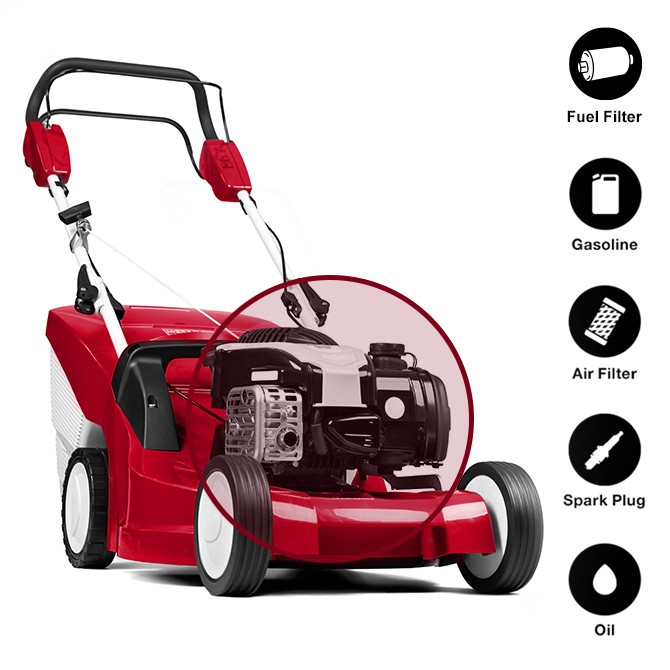
Step-by-step Lawn Mower Engine Troubleshooting checklist
Follow a simple checklist to find the root cause. Work top to bottom. Keep tools near and work on a flat surface.
- Safety first
- Remove the spark plug wire. Let the mower cool. Use gloves and eye protection.
- Fuel check
- Confirm fresh gasoline and correct level. Smell the fuel for sour or varnished odor.
- Spark check
- Remove the spark plug and inspect for wear. Test spark using a spark tester.
- Air check
- Inspect and clean the air filter. A dirty filter restricts air and causes rich running.
- Oil and fluids
- Confirm oil level. Low or dirty oil can cause damage and poor running.
- Fuel delivery
- Check fuel filter, fuel line, and primer bulb. Look for clogs or cracks.
- Carburetor
- Inspect for varnish, debris, or clogged jets. A quick carb clean often helps.
- Compression
- Test compression if the engine cranks slowly or lacks power.
- Blade and deck
- Check blade sharpness and deck cleanliness. Clogged deck reduces cutting efficiency.
- Electrical and ignition
- Inspect ignition coil, kill switch, and safety interlocks for faults.
Keep notes as you test. This makes troubleshooting repeatable and helps if you seek professional repair. Lawn Mower Engine Troubleshooting works best with a methodical checklist.

Detailed fixes for specific symptoms
This section gives clear fixes for common complaints. Use short checks first, then deeper fixes.
Engine won't start
- Check fuel: drain old fuel and add fresh gasoline with correct octane.
- Spark plug: clean or replace the plug. Gap to manufacturer spec.
- Carburetor flood: open the choke, crank a few seconds, and let excess fuel clear.
Lawn Mower Engine Troubleshooting tip: a fresh plug and fresh gas fix most no-starts.
Engine starts then stalls
- Fuel filter: replace if old or clogged.
- Primer/choke use: follow the mower manual steps; avoid over-priming.
- Carb bowl: clean or use a quick carb cleaner to remove varnish.
Engine runs rough or misfires
- Air filter: replace a dirty foam or paper filter.
- Fuel mix: avoid mixing oil into gas for 4-stroke engines.
- Spark timing: inspect coil and flywheel key for damage.
Loss of power under load
- Blade and deck: sharpen blade and remove grass buildup.
- Compression: low compression needs ring or valve work.
- Fuel flow: check for kinked lines and weak fuel pump.
Excessive smoke
- Too much oil: check oil level and drain excess.
- Burning oil: worn rings or valves let oil into the combustion chamber.
- Rich mixture: a stuck choke or carburetor issue can create black smoke.
Each symptom above links to simple checks. Start small and move to parts replacement if needed. Lawn Mower Engine Troubleshooting is often about patience and careful observation.

Maintenance tips to prevent engine problems
Good care cuts troubleshooting time and extends engine life. Do routine tasks every season.
Key maintenance tasks:
- Change engine oil every 25 hours or annually for small mowers.
- Replace the air filter every season or sooner in dusty conditions.
- Replace spark plug annually or when worn.
- Use fresh fuel and add stabilizer for seasonal storage.
- Clean the mower deck and sharpen blades regularly.
- Follow the manufacturer's recommended service schedule.
Record work done in a small log. This helps diagnose future issues faster. Routine care makes Lawn Mower Engine Troubleshooting less frequent and less costly.

Tools and parts checklist for DIY Lawn Mower Engine Troubleshooting
Having the right tools saves time. Keep these ready in a small kit.
Useful tools and parts:
- Spark plug wrench and spare spark plugs.
- Small screwdriver set and socket set.
- Fuel line pliers and a fuel filter replacement.
- Spark tester and compression gauge.
- Carburetor cleaner and spray intake cleaner.
- Replacement air filters and engine oil.
- Blade sharpener or replacement blade.
Buy quality parts that match your mower model. Good tools speed up repairs and reduce mistakes during Lawn Mower Engine Troubleshooting.

Personal experience: lessons learned and common mistakes
I’ve repaired dozens of mowers and made my share of mistakes. I’ll share what saved me time.
What I learned:
- Don’t skip fresh fuel. Stale gas causes the most problems I saw.
- Clean the carburetor jets before replacing major parts. Often a carb clean fixed it.
- Keep a small parts kit with plugs and filters. It paid for itself.
Common mistakes to avoid: - Over-tightening parts and cracking plastic fittings.
- Ignoring the safety switches and running tests without disconnecting the spark wire.
- Storing mowers with fuel in the tank for months.
These small habits cut down on repeat visits and make Lawn Mower Engine Troubleshooting quicker. Treat the mower like a trusted tool and it will reward you.

Quick PAA-style questions people ask about Lawn Mower Engine Troubleshooting
How do I know if the spark plug is bad?
- Remove the plug and check for heavy fouling or a broken insulator. Use a spark tester to confirm no spark.
Can stale fuel cause mower problems?
- Yes. Old fuel forms varnish in the carburetor and causes poor running or no-starts.
Is a clogged air filter urgent?
- Yes. A clogged filter limits air and makes the engine run rich. Replace it to restore performance.

Frequently Asked Questions of Lawn Mower Engine Troubleshooting
How often should I change the oil in my mower?
Change oil every 25 hours of use or at least once a season. Fresh oil protects the engine and reduces wear.
Why does my mower flood when I try to start it?
Flooding happens from over-priming, stuck choke, or a stuck float needle in the carburetor. Let it sit, clear the plug, and try with an open choke.
What does white or blue smoke mean?
Blue or white smoke often means oil is burning inside the engine. Check oil level and look for worn rings or valve seals.
Can I use old fuel after adding stabilizer?
Stabilizer helps but does not always fully restore very old fuel. Best practice is to drain very stale fuel and refill with fresh gas.
When should I clean the carburetor?
Clean the carburetor if the engine runs rough, won’t idle, or fuel flow is erratic. A light clean often solves minor issues.
Is a compression test necessary?
Yes, if the engine lacks power or doesn’t seem to build RPMs under load. Low compression points to internal wear.
How do safety switches affect troubleshooting?
Faulty safety switches prevent starting or will kill the engine. Test or bypass only for diagnosis, but never ignore safety repairs.
Conclusion
You can fix most common mower issues by checking fuel, spark, and air first. Follow the step-by-step Lawn Mower Engine Troubleshooting checklist and keep a small tool kit ready. Regular maintenance prevents many failures and saves money. Start with the easy checks today, keep a maintenance log, and tackle deeper fixes when needed. Try one simple repair from this guide and leave a comment on your result or subscribe for more hands-on tips.

