

Most Mercury CDI ignition problems come from weak spark, bad grounding, or a faulty pickup coil.
I have worked on outboards and small engines for years. This Mercury Cdi Ignition Troubleshooting Guide will help you find faults fast. I will explain how the CDI system works, common symptoms, step-by-step tests, and clear next steps. Read on to solve spark problems with confidence and save time and money.

36% off Today’s Exclusive Deals
Limited-time Exclusive Deals. Check current discount on Amazon.
Check Price on Amazon As an Amazon Associate I earn from qualifying purchases.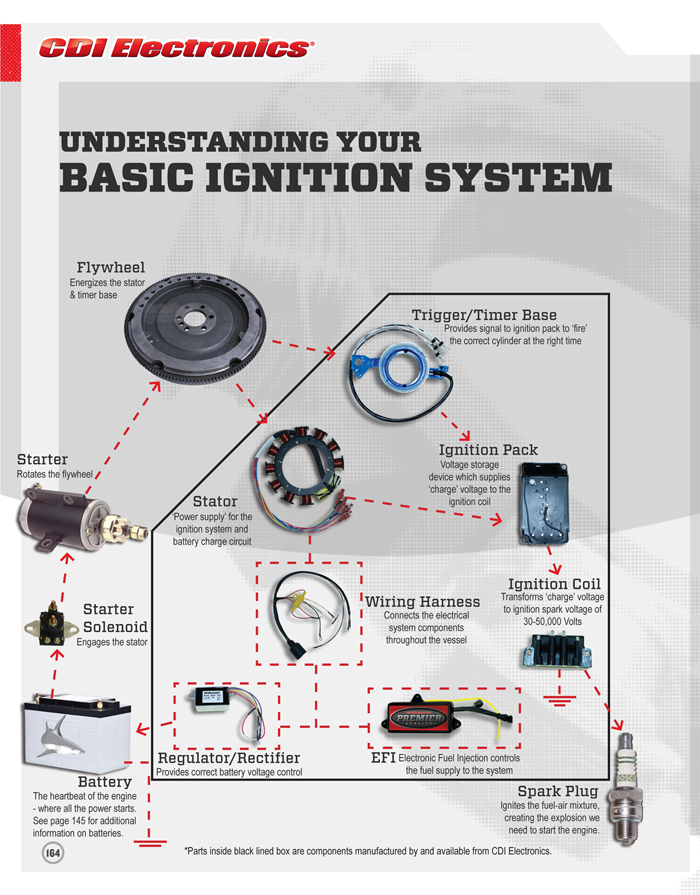
What is the Mercury Cdi Ignition and how it works
A CDI unit stores and releases high voltage to the ignition coil. The pickup coil and stator tell the CDI when to fire. Spark timing is then delivered to the spark plug through the coil. The Mercury Cdi Ignition Troubleshooting Guide focuses on these parts and their links.
CDI systems are simple in parts but precise in timing. Small wiring faults or weak pulses cause no spark or weak spark. Knowing the parts and signals makes troubleshooting quick and accurate. This section gives basic definitions you will use in tests.
Common symptoms and likely causes
Symptoms are the signs you see. Causes are the likely parts that need testing.
- No spark at the plug: often the CDI, pickup coil, or open grounding.
- Weak or intermittent spark: poor connections, bad stator output, or degraded coil.
- Backfiring or erratic timing: timing pickup issues or damaged stator winding.
- Engine starts then cuts out: overheating CDI, loose wiring, or failing kill switch.
- Electrical smells or melted wires: short circuit or wrongly routed cables.
Use symptoms to pick tests from this Mercury Cdi Ignition Troubleshooting Guide. Focus on one symptom at a time. That keeps repairs cleaner and faster.

Tools and safety checklist
Good tools make checks safe and reliable. Follow safety steps first.
- Basic tools: insulated screwdrivers, pliers, and socket set.
- Electrical tools: multimeter (DC and AC), spark tester, and pickup coil tester if available.
- Safety gear: gloves, eye protection, and no loose clothing.
- Prep: disconnect battery before major wiring work. Keep fuel away from sparks.
- Documentation: have the engine service manual or wiring diagram handy.
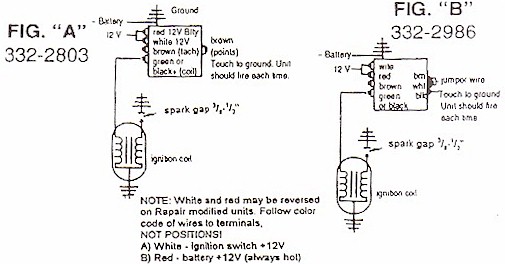
A proper multimeter is essential for this Mercury Cdi Ignition Troubleshooting Guide. Use it to measure resistance and AC voltage from stator and pickup coils. Always follow safe testing procedures.

Step-by-step Mercury Cdi Ignition Troubleshooting Guide
Follow these steps in order. Short checks first. Deeper tests next.
-
Visual inspection:
- Check wires for chafing and corrosion.
- Inspect connectors for water, salt, or bent pins.
- Look for burned components or melted insulation.
-
Spark plug and cap check:
- Remove the plug and check condition and gap.
- Use a spark tester to see spark quality while cranking.
- Replace the plug if fouled or worn.
-
Ground checks:
- Ensure engine block to battery ground is clean and tight.
- Check grounding strap from stator/CDI to engine.
- Poor ground often causes intermittent or no spark.
-
Kill switch and safety circuit:
- Bypass the kill switch briefly to test if it causes shutdown.
- Inspect lanyard and connectors for continuity.
-
Pickup coil test:
- Check resistance per manual specs with a multimeter.
- Check AC pulse while cranking; a missing pulse can mean no timing signal.
-
Stator and charging test:
- Measure AC output at the stator while cranking.
- Low or no AC suggests stator or wiring failure.
-
Ignition coil test:
- Measure primary and secondary resistances against specs.
- Swap a known-good coil if available to confirm results.
-
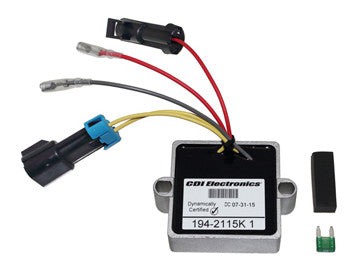
CDI unit suspect:
- CDI failures are common when other parts test good.
- Replace CDI if pickup, stator, and coil test in spec but no spark.
-
Wiring continuity and shorts:
- Trace wires using continuity mode.
- Repair corroded connectors and replace damaged harness sections.
-
Final validation:
- Reassemble and test-run.
- Monitor engine response and spark under load.
This Mercury Cdi Ignition Troubleshooting Guide uses simple steps to isolate the issue. Keep notes as you test. It speeds repairs and avoids repeated disassembly.
Quick PAA-style questions inside the guide
Q: How do I know if the CDI is bad?
A: If pickup coil and stator have proper signals and the ignition coil shows correct resistance but there is still no spark, the CDI is likely bad.
Q: Can a weak battery cause CDI problems?
A: Yes. Low battery voltage can reduce stator output and prevent the CDI from firing properly.
Q: Is the spark tester safe for modern outboards?
A: Yes when used as instructed. Use an inline tester rated for the engine voltage to avoid damage.
Testing components in detail
Break tests into small checks. Record the reading for each test.
Pickup coil testing
- Measure DC resistance across the pickup leads. Compare to specs.
- Check AC pulse while cranking. A missing or weak pulse means replace pickup.
Stator and charging coil
- Test AC output with the engine cranked. Voltage should rise with RPM.
- Inspect for oil or water intrusion. Replace stator if windings are open or shorted.
Ignition coil testing
- Measure primary coil resistance. Then measure secondary.
- Very high or infinite resistance indicates internal damage. Replace if out of range.
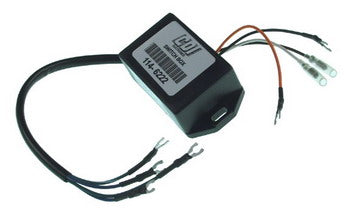
CDI unit checks
- CDI units are sealed. They are hard to bench test reliably.
- Rule out other components first. If everything else is good, swap the CDI with a compatible unit.
Wiring and connectors
- Clean terminals with contact cleaner and a small brush.
- Use dielectric grease on marine connectors after cleaning.
- Replace connectors that move or show corrosion.
Spark plug and cap
- Use the correct heat range plug for the engine.
- Replace cracked caps and brittle boots. They leak high voltage and cause weak spark.
Follow the manual values for resistance and voltage. Manuals give exact ranges for each Mercury model. This level of testing keeps mistakes low and fixes fast.
Real-world examples and personal tips
I once fixed a 50 HP Mercury that would crank but not spark. The stator showed low AC output. I cleaned corrosion and tightened the ground. The engine fired immediately. The root cause was a loose ground strap that looked fine at first glance.
Common mistakes I have seen
- Replacing the CDI first without checking pickup and stator.
- Ignoring poor ground connections.
- Using the wrong type of spark plug cap or plug gap.
Practical tips I use every time
- Mark connectors before disconnecting for correct reassembly.
- Use a sticker with test readings on the cowling for future service.
- Keep a spare plug and connector pins in your tool kit.
These experiences shape this Mercury Cdi Ignition Troubleshooting Guide. Small checks can prevent big repairs.
Replacement, costs, and when to seek professional help
Replacement parts vary in price. Basic parts like spark plugs and caps are inexpensive. CDI units and stators cost more. Labor adds to cost if you visit a shop.
Seek professional service when
- Wiring diagrams are unclear or damaged.
- You lack tools like a quality multimeter.
- Replacing major electrical components on high-value engines.
If unsure, get a professional diagnosis. A correct diagnosis saves time and money. Use this Mercury Cdi Ignition Troubleshooting Guide to gather facts before you pay for service.
Preventive maintenance and best practices
Regular checks prevent most CDI problems. Do these tasks seasonally.
- Clean and inspect electrical connectors.
- Check plug condition and gap every 100 hours or season.
- Run the engine and monitor charging output.
- Keep wiring away from heat and moving parts.
- Store engines dry and protected to prevent corrosion.
Routine care lengthens component life and reduces emergency breakdowns. This preventive work makes troubleshooting easier if issues appear later.
Frequently Asked Questions of Mercury Cdi Ignition Troubleshooting Guide
What are the first signs of CDI failure?
Early signs include no spark, intermittent spark, or engine dying under load. Often the issue appears after heat build-up or water exposure.
Can a bad pickup coil be repaired?
Pickup coils are usually replaced rather than repaired. Repair attempts can be unreliable and short lived.
How do I test the stator on a Mercury outboard?
Measure AC voltage from the stator while cranking and compare to specs. Low or no AC indicates stator trouble.
Is CDI replacement a common repair for Mercury engines?
Yes, CDI failures are common once wiring and coils age. However, verify other components first to avoid unnecessary replacement.
Will corrosion cause ignition failure?
Yes. Corrosion on connectors and grounds often causes intermittent or no spark. Cleaning and sealing connectors fixes many problems.
How long does a CDI unit last?
CDI lifespan varies with use and environment. Under good care, many last years; in harsh saltwater or with poor wiring they fail sooner.
Can water in the cowling cause ignition issues?
Yes. Water can corrode connectors and short circuits. Drying and cleaning often restores function if damage is not severe.
Conclusion
Use this Mercury Cdi Ignition Troubleshooting Guide to work methodically. Start with visual checks. Move to simple electrical tests. Save CDI replacement as a last step after testing pickup, stator, coil, and wiring.
Take action now: inspect grounds, test with a multimeter, and note readings. If you solved a problem, share your steps in the comments below. If you still need help, subscribe for deeper guides and wiring tips.

