

Most dryers that run without heat have a blown thermal fuse or failed heating component.
I have spent years fixing dryers and writing about appliance repair. This article explains No Heat Dryer Troubleshooting clearly and simply. You will learn what to check first, how to test parts, and when to call a pro. My goal is to help you fix common no-heat problems safely and save time and money.

36% off Today’s Exclusive Deals
Limited-time Exclusive Deals. Check current discount on Amazon.
Check Price on Amazon As an Amazon Associate I earn from qualifying purchases.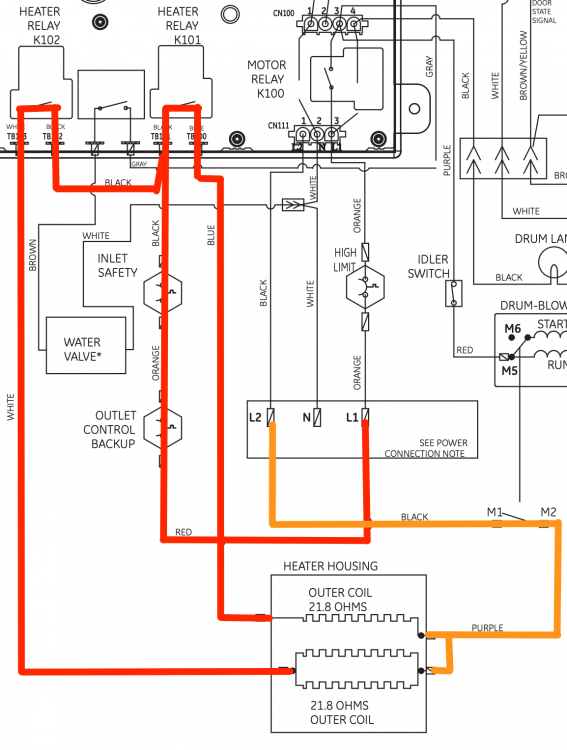
What No Heat Dryer Troubleshooting Means
No heat dryer troubleshooting is the process of finding why a dryer drum turns but no warm air comes out. It covers both electric and gas dryers. Troubleshooting looks at vents, fuses, heating elements, thermostats, and electrical supply. You will use simple tests and safe steps to isolate the fault.

Common Causes of a No Heat Dryer
Electric and gas dryers can stop heating for similar or different reasons. Knowing common causes speeds up No Heat Dryer Troubleshooting.
- Thermal fuse has blown, cutting power to the heater.
- Failed heating element in electric dryers.
- Bad ignition or gas valve coils in gas dryers.
- Clogged vent or lint trap that restricts airflow.
- Faulty high-limit thermostat or cycling thermostat.
- Damaged power supply or broken dryer timer and control board.
- Worn drum seals or blocked air pathways causing overheating shutdown.

Tools and Safety for No Heat Dryer Troubleshooting
You need a few tools and safe habits before you begin No Heat Dryer Troubleshooting.
- Tools to have on hand: multimeter, screwdrivers, nut drivers, needle-nose pliers, and a vacuum for lint.
- Turn off power at the breaker for electric dryers, or shut off gas supply and unplug for gas dryers.
- Wear gloves and eye protection when handling sharp panels.
- Work in a well-ventilated area and avoid touching live circuits.
Step-by-Step No Heat Dryer Troubleshooting
Follow a clear order to find the problem fast. This step list helps narrow issues without guesswork.
-
Check the basics first.
- Ensure the dryer is plugged in and the breaker is not tripped. For electric dryers, confirm both 120V hot legs are present.
- Reset tripped breakers and try the dryer again.
-
Inspect the lint filter and vent.
- Remove lint from the filter and vacuum the lint trap.
- Disconnect the vent hose and run the dryer briefly to see if it heats with the vent removed.
-
Test for airflow restriction.
- Blocked vents cause overheating and thermal fuse failure. Clean the vent to the outside and remove kinks.
-
Check the thermal fuse.
- The thermal fuse is a common failure that causes no heat. Use a multimeter to test for continuity.
-
Test heating components.
- For electric dryers, check the heating element and high-limit thermostat with a multimeter.
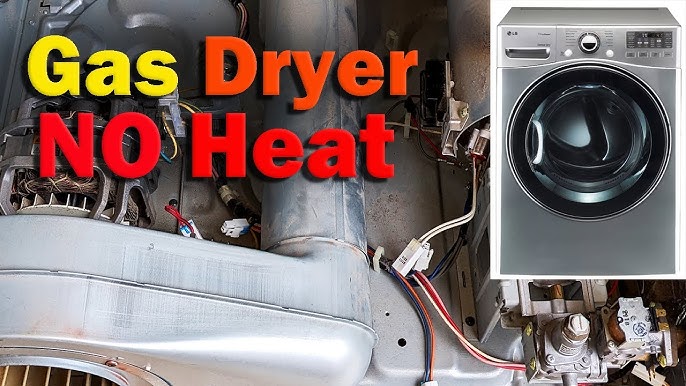
- For gas dryers, check the igniter and gas valve coils for continuity and visible damage.
-
Inspect the door switch and control settings.
- A broken door switch can stop the heating circuit in some models. Try running the dryer with the door closed and observe.
-
Look at wiring and power supply.
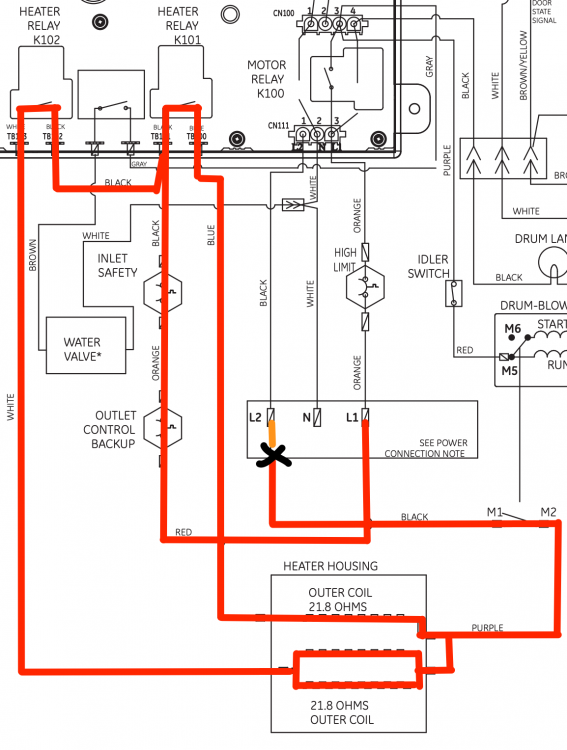
- Loose wires, burnt connectors, or a half-voltage condition on electric dryers will affect heat. Check terminal connections.
-
Run a timed test.
- After each fix, run a short timed cycle to confirm the dryer produces heat and maintains safe temperatures.
Advanced Diagnostics and Parts to Test
If the basic checks do not fix the problem, test specific parts. These tests help complete No Heat Dryer Troubleshooting.
- Thermal fuse
- Test continuity with a multimeter. Replace if open.
- Heating element (electric)
- Check for continuity and visible breaks. A broken coil means replacement.
- High-limit and cycling thermostats
- Test continuity at room temp. Replace if open or inconsistent.
- Gas igniter and flame sensor
- Igniters can crack or burn out. Test resistance and watch for a visible glow during start.
- Gas valve coils
- Faulty coils won’t open the gas valves. Test for proper resistance and replace if out of spec.
- Timer and control board
- If other parts work, a bad control board or timer can fail to send power to the heater.

Repair Cost, Parts, and When to Call a Pro
Deciding to DIY or hire a pro depends on cost and confidence. This section helps with that choice during No Heat Dryer Troubleshooting.
- Typical part costs
- Thermal fuse: low cost and easy to swap.
- Heating element: moderate cost and moderate skill needed.
- Igniter or gas coils: moderate cost, gas knowledge required.
- Control board: higher cost and often harder to replace.
- Labor and safety
- Gas work can be risky. Hire a licensed tech for gas valve or line repairs.
- If tests point to the control board or complex wiring, a pro saves time.
- Warranty and repair vs replace
- If repair cost nears half the price of a new dryer, consider replacement.
- Check manufacturer warranty before paying for parts.

Preventive Maintenance to Avoid No Heat Issues
Good care reduces the need for No Heat Dryer Troubleshooting. Small habits extend life and keep heat steady.
- Clean lint filter after every load.
- Inspect and clean the vent and outside hood twice a year.
- Keep the dryer level and avoid crushing the vent hose.
- Use proper dryer settings and avoid overloading.
- Replace old vents and hoses that have holes or buildup.

Personal Experience and Lessons Learned
I have repaired dozens of dryers. Most no-heat calls were a clogged vent or a blown thermal fuse. I once spent hours tracking a no-heat issue only to find a crushed vent behind a washer. That taught me to check the vent early. Another time, a bad outlet caused half voltage and weak heat. Learning to test the power early saves time and parts.
.webp)
Frequently Asked Questions of No Heat Dryer Troubleshooting
Why does my electric dryer run but not heat?
Most often a blown thermal fuse or broken heating element causes this. Start with the fuse and then test the heating element for continuity.
How do I know if my dryer thermal fuse is bad?
A thermal fuse that is blown will show no continuity on a multimeter. It usually fails after a vent restriction or overheating.
Can a clogged vent cause no heat?
Yes. A clogged vent can make the dryer overheat and blow the thermal fuse, which stops the heat. Clean the vent and try the dryer again.
Is gas dryer no heat the same as electric dryer no heat?
The symptoms can match, but causes differ. Gas dryers often fail at the igniter or gas coils, while electric dryers often fail at the heating element.
Should I replace a heating element or the control board first?
Test the heating element before replacing the control board. Replace the simpler, failed part first once it is confirmed bad.
How do I test a dryer igniter safely?
Turn off power and gas before testing. Use a multimeter to check resistance and look for visible cracks or damage.
When should I call a professional for No Heat Dryer Troubleshooting?
Call a pro if you find gas-related faults, or if wiring or control board issues are present. Also hire a pro if you are not comfortable working with electricity or gas.
Conclusion
No Heat Dryer Troubleshooting is a step-by-step process. Start with vents and the thermal fuse, then test heating parts and power. Use safe tools and know when to call a pro. Try the simple fixes first and keep up regular vent and lint care to avoid repeat problems. If this guide helped, try the checks today, subscribe for more tips, or leave a comment about your dryer issue.

